
Hilterfingen — History & Facts
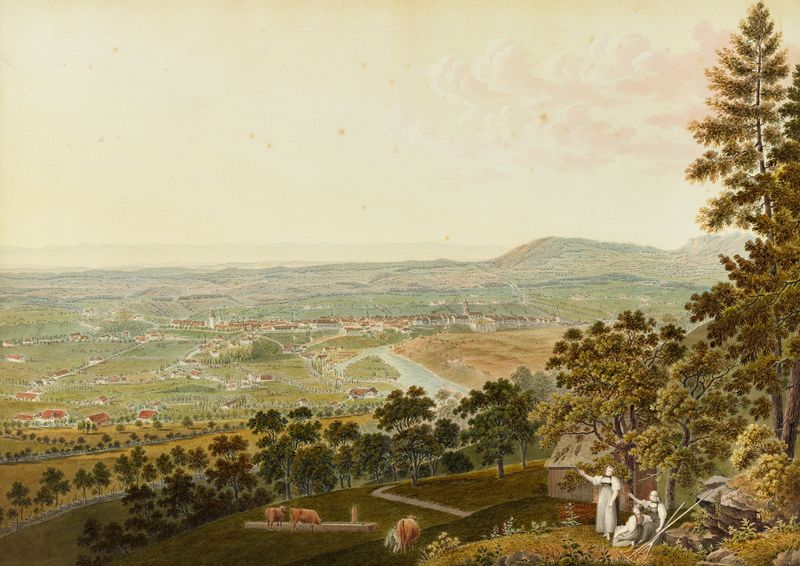
Can beauty exist without sorrow? In the intricate layers of Hilterfingen, a tapestry of color and form emerges, offering a glimpse into the divine amidst the human condition. Look to the center of the canvas, where the gentle hues of blues and greens swirl harmoniously, inviting your gaze into a serene landscape. The rolling hills, kissed by a soft light, create an ethereal quality that contrasts with darker, shadowy corners of the painting. Notice how the meticulously applied brushstrokes reveal Weibel’s skillful dance between chaos and tranquility, allowing the viewer to feel both immersed in this tranquil setting and aware of its fleeting nature. Delve into the nuances of the piece, and you will find a tension between the idyllic beauty of the landscape and the subtle undertones of melancholy that pervade it.
The way the light filters through the clouds evokes a sense of longing, suggesting that even within beauty, sorrow lingers just beneath the surface. Each element, from the delicate trees to the distant mountains, speaks to an interconnectedness that hints at both the divine presence and human fragility. Jakob Samuel Weibel painted Hilterfingen during a period of exploration in early 20th-century Switzerland, when artists were increasingly interested in the interplay between nature and emotion. While specific dates of his work remain elusive, the era was characterized by a search for meaning amidst the rapid changes of modern life, reflecting his quest to encapsulate the divine essence found in the natural world.
More Artworks by Jakob Samuel Weibel
Browse all →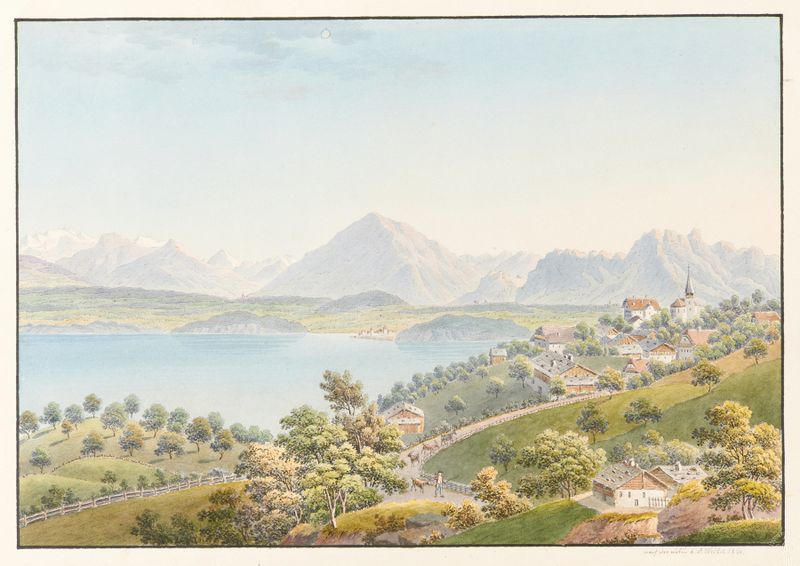
Vue dessiné depuis le Village de Sigriswil, audessus du Lac de Thoune
Jakob Samuel Weibel
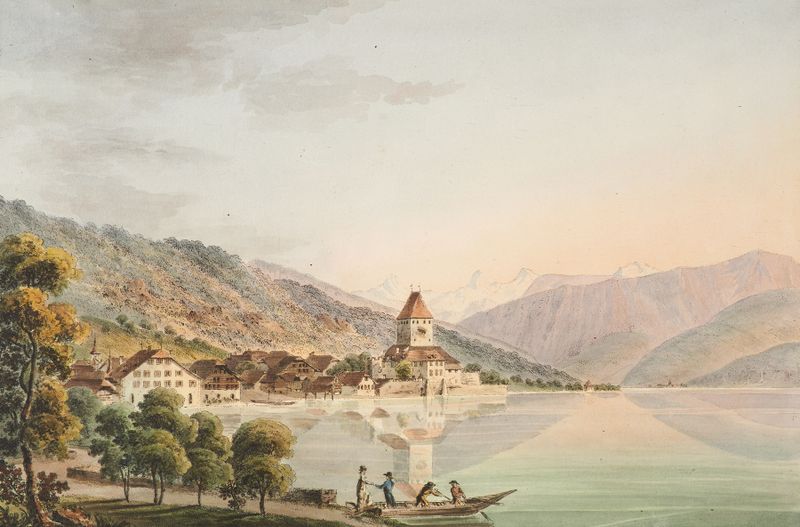
Vûe du Chateau d’Oberhofen au Lac de Thoune
Jakob Samuel Weibel
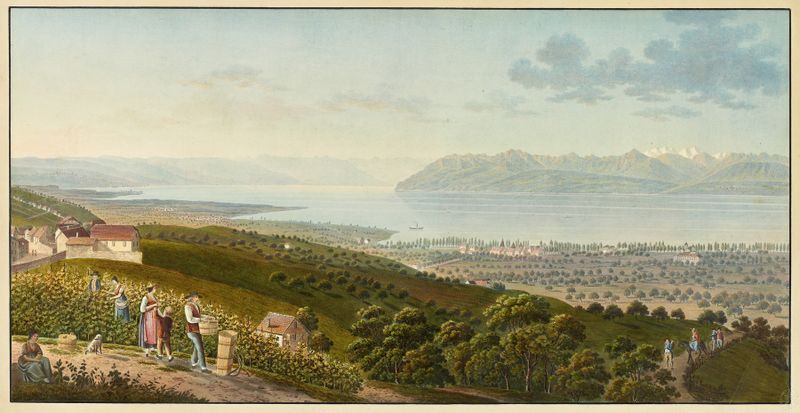
Vue genérale du Lac de Geneve
Jakob Samuel Weibel
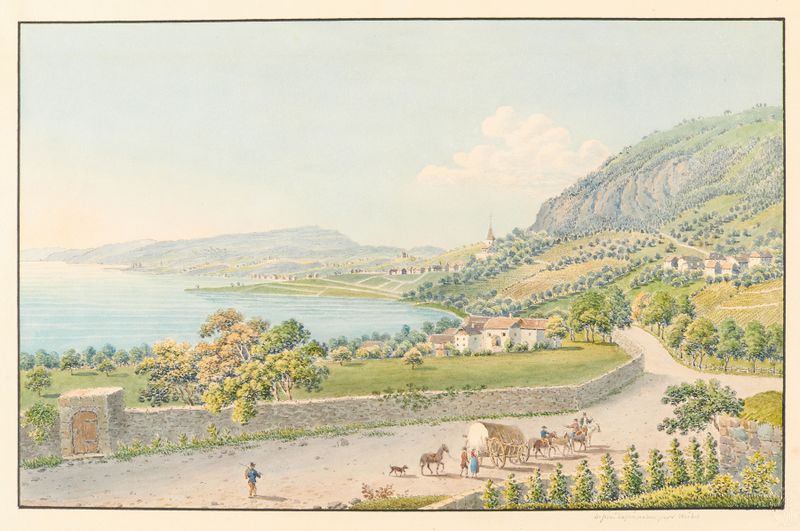
Vue des environs de Montreux et de Clarens
Jakob Samuel Weibel
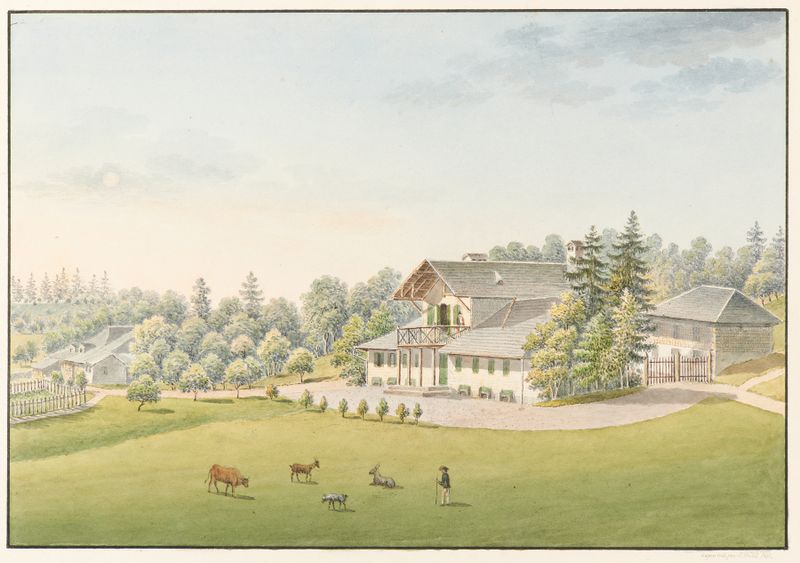
Vue du nouveau Châlet de Vernand
Jakob Samuel Weibel
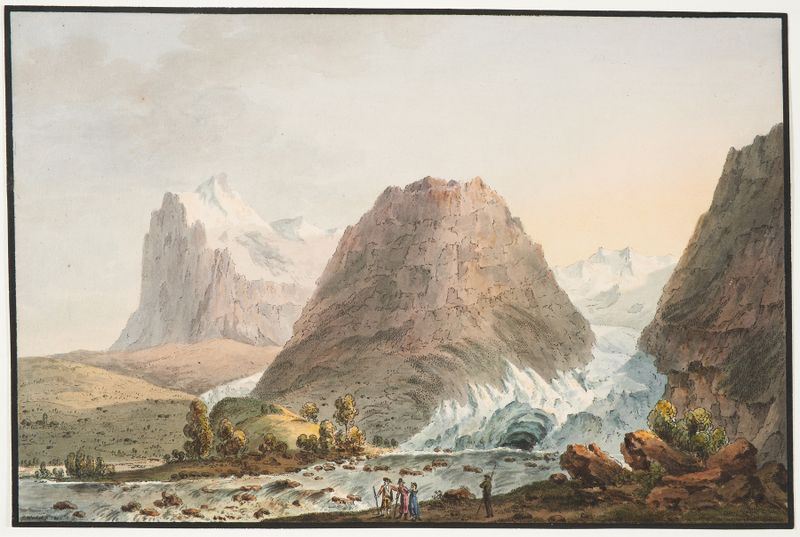
Vûe des Glacieres de Grindelwald
Jakob Samuel Weibel
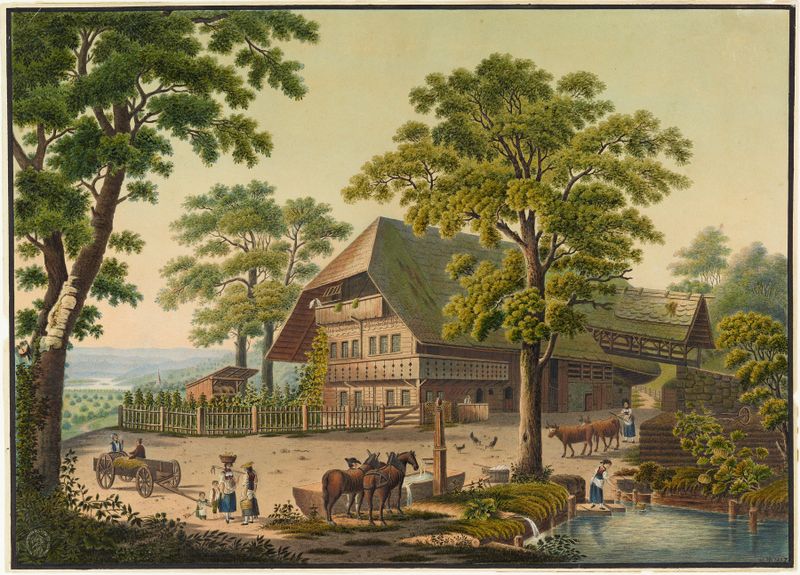
Maison de paysan près Wichtrach
Jakob Samuel Weibel
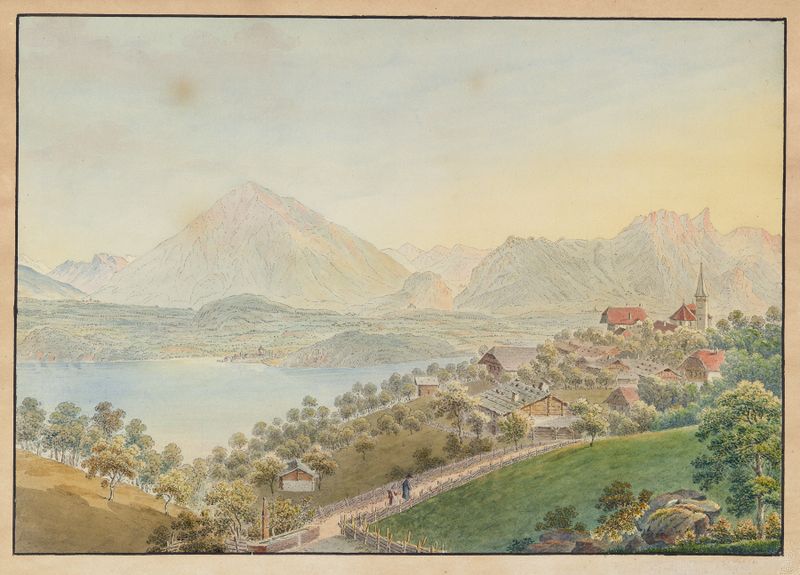
Ansicht von Sigriswil mit Niesen und Thunersee
Jakob Samuel Weibel
Ansicht Berns und der Aare vom Gurten aus
Jakob Samuel Weibel

Lausanne Ville capitale du Canton de Vaud
Jakob Samuel Weibel





