Himmelstudie — History & Facts
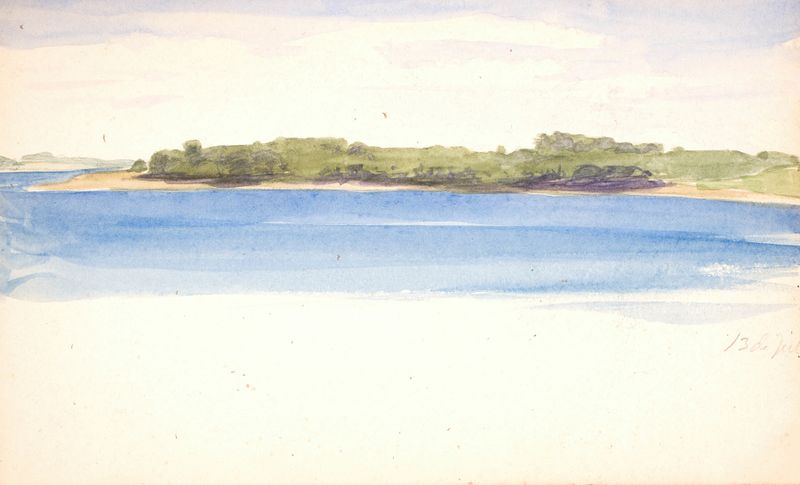
In a world of fleeting moments, the idea of rebirth often clings to the edges of our perception, wrapped in layers of transformation and hope. Himmelstudie, with its ethereal presence, invites us to explore the delicate balance between despair and renewal. Look closely at the vibrant sky, where hues of deep azure intermingle with soft gold and lavender. Notice how the brushstrokes swirl and dance, creating a dynamic rhythm that pulls the viewer’s gaze upward toward the light.
The composition is anchored by a hypnotic interplay of clouds, their edges illuminated with a warm glow that suggests the promise of a new dawn. Each stroke seems to breathe, pulsating with life, while the colors speak of potential and change. The painting resonates with the duality of existence—beauty intertwined with turbulence. The juxtaposition of dark, turbulent clouds and the gentle illumination of sunlight hints at an underlying struggle, a reminder that rebirth often follows hardship.
In this celestial tapestry, solitude and possibility coexist, embodying the artist’s profound understanding of nature and the human experience. The viewer is left with a lingering sense of hope, a quiet yearning for transformation amidst chaos. Agnes Slott-Møller created Himmelstudie between 1879 and 1889, a period marked by her exploration of symbolism and the natural world. Living in Denmark, she was influenced by the burgeoning Symbolist movement, which sought to convey deeper emotional truths through art.
This painting reflects her engagement with the themes of spirituality and nature, capturing the essence of renewal during a time when artists were increasingly turning to metaphysical ideas.