
Horses of Attica — History & Facts
A haze of golden light settles over the landscape, drawing the viewer first to a cluster of pale horses that seem to shimmer against the earth. The painter, Arthur Bowen Davies, lets the horizon dissolve into a field of ochre and olive, so that the animals emerge almost as visions—half-formed, yet unmistakably alive. A lone figure, rendered in warm tones, sits quietly among them, staff in hand, as if pausing to witness the gentle procession.
The composition invites the eye to wander: from the luminous horses in the foreground, to the rolling, shadowed hills, and finally to the vast, glowing sky that dominates the upper half of the canvas. The effect is dreamlike, as if the scene is being remembered rather than observed. Painted after 1910, Horses of Attica belongs to a period when American artists like Davies were drawn to mythic and Arcadian themes, seeking escape from the modern city in visions of ancient or imagined pasts. Works such as this, with their soft focus and poetic palette, were often created for collectors who craved beauty and contemplation rather than narrative drama.
Little is recorded about the specific journey of this piece, now preserved in the digital collection referenced as ywFXOTpWs8jX6g at the Google Cultural Institute. Yet the painting’s quiet ambiguity—its merging of landscape, memory, and myth—remains its most enduring invitation. Stand before it, and let your eye drift with the horses into the endless, sunlit distance.
More Artworks by Arthur Bowen Davies

Mirror of Illusion
Arthur Bowen Davies
Nymphs of the Stream
Arthur Bowen Davies

Woman Dancing
Arthur Bowen Davies
Landscape 2
Arthur Bowen Davies
Ocean Swells
Arthur Bowen Davies
Silver Springs
Arthur Bowen Davies
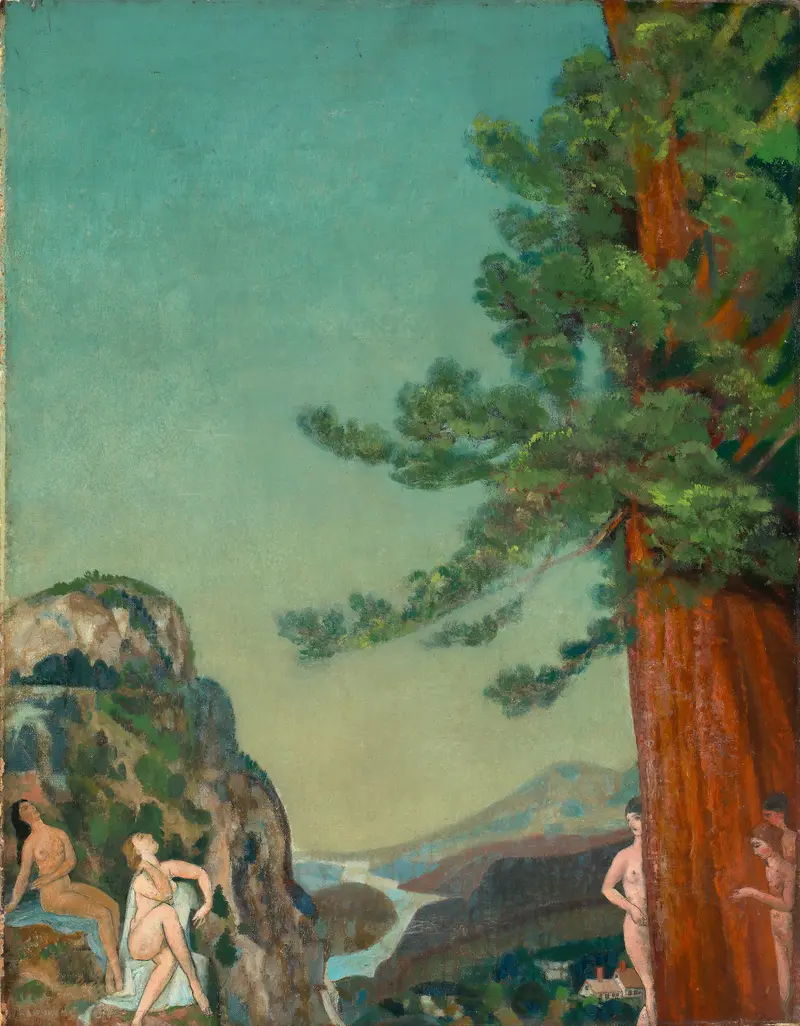
On the Cliffs
Arthur Bowen Davies

Landscape
Arthur Bowen Davies
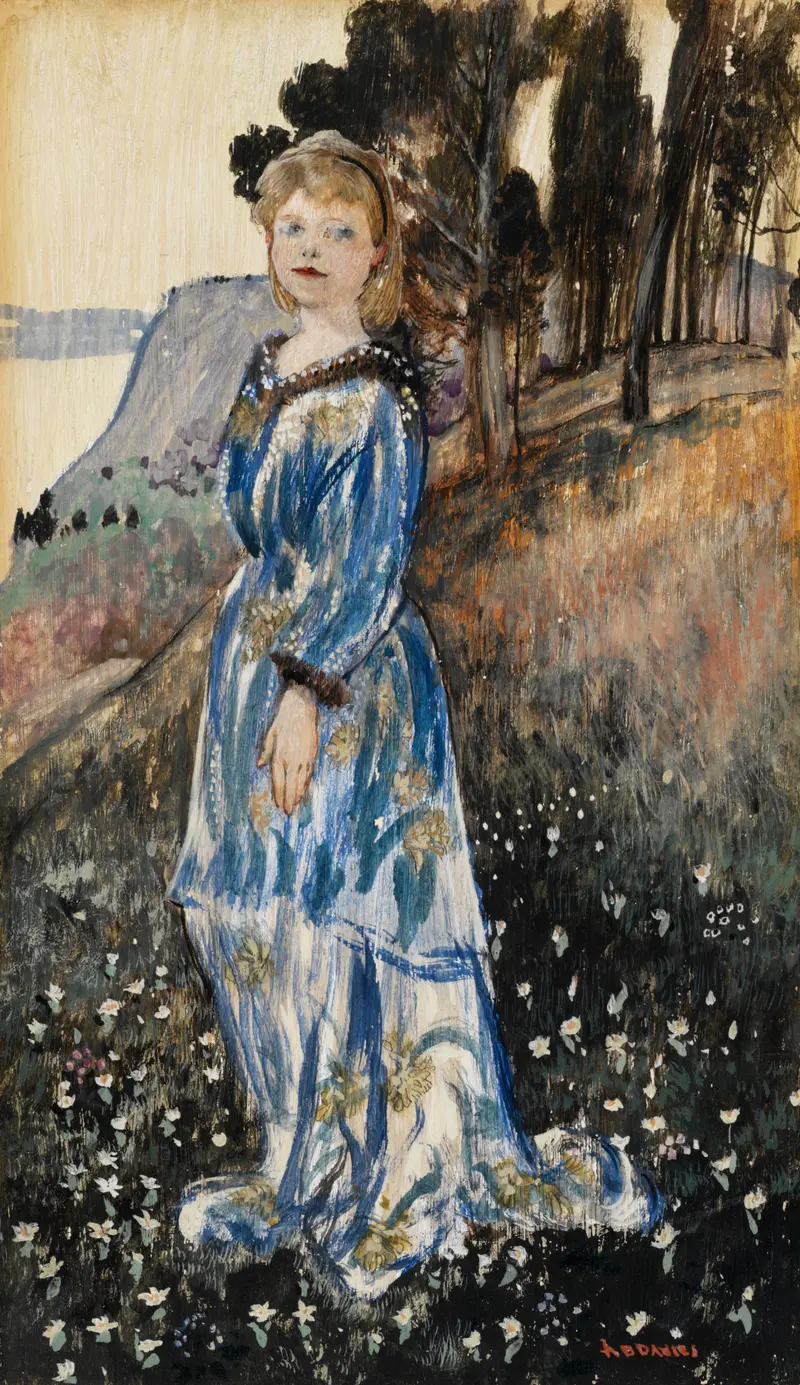
Flora
Arthur Bowen Davies
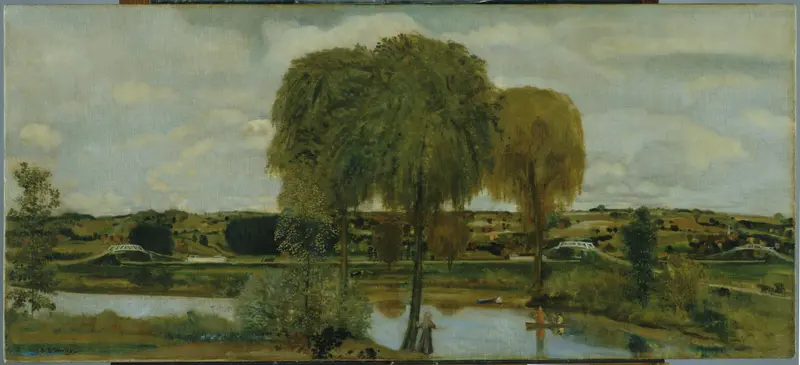
Along the Erie Canal
Arthur Bowen Davies
More Landscape Art

The Starry Night
Vincent van Gogh

View of Delft
Johannes Vermeer

Water Lilies
Claude Monet

The Grand Canal, Venice, looking north-west from the Ca' Corner to the Ca' Contarini degli Scrigni, with the campanile of Santa Maria della Carità
Canaletto

Windsor Castle
Canaletto

The Grand Canal looking North-East from the Palazzo Dolfin-Manin to the Rialto Bridge
Canaletto