
Horyuji Nishisato (The West Village, Horyuji Temple) — History & Facts
What secret hides in the quiet of the canvas? Within the serene embrace of Horyuji Temple, beauty flourishes in gentle whispers, inviting introspection and a deep connection to nature's tranquility. Look to the foreground, where soft hues of green blend with the earthy browns of the temple’s architecture, creating a harmonious palette that grounds the viewer. The delicate strokes capture the subtle interplay of light as it dances across the tiled roofs and ancient stones, guiding your eyes upward. Notice how the distant mountains, rendered in soft blue-gray tones, cradle the temple, suggesting both a protective embrace and a spiritual ascent. In this tranquil scene, contrasts emerge: the steadfastness of the temple against the ethereal quality of the mist that envelops it, evoking a sense of time's passage.
The meticulous detail in the foliage hints at the tireless cycles of nature, an eternal beauty that persists amidst the fleeting. Each brushstroke whispers of reverence, suggesting a dialogue between humanity and the divine as the viewer contemplates their own place within this landscape. Kawase Hasui painted Horyuji Nishisato in 1956 during a prolific period when he was celebrated for his woodblock prints capturing the essence of traditional Japanese landscapes. At this time, Japan was experiencing rapid modernization, and Hasui’s work served as a reflective pause, anchoring viewers to the beauty of heritage and its enduring spirit amidst the encroaching modern world.
More Artworks by Kawase Hasui
Browse all →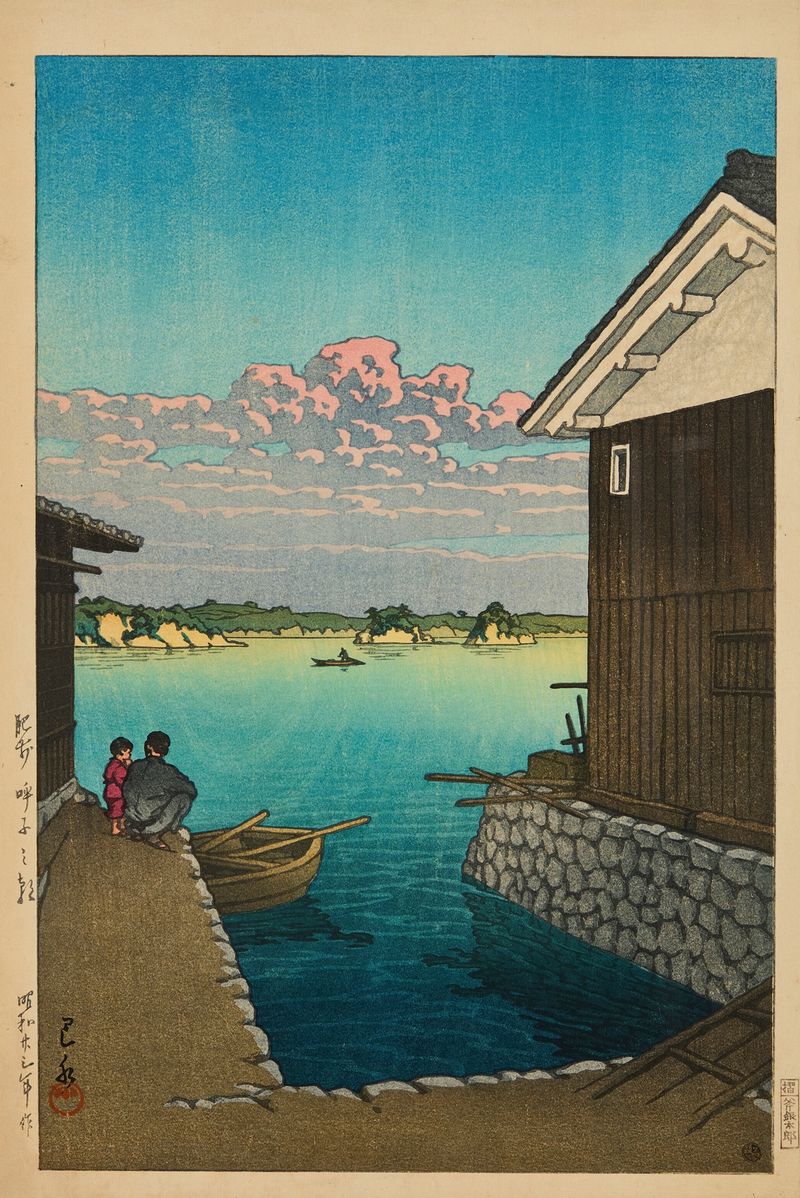
Hizen Yobuko no asa (Morning in Yobuko, Hizen)
Kawase Hasui
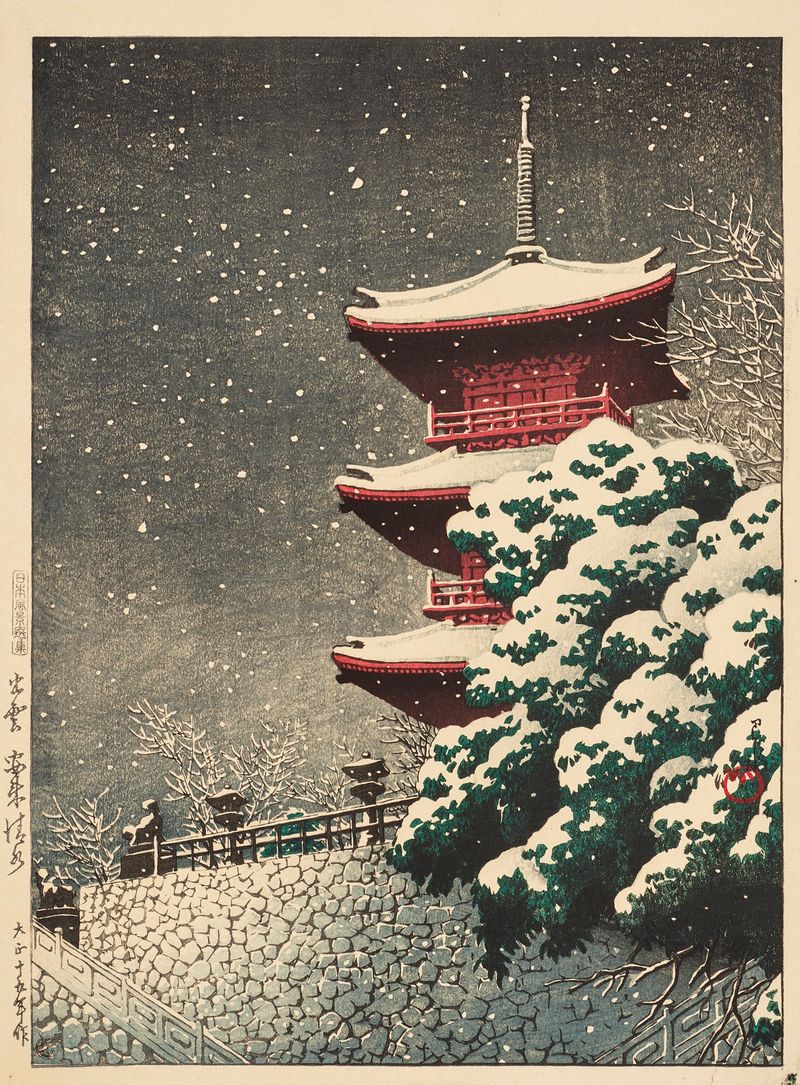
Izumo, Yasugi Kiyomizu (Yasugi Kiyomizu Temple at Izumo)
Kawase Hasui
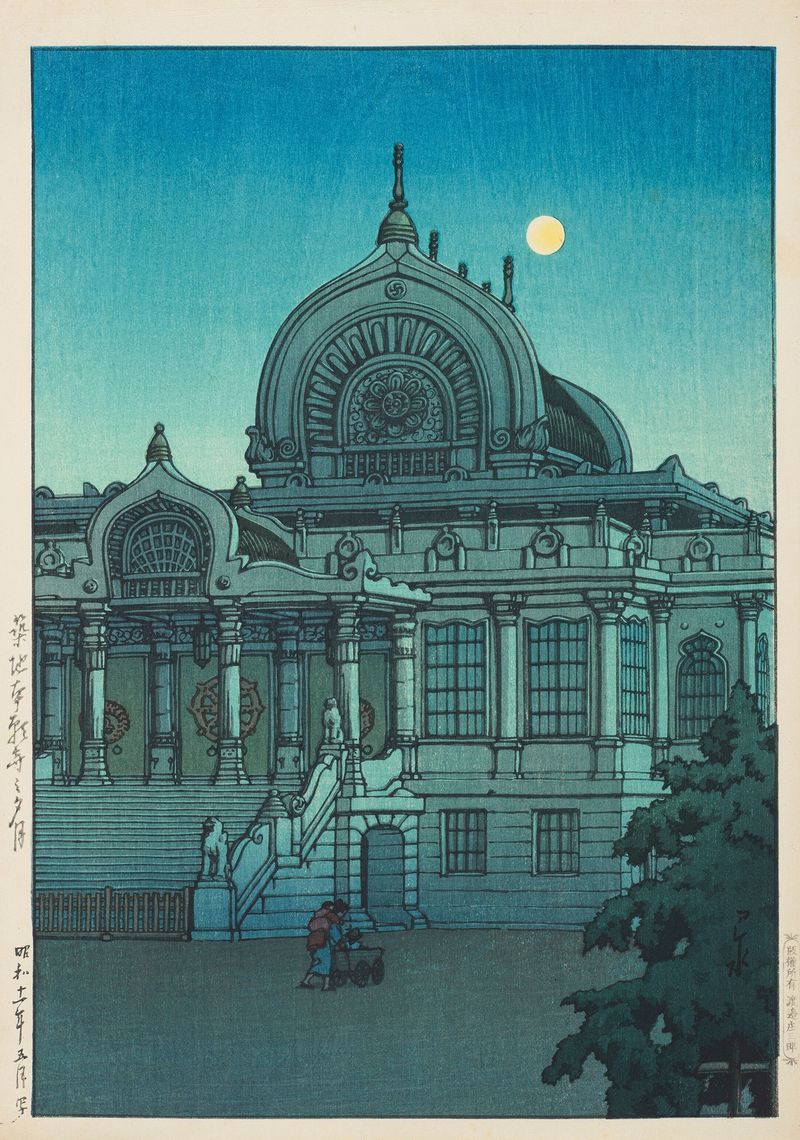
Tsukiji Honganji no yuzuki (Evening moon at Honganji Temple in Tsukiji)
Kawase Hasui
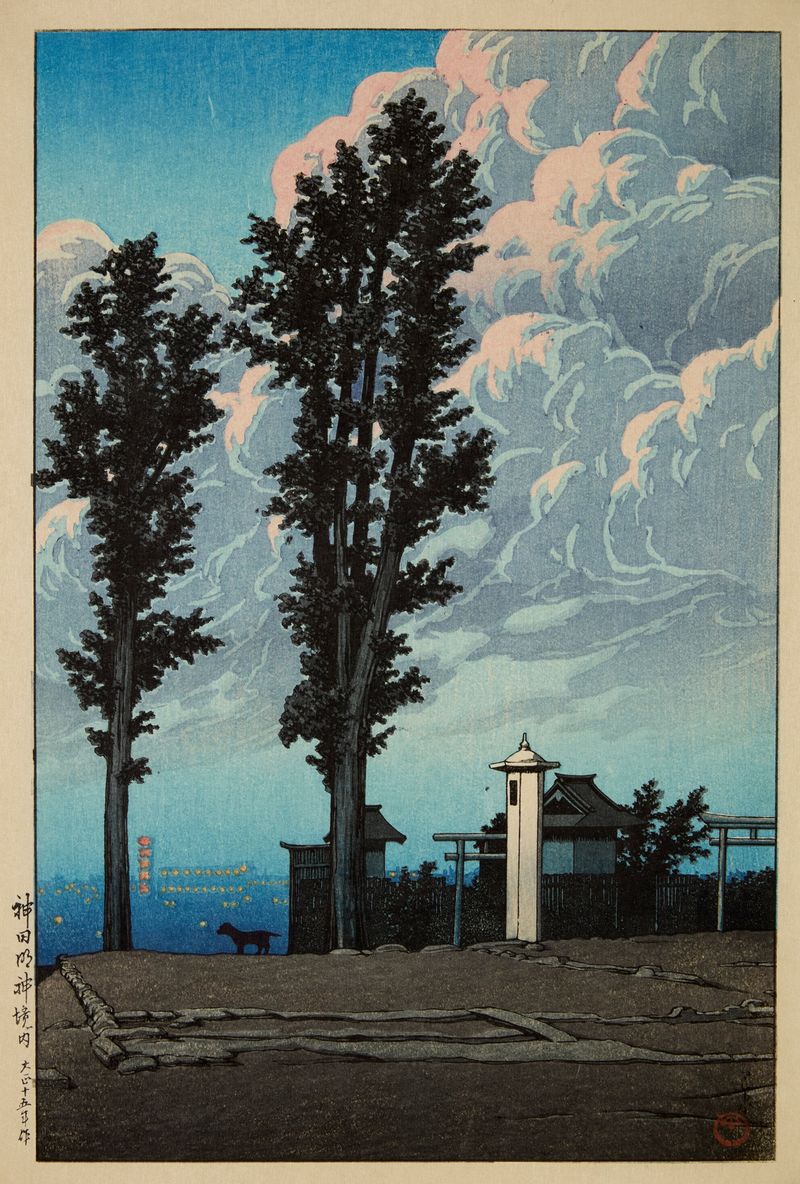
Kanda Myojin keidai (Kanda Myojin Shrine precent)
Kawase Hasui
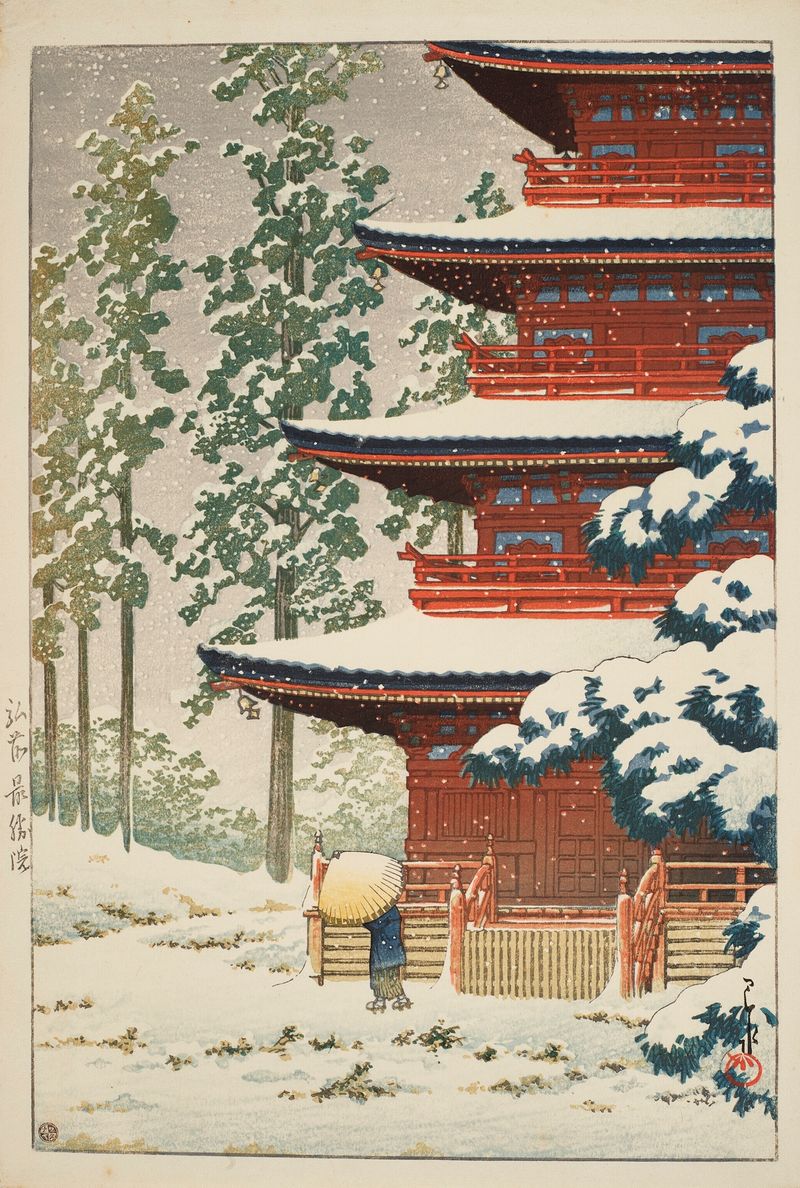
Saisho-in Temple, Hirosaki
Kawase Hasui
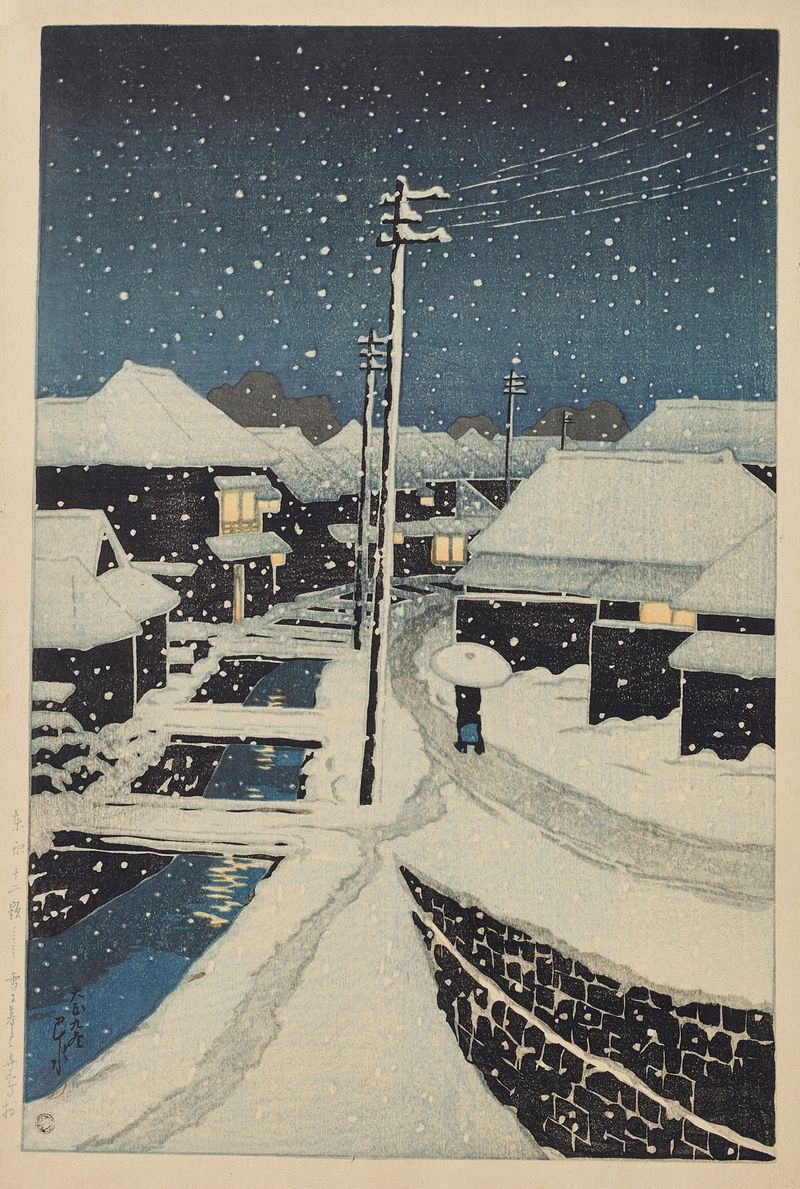
Yuki ni fururu Terajima mura (Evening snow at Terajima Village)
Kawase Hasui
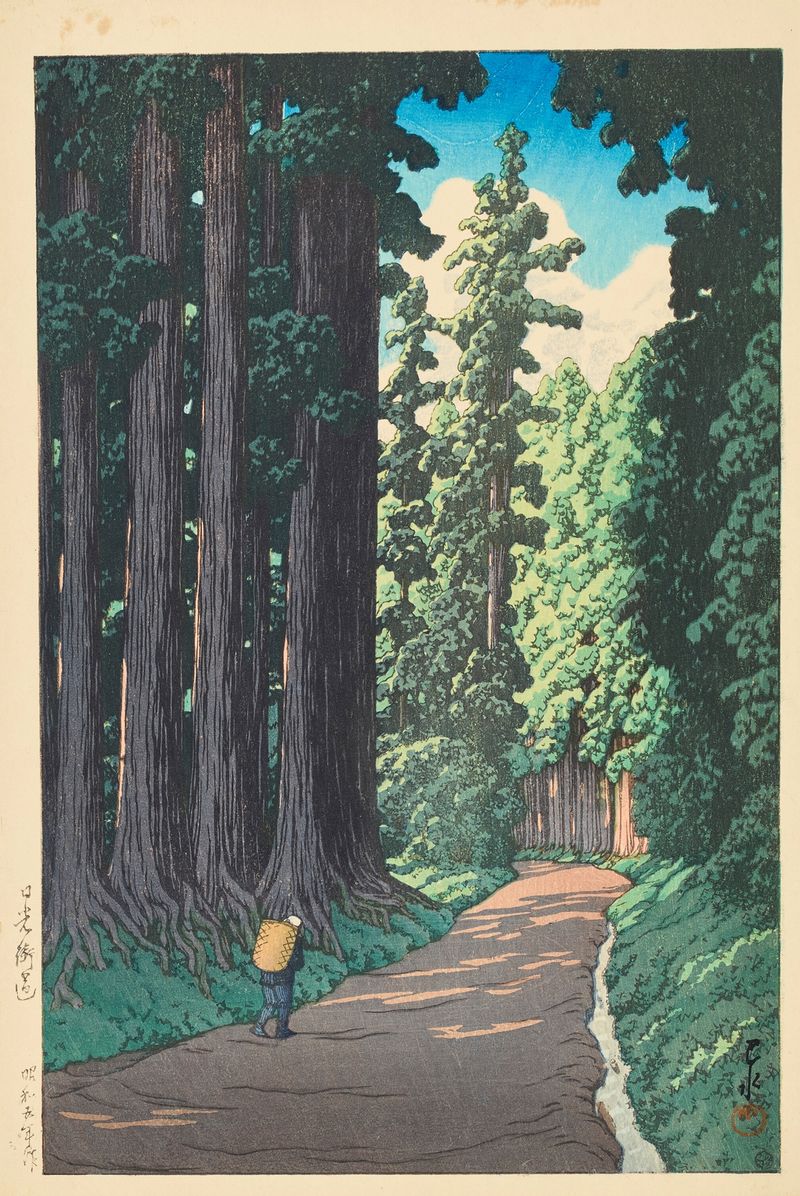
Nikko gaido (The Road to Nikko)
Kawase Hasui
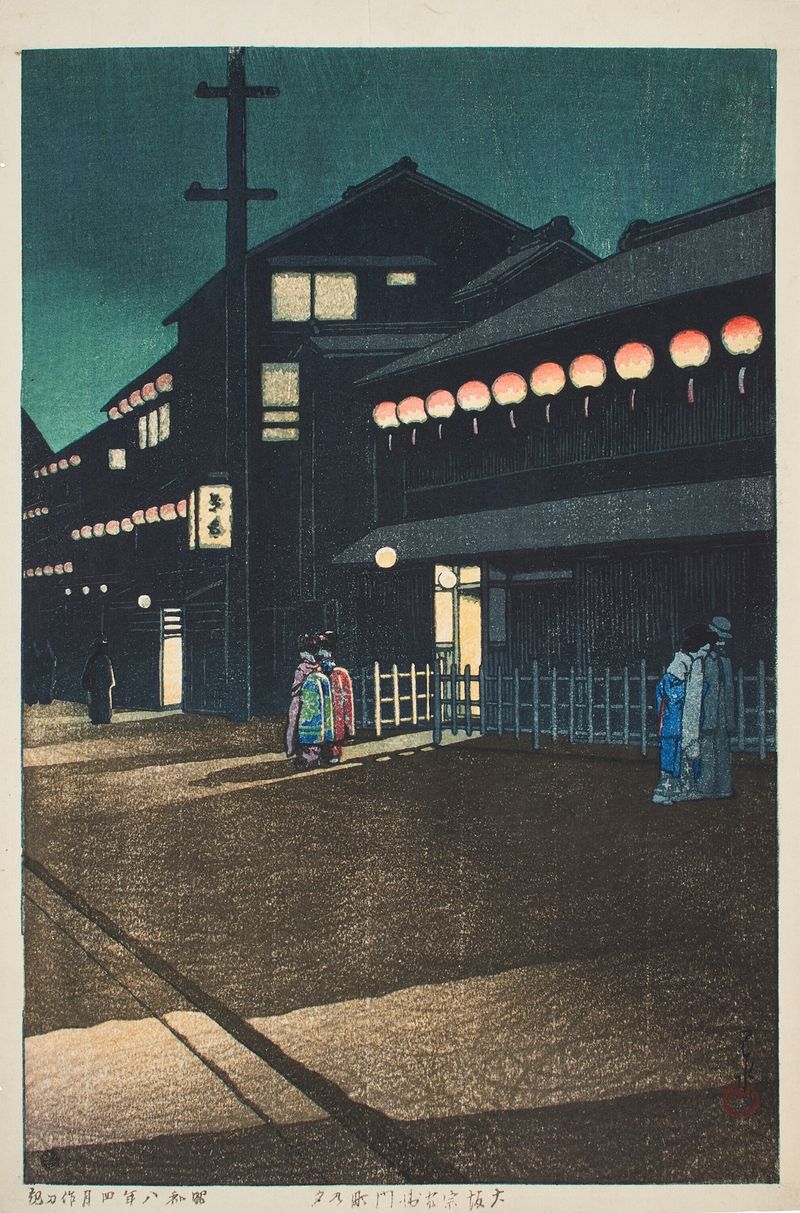
Osaka Soemon-cho no yu (Evening in Soemon-cho, Osaka)
Kawase Hasui
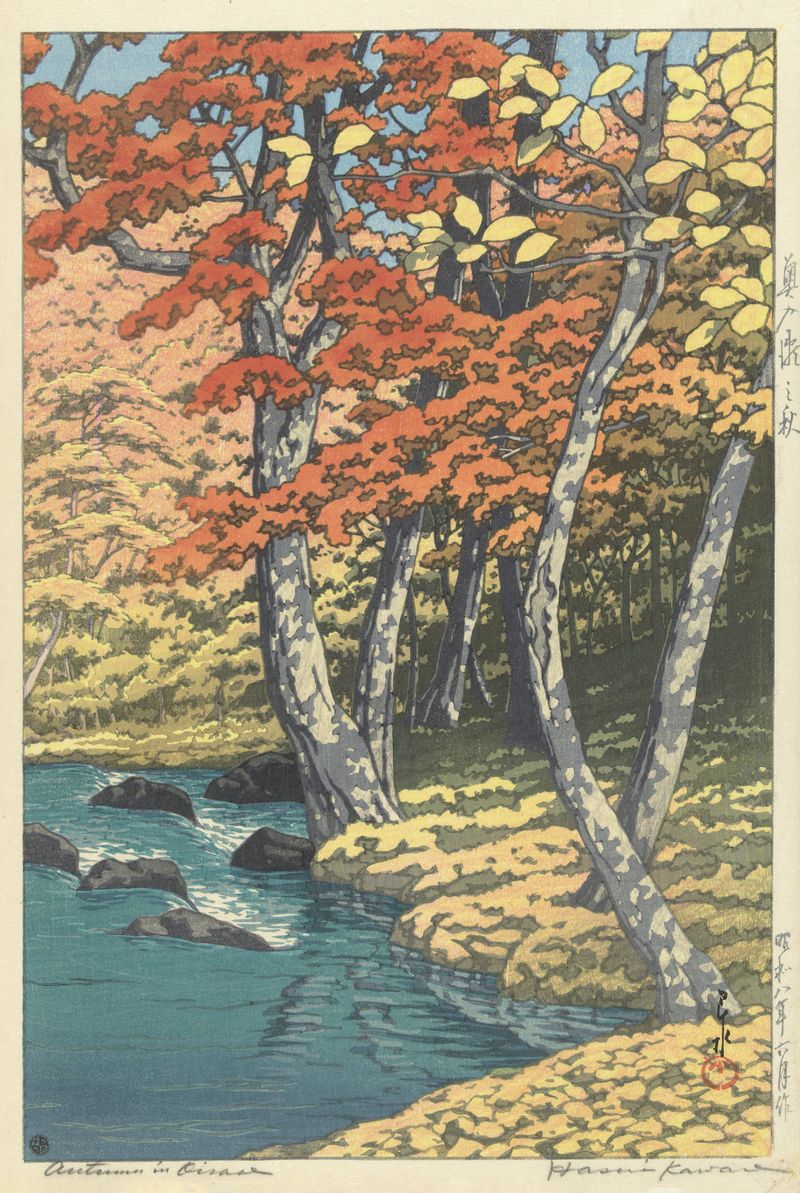
Autumn In Oirase
Kawase Hasui
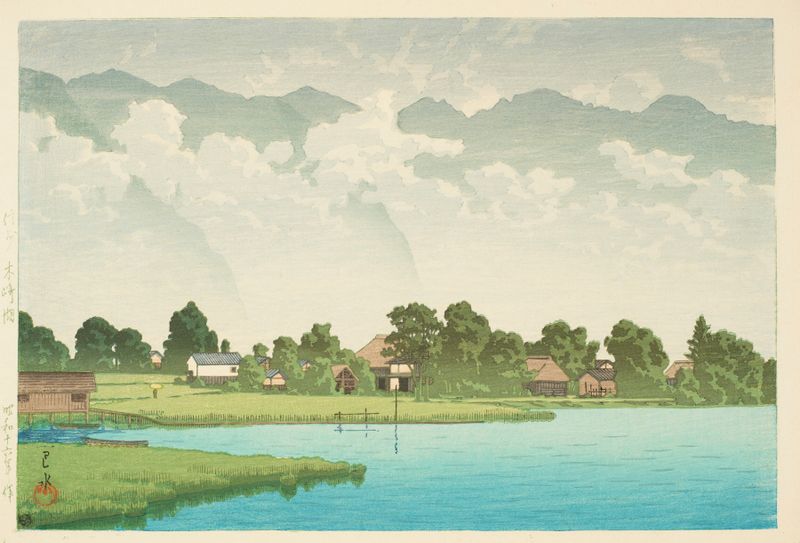
Shinshu Kizakiko (Kizaki Lake in Shinshu)
Kawase Hasui
More Architecture Art
Browse all →
The statue of Liberty
Frédéric Auguste Bartholdi

View of Houses in Delft, Known as ‘The Little Street’
Johannes Vermeer

View of Houses in Delft, Known as ‘The Little Street’
Johannes Vermeer

The Cathedral in Rouen. The portal, Grey Weather
Claude Monet

The yellow house
Vincent van Gogh

The Church in Auvers-sur-Oise, View from the Chevet
Vincent van Gogh