Hundeportrait — History & Facts
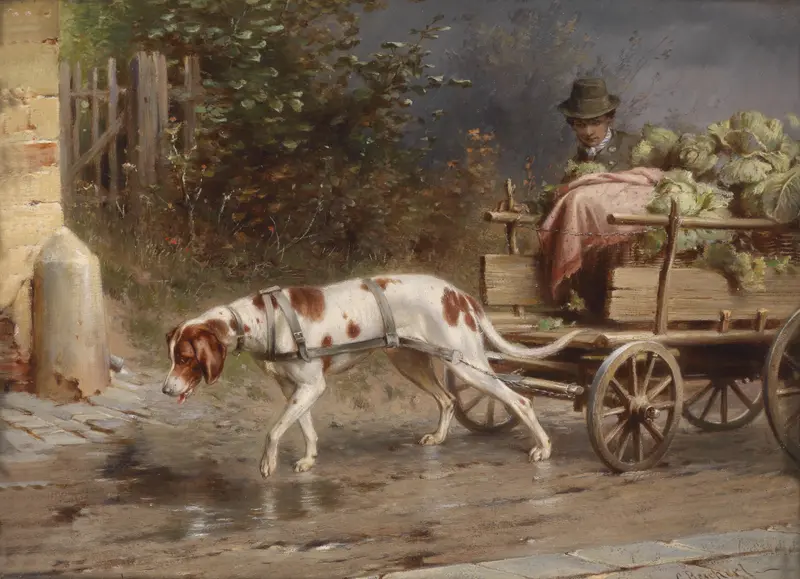
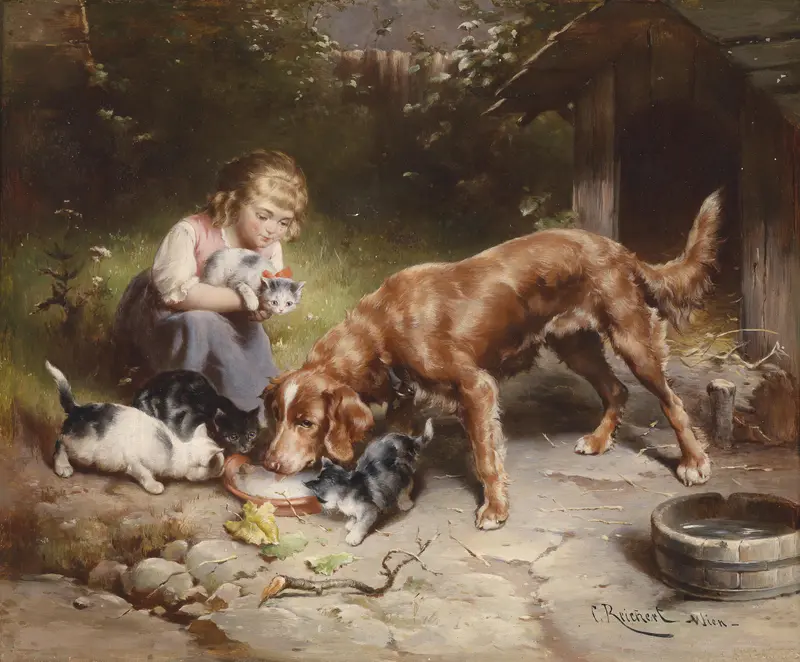
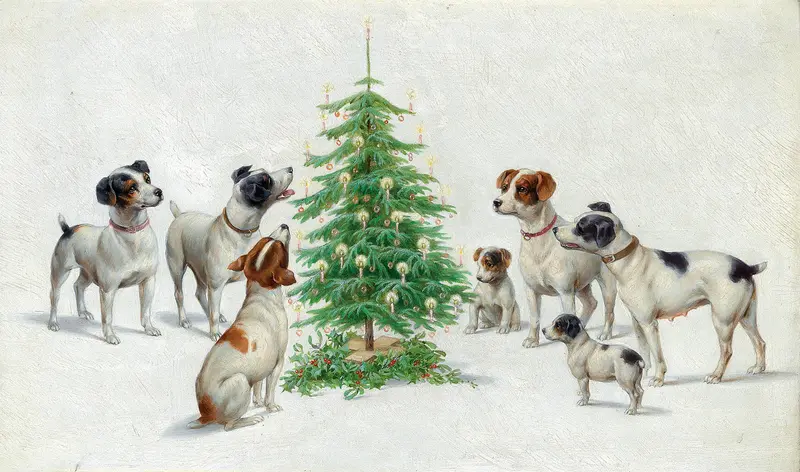
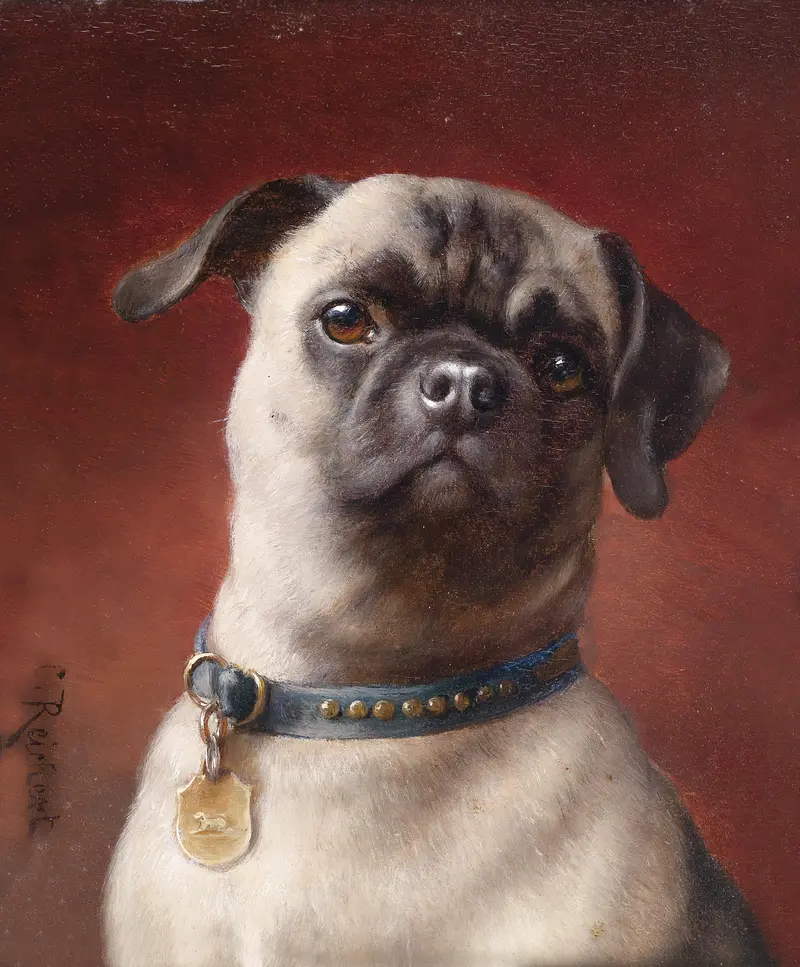
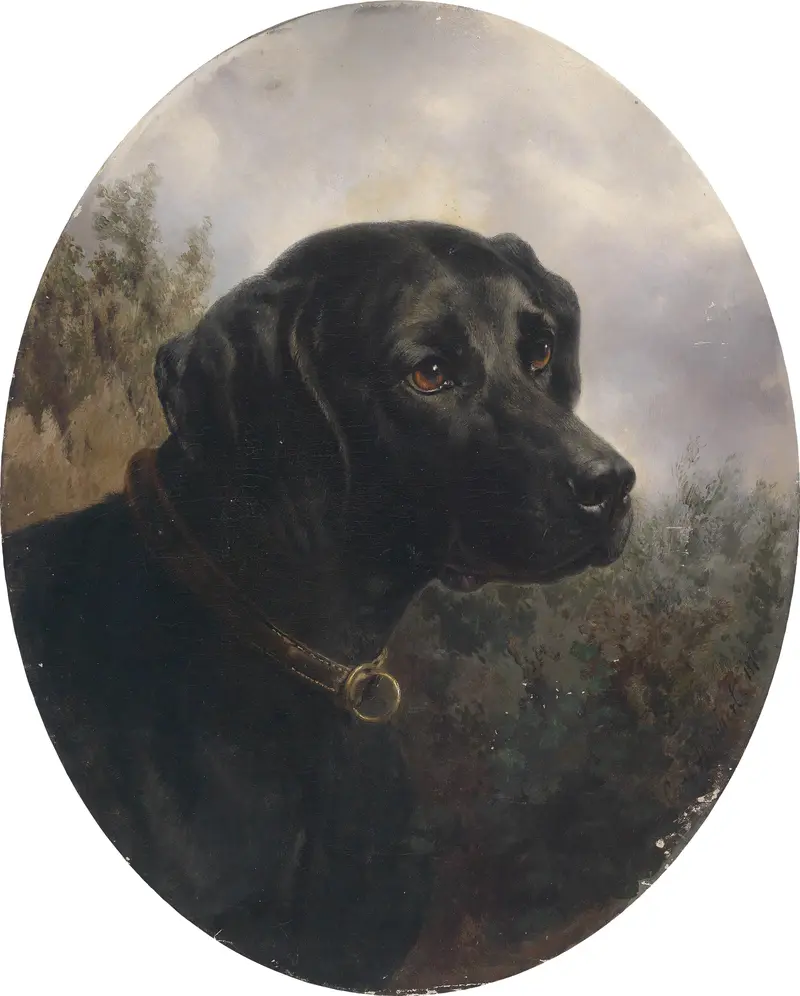
What holds the viewer here is the quiet dignity in the animal’s gaze, as if Hundeportrait by Carl Reichert has captured not just a likeness but a moment of silent understanding between painter and subject. The dog’s head is turned in profile, yet the eye glances subtly outward, its amber iris catching the light in a way that suggests both alertness and calm. The short, glossy fur is rendered with careful strokes, each marking the gentle curve of muscle beneath the skin, while the soft blue background lifts the head into a space of almost meditative stillness.
The collar, simple and unadorned, grounds the animal in the everyday world, but the artist’s attention to the play of light across the muzzle and brow gives this portrait a sense of quiet importance. Painted by 1918, this work stands at the end of a long tradition of animal portraiture that flourished in 19th-century Europe, where dogs were celebrated companions, hunting partners, and sometimes even social status symbols. Artists like Carl Reichert became known for their ability to capture the individuality and soul of their subjects, often working for private patrons who wished to immortalize a beloved pet. The Dorotheum collection, where this portrait now resides, preserves such works as tokens of a world where the bond between human and animal was both personal and proudly displayed.
Little is recorded about this specific painting’s journey, but its presence invites us to linger on the details—the sheen of the fur, the gentle droop of the ear, the intelligence in the eye—and to imagine the quiet moment of connection that inspired it.