Hundeporträt rund — History & Facts
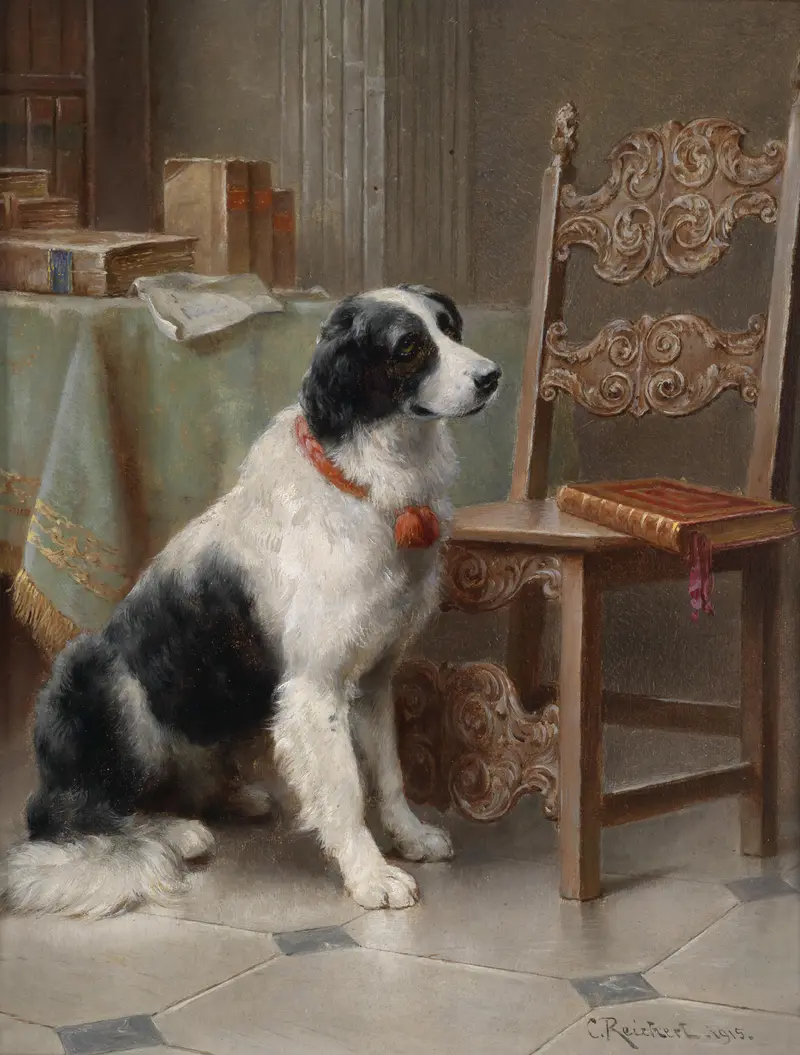
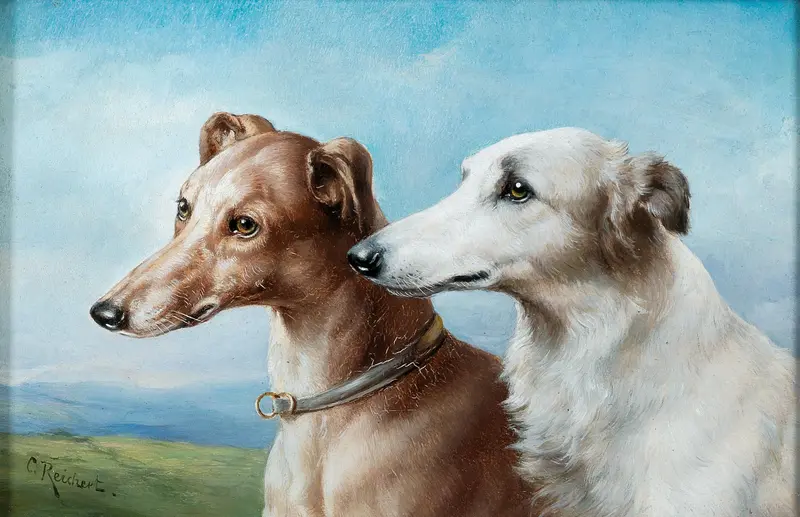
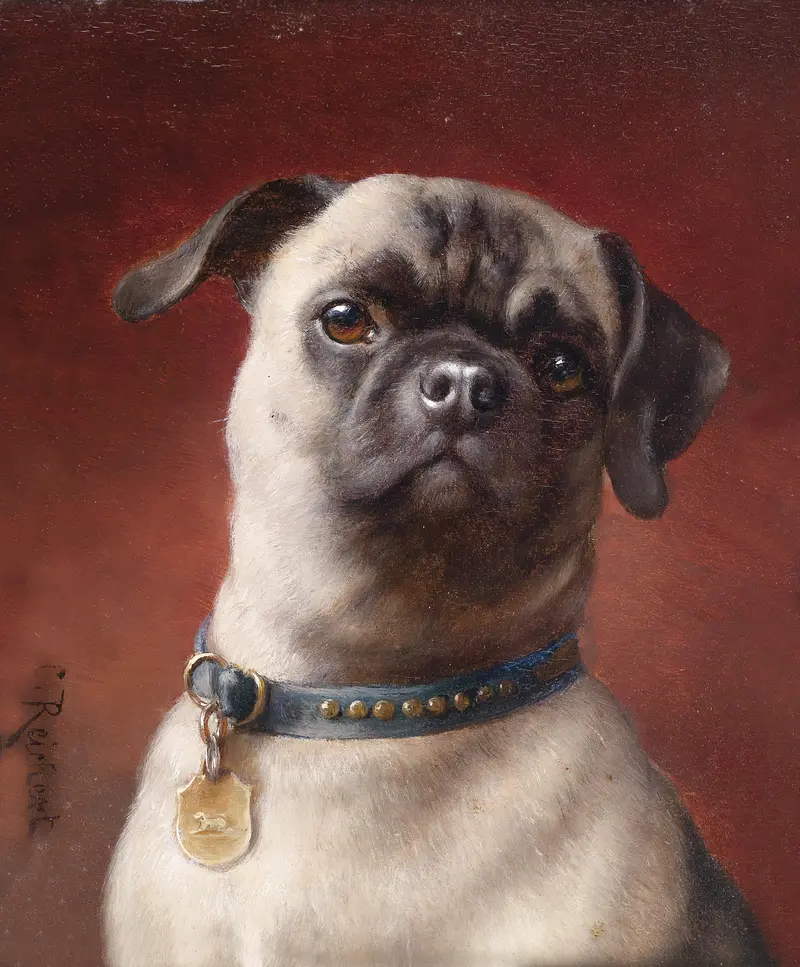
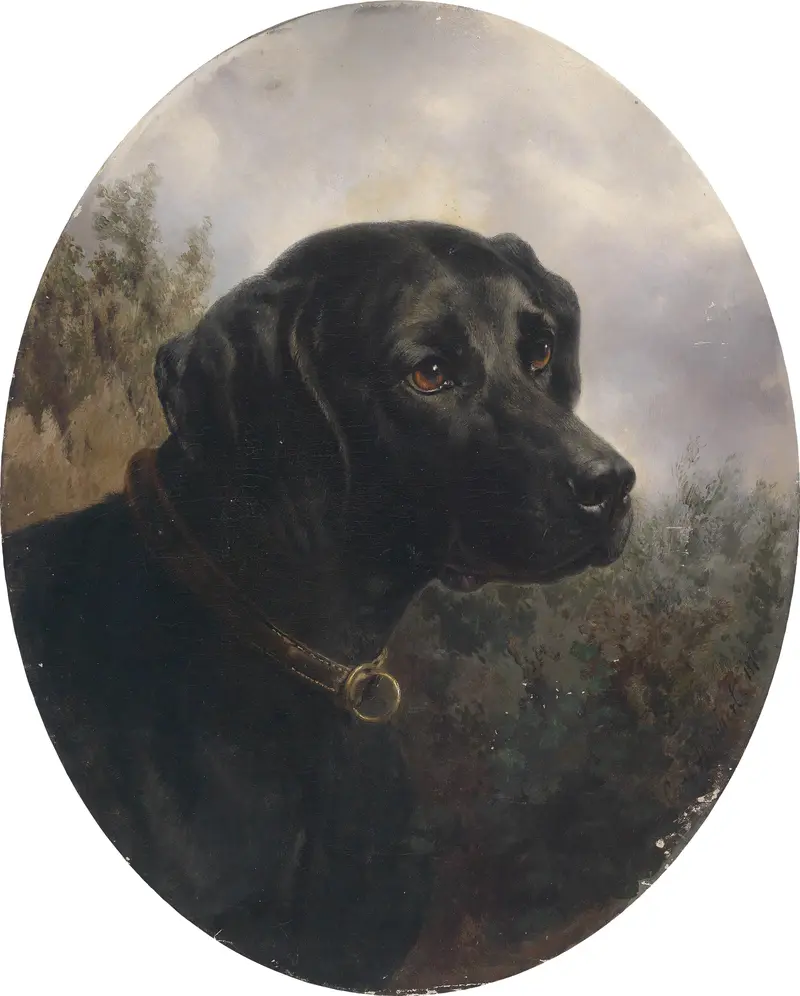
There is a quiet dignity in the way this dog holds its head, the lean muzzle and attentive gaze set against a swirl of soft, clouded sky. The artist, Carl Reichert, has chosen a profile view that allows every muscle and marking to speak: the sleek fur, the gentle tension of the neck, the glint of the eye that suggests both alertness and trust. The circular format frames the animal almost like a medallion, giving it the air of a cherished emblem.
Light falls softly from above, picking out the warm tones in the fur and the polished leather of the collar, which bears the faint inscription of a name—hinting at a story of companionship just beyond the canvas. Painted by 1918, this portrait belongs to a tradition that flourished in the late nineteenth and early twentieth centuries, when animal portraiture became a mark of affection and status among European patrons. Artists like Reichert were sought after for their ability to capture not just the likeness but the character of beloved pets, often commissioned by families who wished to immortalize their loyal companions. The work now resides in the Dorotheum collection, a reminder of an era when the bond between human and animal was celebrated with the same seriousness as any family member’s likeness.
The careful realism and gentle atmosphere invite you to look again, to wonder about the life behind those watchful eyes.