
Hunters in the Snow — History & Facts
What first draws the eye in Hunters in the Snow is not the hunters themselves, but the vast, cold silence that seems to envelop them. A pair of figures, sturdy and bundled against the elements, walk away from us along a winding snow-covered path, their dogs trotting faithfully at their heels. The landscape is hushed, the palette dominated by muted greens and whites, with only the faintest hints of warmth in the brown coats and the dogs’ fur.
The sky, unusually deep and greenish, presses down with a heavy stillness, while the bare trees to the right stand like silent witnesses. The long shadows cast by the figures and animals anchor them to the earth, and the distant, blurred shapes of houses and more travelers remind us of the world’s quiet persistence, even in winter’s grip. Works like this, painted by artists such as Adrien-Joseph Heymans—a figure associated with the Belgian school and the landscape-focused School of Tervuren—emerged in a time when the depiction of rural life was both a celebration and a documentation of a rapidly changing world. In the nineteenth century, as industrialization crept across Europe, painters turned to scenes of the countryside, often capturing the daily rhythms of work and survival.
Little is recorded about the specific journey of this painting, now found in Brussels and photographed in 2009, but its very obscurity speaks to the countless quiet stories that filled the rural winters of its era. Look again at the way the path curves out of sight: it invites you to follow, to wonder what lies beyond the trees, and to imagine the world as these hunters knew it.
More Artworks by Adrien-Joseph Heymans
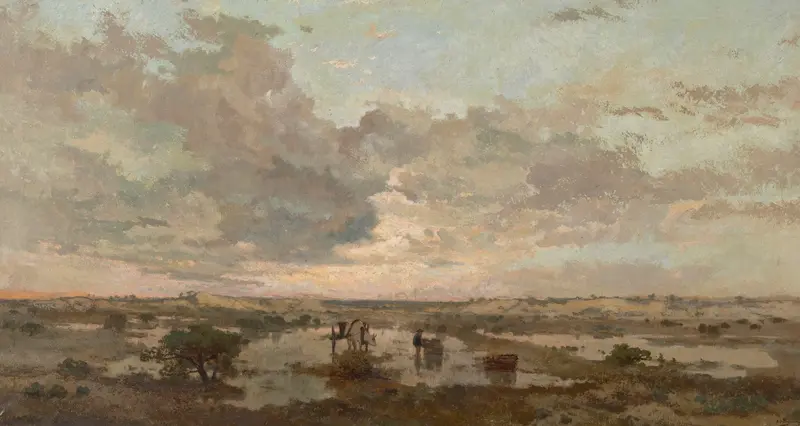
Sunset on the Heath
Adrien-Joseph Heymans
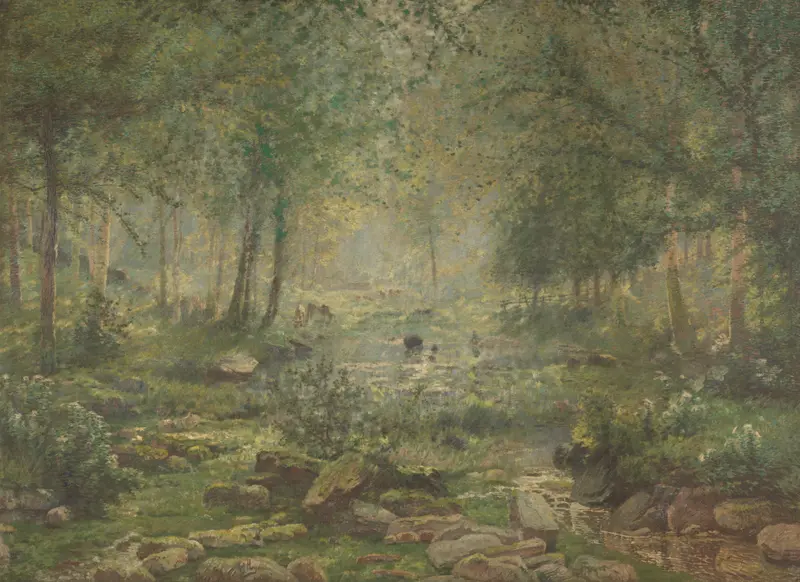
Woodland near Bertogne
Adrien-Joseph Heymans
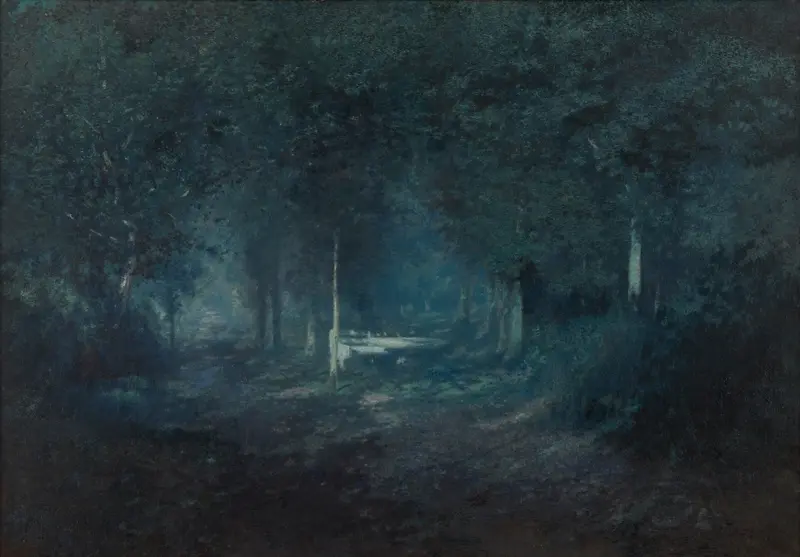
Wood by Moonlight
Adrien-Joseph Heymans
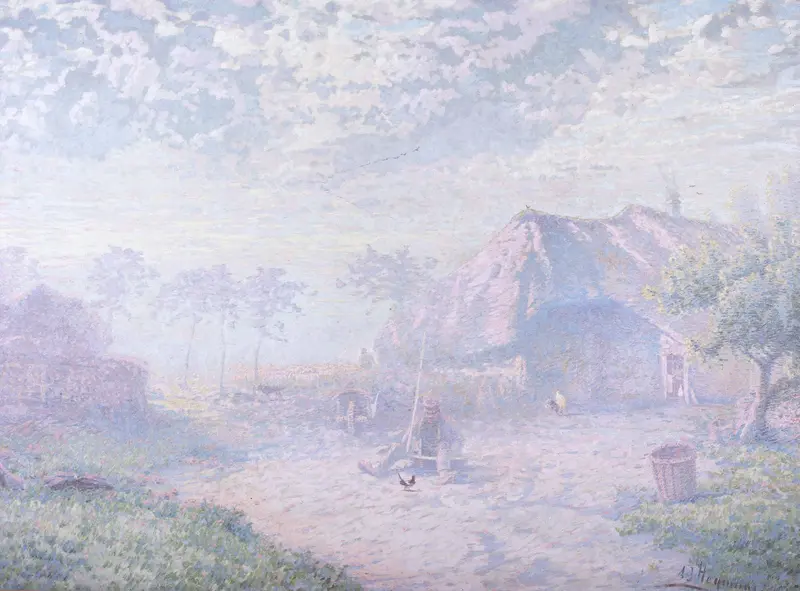
Early Morning
Adrien-Joseph Heymans
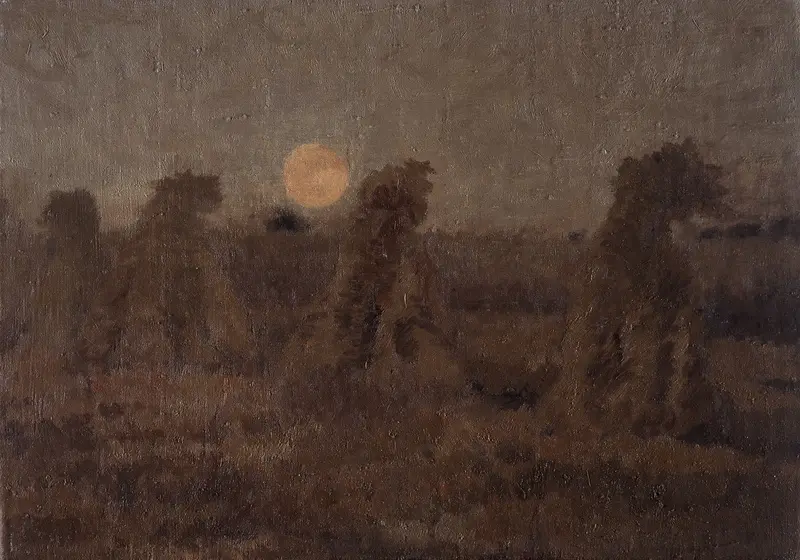
Haystacks by Night
Adrien-Joseph Heymans
Morgens vroeg
Adrien-Joseph Heymans
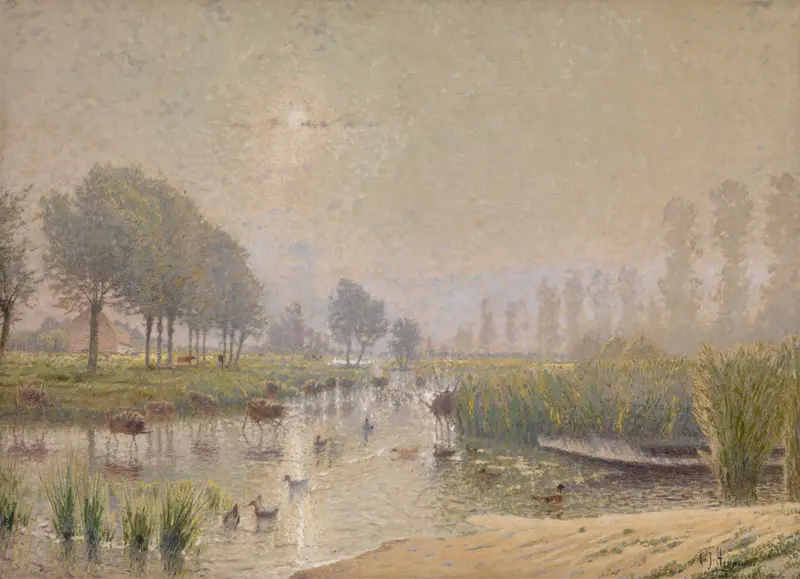
Duck Nests in the Reed
Adrien-Joseph Heymans
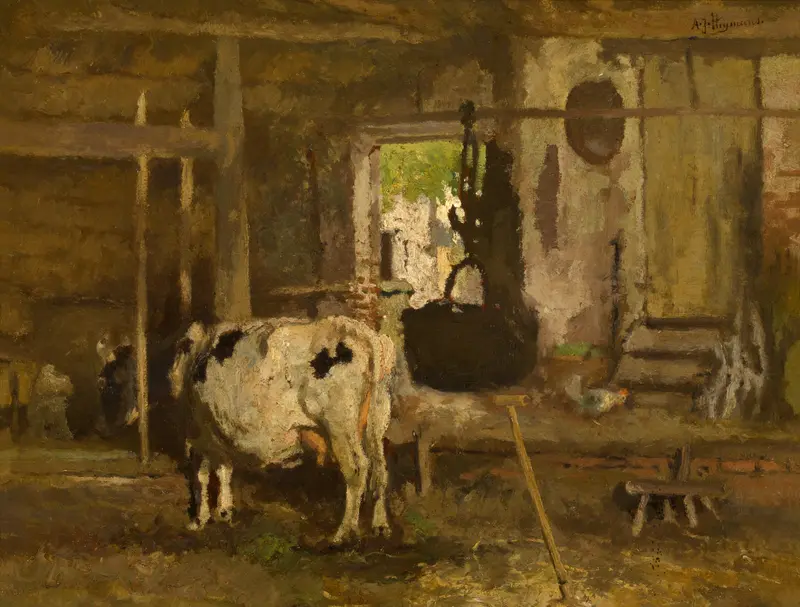
Stable Interior
Adrien-Joseph Heymans
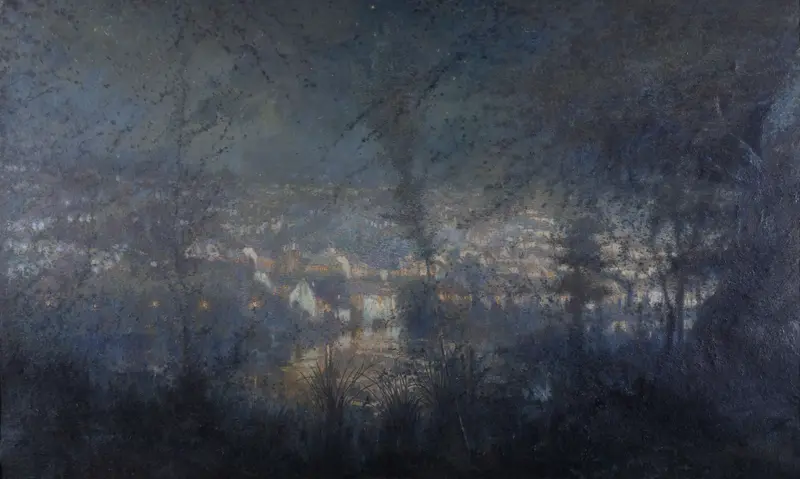
Houffalize by Night
Adrien-Joseph Heymans
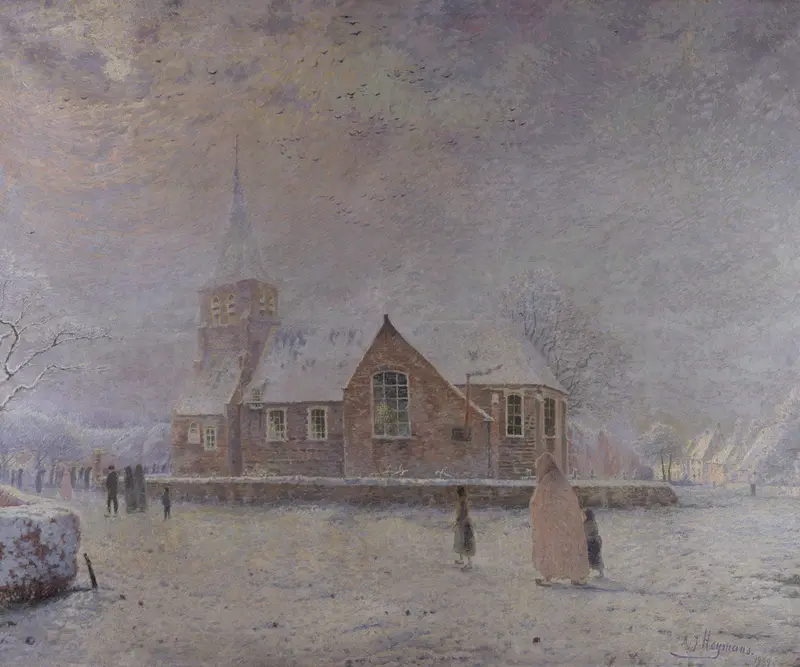
Snow-covered Hamlet
Adrien-Joseph Heymans
More Landscape Art

The Starry Night
Vincent van Gogh

View of Delft
Johannes Vermeer

Water Lilies
Claude Monet

The Grand Canal, Venice, looking north-west from the Ca' Corner to the Ca' Contarini degli Scrigni, with the campanile of Santa Maria della Carità
Canaletto

Windsor Castle
Canaletto

The Grand Canal looking North-East from the Palazzo Dolfin-Manin to the Rialto Bridge
Canaletto