Hutt Valley landscape — History & Facts
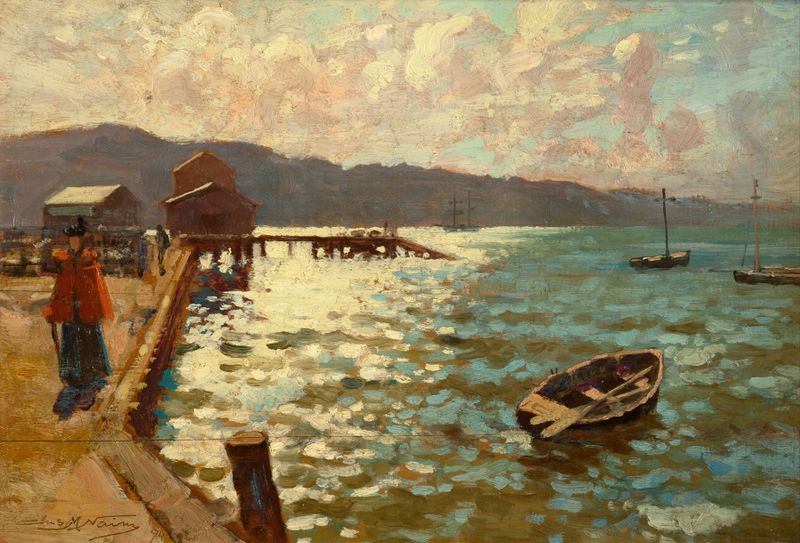
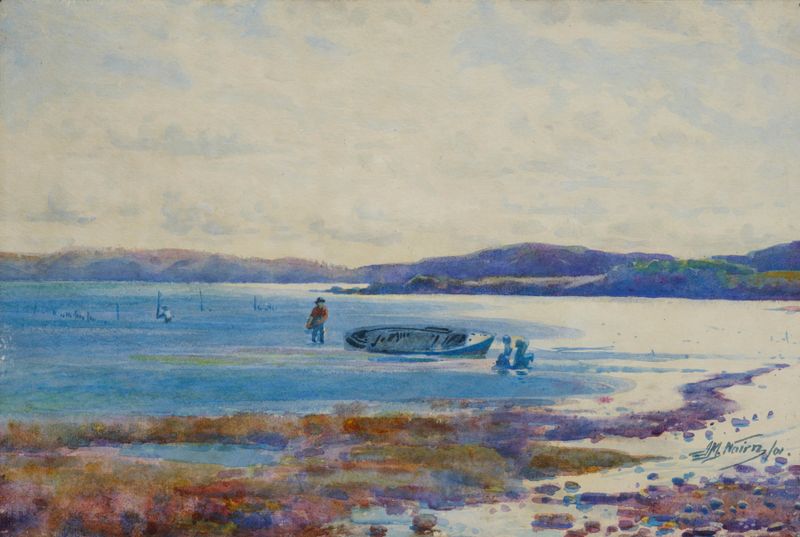
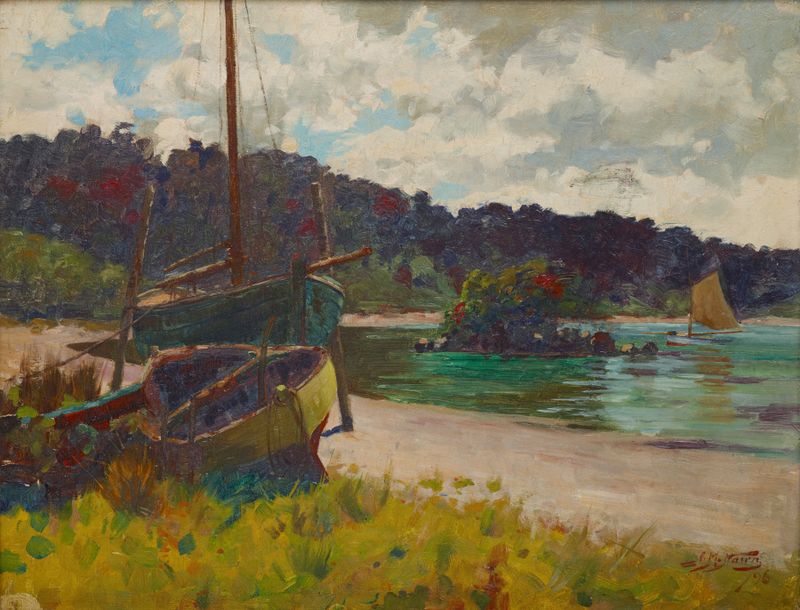
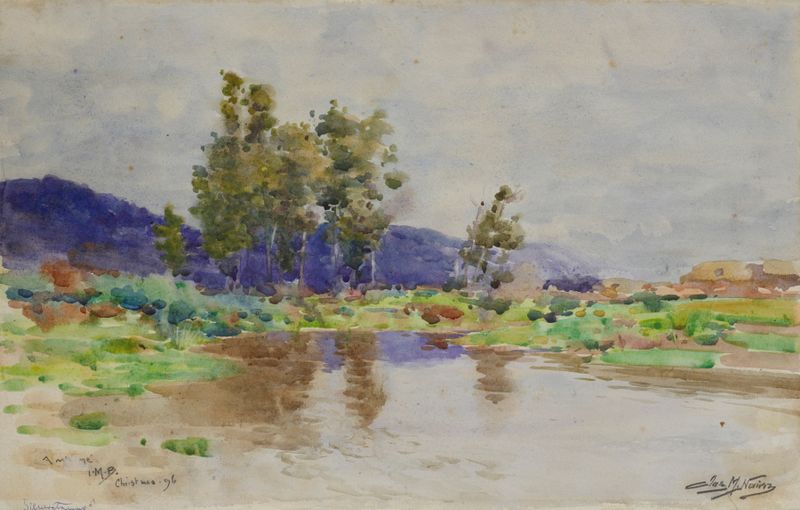
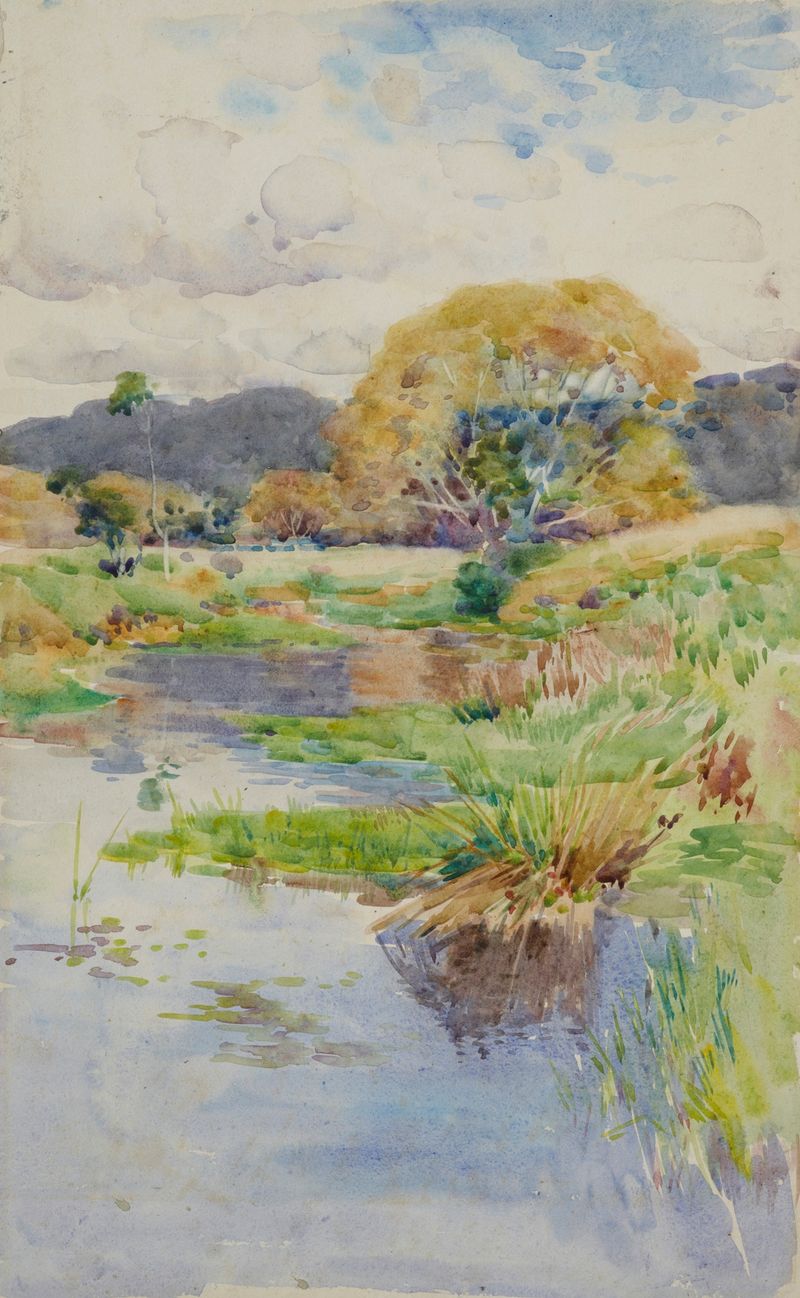
Could beauty survive in a century of chaos? This question lingers in the air of James Nairn's Hutt Valley landscape, a mesmerizing testament to nature's resilience amid the tumult of human existence. Through his brush, the landscape becomes a sanctuary, inviting viewers to lose themselves in its serene embrace. Look to the foreground, where gentle rolling hills unfurl beneath a vast expanse of sky, painted in hues of soft blue and silvery white. The layers of green weave together like a tapestry, each stroke revealing the texture of the land, while dappled light dances across the canvas.
Notice how the artist's deft use of color creates a sense of harmony, grounding the viewer in an idyllic scene that feels both familiar and transcendent. Beneath the surface, the interplay of light and shadow speaks of contrasting emotions — the delicate balance between peace and the inevitable encroachment of modernity. The soft curves of the hills serve as a reminder of nature's grace, while the looming clouds hint at the storms of change that threaten this tranquility. Each element captures a fleeting moment, inviting introspection on the fragility of beauty amidst societal upheavals. Nairn painted this work during a period when New Zealand, particularly in the early 20th century, was grappling with its identity in a rapidly industrializing world.
Emerging as a key figure in the landscape movement, he sought to depict the intrinsic beauty of the land, often reflecting on the natural splendor that seemed untouched by the chaos of modern life. In Hutt Valley landscape, he provides a visual refuge, echoing his longing for a simpler, more harmonious connection to nature.