Half Moon Bay, Stewart Island — History & Facts
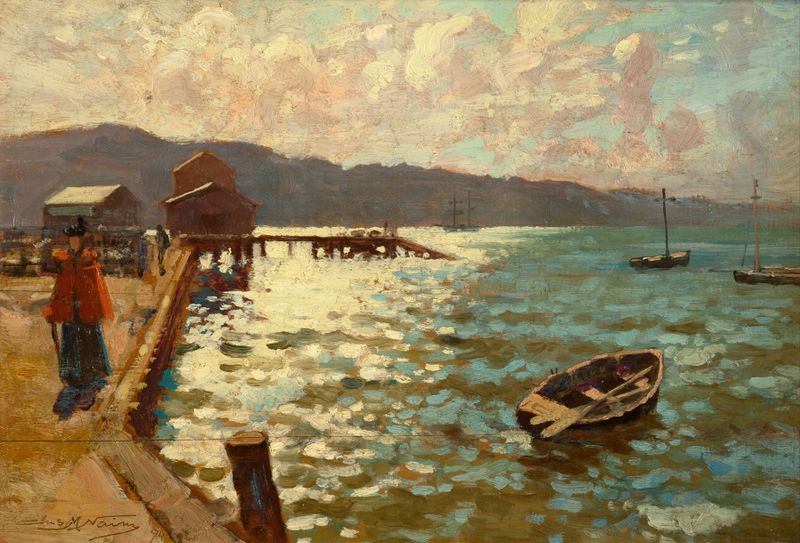
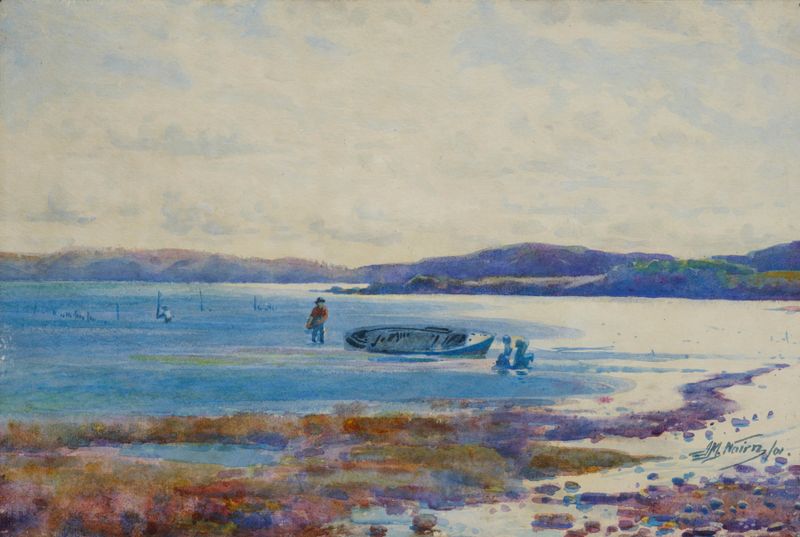
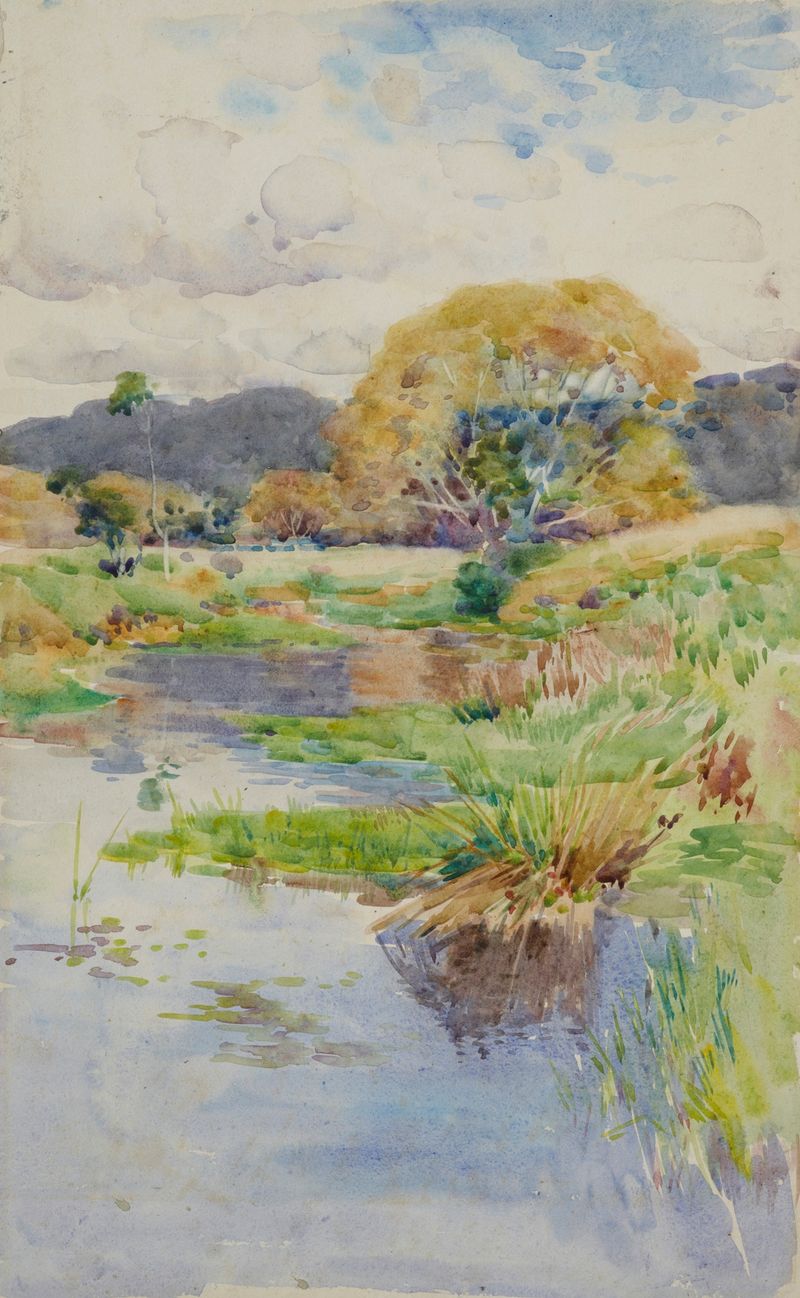
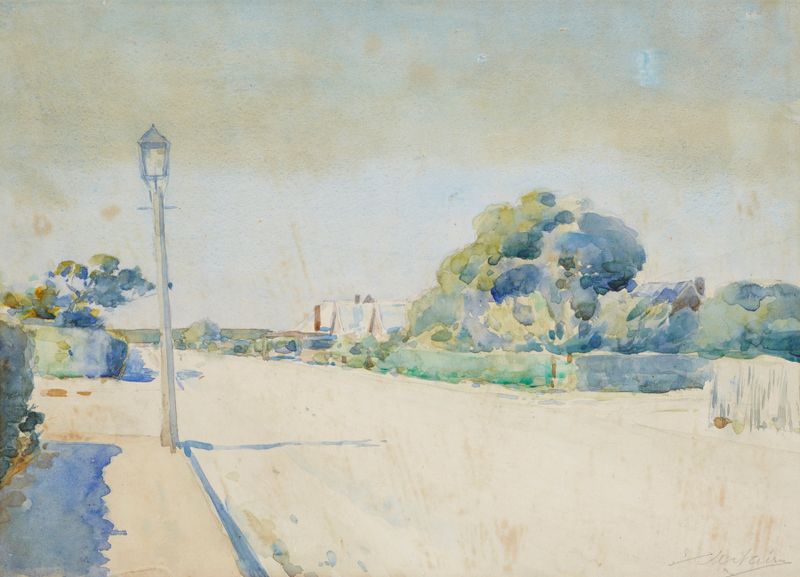
The interplay of light and shadow in art can evoke deep emotions, stirring within us a sense of hope amidst despair. Half Moon Bay, Stewart Island reflects this poignant truth, inviting the viewer to explore the delicate balance between serenity and the undercurrents of longing in nature. Look to the horizon where the sun dips below the water's edge, casting a warm, golden hue across the tranquil bay. The composition draws your eye to the shimmering reflection in the water, masterfully capturing the essence of a fleeting moment.
Nairn’s brushwork evokes the gentle undulations of the waves, while the soft blues and greens of the landscape create a soothing backdrop that contrasts with the vibrant sunset—an emotional crescendo that whispers of both beauty and melancholy. This painting embodies the tension between light and dark, suggesting a story behind the idyllic scenery. The encroaching shadows may symbolize the inevitable passage of time, a reminder that even in beauty, there can be a hint of loss or yearning. The gentle curve of the shoreline, with its inviting embrace, implies a promise of hope, urging the viewer to consider the possibilities that lie beyond the immediate moment. In 1896, James Nairn painted Half Moon Bay, Stewart Island during a period of personal and artistic exploration.
Living in Australia, he was immersed in the Impressionist movement, drawing inspiration from the vibrant landscapes around him. This work reflects not only his artistic development but also a growing interest in capturing the nuances of light and atmosphere—an exploration of beauty that resonates with the complexities of human experience.