Winter morning, Wellington Harbour — History & Facts
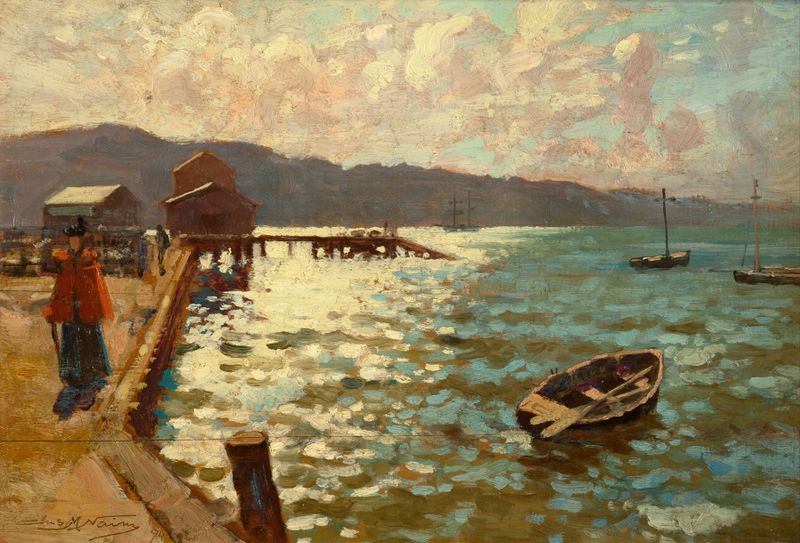
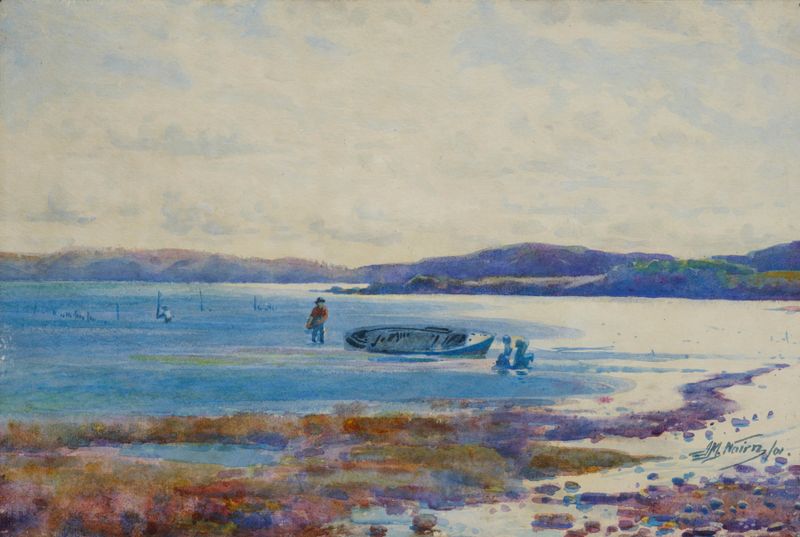
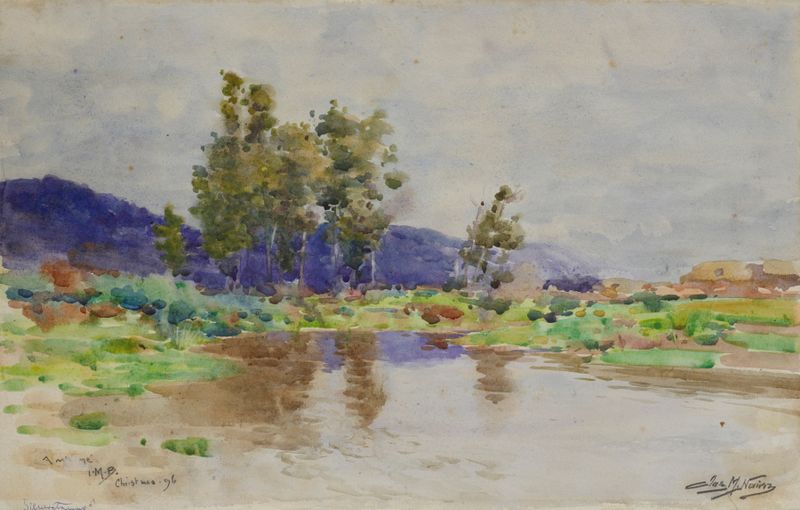
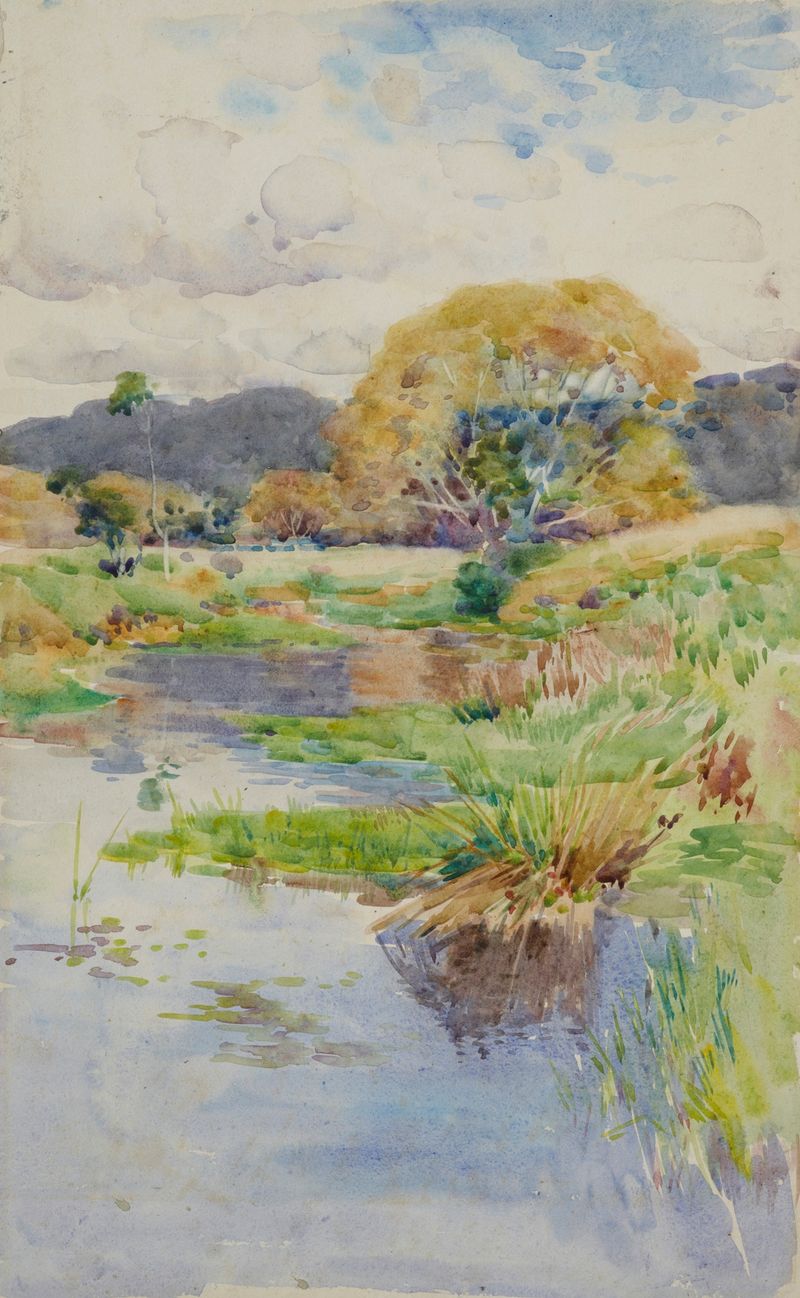
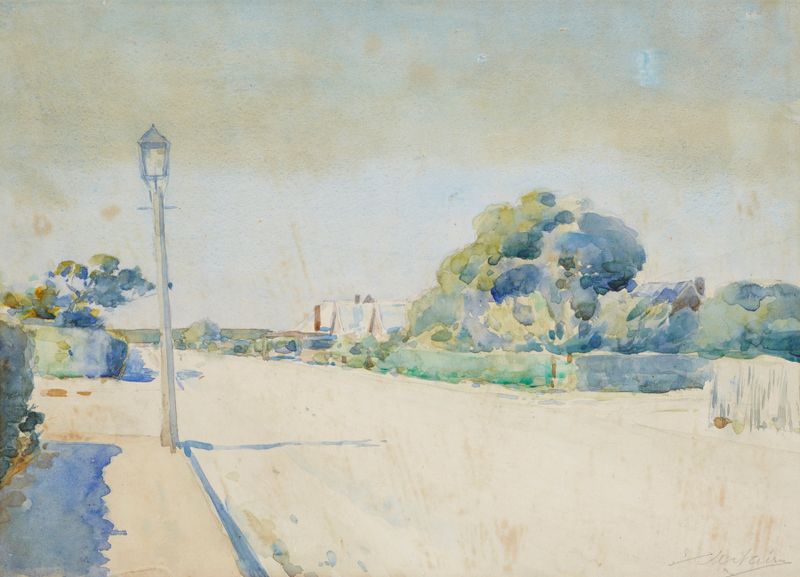
Who listens when art speaks of silence? In a world brimming with noise, the stillness of a winter morning can echo with profound clarity, whispering forgotten memories and gentle insights. Look to the lower left, where soft hues of muted blues and grays meld seamlessly into one another, creating a tranquil foreground that invites your eye. Notice how the distant skyline of Wellington Harbour emerges softly from the mist, shrouded in a veil of fog, while the pale light of dawn delicately kisses the water's surface. The composition masterfully balances color and form, wrapping the viewer in a serene embrace that captures the essence of a quiet morning. The emotional contrasts here are striking — the evident chill of winter juxtaposed with the warmth of nostalgia that permeates the scene.
Each brushstroke seems to hold a memory of quiet moments, perhaps a solitary figure lost in thought or the gentle lapping of waves against the shore, evoking a sense of longing and reflection. The artist's choice of palette enhances this atmosphere, with cool colors speaking to isolation yet hinting at the promise of a new day. In 1900, the artist found himself encapsulated in a world of changing artistic ideals and evolving landscapes. Living in New Zealand, he was influenced by both European Impressionism and the local environment, seeking to capture the unique light and atmosphere of his surroundings.
This piece reflects a pivotal moment in his exploration of landscape painting, bridging the traditional and the modern with a poignant stillness that speaks to the human experience.