Hyères — History & Facts
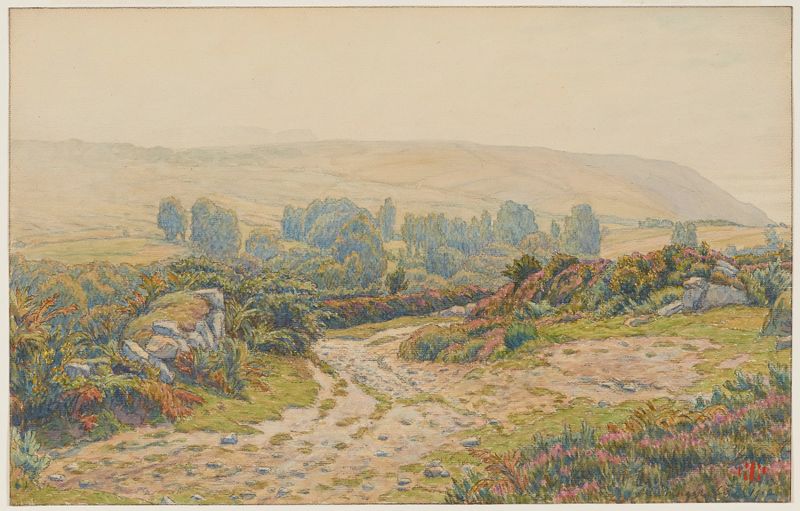
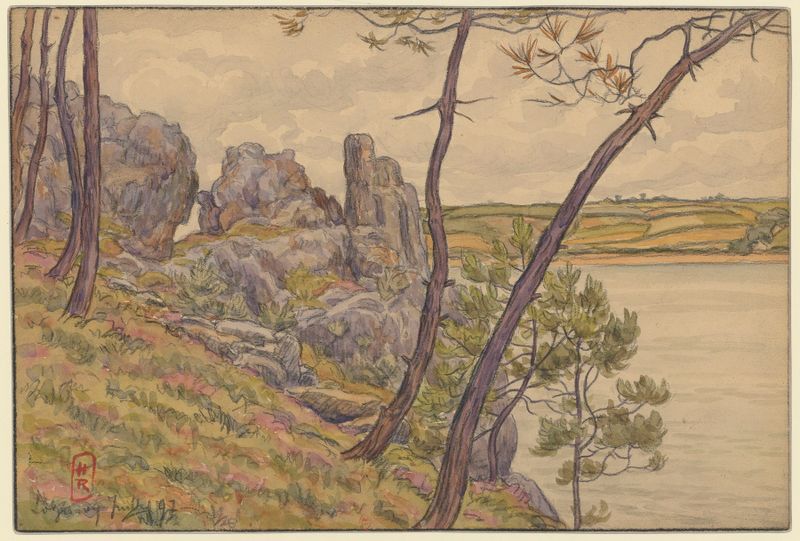
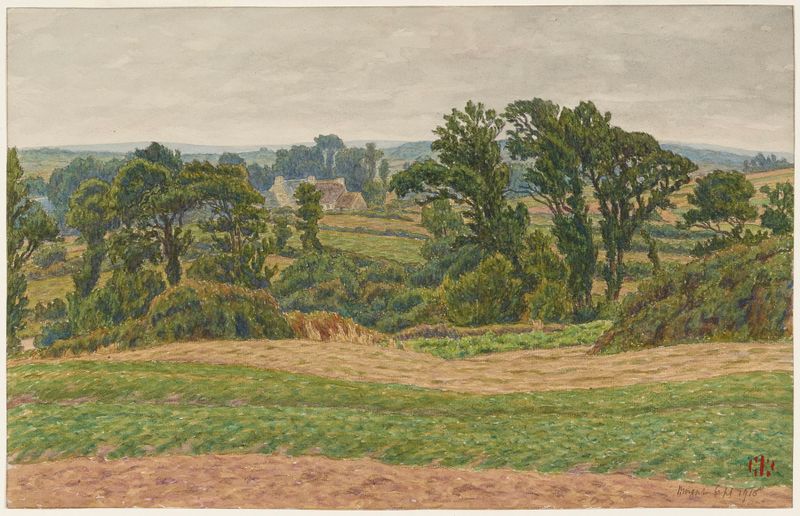
In the embrace of silence, it becomes a mirror reflecting the void, a profound space where absence speaks louder than presence. Look to the left at the soft, undulating hills that cradle the horizon, their gentle curves suggesting a quietude that invites contemplation. Notice how the muted palette of blues and earth tones coalesces into a seamless expanse, evoking a serene melancholy. The composition draws your eye inward, inviting you to explore the delicate interplay of light and shadow, where every stroke seems to breathe life into the stillness of the landscape. Beneath the tranquil surface lies an emotional tension, where the emptiness hints at both loss and potential.
The subtle contrast between the vibrant hues near the foreground and the muted tones of the background creates a sense of depth, as if beckoning the viewer to confront the void that resides within. Here, the space is not merely empty; it is charged with a yearning that resonates with universal human experiences of longing and introspection. In 1930, the artist painted this work during a time of personal reflection and transformation. Having moved to a more contemplative phase in his career, he sought to distill his experiences into a visual language that transcended the chaos of the world around him.
This was an era marked by significant change in the art world, with movements like Surrealism beginning to take shape, yet Rivière remained steadfast in his exploration of subtlety and emotional resonance, laying bare the power of simplicity.