
I. Volksgarten — History & Facts
Is this a mirror — or a memory? A vivid exploration of innocence unfolds in Oskar Laske's I. Volksgarten, where the viewer is invited to reflect on the passage of time and the fleeting nature of childhood. Look to the center of the canvas, where the light beckons, illuminating a tranquil park scene. The soft greens and gentle browns harmonize to create a serene space filled with lush foliage.
The figures, though abstract, suggest carefree children playing beneath the dappled sunlight filtering through the trees. Notice how the brushstrokes blend seamlessly, evoking movement and joy, while the subtle shifts in color evoke a world that is both familiar and dreamlike. Delve deeper into the composition, and you’ll find a poignant contrast between the vibrancy of youth and the somber shadows that lurk at the edges. The innocence depicted is tinged with a sense of nostalgia, a reminder that such moments are ephemeral.
The ethereal quality of the painting seems to hold a collective memory, suggesting that while we may bask in the warmth of childhood joy, the shadows of adulthood are always watching, waiting to reshape those memories. In 1950, Laske painted I. Volksgarten during a period marked by recovery and reflection in post-war Europe. Living in Austria, he drew from the remnants of a world striving for renewal, channeling both the innocence of childhood and the weight of past experiences into his work.
The period saw an emphasis on expressing emotional depth through abstraction, a theme that resonates powerfully in this captivating piece.
More Artworks by Oskar Laske
Browse all →
Faschingsumzug am Stock im Eisen Platz
Oskar Laske

Schönbrunn (Winter)
Oskar Laske
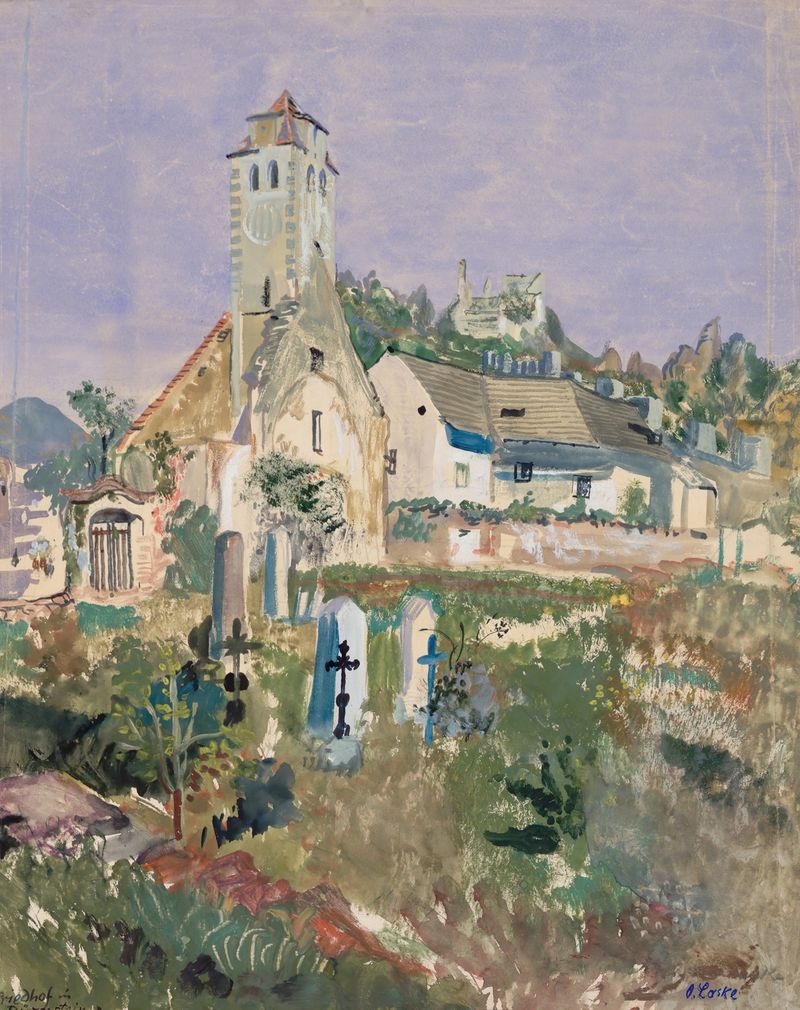
Friedhof in Dürnstein
Oskar Laske

Pratermotiv an der alten Donau
Oskar Laske

Frühjahrsnebel in Niederösterreich
Oskar Laske

Begräbnis des Wiener Bürgermeisters Dr. Karl Lueger
Oskar Laske

Maria Theresien-Denkmal mit Blick gegen das Burgtor
Oskar Laske
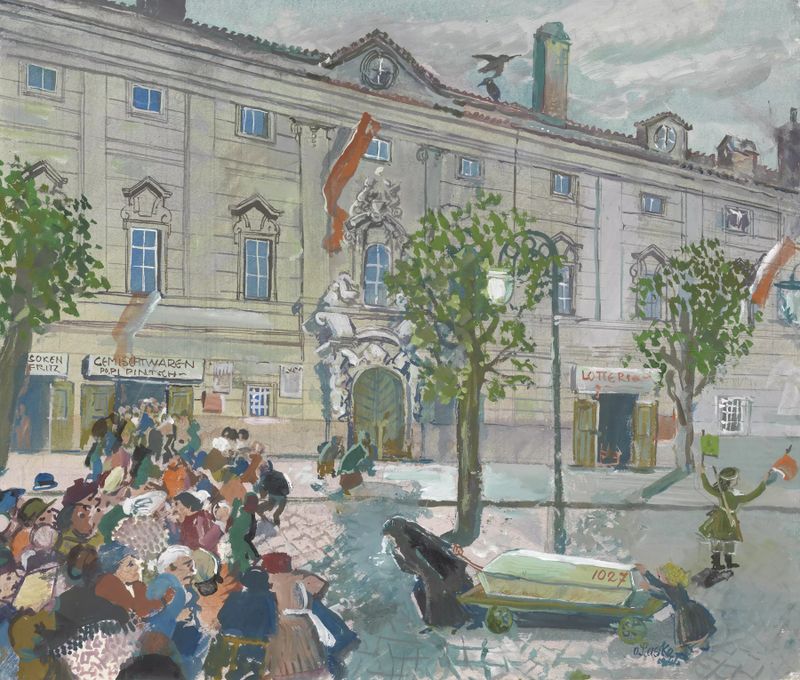
Wiener Straßenbild vom Mai 1945
Oskar Laske

Winterlandschaft in Pressbaum
Oskar Laske

Ansicht von Positano
Oskar Laske





