
Ikegami Honmonji (Honmon Temple, Ikegami) — History & Facts
In an era marked by revolution, artistry becomes a vessel for preserving the ephemeral beauty around us. Focus on the tranquil scene unfolding in the foreground, where the soft lines of the temple's architecture harmonize with the natural world. The delicate hues of dusk bathe the structure in a warm glow, inviting your gaze to trace the intricate details of the wooden eaves. Notice how the vibrant greens of the surrounding foliage frame the temple, creating a sense of sanctuary.
This interplay of light and shadow reveals a mastery of technique, as Kawase Hasui captures the fleeting moments of day transitioning into night. Hidden within this serene tableau is a tension between permanence and transience. The temple represents steadfastness amidst change, a stark contrast to the tumultuous times of the 1930s in Japan. As you observe the meticulously rendered scene, consider the subtle whispers of revolution that linger in the air — the world outside the canvas is in flux, yet this moment is a refuge from that chaos.
Each brushstroke signifies not just a place, but a poignant reminder of what endures. In 1931, Kawase Hasui painted this piece during a time of significant social and political upheaval in Japan. The nation was grappling with modernization and the consequences of the global economic crisis. As an influential figure in the Shin-hanga movement, Hasui sought to marry traditional ukiyo-e techniques with contemporary themes, capturing the essence of a nation at a crossroads while grounding it in the serenity of its historical spaces.
More Artworks by Kawase Hasui
Browse all →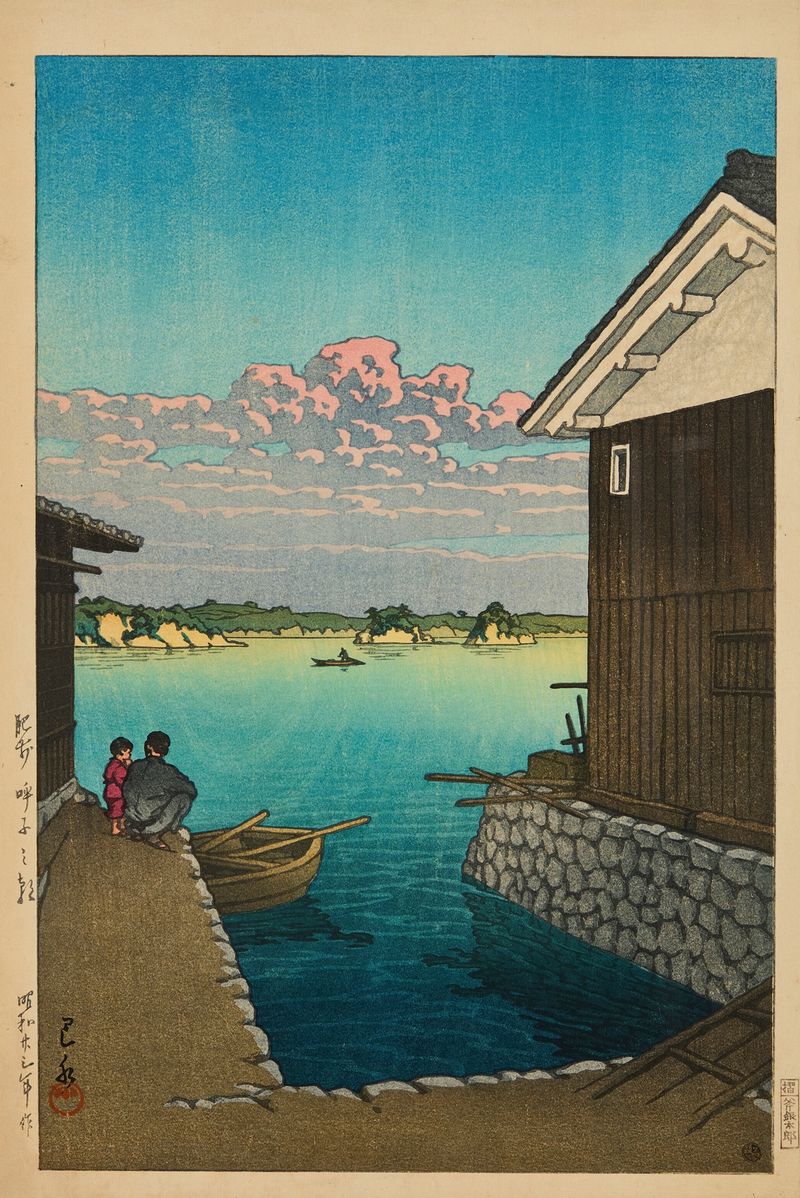
Hizen Yobuko no asa (Morning in Yobuko, Hizen)
Kawase Hasui
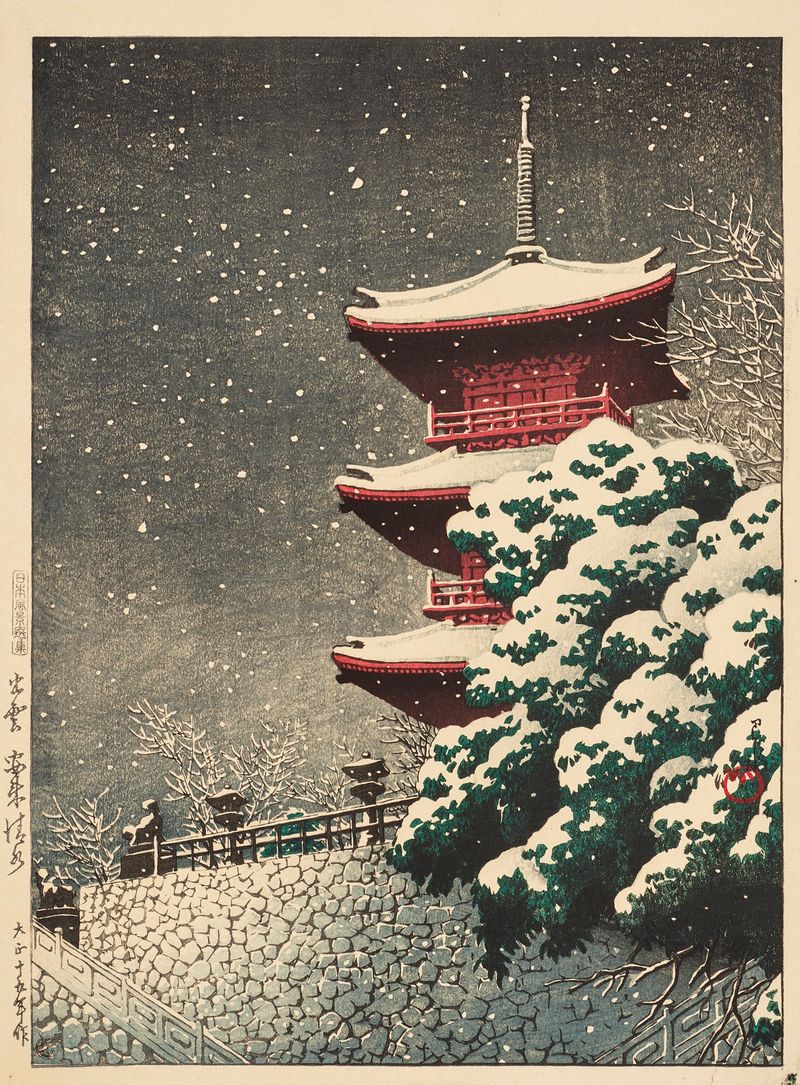
Izumo, Yasugi Kiyomizu (Yasugi Kiyomizu Temple at Izumo)
Kawase Hasui
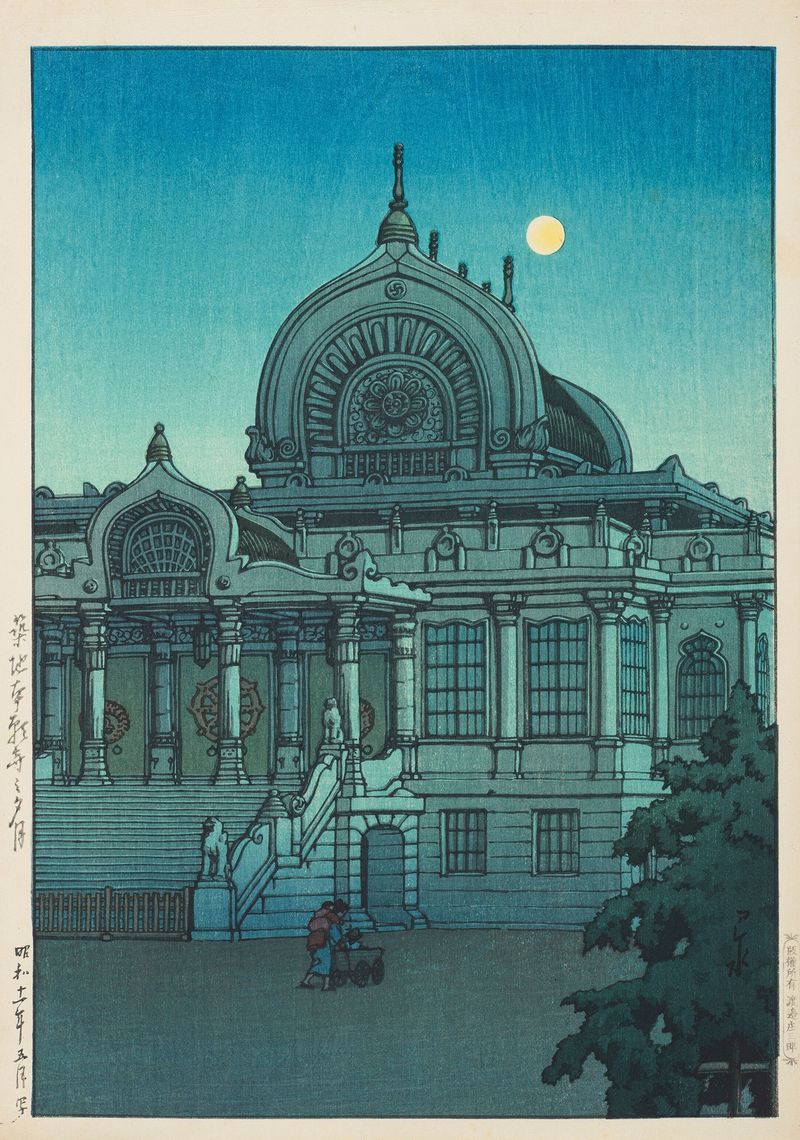
Tsukiji Honganji no yuzuki (Evening moon at Honganji Temple in Tsukiji)
Kawase Hasui
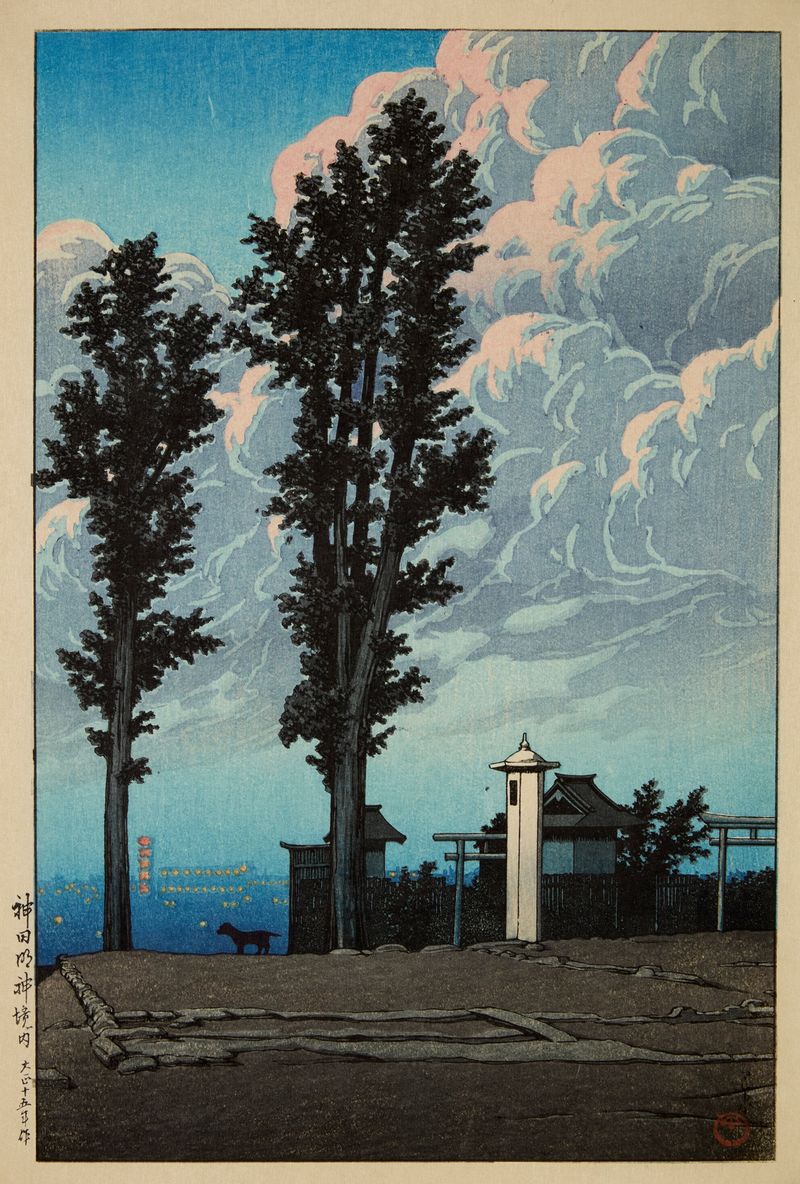
Kanda Myojin keidai (Kanda Myojin Shrine precent)
Kawase Hasui
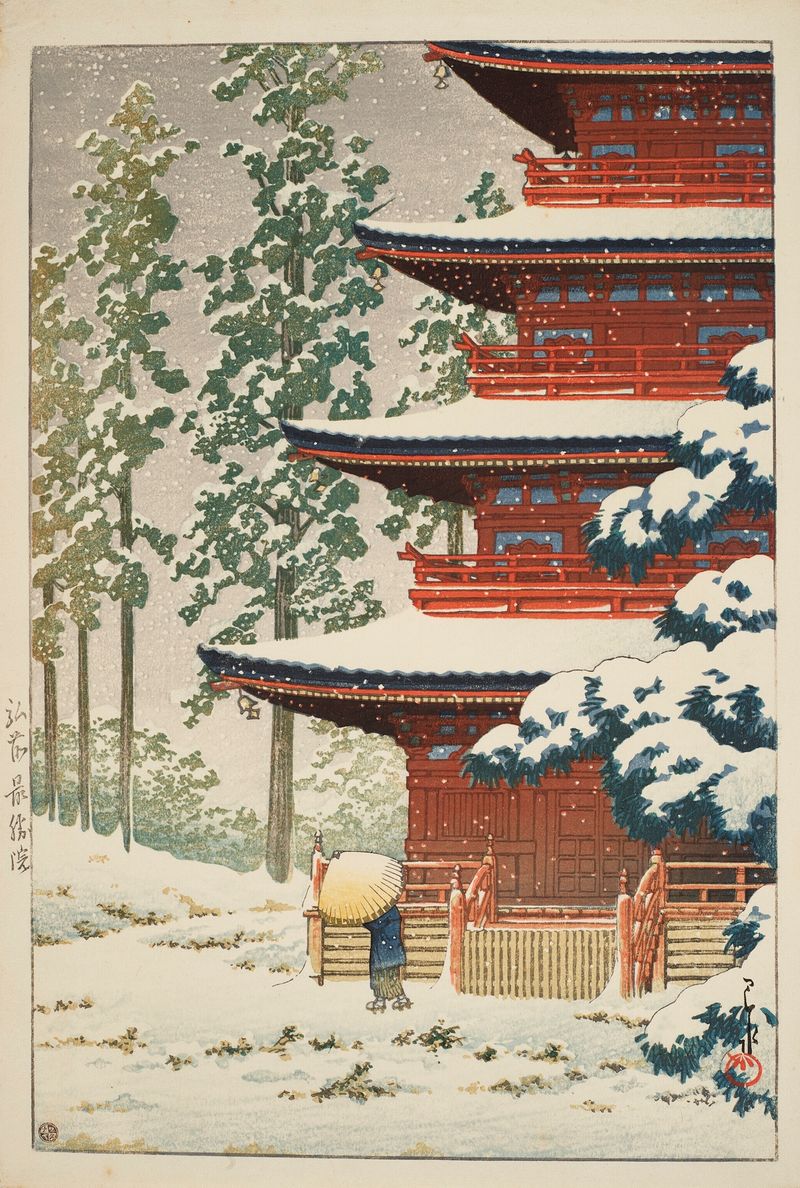
Saisho-in Temple, Hirosaki
Kawase Hasui
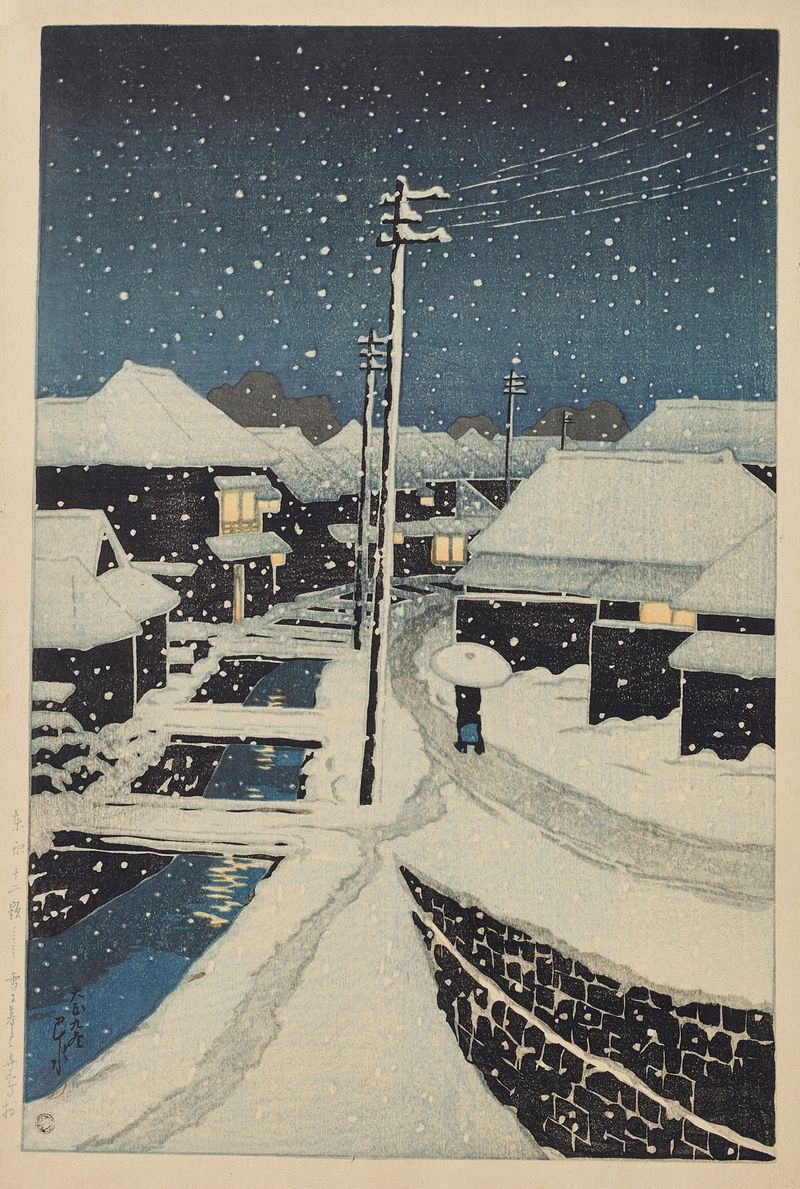
Yuki ni fururu Terajima mura (Evening snow at Terajima Village)
Kawase Hasui
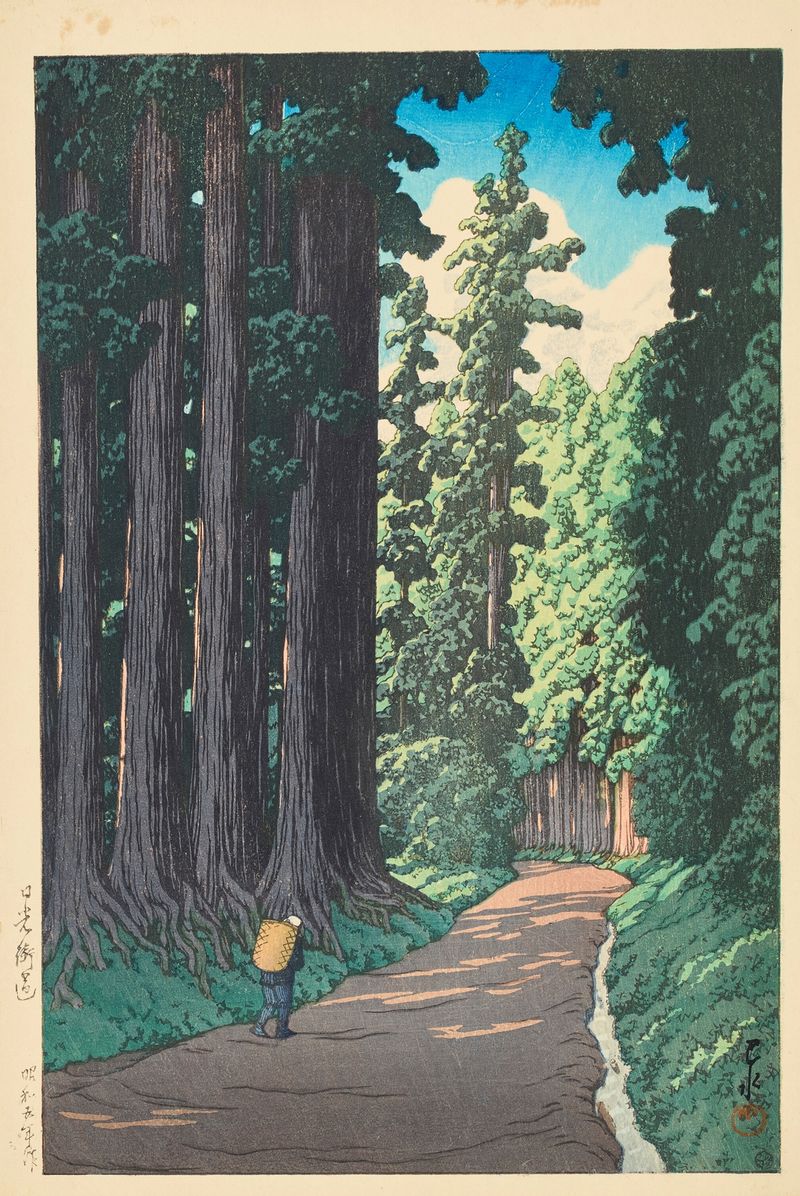
Nikko gaido (The Road to Nikko)
Kawase Hasui
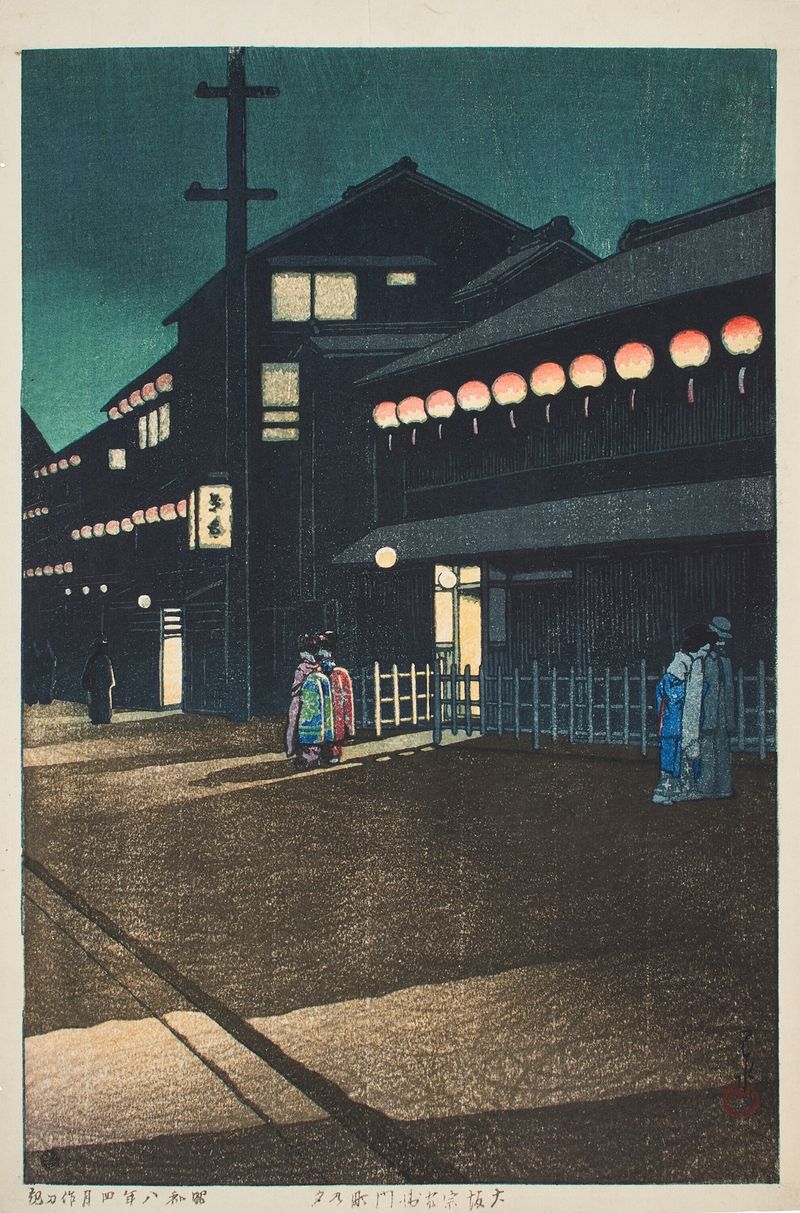
Osaka Soemon-cho no yu (Evening in Soemon-cho, Osaka)
Kawase Hasui
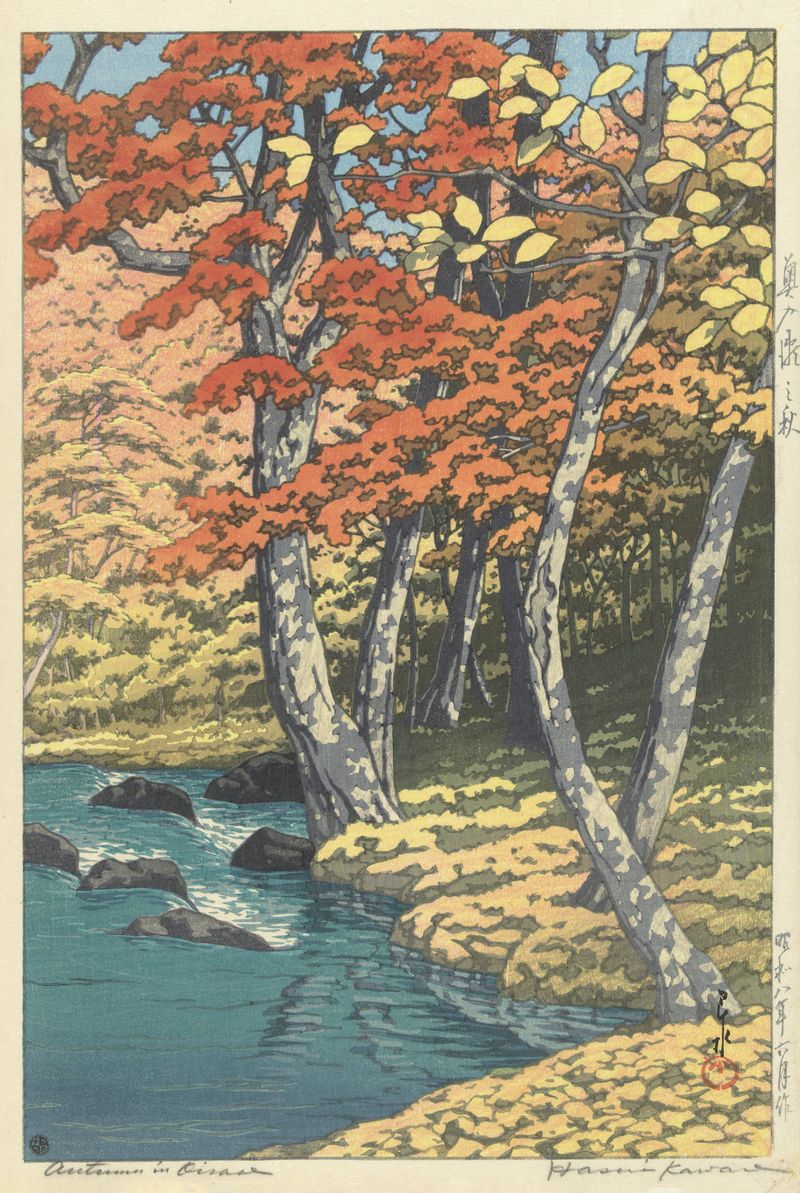
Autumn In Oirase
Kawase Hasui
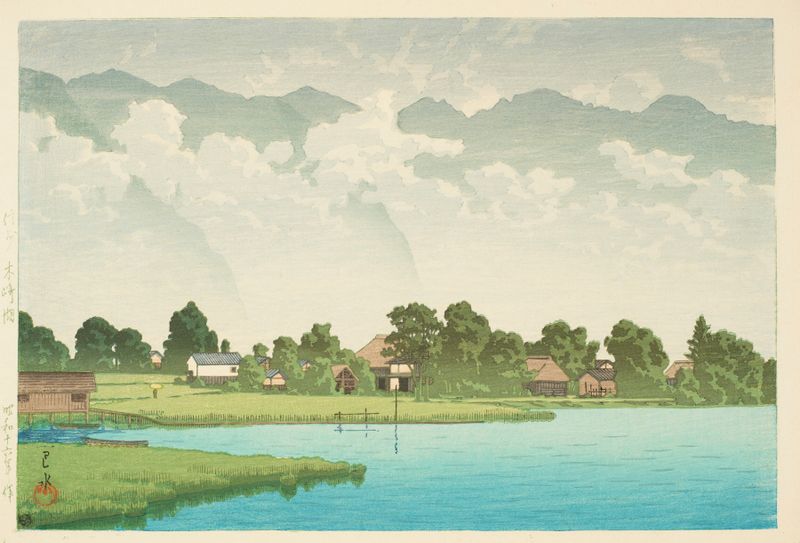
Shinshu Kizakiko (Kizaki Lake in Shinshu)
Kawase Hasui
More Architecture Art
Browse all →
The statue of Liberty
Frédéric Auguste Bartholdi

View of Houses in Delft, Known as ‘The Little Street’
Johannes Vermeer

View of Houses in Delft, Known as ‘The Little Street’
Johannes Vermeer

The Cathedral in Rouen. The portal, Grey Weather
Claude Monet

The yellow house
Vincent van Gogh

The Church in Auvers-sur-Oise, View from the Chevet
Vincent van Gogh