
Ilos, Lycia — History & Facts
In a moment of stillness, the raw intensity of humanity’s struggles is laid bare, inviting us to peer into the depths of conflict and survival. Look to the left at the rugged cliffs, where the delicate interplay of light and shadow enhances the harshness of the scene. The artist employs a muted palette, with earthy tones of browns and greens contrasting against the stark white of the ancient ruins that loom over the landscape. Notice how the tumultuous skies seem to be in dialogue with the crumbling structures below, each brushstroke revealing the weight of time and turmoil.
The composition not only captures the physical landscape but also hints at the emotional turbulence that lingers in the air. Delve deeper into the details, and you’ll find hints of violence etched into the very fabric of the artwork. The scattered debris suggests destruction, while the distant figures serve as silent witnesses to the remnants of a once-thriving civilization. There’s a tension between beauty and devastation, as the natural world stands resilient yet overshadowed by the scars of human conflict.
These elements converge to evoke an unsettling awareness of fragility in both architecture and life itself. In 1843, while creating this piece, the artist was immersed in the Romantic movement, reflecting on themes of nature's power and the turbulent history of civilizations. Müller, who spent considerable time in Italy and the Mediterranean, sought to capture the essence of lost glory in his landscapes. This painting emerged during a period of fascination with ancient ruins and the stories they tell, highlighting the juxtaposition of beauty and violence that permeated both the artist's life and his work.
More Artworks by William James Müller
Browse all →
Cleeve, Somerset, with Bridgewater Bay in the Distance
William James Müller

The Bridge at Llangollen
William James Müller

Cairo Bazaar
William James Müller
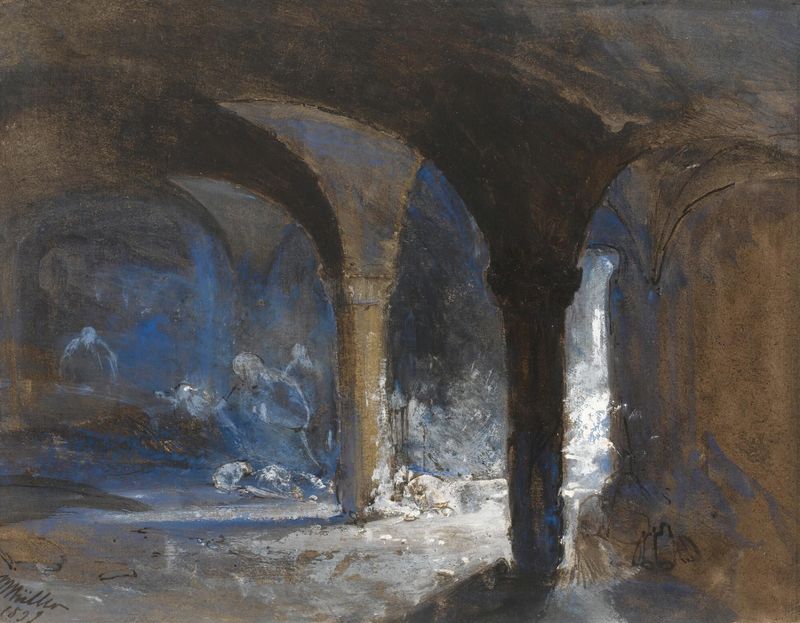
Crypt of the bishop’s palace during the Bristol riots
William James Müller

Near the Caravan Bridge, Smyrna
William James Müller
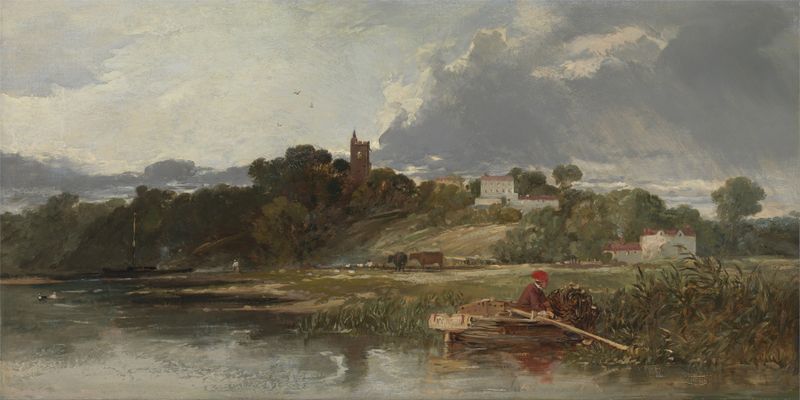
Gillingham on the Medway
William James Müller

The Church of the Holy Sepulchre
William James Müller

A View of Eton and the Fellows Eyot
William James Müller

Tripoli
William James Müller

A Mountain Torrent
William James Müller





