
In Amsterdam — History & Facts
What secret hides in the quiet of the canvas? In In Amsterdam, the stillness of the moment invites contemplation, revealing layers of emotion and light. Look to the left at the soft glow emanating from a window, casting delicate shadows on the cobblestones below. The muted, earthy tones of the streets contrast with the vibrant bursts of color in the enveloping sky, suggesting a transition from day to night. Henri's brushwork, with its spontaneity, draws attention to the fleeting nature of light and life, guiding the viewer's gaze across the scene and creating a sense of movement and intimacy. Beyond the surface, the painting encapsulates a dialogue between solitude and connection.
The quiet figures, almost ghostly in their inactivity, evoke a sense of longing, as if they are mere spectators in their own lives. The interplay of light and shadow serves as a metaphor for understanding — illuminating not just the physical space but the emotional landscapes within the characters. An atmosphere of stillness hints at the unspoken stories waiting to surface, making the viewer ponder the lives that unfold in the hidden corners of the city. In 1910, Henri painted this piece during a transformative period for American art, embracing the burgeoning Ashcan School movement, which focused on the realities of urban life.
While in Amsterdam, he sought to capture the vibrancy and authenticity of everyday scenes, reflecting a broader cultural shift toward modernism and the exploration of the human experience.
More Artworks by Robert Henri
Browse all →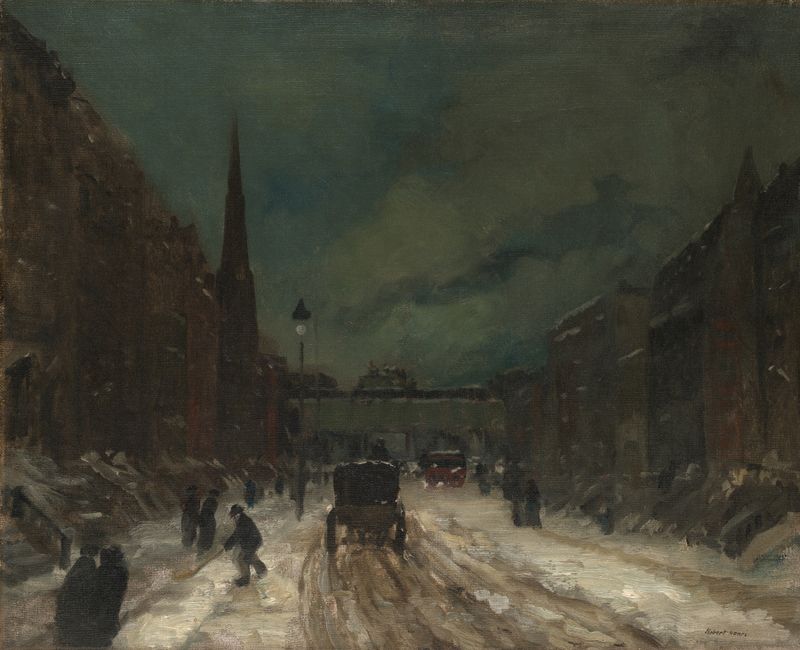
Street Scene with Snow (57th Street, NYC.)
Robert Henri
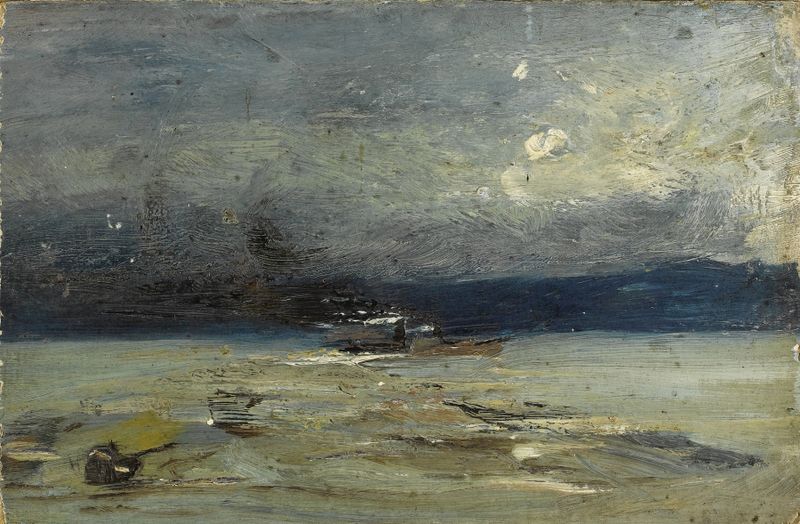
On the Hudson River
Robert Henri
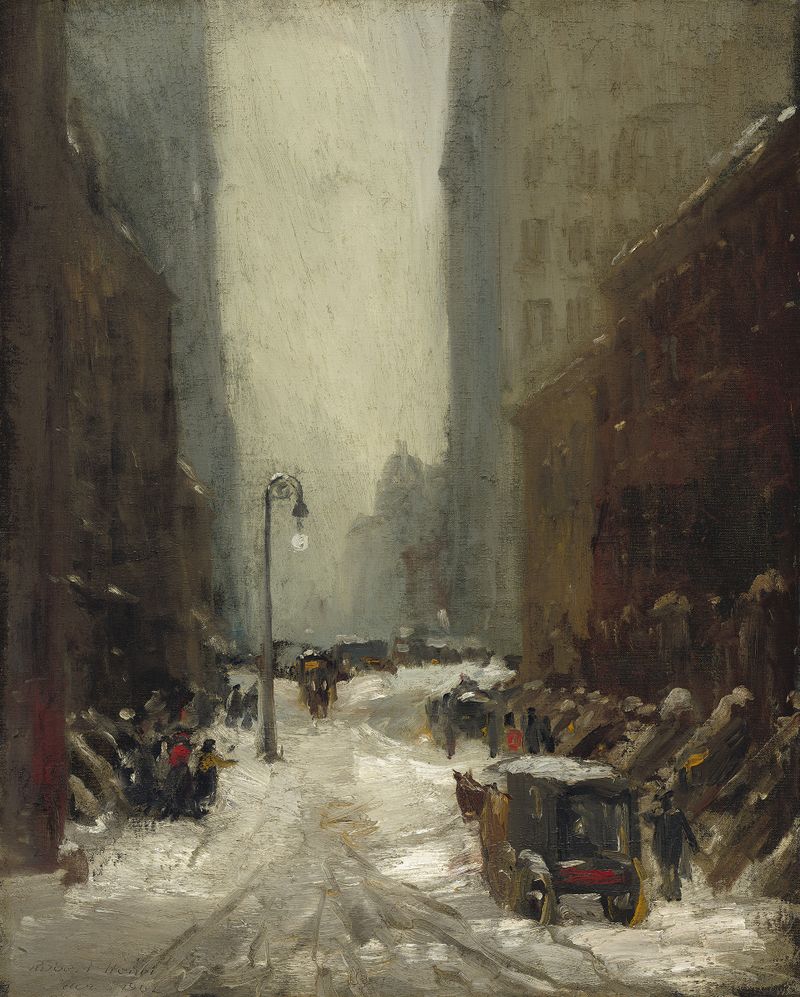
Snow in New York
Robert Henri
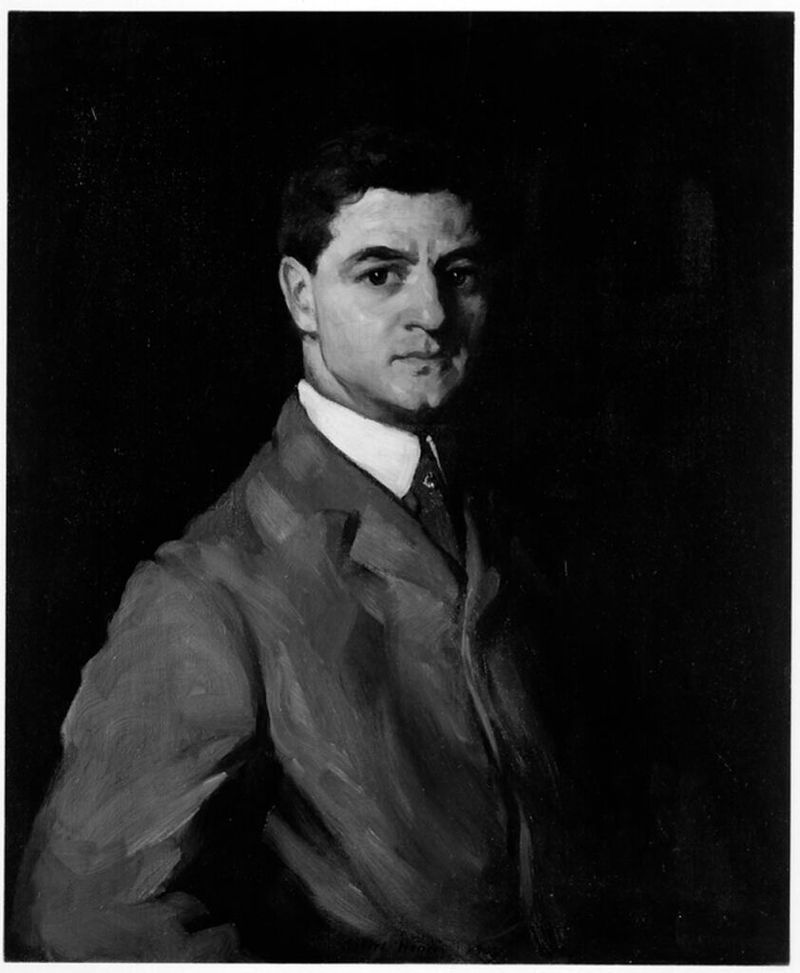
Carleton Eldredge Noyes (1872-1950)
Robert Henri
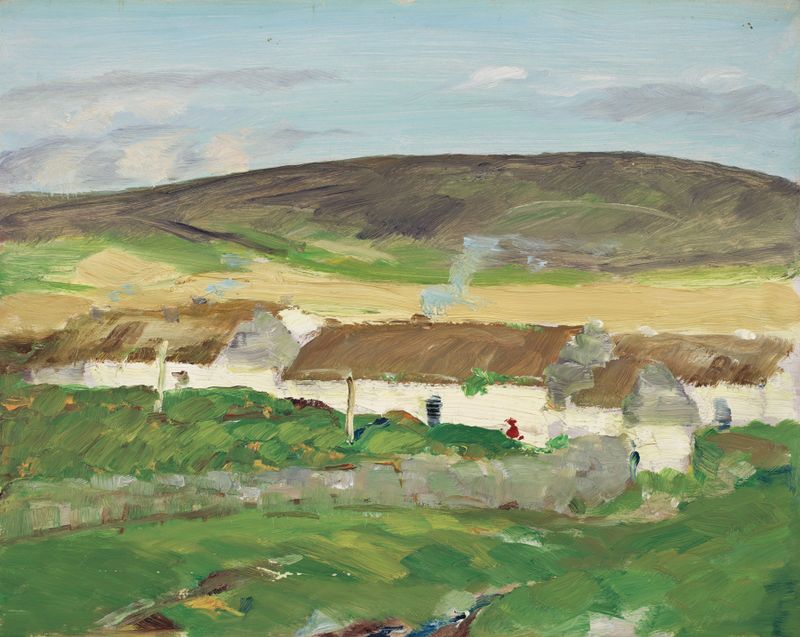
The White Cottage, Ireland
Robert Henri
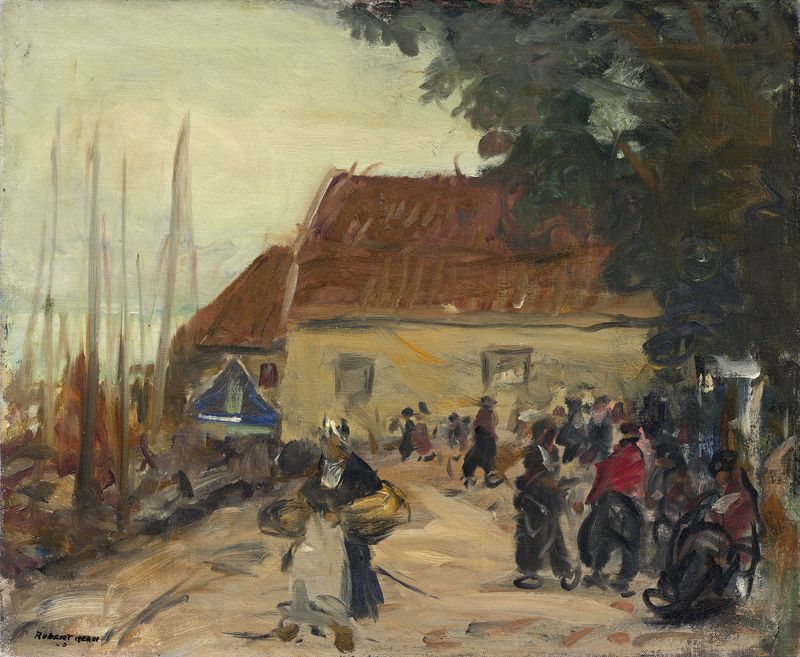
Volendam Street Scene
Robert Henri

Young Woman in Black
Robert Henri
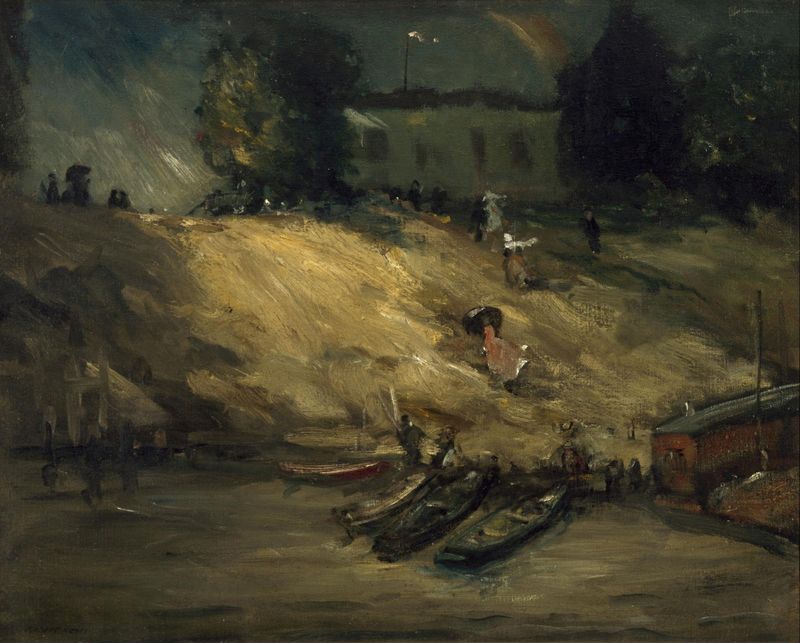
Sudden Shower
Robert Henri

Herself
Robert Henri
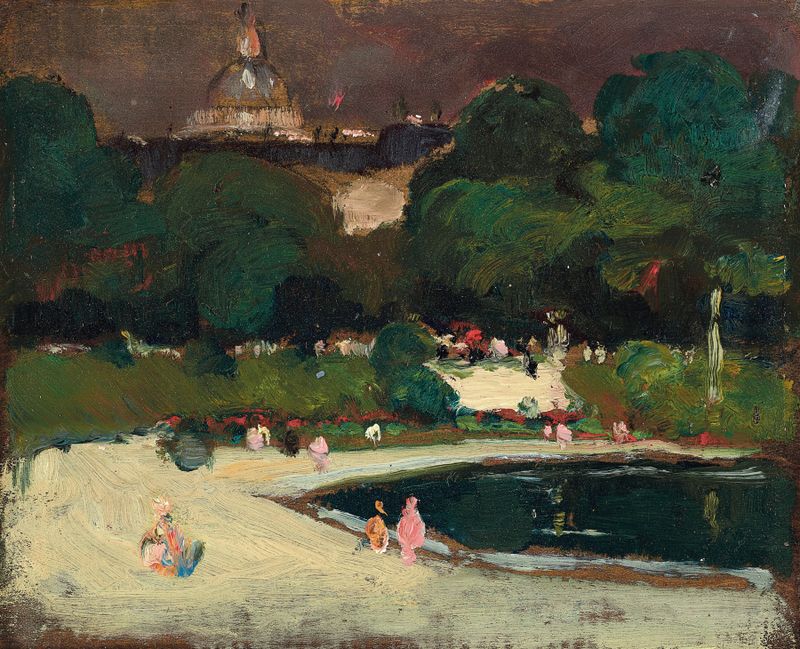
Luxembourg Gardens, Stormy Sky
Robert Henri





