
In the roads, Evening — History & Facts
Can paint confess what words never could? In In the Roads, Evening, the artist captures an awakening moment, where dusk envelops the horizon, blurring the boundaries between sea and sky. Look to the left at the swirling clouds, rich in hues of deep indigo and violet, curling like whispers of a fading day. The luminous glow of the setting sun spills across the water, its reflective shimmer guiding the eye toward the distant horizon. Notice how the brushstrokes flow, creating a sense of movement in the waves, each stroke a testament to the artist's mastery of light and shadow, pulling the viewer into a tranquil yet vibrant seascape. As the evening descends, a quiet tension emerges—the tumult of the sea contrasts with the peacefulness of the sky.
The tiny ship, a mere silhouette against the vastness, may symbolize solitude amidst nature's grandeur. This juxtaposition of light and darkness speaks to the duality of existence—the beauty of endings and the calm that follows chaos, inviting deep reflection on life's transitions. Painted in 1867, during a period of personal and professional growth, Aivazovsky was gaining recognition for his ability to evoke emotion through landscapes. Living in Russia, he was exploring the interplay between Romanticism and realism, capturing the sublime aspects of nature.
This work reflects not only his technical prowess but also the broader movements in art and society, as the world began embracing both the beauty and turbulence of modern existence.
More Artworks by Ivan Konstantinovich Aivazovsky
Browse all →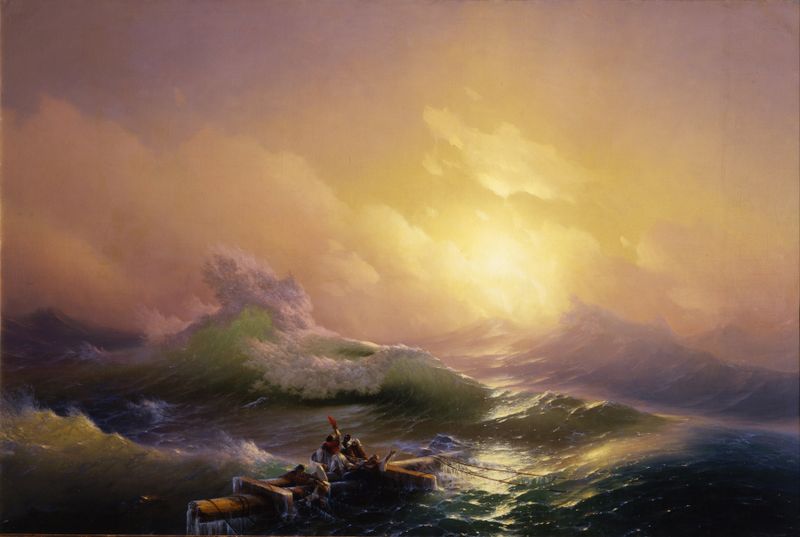
The Ninth Wave
Ivan Konstantinovich Aivazovsky
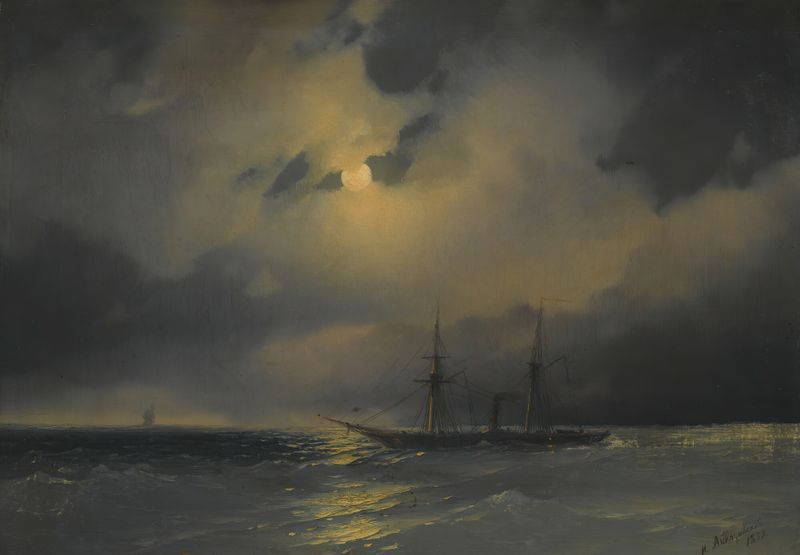
Shipping In Moonlight
Ivan Konstantinovich Aivazovsky
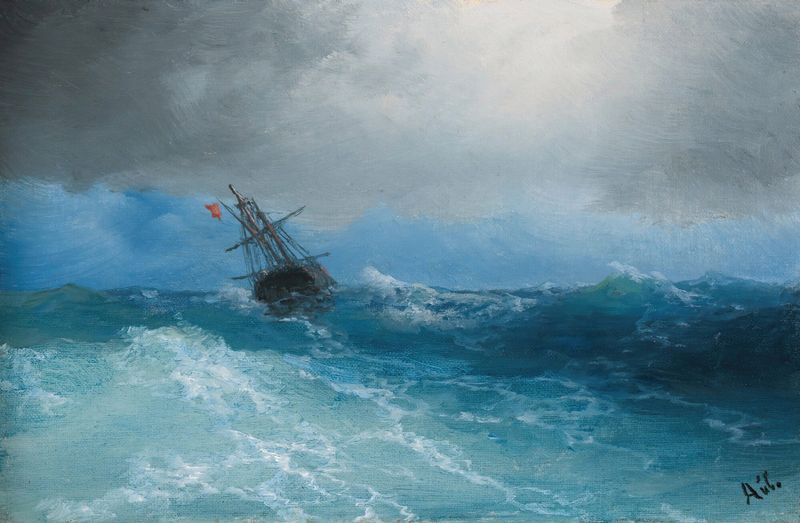
Gathering Storm
Ivan Konstantinovich Aivazovsky
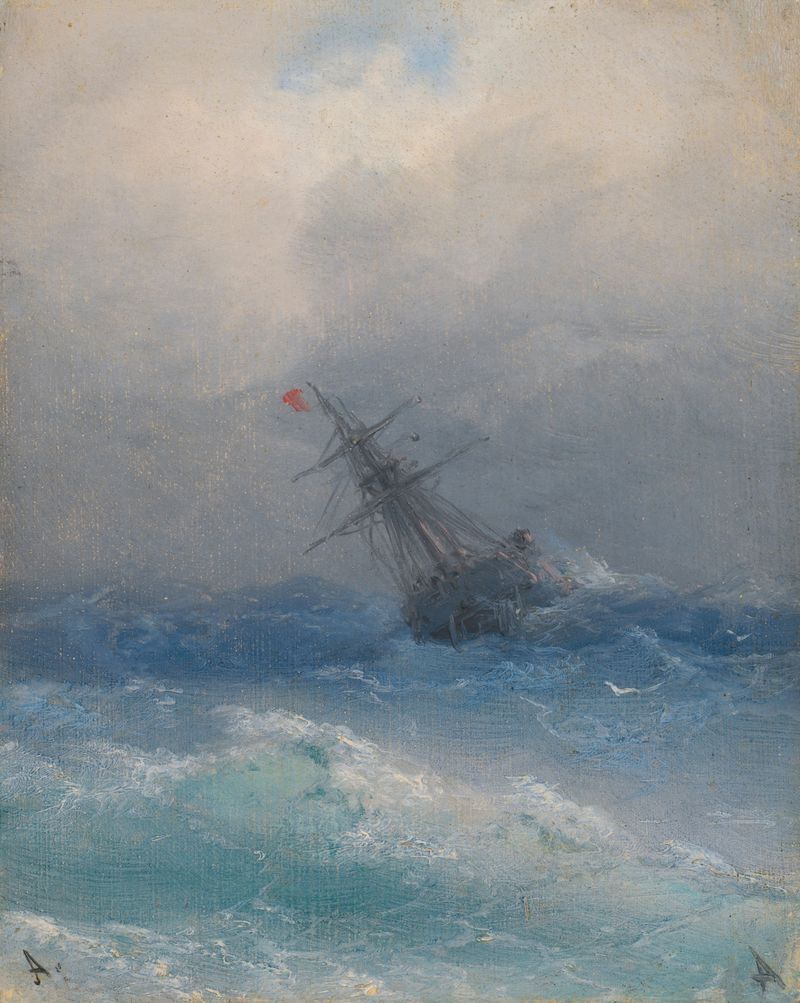
Shipwreck
Ivan Konstantinovich Aivazovsky
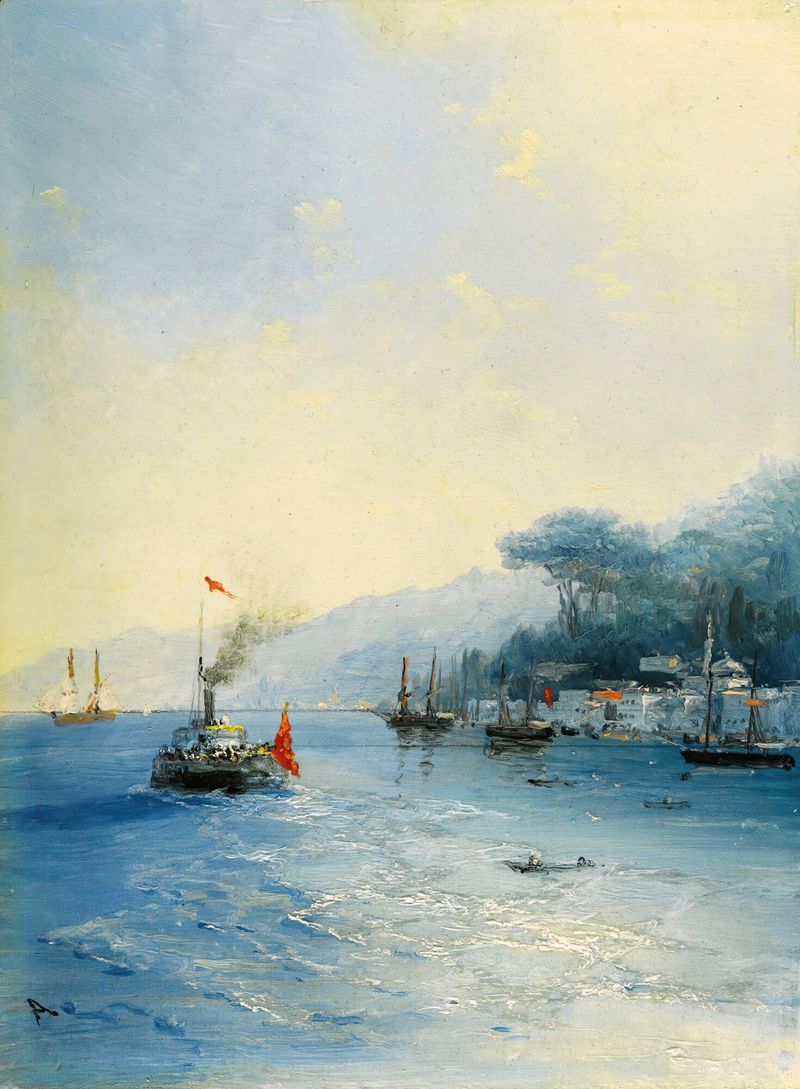
Shipping On The Bosphorus, Constantinople
Ivan Konstantinovich Aivazovsky
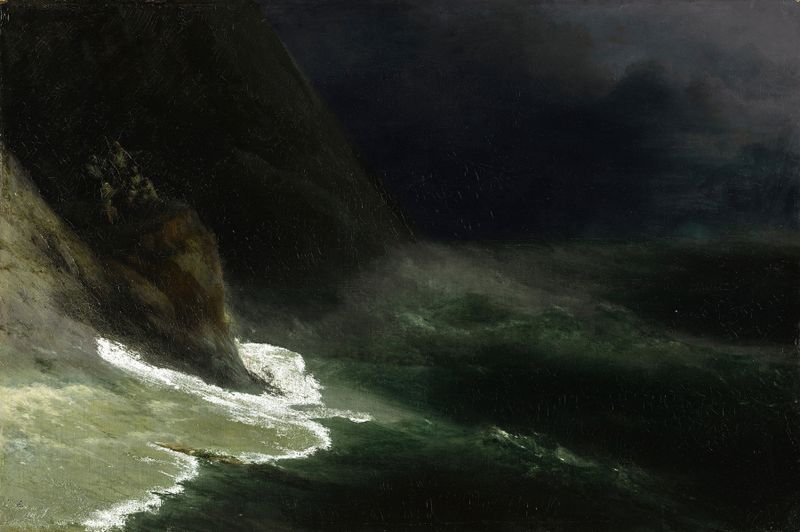
Seascape
Ivan Konstantinovich Aivazovsky
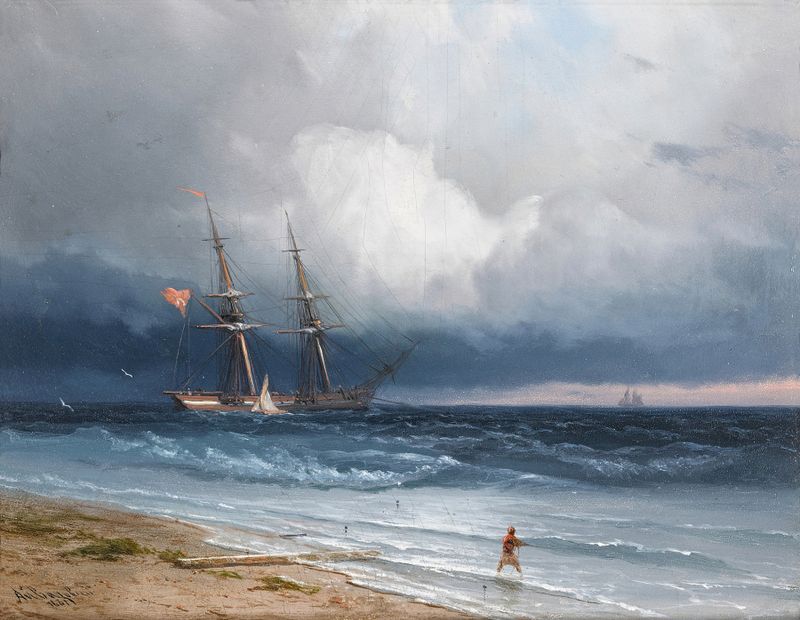
Ship by the Shore
Ivan Konstantinovich Aivazovsky
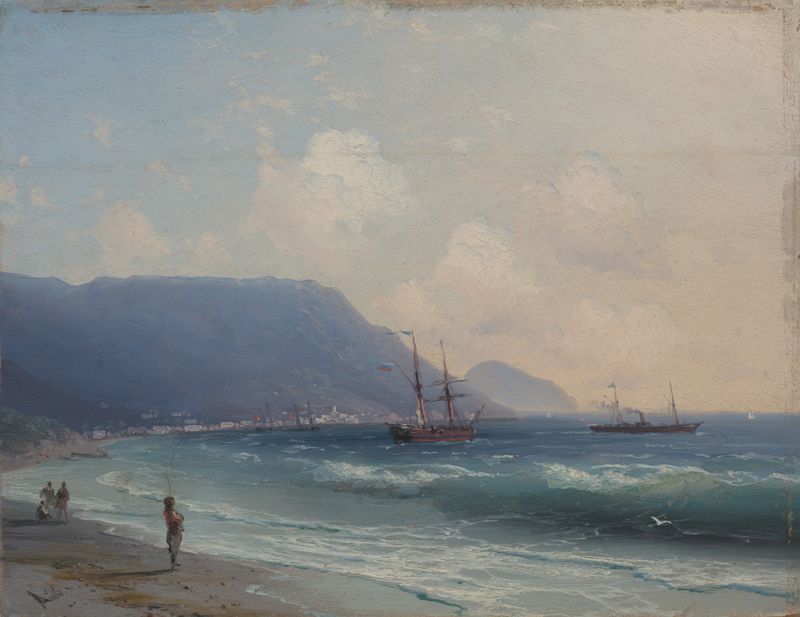
Seascape
Ivan Konstantinovich Aivazovsky
Moonlight
Ivan Konstantinovich Aivazovsky
Shipping Off Ischia
Ivan Konstantinovich Aivazovsky





