In the siege seating. Trinity Bridge and Kutafya Tower — History & Facts
What first seizes the eye in In the siege seating. Trinity Bridge and Kutafya Tower is the sheer density of life—an entire city seems to pulse within the crowded square, the bridge, and the fortified towers. The viewer is drawn into a swirl of movement: merchants and townsfolk press forward, carts piled high and guarded by watchful figures, while the white stone of the Kutafya Tower rises as both barrier and beacon.
The architecture is rendered with loving precision, its heavy forms softened by the bustle of humanity below. Every figure, from the richly robed dignitaries to the laborers bent over their loads, seems to play a role in this grand urban drama. The muted palette—ochres, browns, and the chill of the stone—anchors the scene in a world both historical and immediate, while the sky’s pale wash leaves the city’s energy uncontained. Painted in 1915 by Apollinari Mikhailovich Vasnetsov, this work belongs to a moment when Russian artists looked back to the nation’s medieval and early modern past, reconstructing lost worlds with an almost archaeological devotion.
Such paintings were not just nostalgic; they were part of a larger cultural movement that sought to define Russian identity through its architectural and civic heritage. Vasnetsov, known for his cityscapes and historical reconstructions, was a master at populating his scenes with convincing detail, inviting viewers to imagine themselves within the vanished rhythms of old Moscow. Today, the painting’s crowded thoroughfares and fortress walls invite us to linger, searching out stories in every corner of the canvas.
More Artworks by Apollinari Mikhailovich Vasnetsov

Landscape With Lake
Apollinari Mikhailovich Vasnetsov
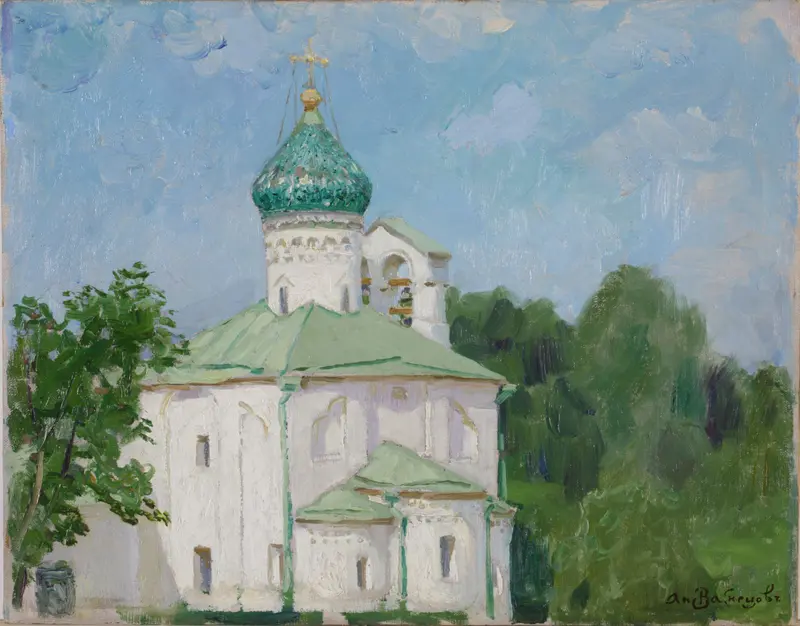
Sergius Luzhki
Apollinari Mikhailovich Vasnetsov
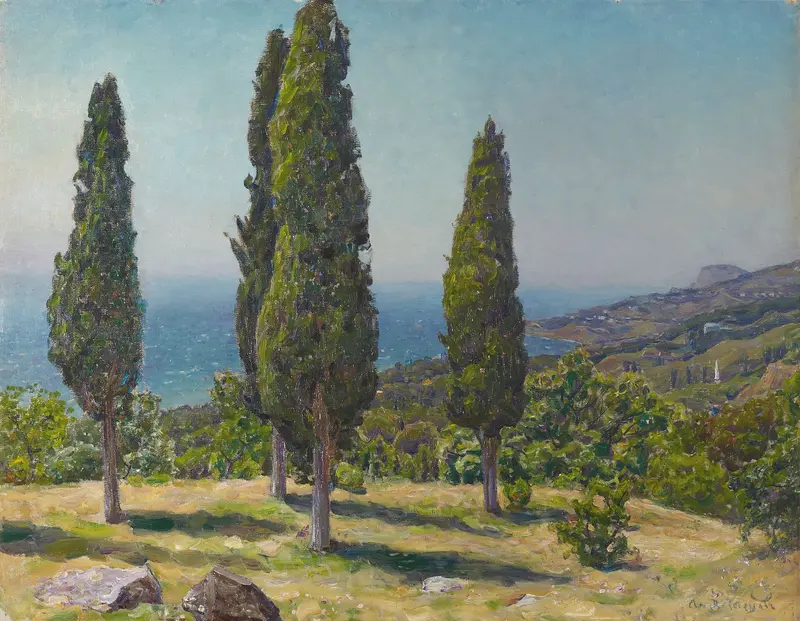
cypresses. Crimea
Apollinari Mikhailovich Vasnetsov
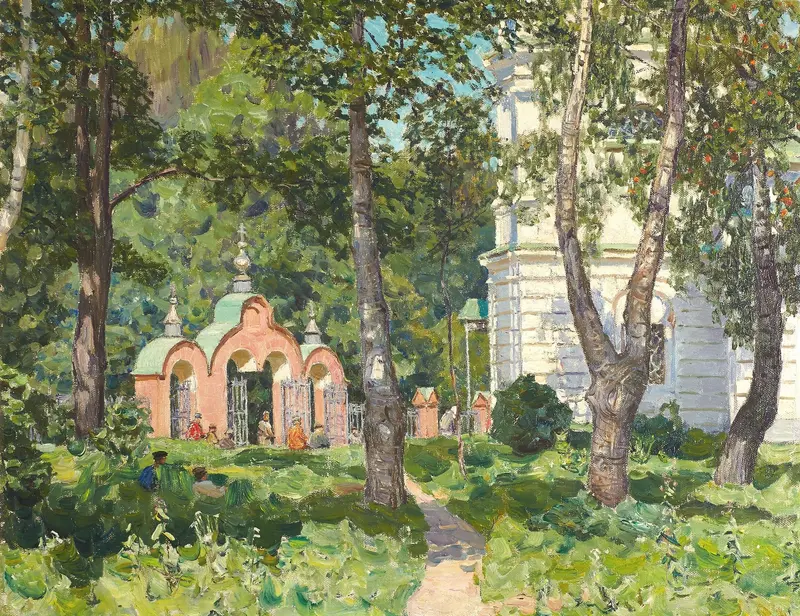
Demyanovo. At the churchyard
Apollinari Mikhailovich Vasnetsov
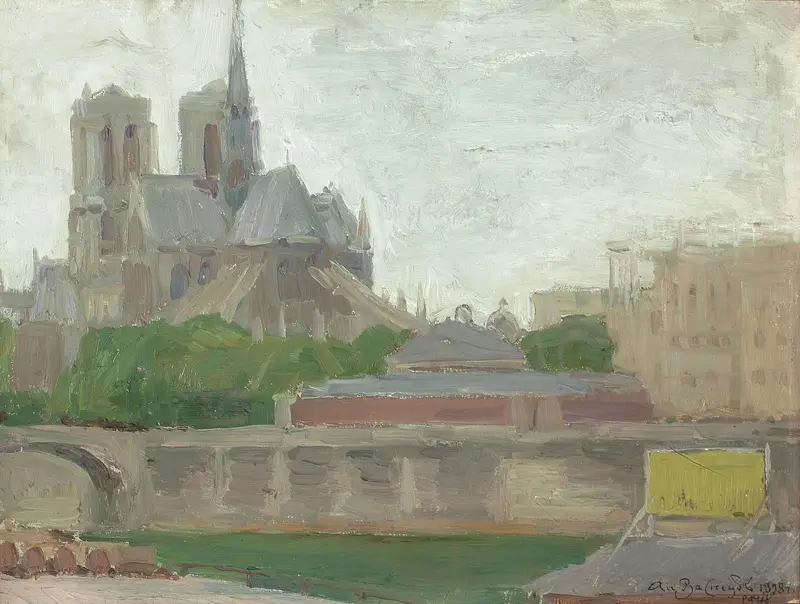
Notre Dame de Paris
Apollinari Mikhailovich Vasnetsov
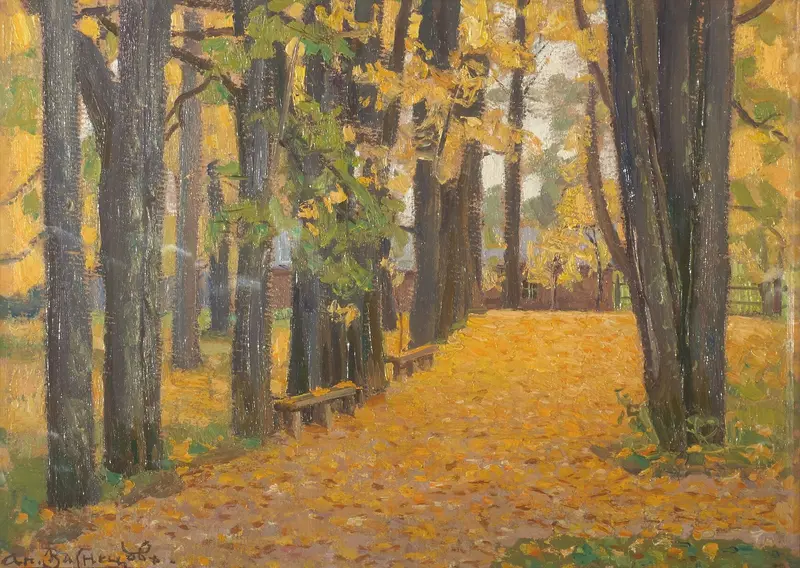
Autumn park
Apollinari Mikhailovich Vasnetsov
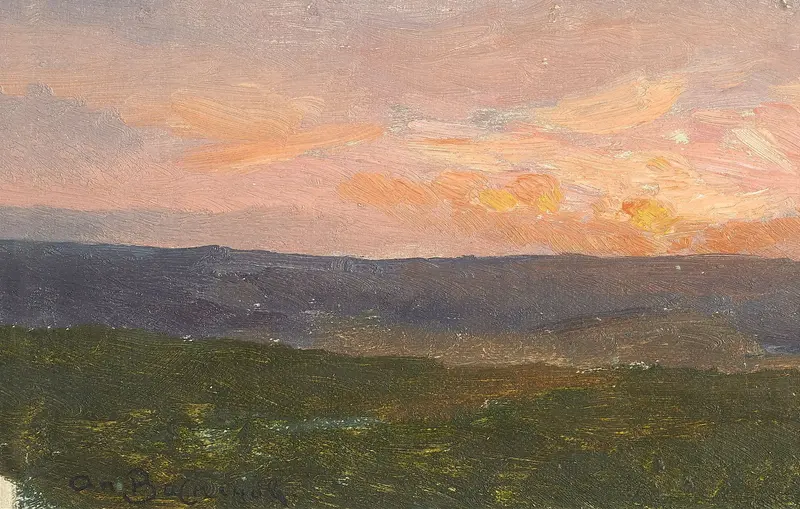
Sunset. Shurma
Apollinari Mikhailovich Vasnetsov

Via delle Tombe Pompeii
Apollinari Mikhailovich Vasnetsov
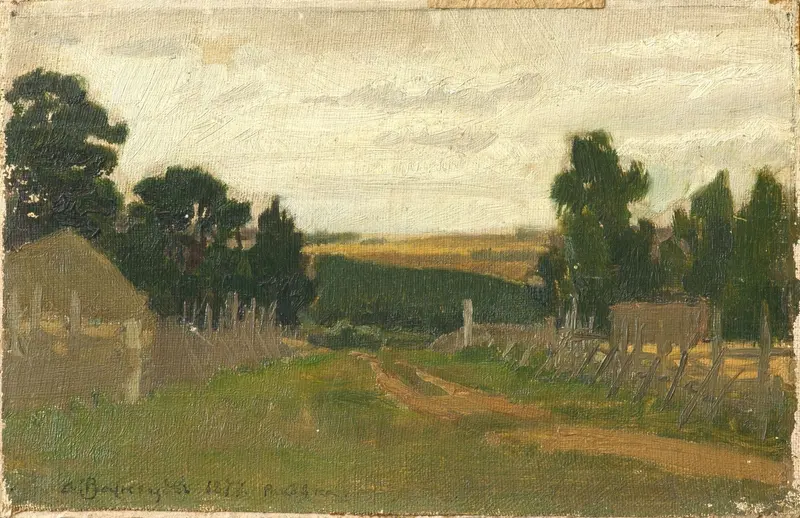
Rakovka
Apollinari Mikhailovich Vasnetsov
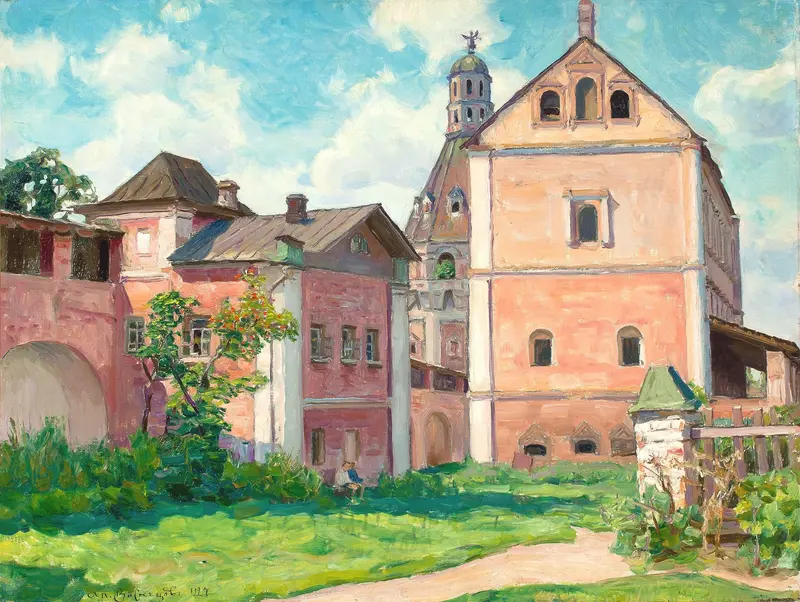
Simonov tower
Apollinari Mikhailovich Vasnetsov