
Indian Rock, Narragansett Bay — History & Facts
The eye is drawn first to the sheer expanse of sky, a pale and cloud-brushed blue that seems to dwarf the rugged outcrop of Indian Rock below. The rock itself, rendered in warm ochres and browns, anchors the left side of the painting with a sense of permanence, while the water’s shifting surface carries the viewer’s gaze outward toward the horizon. Small figures and boats dot the foreground, their presence subtle but essential—they hint at daily labors and quiet routines, but never steal the scene from the landscape itself.
The distant sails, almost spectral against the blue, suggest a world beyond the immediate shore, inviting the viewer to imagine journeys just out of reach. The palette is clear and cool, with the rock’s sunlit face offering a counterpoint to the deep, restless blues of the bay. Painted in 1875, Indian Rock, Narragansett Bay belongs to an era when American artists sought to capture the nation’s coasts with both precision and poetry. Works like this were often made for a growing middle class eager to display scenes of their own land—places familiar yet transformed by the painter’s eye.
Arthur Quartley was known for his coastal views, and here he balances the drama of nature with the quiet dignity of human activity. The painting surfaced at Sotheby’s in New York in 2014, a rare appearance that reminds us how many such works slip quietly through history, their stories told only in the play of light across water and stone. Stand before this scene and let your imagination drift with the boats toward the far-off horizon.
More Artworks by Arthur Quartley
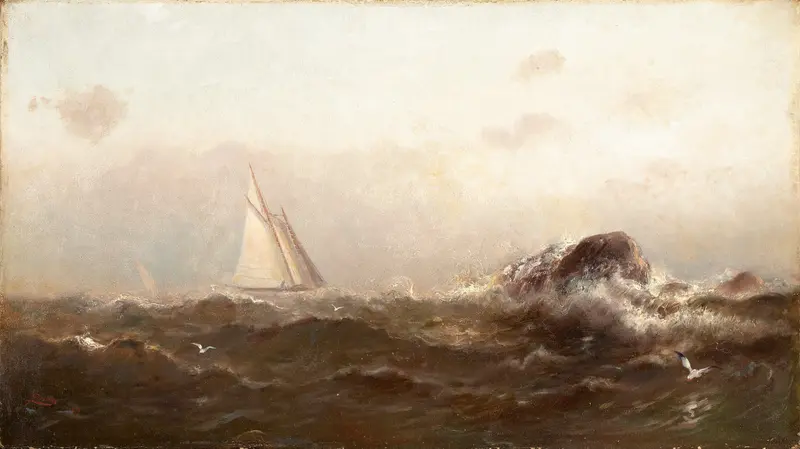
Morning Off Marblehead
Arthur Quartley
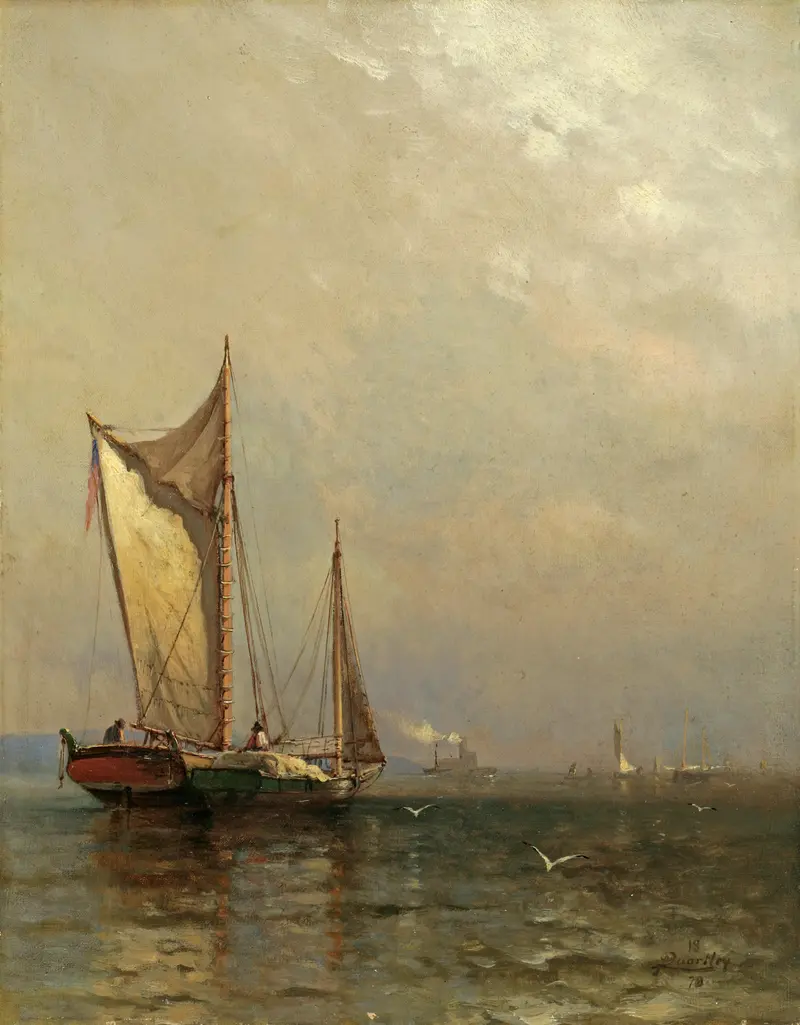
On the Hudson
Arthur Quartley
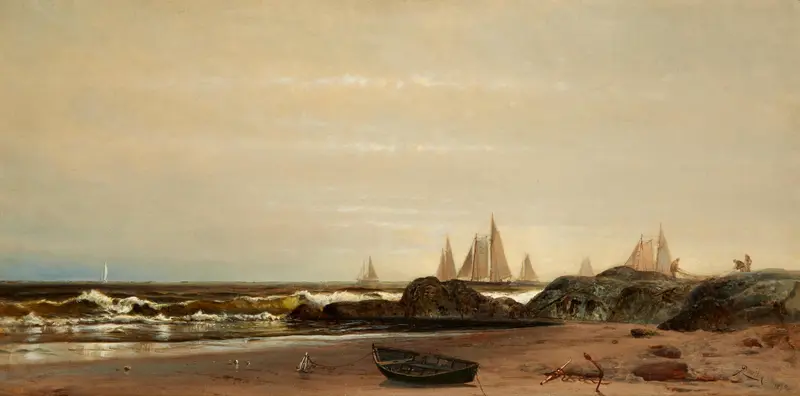
Sailing along the shore
Arthur Quartley
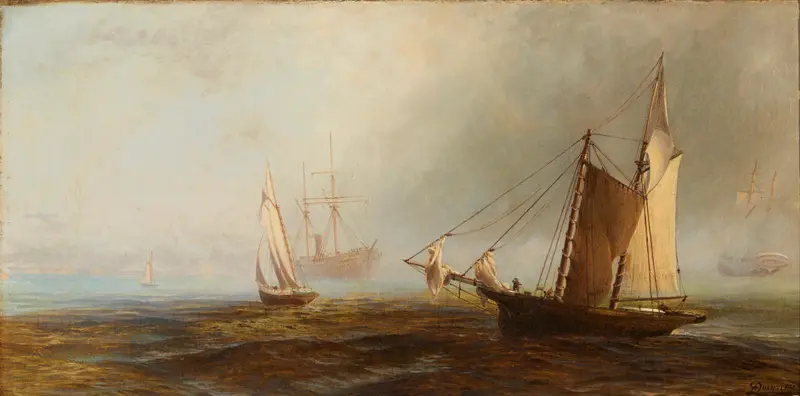
Off Cape Cod
Arthur Quartley
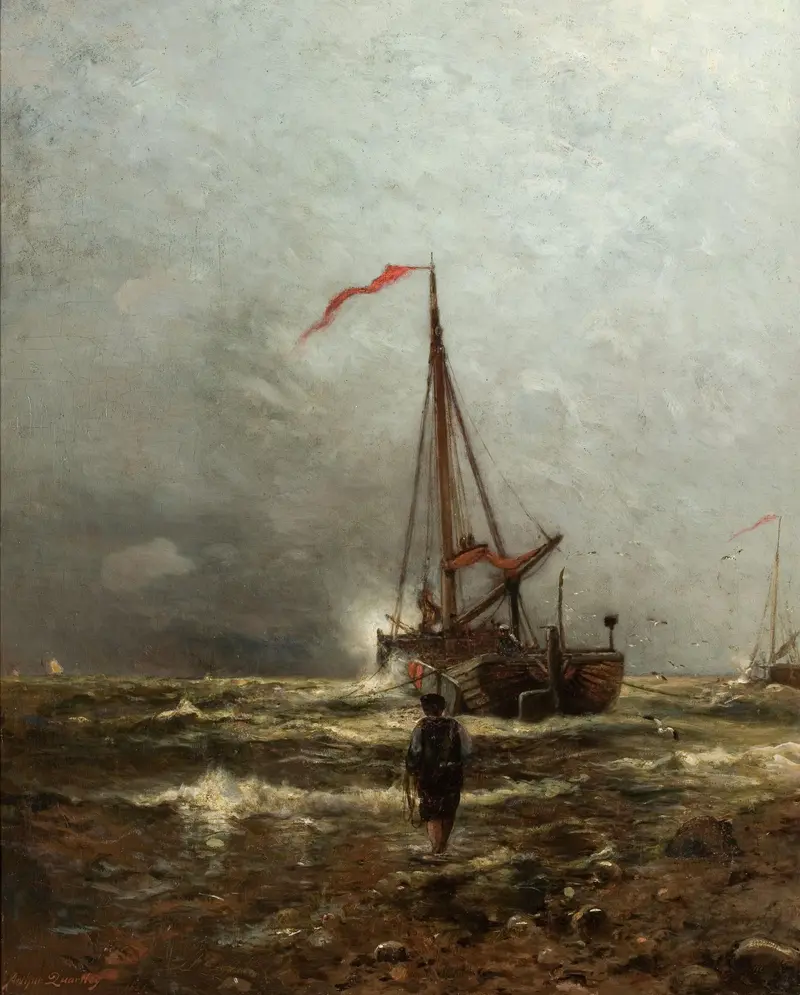
Coast of Holland
Arthur Quartley
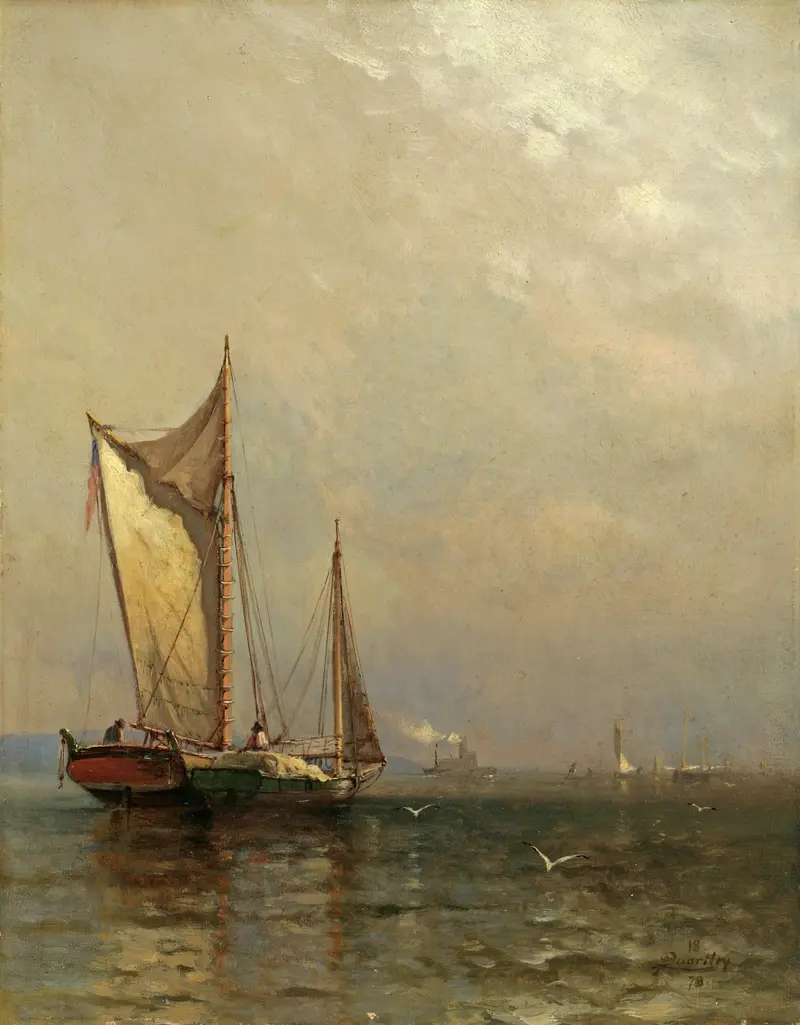
Sailboats on the Hudson
Arthur Quartley
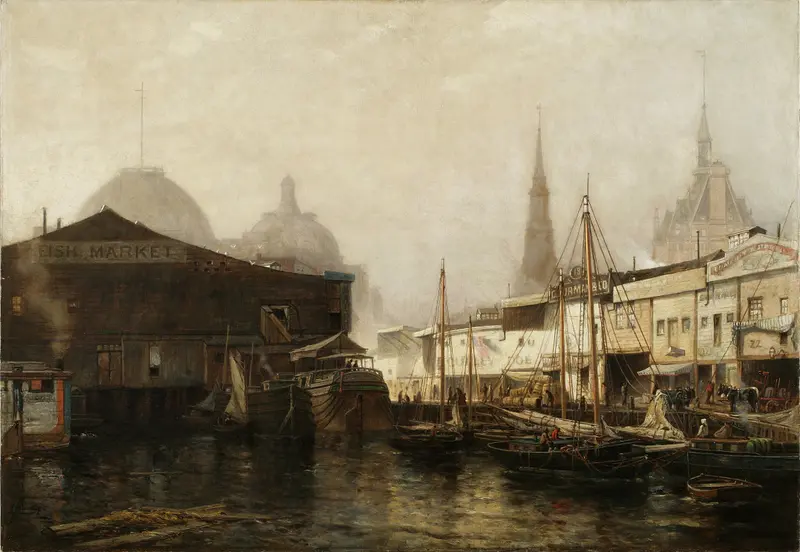
North River Pierhead
Arthur Quartley
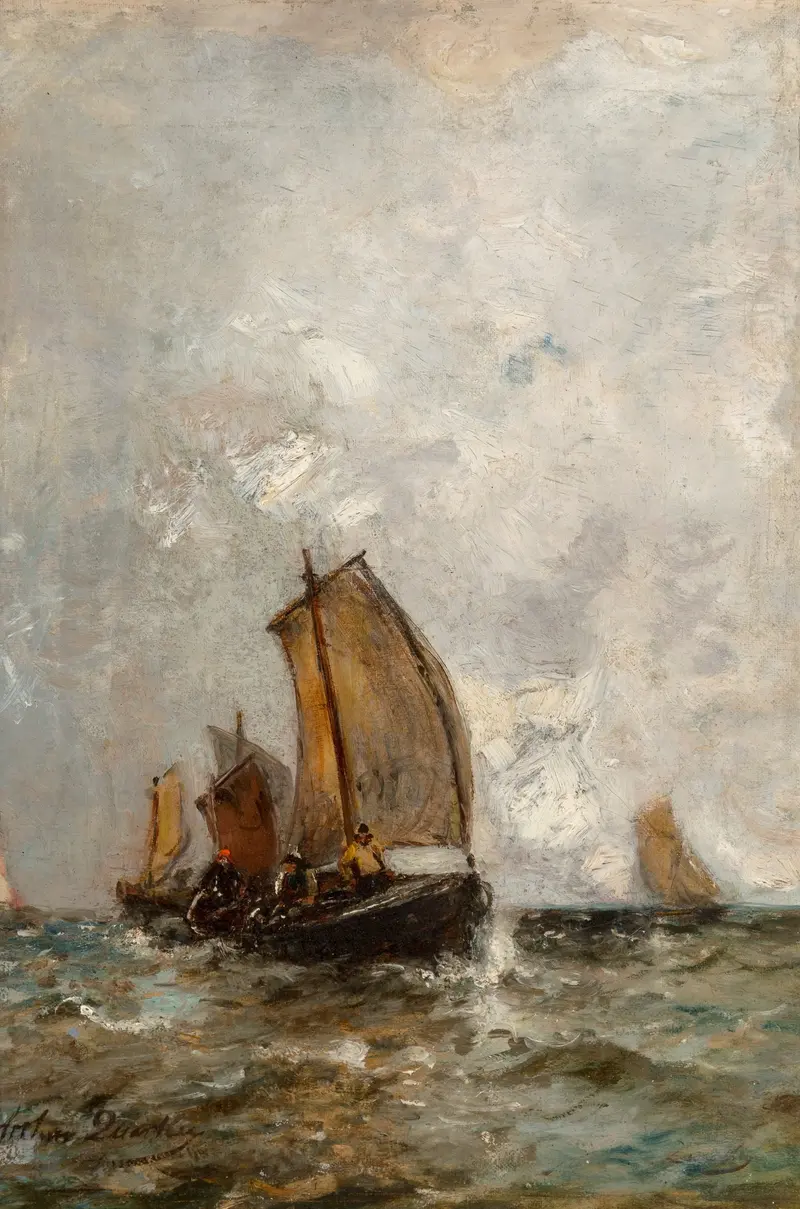
At Sea
Arthur Quartley
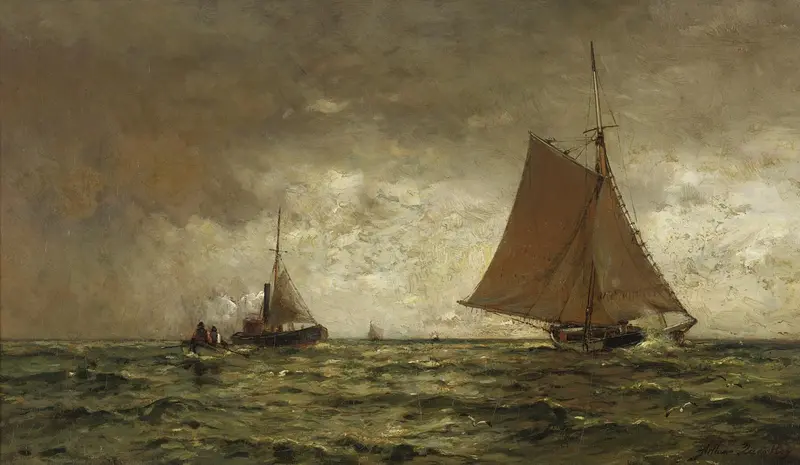
On the High Seas
Arthur Quartley
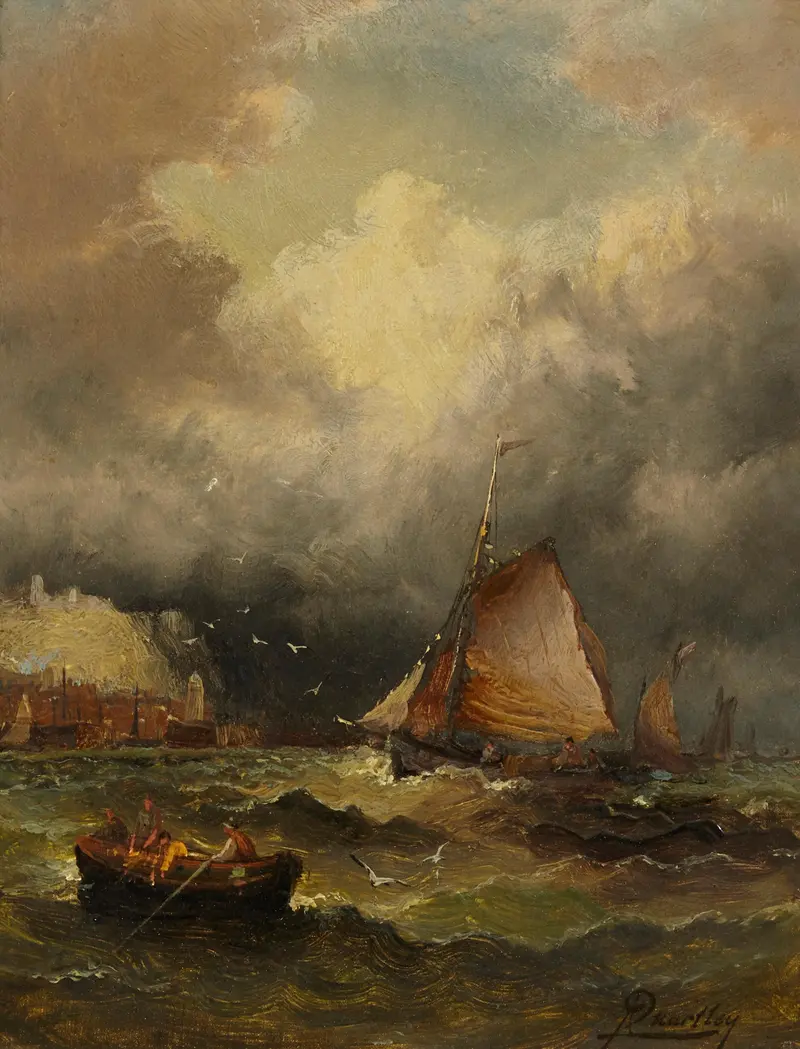
A coastal scene with men piloting boats on a turbulent sea and a town in the distance
Arthur Quartley
More Landscape Art

The Starry Night
Vincent van Gogh

View of Delft
Johannes Vermeer

Water Lilies
Claude Monet

The Grand Canal, Venice, looking north-west from the Ca' Corner to the Ca' Contarini degli Scrigni, with the campanile of Santa Maria della Carità
Canaletto

Windsor Castle
Canaletto

The Grand Canal looking North-East from the Palazzo Dolfin-Manin to the Rialto Bridge
Canaletto