
On the High Seas — History & Facts
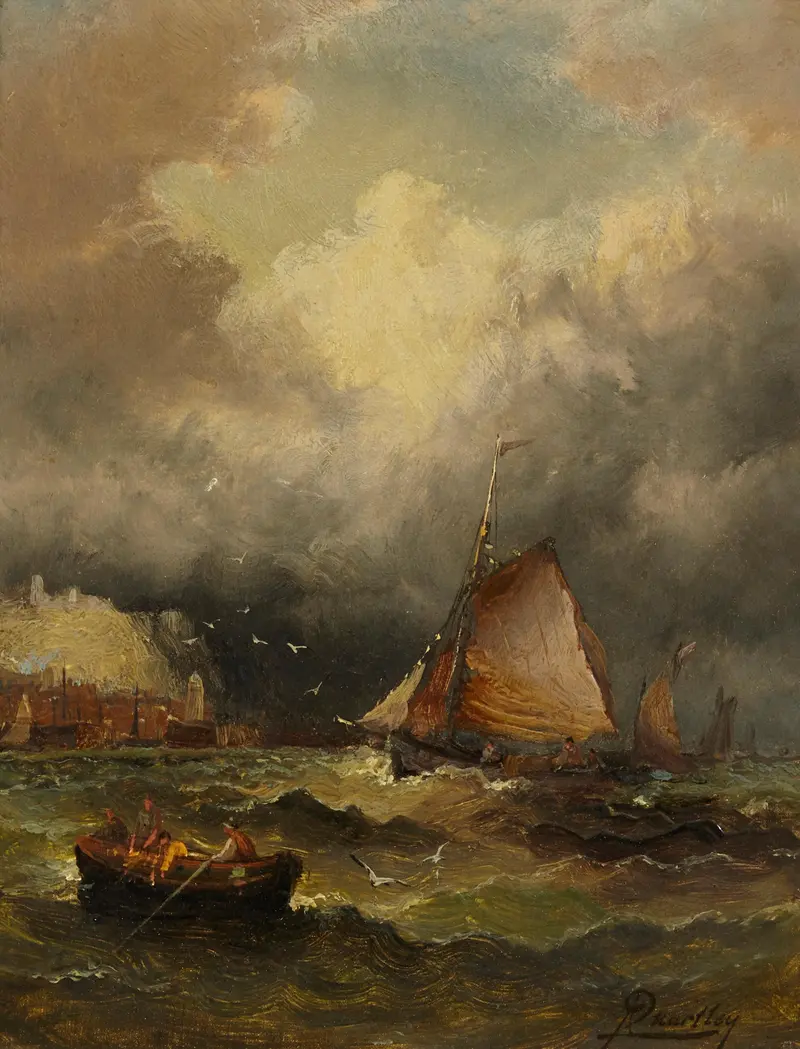
What first catches the eye in On the High Seas is the restless conversation between sky and water, where vessels—sails taut and smokestacks puffing—slice through a churning, green-grey expanse. The largest sail, angled sharply and catching the last of the light, commands the right side of the canvas, its ochre surface glowing against the stormy sky. To the left, a steamer and a rowboat cluster together, their dark forms bracing against the wind, while distant ships dissolve into the horizon.
The low vantage point places the viewer nearly at water level, heightening the sense of immersion and movement, as if the sea itself might spill out of the frame. Quartley’s brushwork animates the waves, each stroke a record of wind and current, while the heavy, mottled clouds above threaten to close in, amplifying the drama below. Works like this, painted by Arthur Quartley in the late nineteenth century, belonged to a flourishing tradition of marine painting that mirrored both technological change and a growing appetite for scenes of modern industry at sea. Collectors of the era, often merchants or industrialists themselves, sought such images for their parlors and offices, reminders of commerce and adventure.
By the time this painting appeared at Sotheby’s New York in 2007, it represented not just a vision of the sea, but a fragment of a world in transition—from sail to steam, from solitary journeys to global networks. History has kept few traces of this specific canvas’s path, but its restless surface invites us to imagine the countless crossings and stories that once filled such waters.
More Artworks by Arthur Quartley
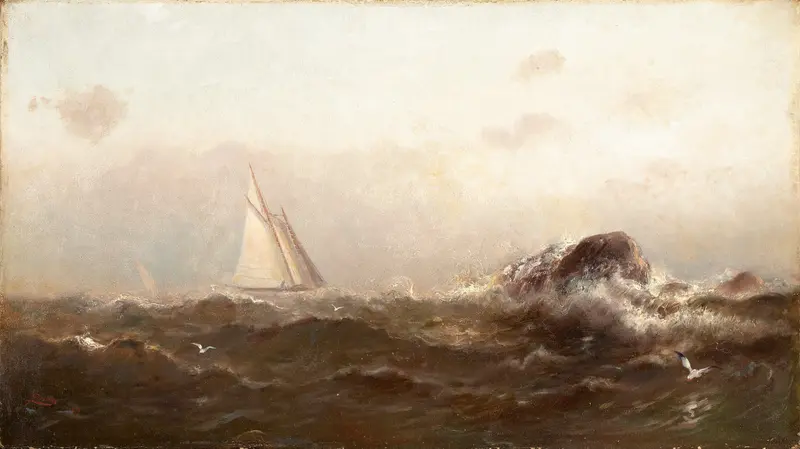
Morning Off Marblehead
Arthur Quartley
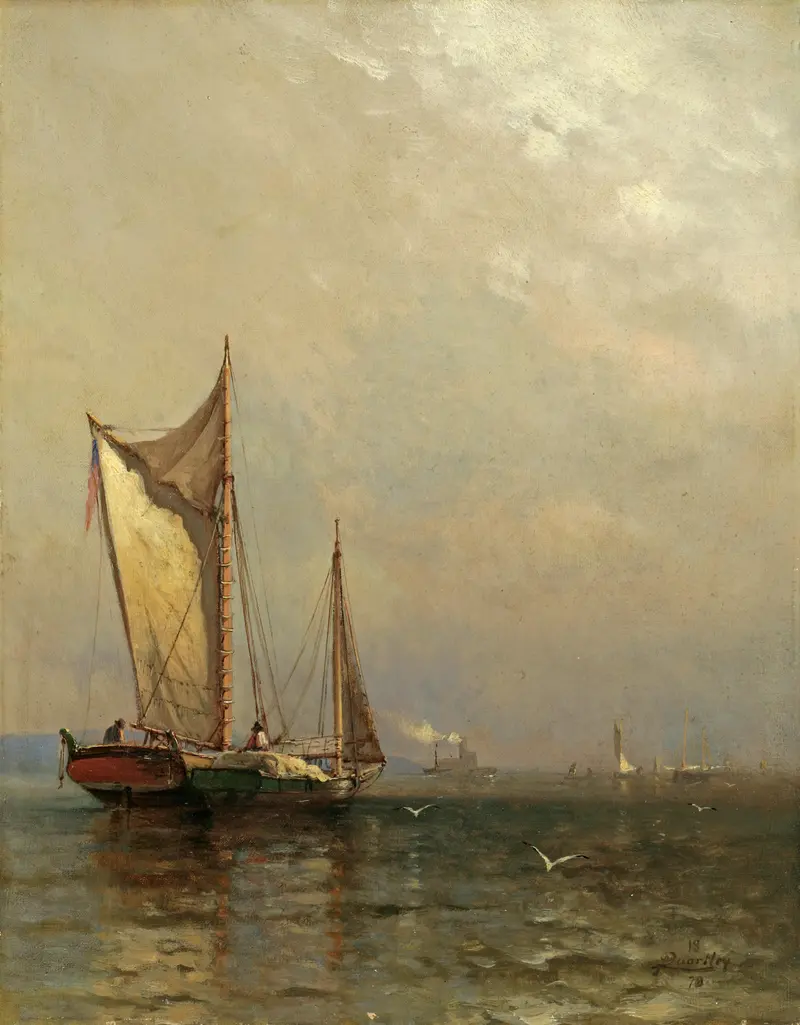
On the Hudson
Arthur Quartley
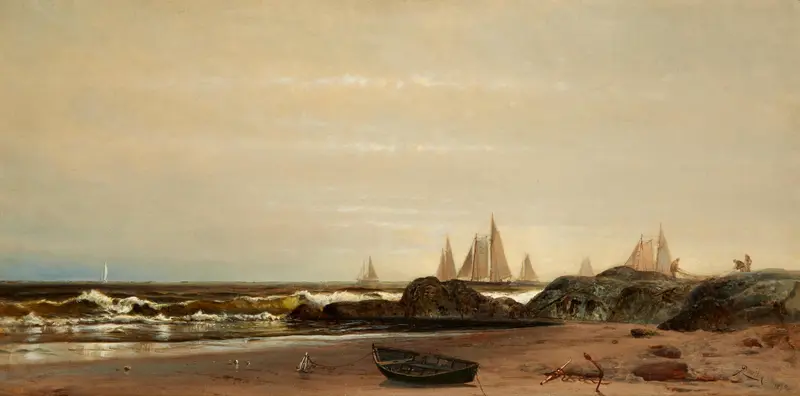
Sailing along the shore
Arthur Quartley
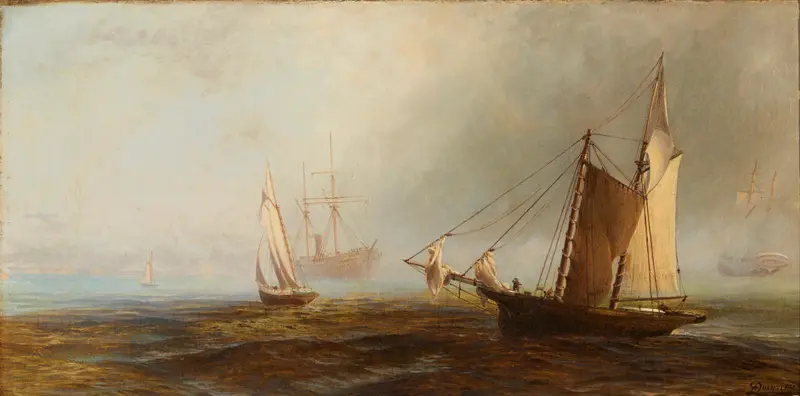
Off Cape Cod
Arthur Quartley
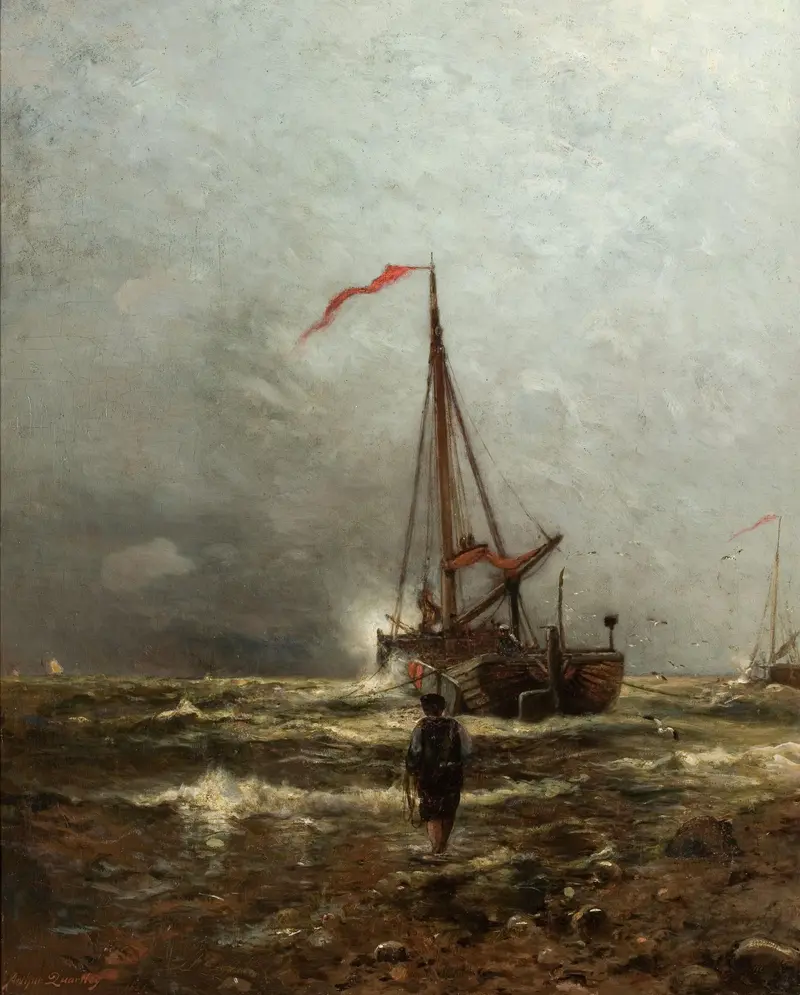
Coast of Holland
Arthur Quartley
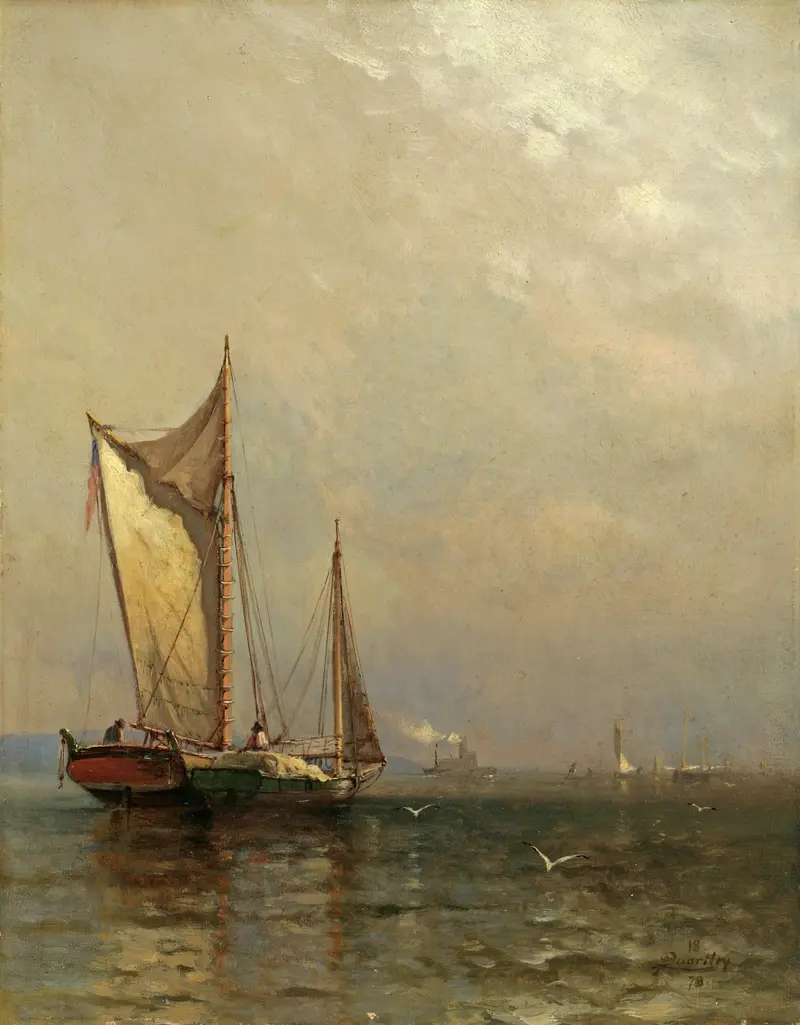
Sailboats on the Hudson
Arthur Quartley
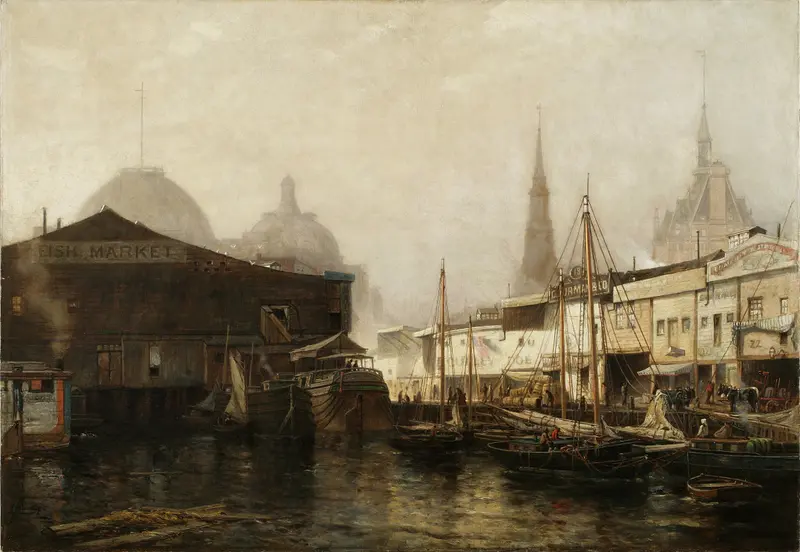
North River Pierhead
Arthur Quartley
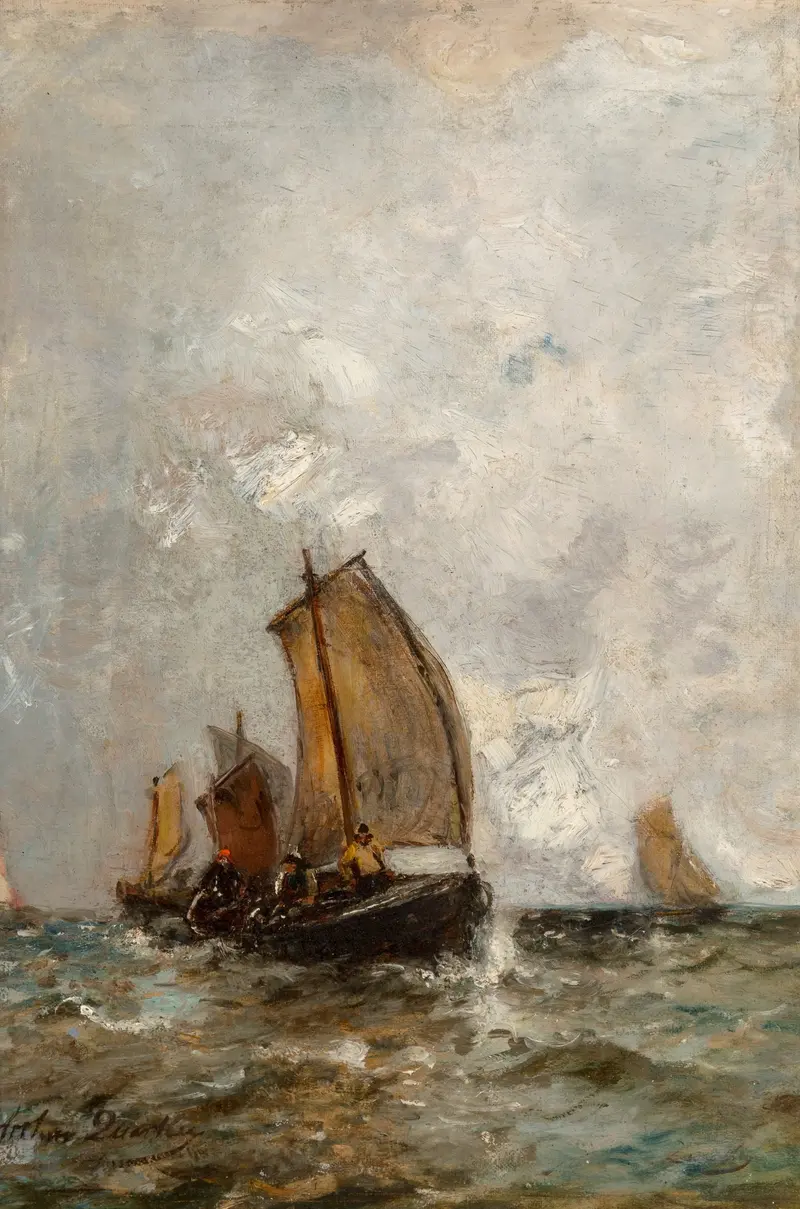
At Sea
Arthur Quartley
Indian Rock, Narragansett Bay
Arthur Quartley
A coastal scene with men piloting boats on a turbulent sea and a town in the distance
Arthur Quartley





