Indiana Landscape — History & Facts
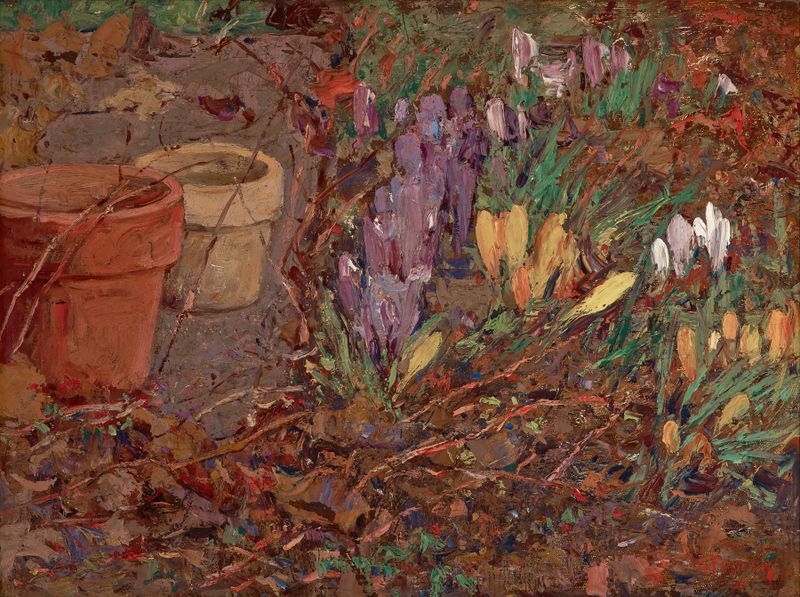
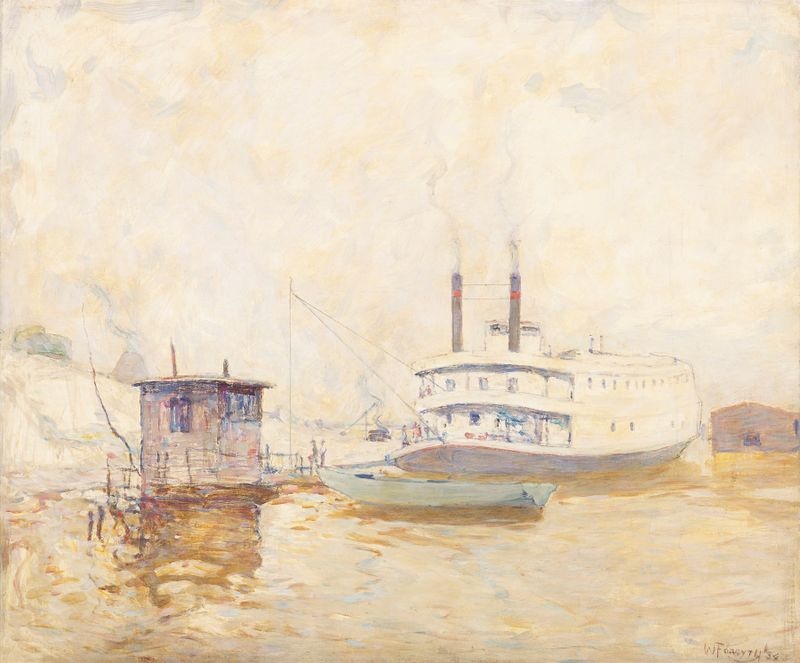
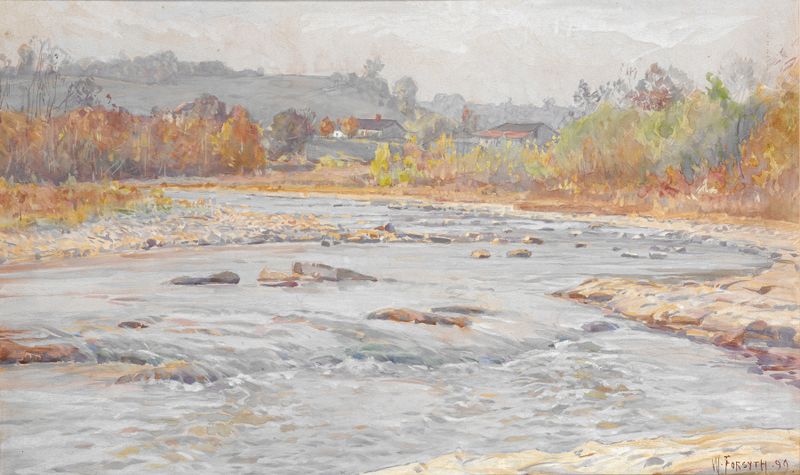
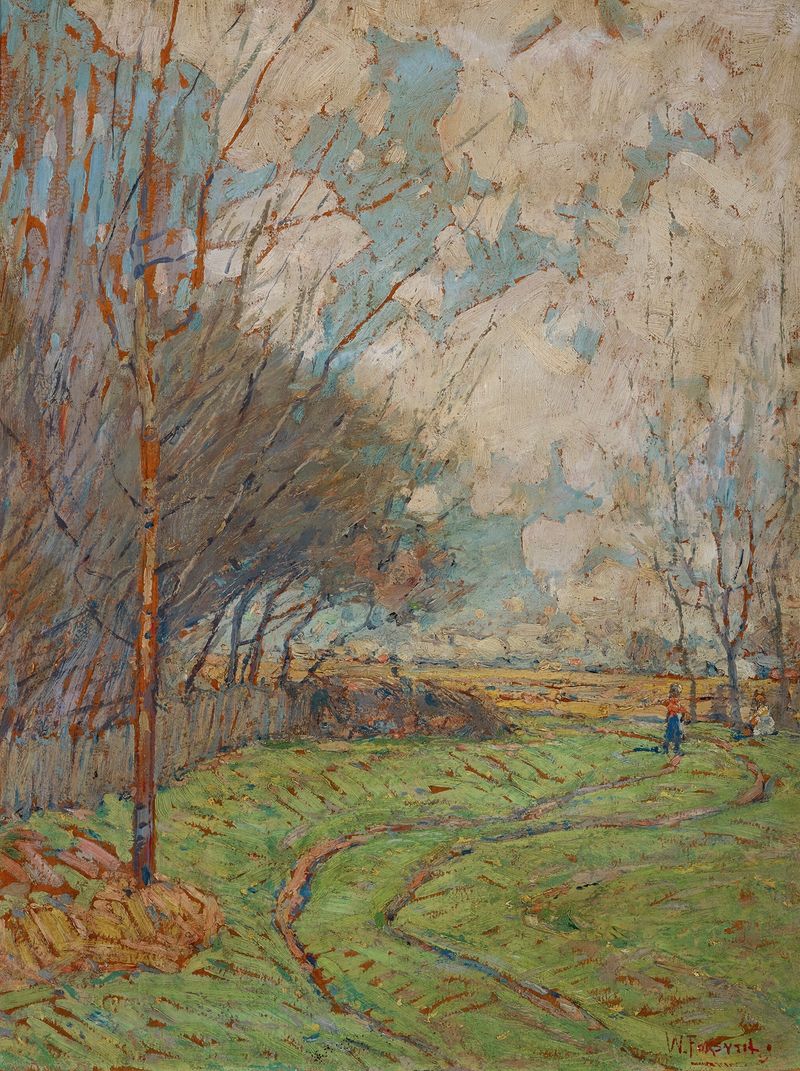
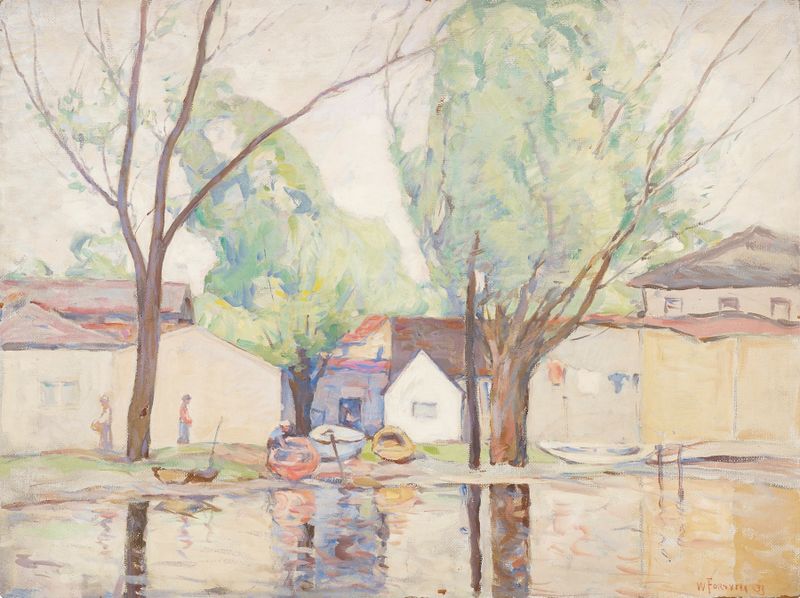
Is this a mirror — or a memory? The canvas invites viewers into a realm where movement intertwines with stillness, evoking the essence of a fleeting moment captured forever. Look to the left at the vibrant burst of greens, where the trees sway gently, their leaves quivering as if in conversation with the breeze. Notice how the soft, dappled light filters through the branches, creating a play of shadows on the ground below. The rhythmic brushstrokes convey a sense of life and energy, as if the landscape itself breathes, embodying nature's ever-changing dance.
The gentle undulations of the terrain lead the eye through this serene vista, inviting contemplation. Delve deeper into the juxtaposition of calm and movement that Forsyth masterfully portrays. The stillness of the pond, mirroring the sky, contrasts with the vibrant life surrounding it; this duality suggests an emotional tension between serenity and the ceaseless flow of time. Small details, such as the subtle ripples in the water and the way the grasses bend, hint at unseen forces, perhaps representing memory's elusive nature and our longing for permanence amidst change. Forsyth painted this landscape during a time of artistic transition, specifically in the late 19th century when the Impressionist movement began to take root in America.
Working in Indiana, he was influenced by his surroundings, reflecting the natural beauty of the Midwest while also experimenting with color and light. This period marked his evolution as an artist, leaving behind the constraints of traditional styles to embrace a more expressive approach to nature's portrayal.