Waterside — History & Facts
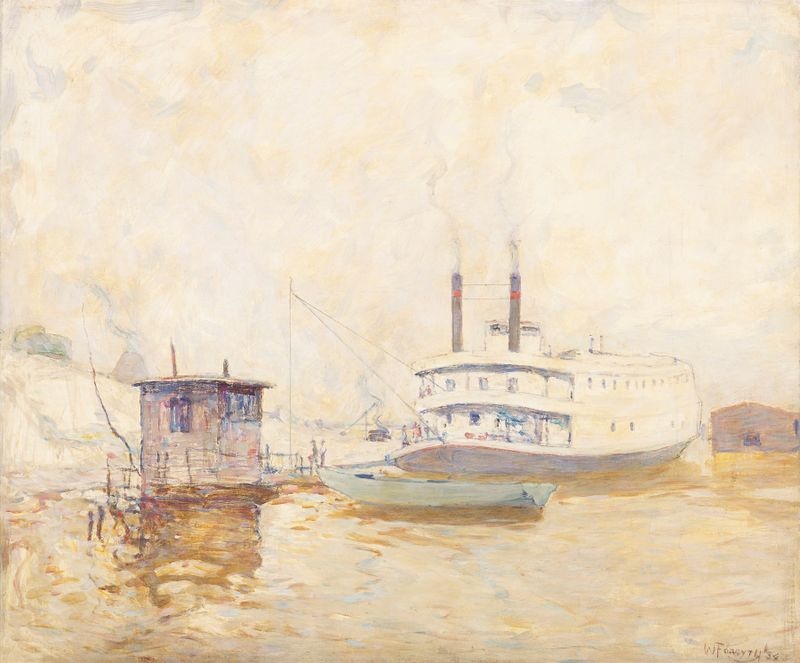
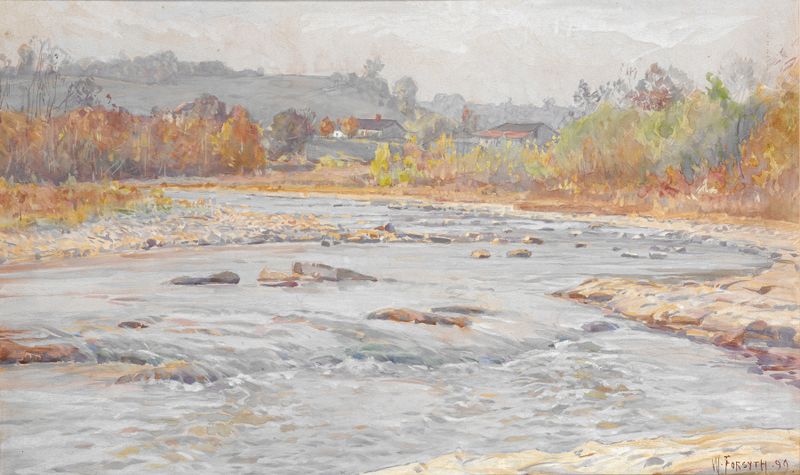
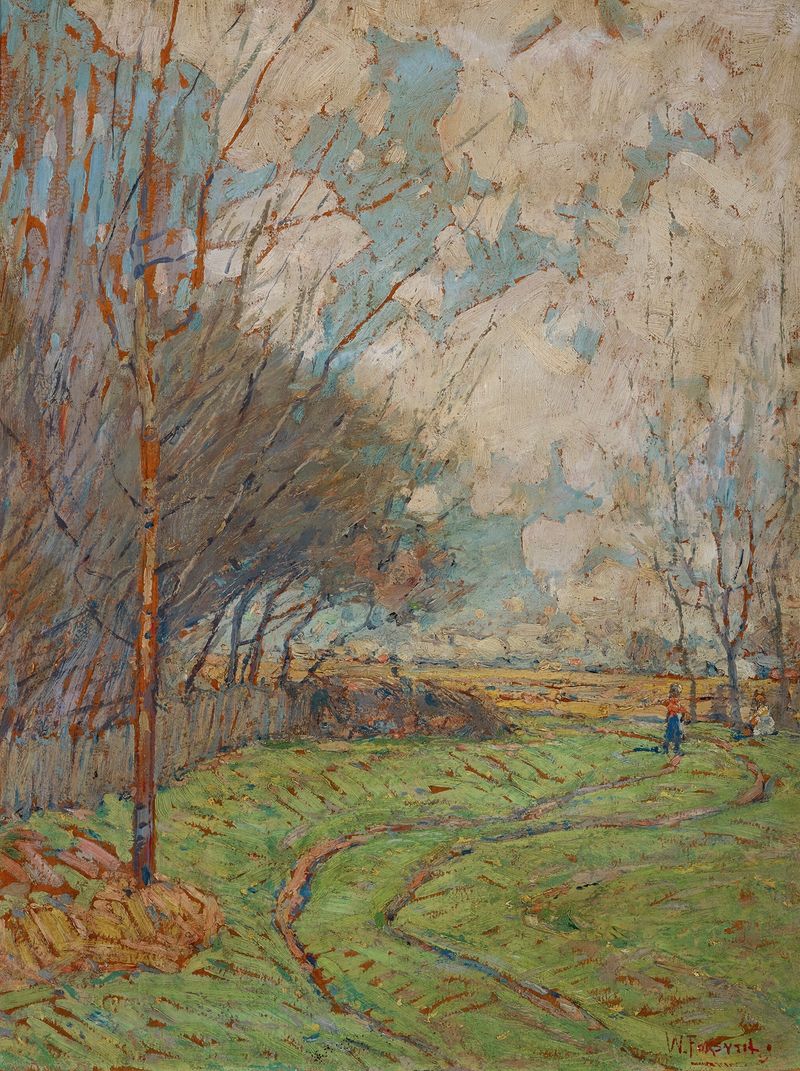
Could beauty survive in a century of chaos? In Waterside, the tension between tranquility and turmoil unfolds, inviting us to explore the delicate balance of nature amidst the noise of existence. Look to the center of the painting, where the still waters reflect a waning sun, casting a golden hue across the surface. Notice how the vibrant greens of the surrounding foliage embrace the scene, contrasting sharply with the encroaching shadows that creep in from the edges. Forsyth’s brushwork is both deliberate and fluid, capturing the essence of a serene moment while hinting at the undercurrents of discord lurking just beyond view. In the interplay of light and shadow lies a profound commentary on the fragility of peace.
The calm waters may symbolize a sanctuary, but their stillness belies a world rife with chaos. Each blade of grass and every ripple in the water speaks to the transience of beauty, suggesting that even in moments of perfect harmony, the tumult of life persists just beneath the surface. Painted in 1933, Forsyth's Waterside reflects a period marked by the Great Depression and a growing unease in society. While grappling with personal challenges and the shifting tides of the art world, he sought solace in the natural environment, turning to the landscapes of his native Scotland.
This painting stands as a testament to his understanding of beauty as both a refuge and a reminder of life’s inherent complexities.