Whitewater Rapids — History & Facts
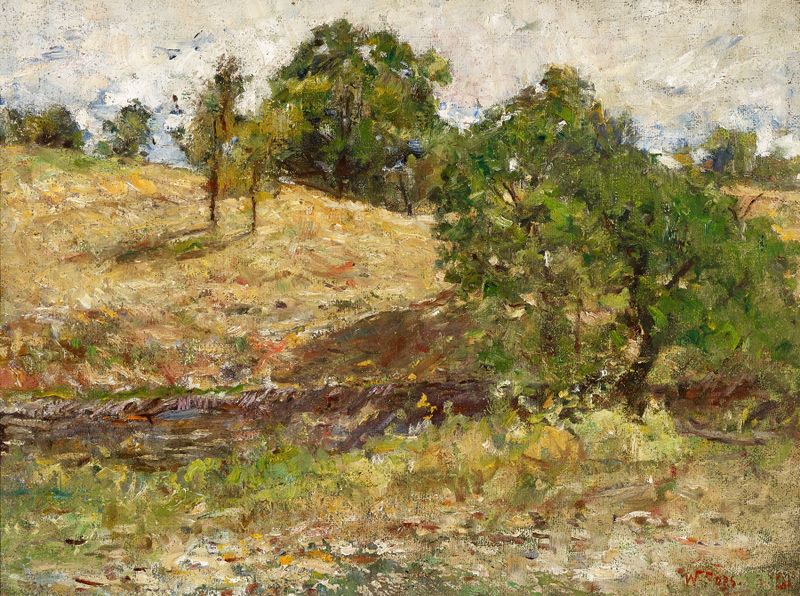
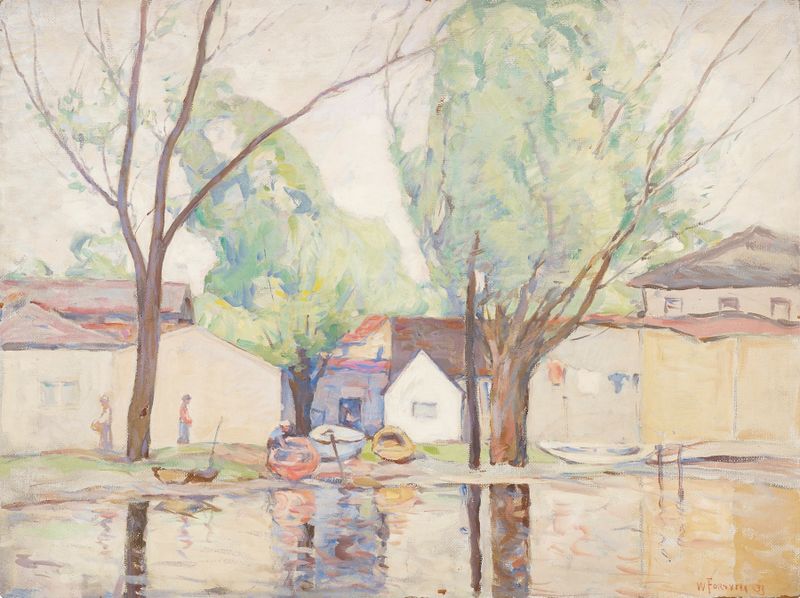
In the throes of nature's wild beauty, melancholy often hides beneath the surface, waiting to be discovered. Look to the left at the crashing tumult of the rapids, where frothy white water churns against dark rocks. The artist employs a palette of deep greens and browns, imbuing the scene with a sense of earthy grounding, while the vibrant whites and frosty blues of the water contrast sharply. The swirling motion of the currents draws the viewer's gaze, creating a sense of both chaos and rhythm, as if the landscape itself holds its breath, caught in the moment before release. Notice the subtle interplay between light and shadow, especially where sunlight breaks through the canopy, illuminating the water’s surface like fleeting memories.
This juxtaposition evokes a feeling of impermanence, hinting at the emotional weight carried by nature itself. The wildness of the rapids speaks to both exhilaration and loss, suggesting that beauty can often be tinged with sorrow. Forsyth painted this work in 1899, during a time when the American art scene was evolving, embracing naturalism and impressionism. Living in the vibrant artistic community of the Great Lakes, he sought to capture the raw energy of the landscape that surrounded him.
His dedication to plein air painting reflected a desire to connect deeply with nature, mirroring the tumult of life itself, a sentiment that resonates within the depths of Whitewater Rapids.