Ohio River Boat — History & Facts
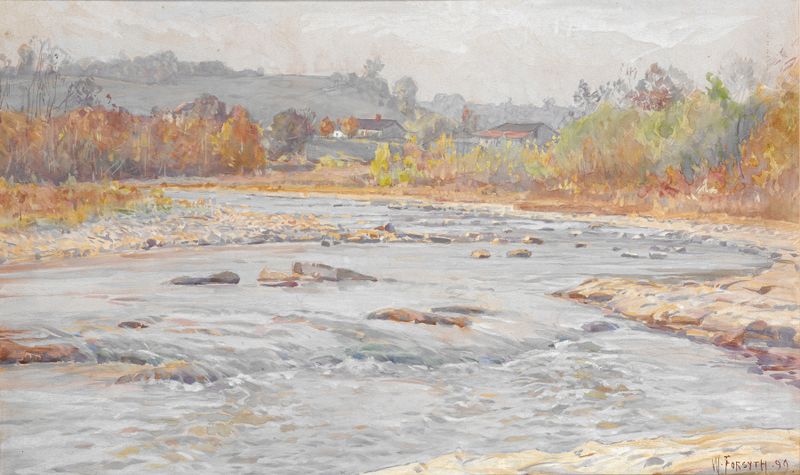
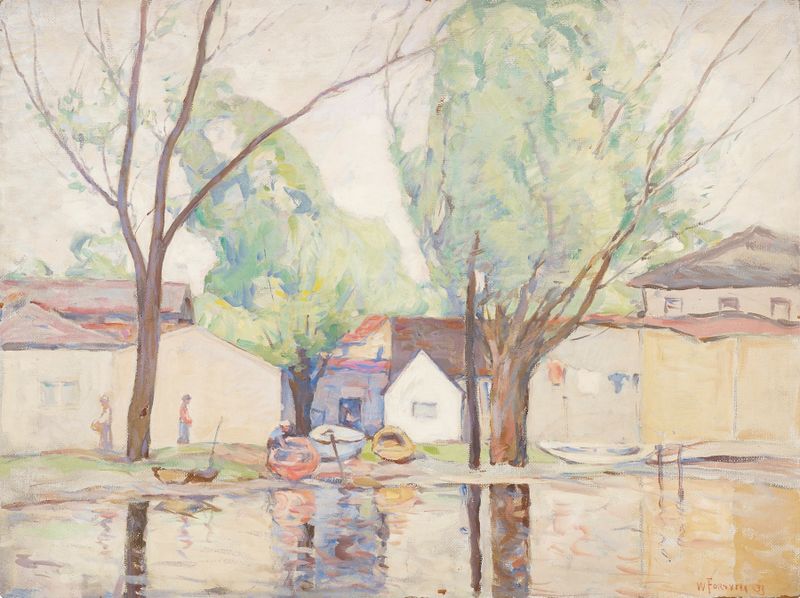
In Ohio River Boat, the viewer is invited to navigate the illusion of a fleeting moment, where water and light coalesce in an ephemeral embrace. The painting captures not merely a landscape but the delicate dance between presence and absence, where memories ripple like the river itself. Look to the left and focus on the gentle curve of the riverbank, where soft greens and browns blend seamlessly with the glimmering blues. This gradient draws your eye toward the boat, anchored yet alive, buoyed by the subtle hues of the water.
Notice how the artist employs loose brushstrokes to evoke movement, contrasting with the precise lines of the boat, suggesting a moment suspended between serenity and motion. The light dances across the surface, illuminating the scene and creating a reflective quality that evokes both nostalgia and wonder. Delve deeper into the contrasts presented in this scene: the stillness of the boat against the lively, flowing river suggests the struggle between time's relentless passage and our desire to hold onto fleeting experiences. The surrounding foliage, depicted with vibrant greens, hints at life beyond the water's edge, yet it feels distant and untouchable, echoing the bittersweet nature of memory.
This interplay of tranquility and vitality encases the viewer in a sense of yearning for moments that ultimately slip away. In 1934, William J. Forsyth painted this work in Ohio, amidst a period of artistic transition where American artists began exploring more regional themes. The rise of the Great Depression had prompted a reevaluation of identity and place, and Forsyth’s focus on the Ohio River reflects a search for beauty and solace amidst uncertainty.
This painting serves as a reminder that even in challenging times, art has the power to encapsulate the essence of life’s fleeting moments.