Interior of Lancaster House — History & Facts
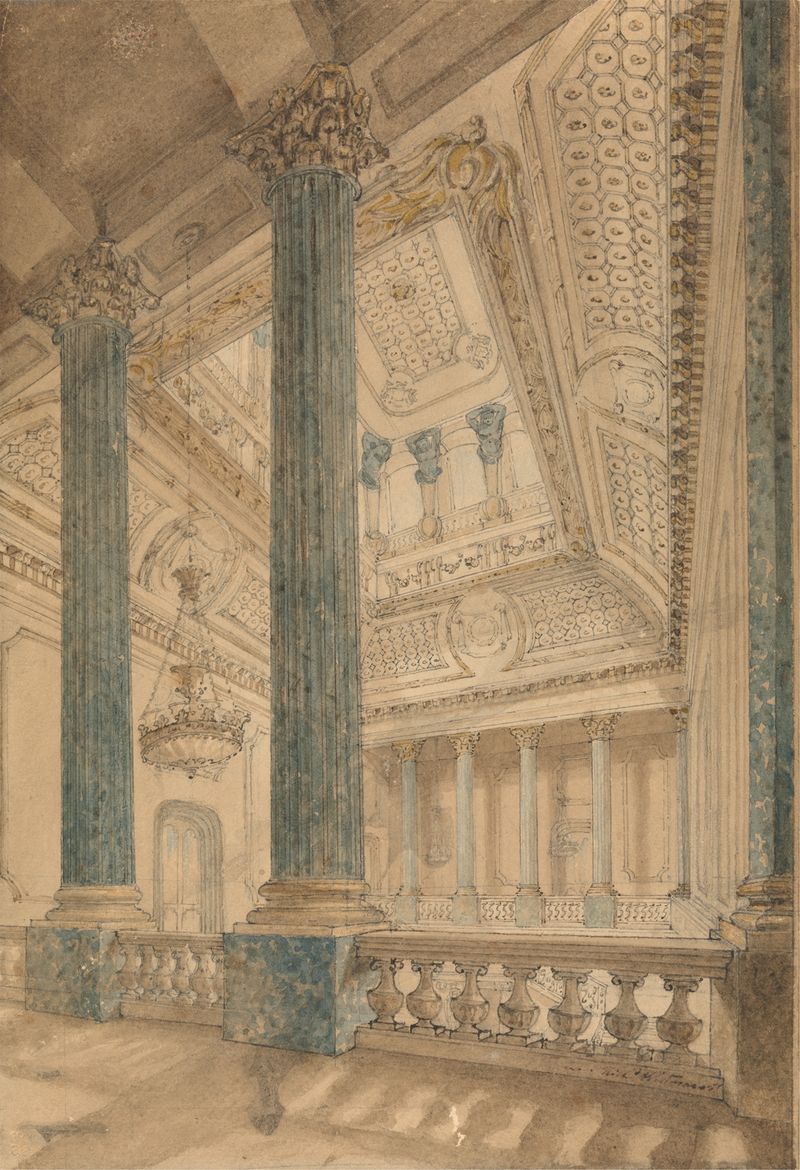
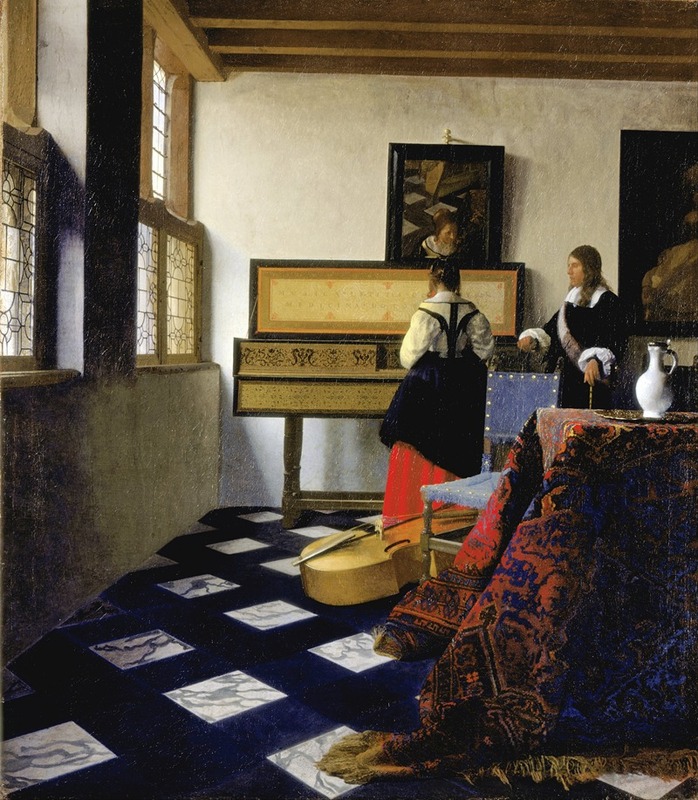
Did the painter know this moment would outlive them? Within the elegant confines of Interior of Lancaster House, the beauty of a bygone era is encapsulated in tranquil frames, waiting to awaken the viewer's senses. Focus on the interplay of light and shadow that dances across the room. The delicate chandelier hangs in mid-air, casting a warm glow that softens the architectural lines of the walls and the meticulously arranged furnishings. Notice how the rich hues of the drapery contrast with the subtle, understated tones of the floor, inviting your eye to explore the layers of texture and detail.
Each element is a whisper of opulence and history, harmonizing effortlessly to create a space that feels both alive and preserved. Within this serene setting lie deeper narratives of power and privilege. The careful arrangement of objects hints at a life lived in comfort, yet there is a stillness that suggests the absence of its inhabitants. The juxtaposition of grandeur against a sense of solitude raises questions about what was once shared within these walls, evoking a yearning for connection that echoes through time.
The painter’s mastery allows us to feel the pulse of history, reminding us that every still moment carries untold stories. Created in an indeterminate time, Interior of Lancaster House reflects Sir Richard Westmacott's engagement with neoclassical ideals, showcasing his skill in conveying both elegance and realism. During this period, as the art world began to embrace new movements, Westmacott was establishing his reputation as a sculptor and painter, deeply influenced by the classical traditions while also navigating the evolving aesthetic landscape of the 19th century.