Interior of the St Laurenskerk, Rotterdam — History & Facts
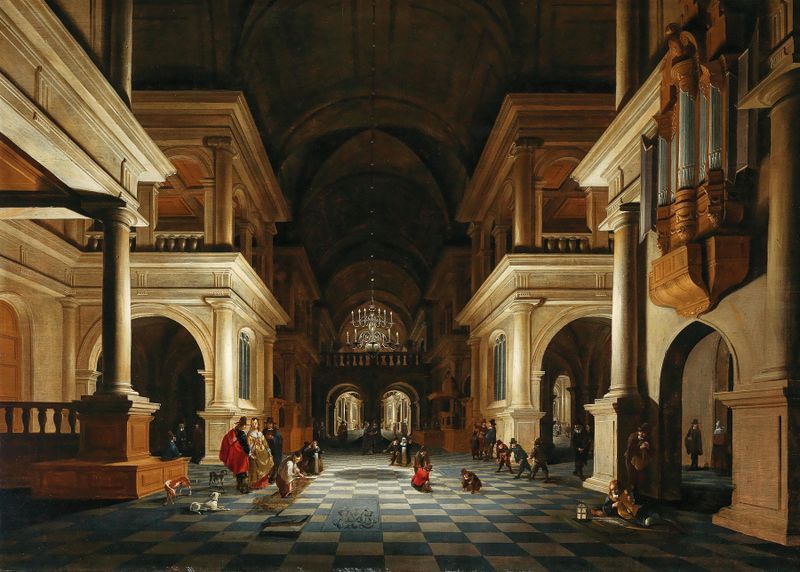
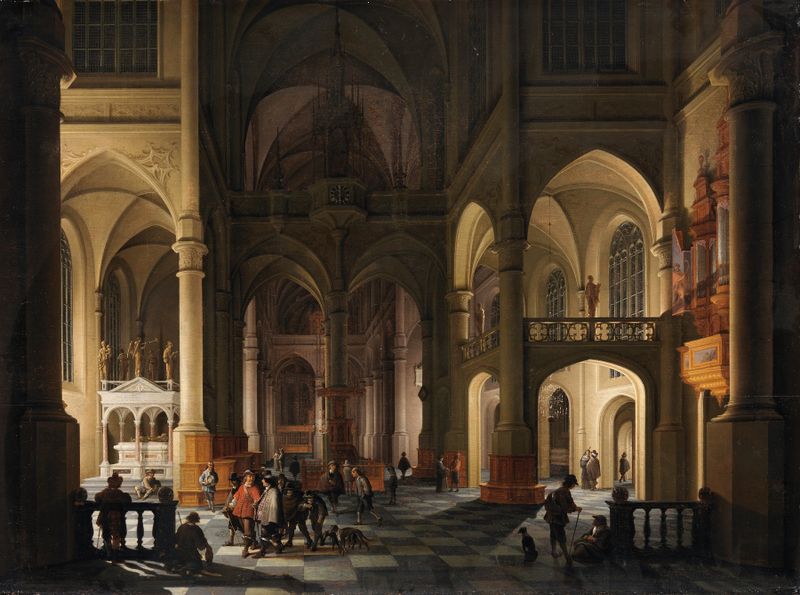
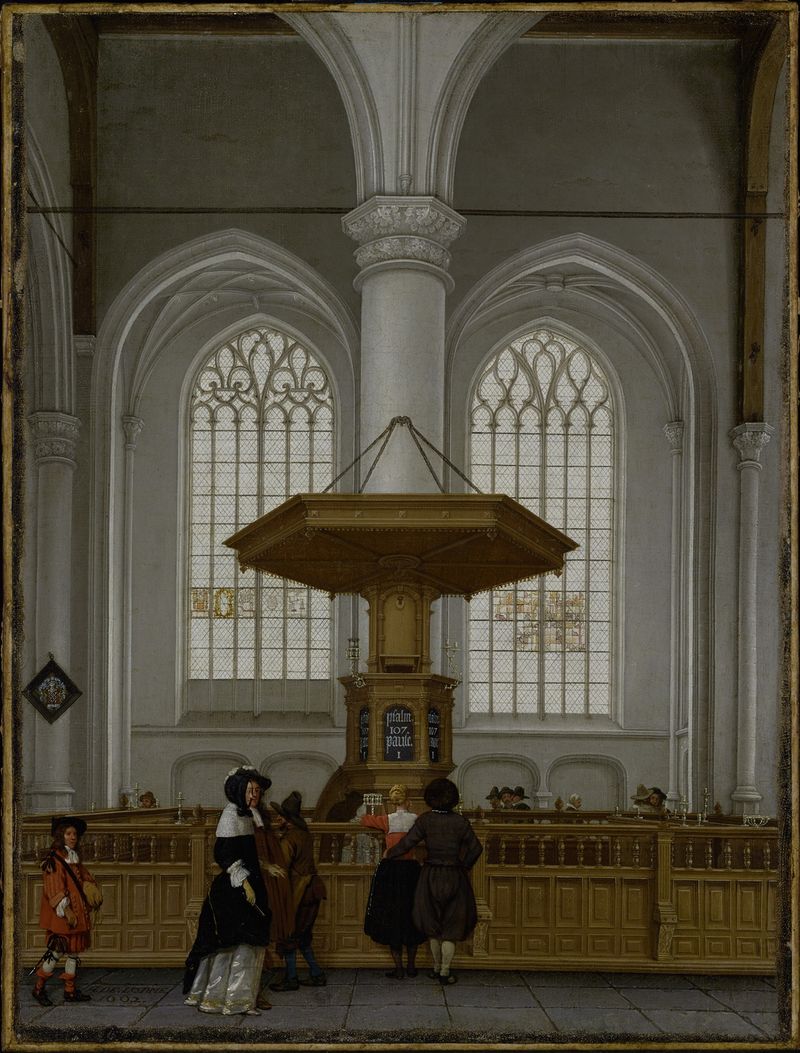
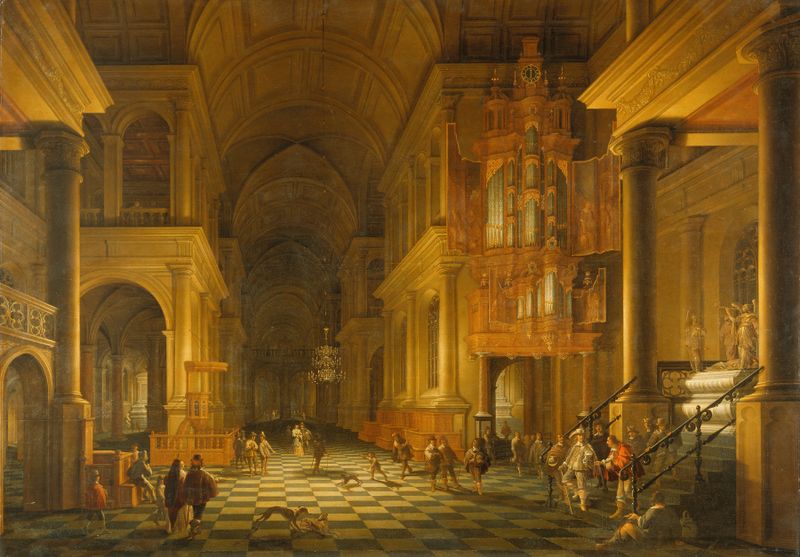
In the hushed serenity of the St. Laurenskerk, beams of light dance through soaring stained glass, illuminating a sacred space caught between the past and the present. The architecture speaks of resilience and transformation, a testament to both faith and artistry.
Shadows mingle with vibrant hues, capturing the essence of a moment where stillness reigns, yet whispers of history echo softly. Look to the left at the grand columns, their muted stone rising majestically to the vaulted ceiling. The artist skillfully uses light to highlight the intricate details of the church’s interior, creating a sense of depth that draws you into the scene. Notice how the warm tones of the wooden pews contrast with the cooler, somber hues of the stone, establishing a dialogue between warmth and reverence.
The careful arrangement of figures — the parishioners, small yet significant — infuses the artwork with humanity, inviting reflection on the spiritual experience. Delve deeper and consider the interplay between light and shadow, representing the tension between the divine and earthly realms. The illuminated areas evoke a sense of hope and faith, while the darker corners whisper of uncertainty and solitude. Each figure’s posture tells a story; some are absorbed in prayer, while others simply gaze, lost in contemplation.
This emotional spectrum enhances the painting's narrative, illustrating the transformative power of religion and art alike. Anthonie de Lorme created this tranquil masterpiece during the mid-1600s in the Netherlands, a time when the influence of Protestantism shaped the country’s artistic landscape. The St. Laurenskerk, a symbol of endurance amid urban changes, served as an ideal subject for the artist, reflecting both the architectural and spiritual shifts of Rotterdam in a period marked by regeneration and introspection.