The interior of a church with elegant figures — History & Facts
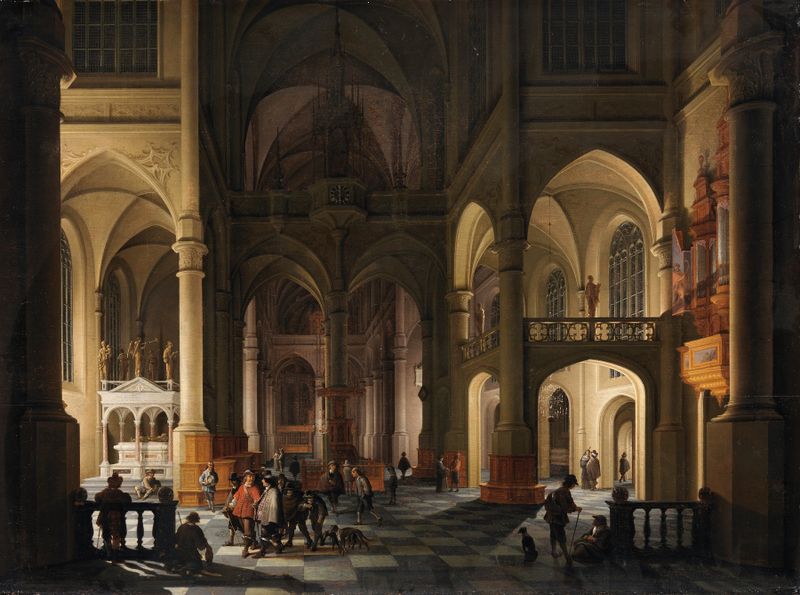
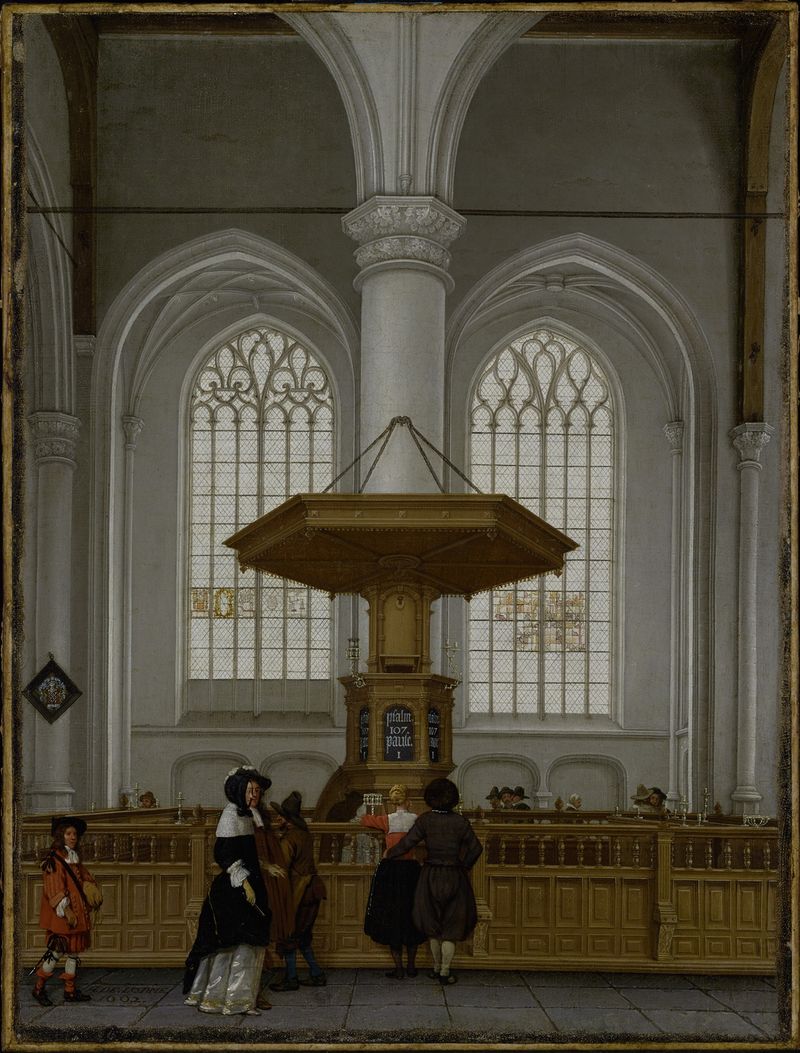
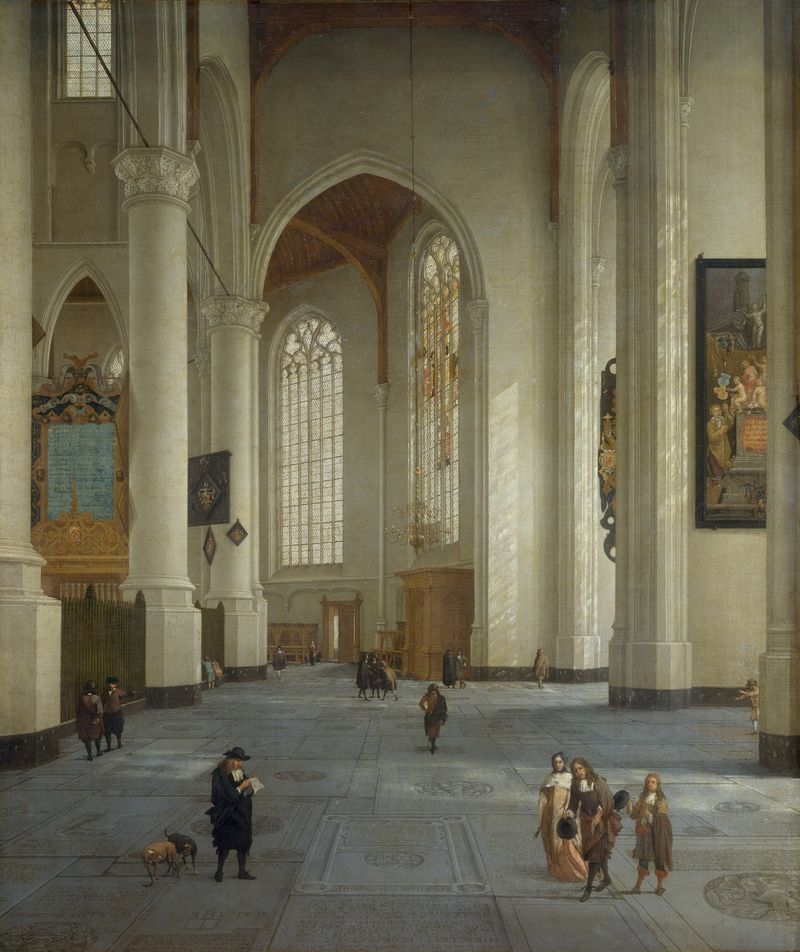
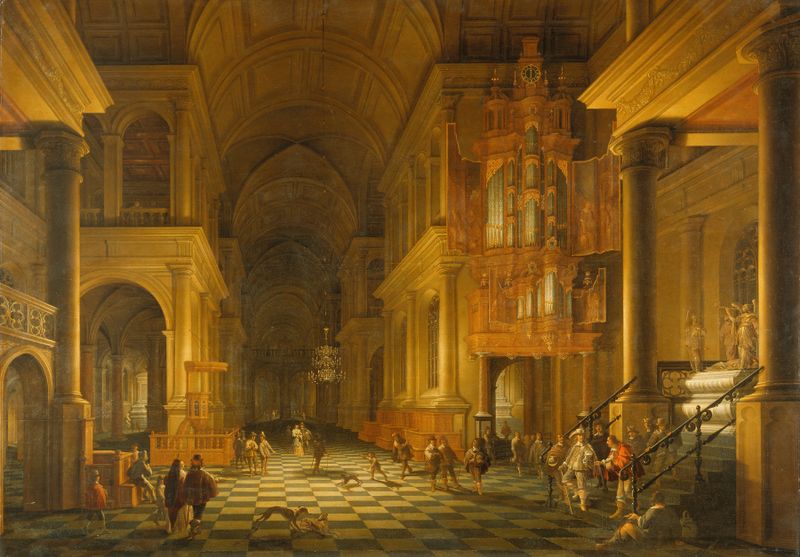
Could beauty survive in a century of chaos? In the midst of turmoil, artistic expression often emerges as a beacon of hope, revealing the resilience of the human spirit. Look to the left where the sunlight streams through the stained glass, casting a kaleidoscope of colors across the floor. The elegant figures stand poised in the nave, their intricate garments meticulously rendered, inviting the eye to trace the delicate folds of fabric and the subtle play of light. Notice how the warm tones of the stone walls resonate with the cool hues of the figures, creating a harmonious balance that envelops the viewer in a serene embrace. Tension lies hidden in the contrast between the serene atmosphere and the tumultuous world outside the church's walls.
Each figure is absorbed in their own contemplation, embodying a stillness that starkly contrasts with the chaos of society in 17th-century Europe. The juxtaposition of light and shadow further amplifies this duality, hinting at the struggle between faith and despair that permeated the era. Anthonie de Lorme created this work in 1632, a time marked by the Thirty Years' War and significant strife across the continent. He painted during a period when the Baroque movement was gaining momentum, characterized by its emotional intensity and dramatic use of light.
This piece reflects not only a dedication to beauty but also a profound understanding of the sacred space as a refuge amidst the discord surrounding him.