Interno del Palazzo Cleopatra — History & Facts
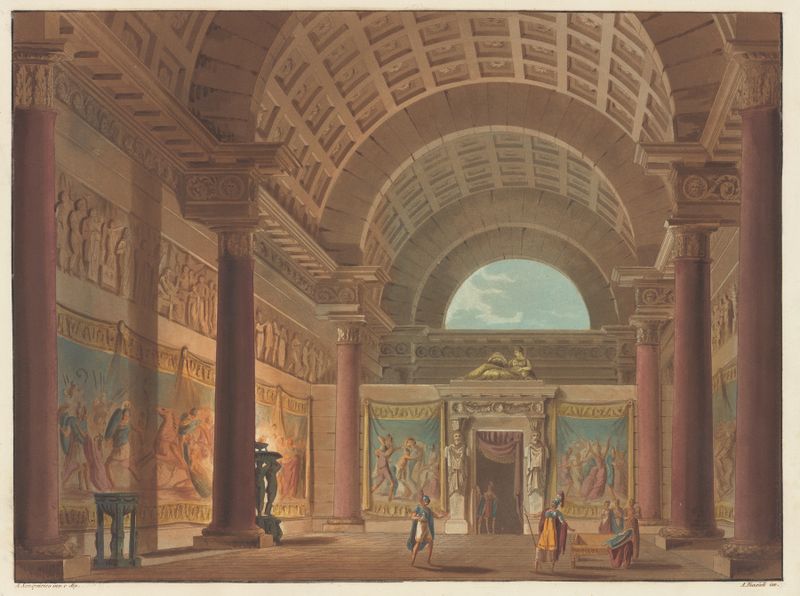
Within the hushed confines of a grand interior, desire lingers in the air like a whisper, beckoning the viewer to step deeper into the narrative woven by light and shadow. Look to the left at the intricate columns that rise majestically, their delicate details revealing a mastery of perspective. Notice how the soft glow of illumination dances along the smooth surfaces, creating a dramatic contrast against the cool palette of blues and grays. The composition draws your eyes inward, directing attention to the opulent furnishings that tell tales of both elegance and yearning, inviting exploration yet concealing stories behind closed doors. As you absorb the sumptuous setting, reflect on the emotional tensions mirrored in the artwork.
The lavish decor hints at aspirations and the bittersweet nature of unfulfilled desires. The interplay between grandeur and emptiness evokes a longing, suggesting that within these walls, the lives of inhabitants carry unexpressed hopes and dreams. The stillness speaks volumes, allowing viewers to feel the weight of what remains unspoken. In 1822, when this work was created, the artist found himself deeply immersed in the cultural revival of neoclassicism.
Living in Milan, Sanquirico was influenced by the flourishing theatricality of the period, which instilled a sense of drama and narrative depth. His artistic journey during this time reflects a yearning to capture not just the physical beauty of spaces, but the profound emotions that dwell within them, bridging the external and internal realms of desire.