Irises — History & Facts
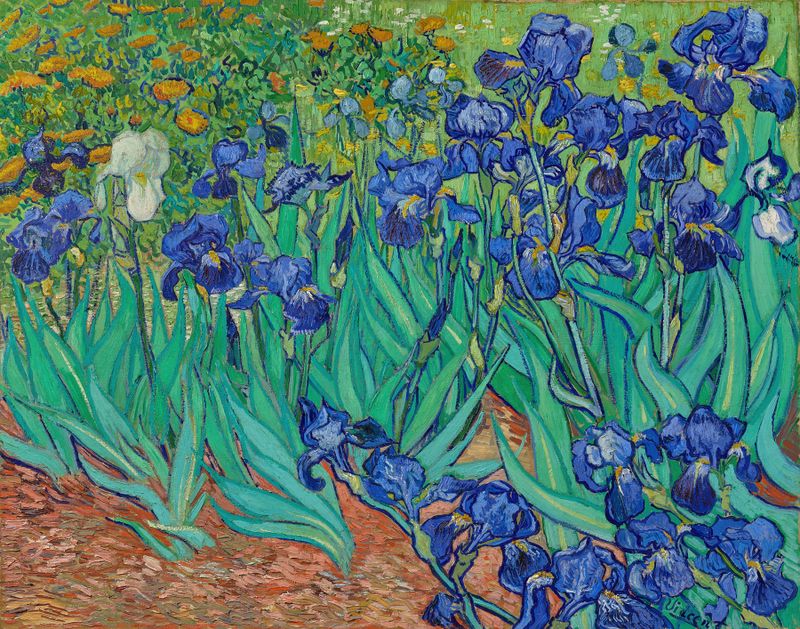
In a world where stillness dances with vibrant hues, the essence of movement resonates profoundly. Focus on the rich, swirling blues and purples that dominate the canvas, inviting your gaze into a serene yet dynamic interplay of color. Notice how the irises stretch upwards, their forms almost alive, as if caught mid-bloom in a warm spring breeze. The brushstrokes are expressive and fluid, blurring the lines between individual petals and a collective symphony of nature, suggesting a world in perpetual flux. Consider the contrast between the vibrant flowers and the softer green and earth tones surrounding them.
This juxtaposition emphasizes the irises' vivacity, portraying not just beauty but the transient nature of life itself. Each brushstroke seems to pulse with energy, encapsulating a fleeting moment in time—each flower a reminder of both resilience and fragility. The movement within the composition speaks to the cycle of life, where beauty is both celebrated and mourned. Created in the last years of his life, this work reflects the poignant journey of Monet during 1914 to 1917 while he grappled with deteriorating eyesight.
As he faced his declining vision, he turned to his beloved garden in Giverny, seeking solace in the vibrant colors around him. This period marked not only personal challenges but also a significant moment in art history, as the Impressionist movement began to pave the way for modern abstraction, capturing the fleeting experiences of light and atmosphere.