
Irises — History & Facts
A dense cluster of irises fills the lower half of the canvas, their pale violet petals emerging from thick, sweeping leaves rendered in vivid greens and yellows. Above the irises, the composition shifts into a swirling field of green and ochre, with no clear horizon or boundary to separate earth from air or water. The brushwork is broad and textured, with visible ridges of paint that create a tactile, encrusted surface across the entire painting.
Small dabs of blue and purple punctuate the greenery, suggesting individual blossoms or patches of shadow among the leaves. The composition is nearly square, and the irises are arranged without a central focus, encouraging the viewer’s gaze to wander across the surface rather than settle on a single point. The upper section is dominated by loose, circular strokes of green and orange, evoking a sense of movement and depth without depicting any specific object or background. The painting is part of a series of large works created during World War I, in which Monet explored the effects of scale and surface by eliminating a clear horizon and immersing the viewer in a field of color and form.
According to the Art Institute of Chicago, the work’s disorienting surface and lack of spatial depth suggest water, with vegetal and floral forms floating across it. After Monet’s death in 1926, Irises and related canvases remained in his studio at Giverny and were only rediscovered in the 1950s, having suffered localized shrapnel damage during World War II. In 1956, the painting was purchased from Katia Granoff’s gallery in Paris by Katherine Kuh, the Art Institute’s curator of modern art, who saw a connection between Monet’s late style and the rise of large-scale abstraction.
The museum notes that Monet’s experimental approach in this late work resonates with the public’s interest in abstract painting, as seen in the acquisition of Jackson Pollock’s Greyed Rainbow the previous year. The provenance traces the painting from Monet to his son Michel, then to Katia Granoff, and finally to the Art Institute of Chicago. Irises has been exhibited at the Art Institute of Chicago in major shows dedicated to Monet’s work, including the 1957 retrospective and the 2020–21 exhibition Monet and Chicago.
Sources: Art Institute of Chicago, record 1956.1202 · Wikidata Q20268037
More Artworks by Claude Monet
Grainstack (Sunset)
Claude Monet
Bathers at La Grenouillère
Claude Monet
Women in the Garden
Claude Monet
The Artist's Garden at Giverny
Claude Monet
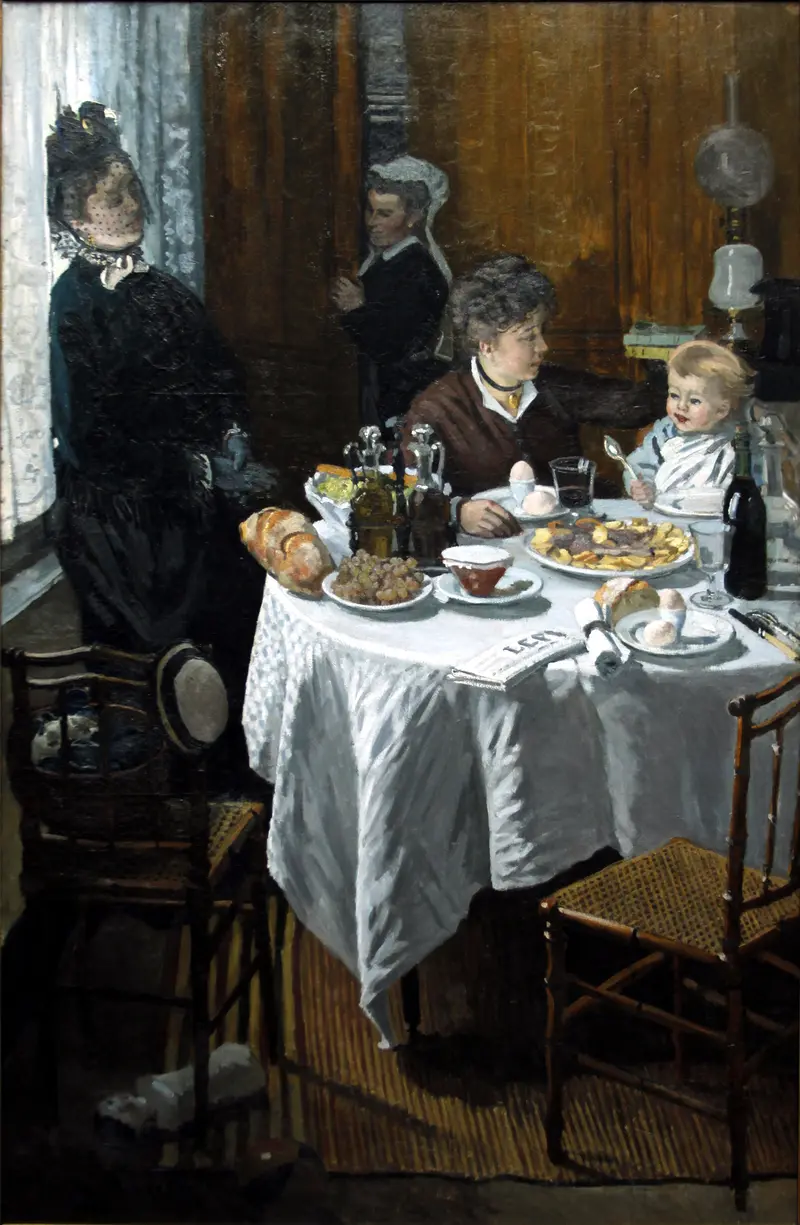
The Luncheon
Claude Monet
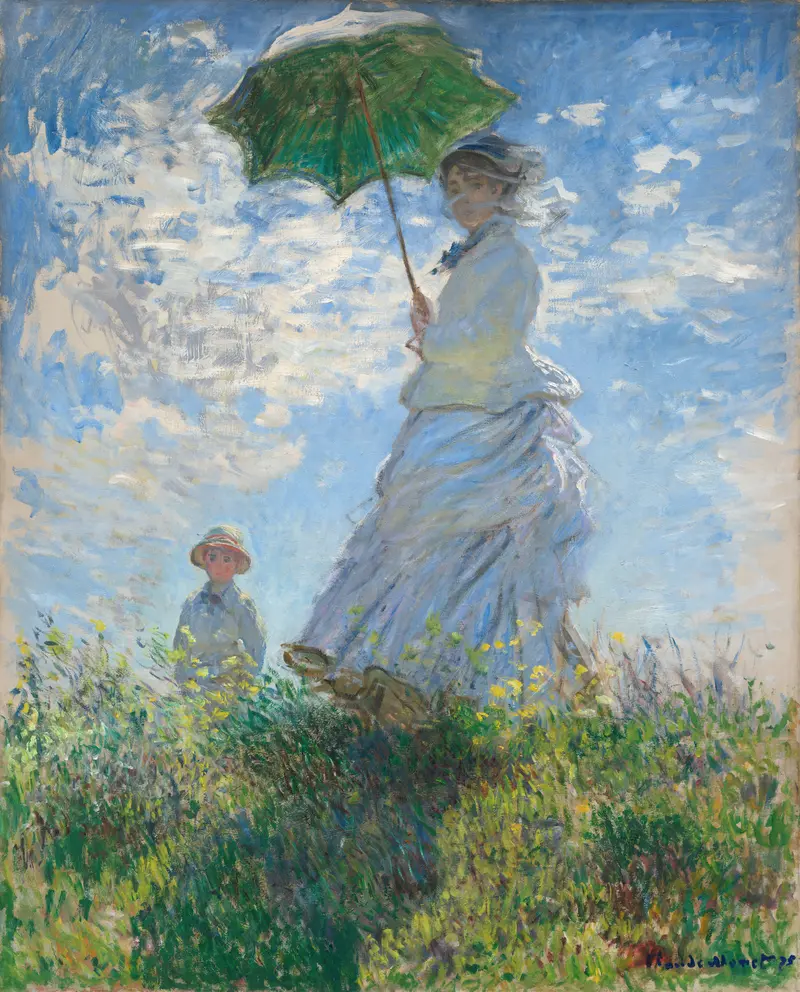
Woman with a Parasol – Madame Monet and Her Son
Claude Monet
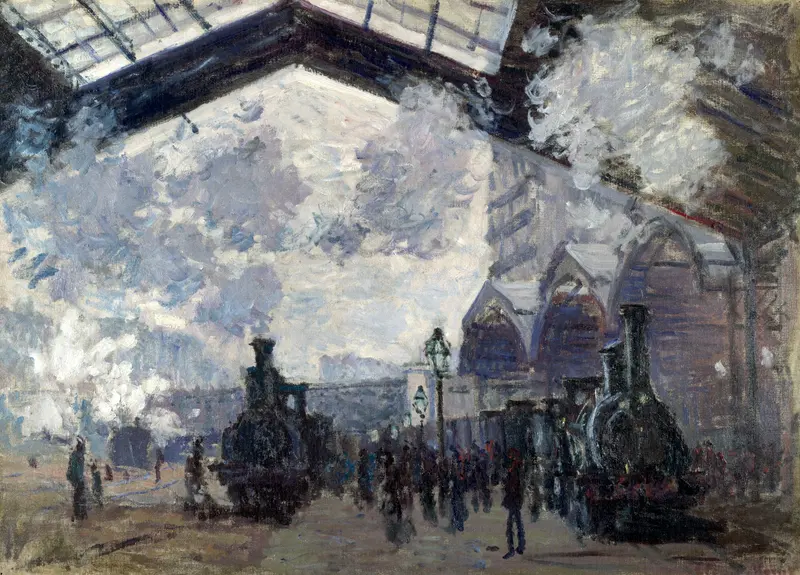
The Gare Saint-Lazare
Claude Monet
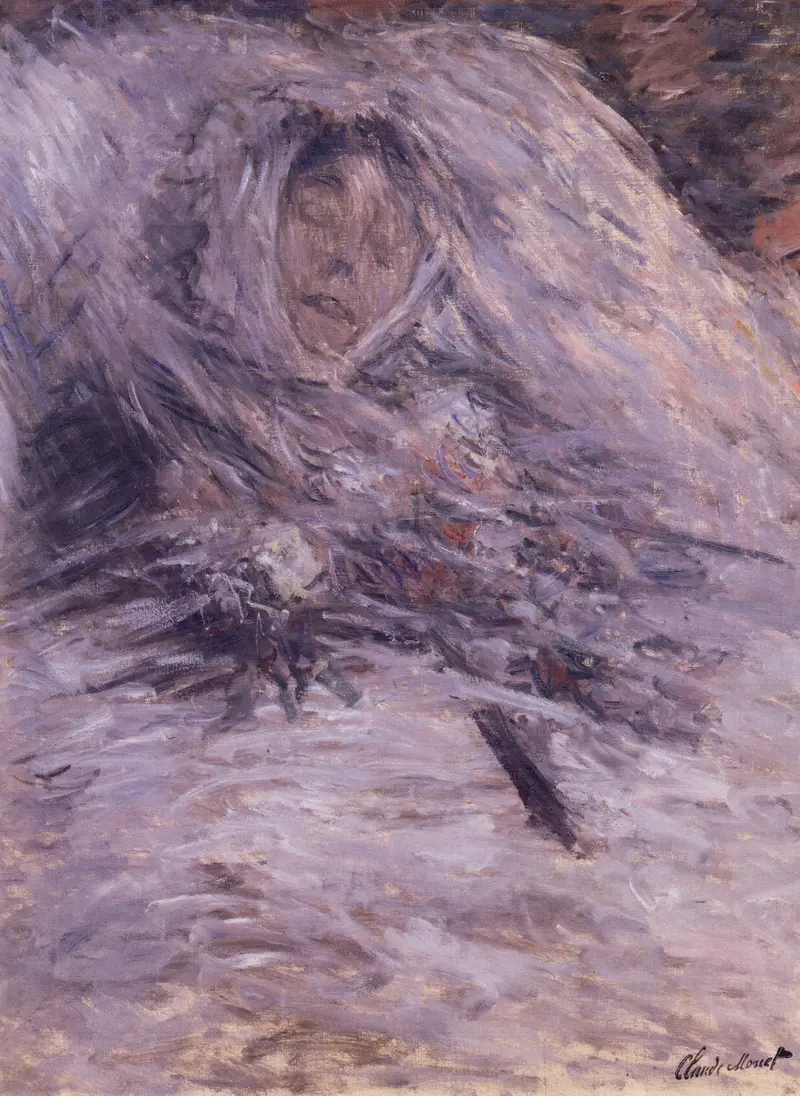
Camille Monet on Her Deathbed
Claude Monet
The Houses of Parliament, Sunset
Claude Monet
Impression, Sunrise
Claude Monet
More Landscape Art

The Starry Night
Vincent van Gogh

View of Delft
Johannes Vermeer

Water Lilies
Claude Monet

The Grand Canal, Venice, looking north-west from the Ca' Corner to the Ca' Contarini degli Scrigni, with the campanile of Santa Maria della Carità
Canaletto

Windsor Castle
Canaletto

The Grand Canal looking North-East from the Palazzo Dolfin-Manin to the Rialto Bridge
Canaletto