
Ishinomaki no bosetsu (Evening Snow at Ishinomaki) — History & Facts
How do we capture the ephemeral beauty of life, especially as it drifts into memory like falling snowflakes? Focus first on the delicate interplay of blue and white, where the crisp twilight sky meets the soft, powdery ground. The gentle gradient of twilight hues envelops the scene, drawing you into the tranquil moment. Notice how the faint outlines of traditional buildings emerge from the snow, their eaves heavy with winter's embrace.
Each stroke of paint is carefully laid, echoing the serenity of a world quieted by falling snow, inviting reflection and stillness. The contrasts in this work evoke deeper feelings of solitude and mortality. While the serene snow creates a sense of calm, the stark silhouettes of the structures hint at the lives that once thrived within. The stillness is profound; it speaks of transience, reminding the viewer of human fragility against nature's eternal forces.
The subtle textures of the snow and the smoothness of the sky resonate, whispering stories of both what has passed and what remains. In 1935, the artist created this piece while living in Japan, a country grappling with rapid modernization and cultural shifts. Hasui was part of the shin-hanga movement, which sought to revitalize traditional ukiyo-e techniques. This work reflects not only his mastery of color and form but also a spiritual connection to the landscapes of his homeland during a time of significant transformation.
More Artworks by Kawase Hasui
Browse all →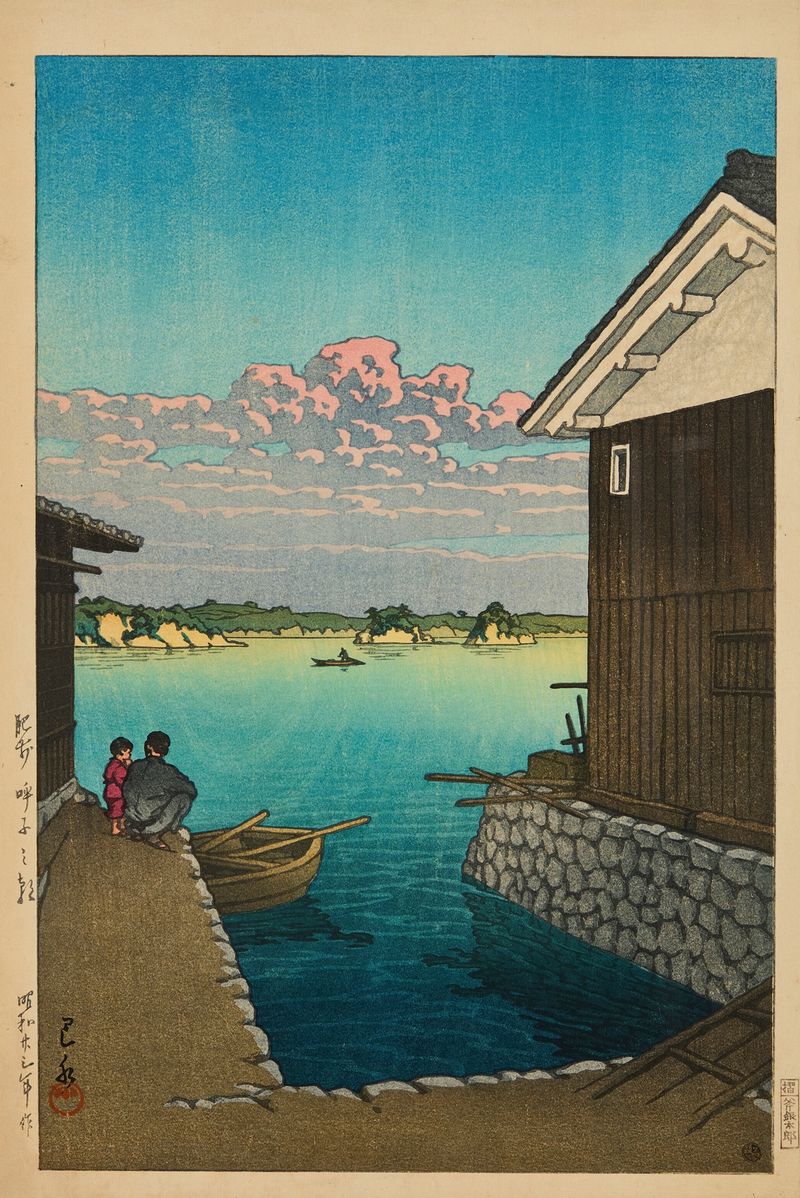
Hizen Yobuko no asa (Morning in Yobuko, Hizen)
Kawase Hasui
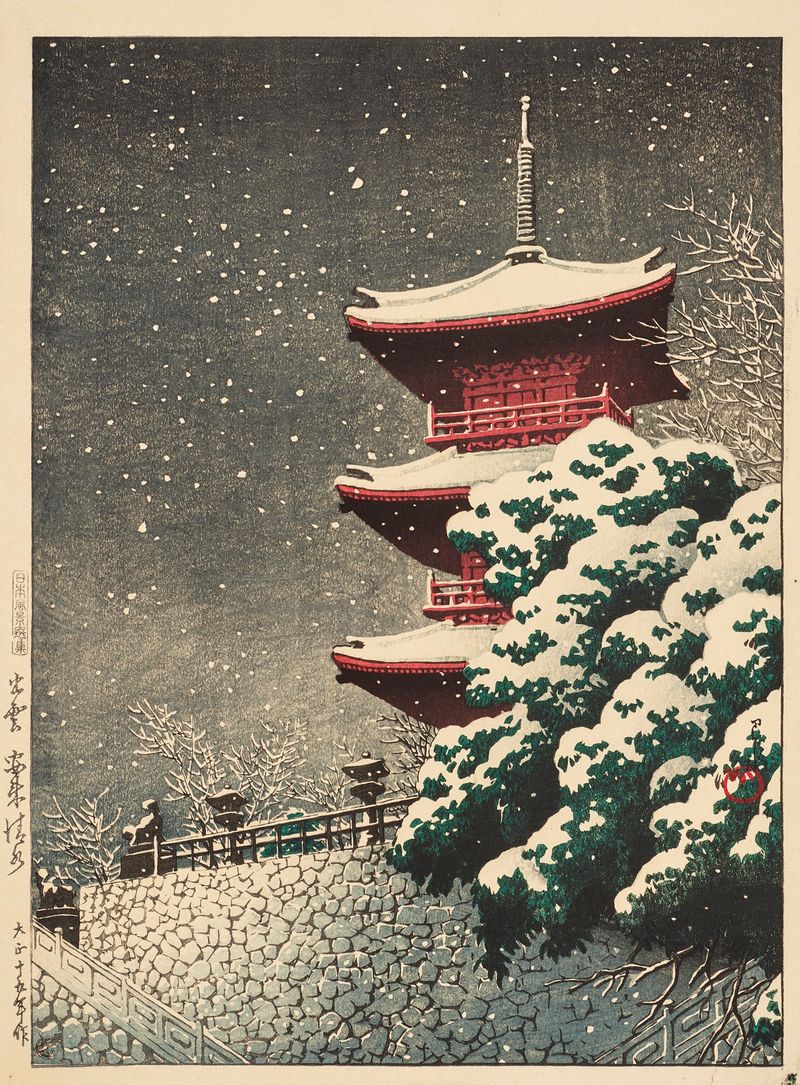
Izumo, Yasugi Kiyomizu (Yasugi Kiyomizu Temple at Izumo)
Kawase Hasui
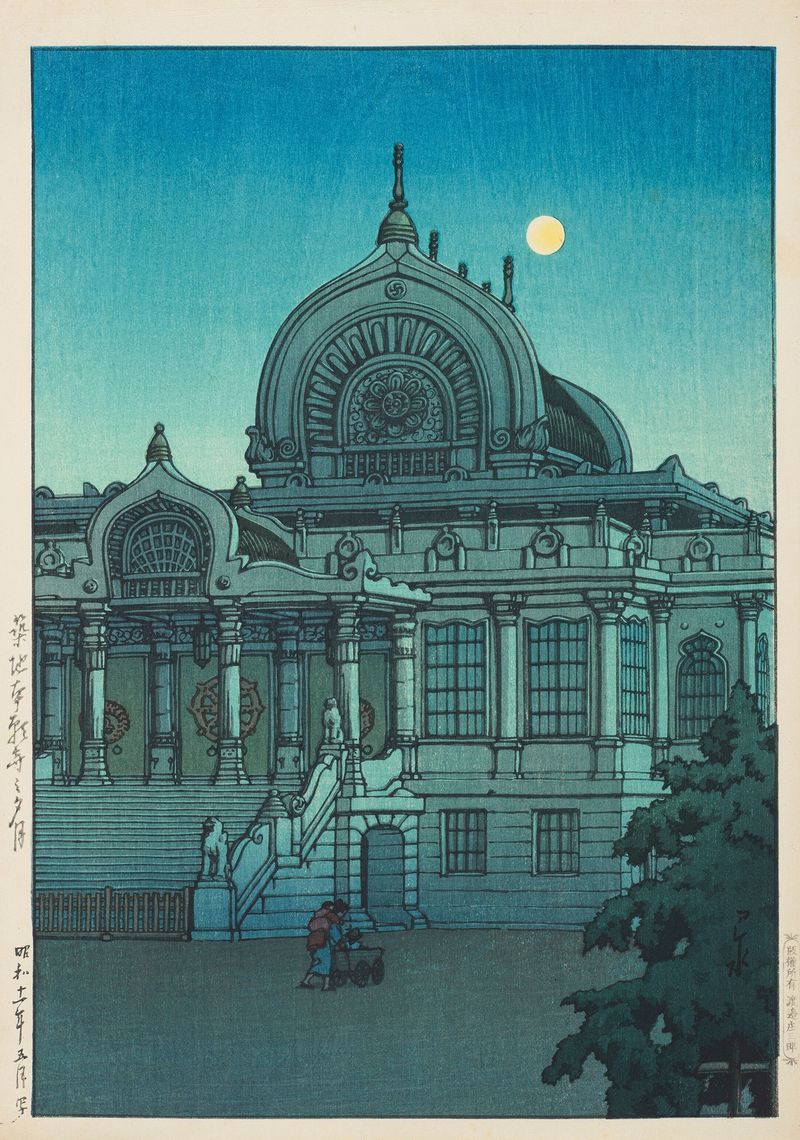
Tsukiji Honganji no yuzuki (Evening moon at Honganji Temple in Tsukiji)
Kawase Hasui
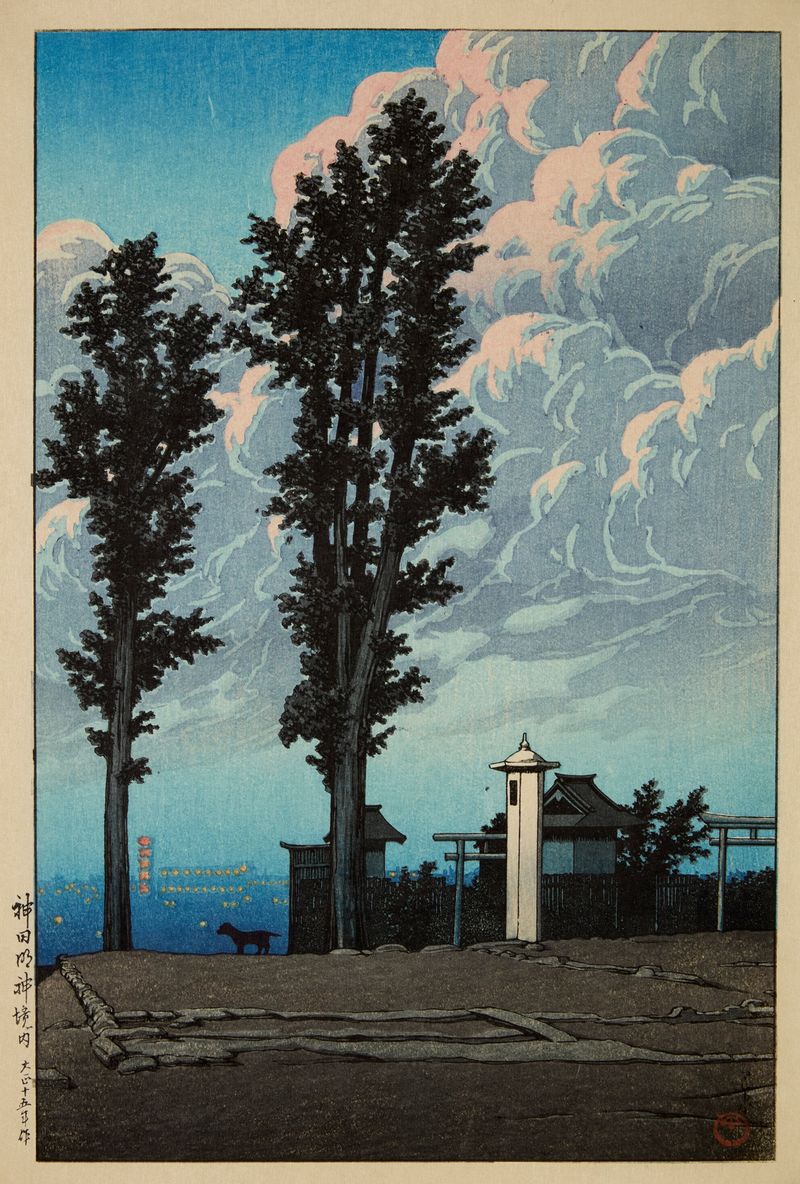
Kanda Myojin keidai (Kanda Myojin Shrine precent)
Kawase Hasui
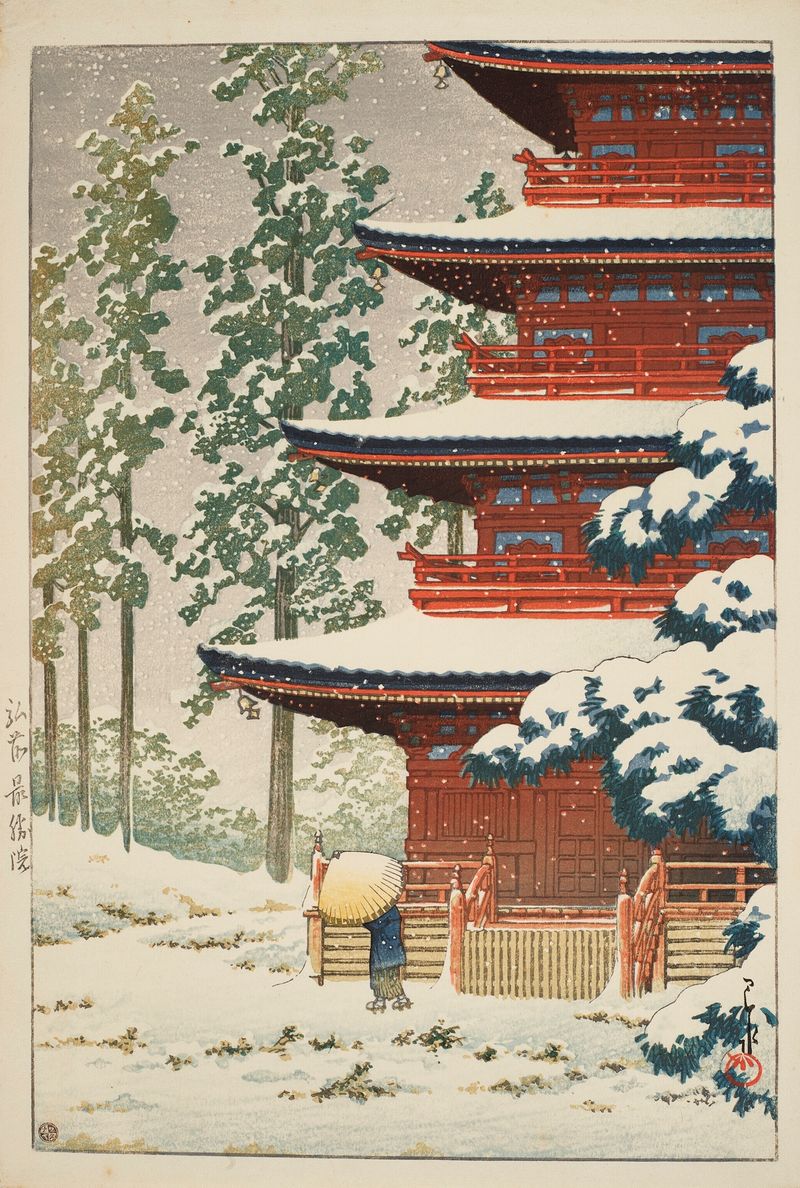
Saisho-in Temple, Hirosaki
Kawase Hasui
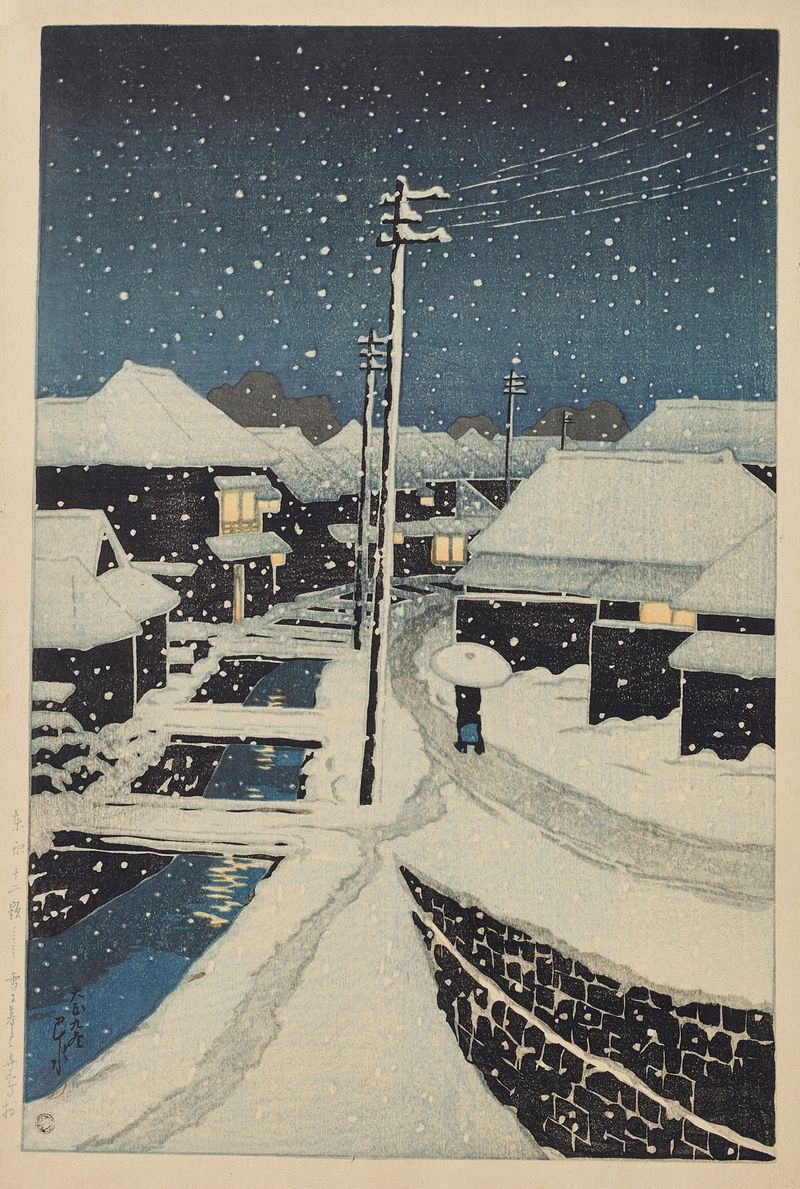
Yuki ni fururu Terajima mura (Evening snow at Terajima Village)
Kawase Hasui
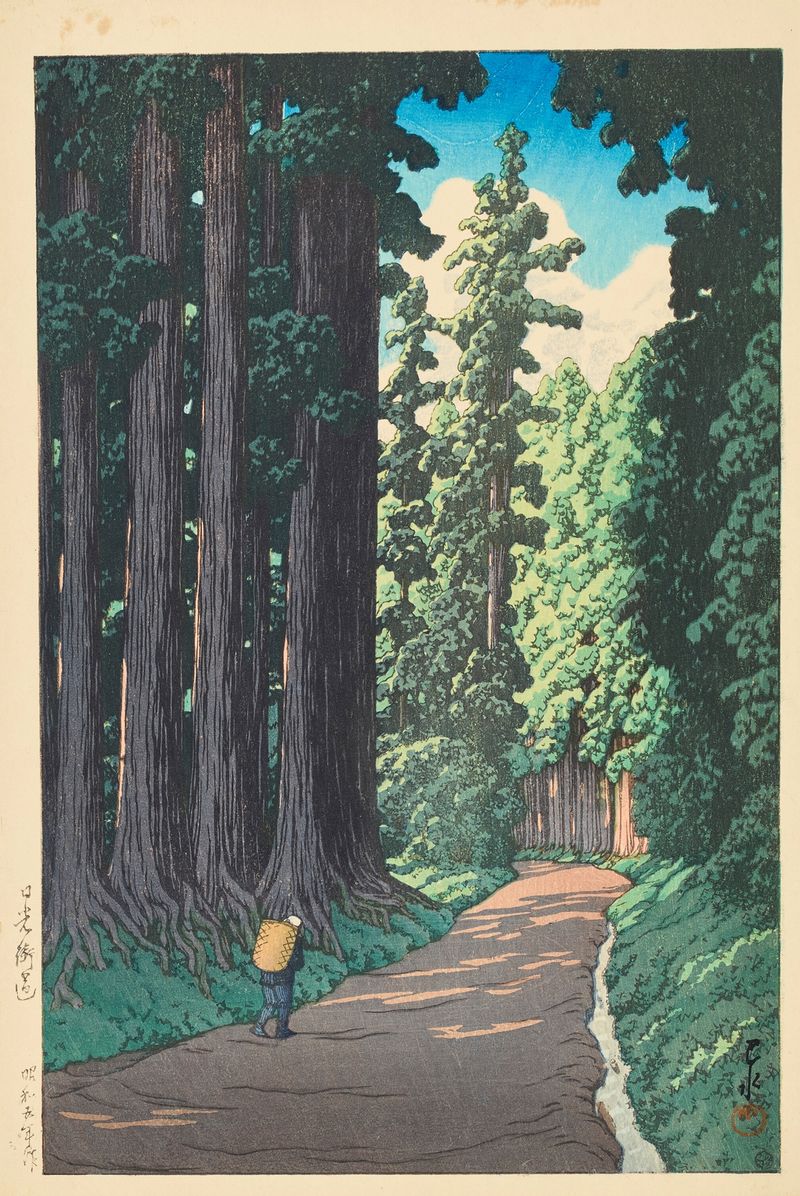
Nikko gaido (The Road to Nikko)
Kawase Hasui
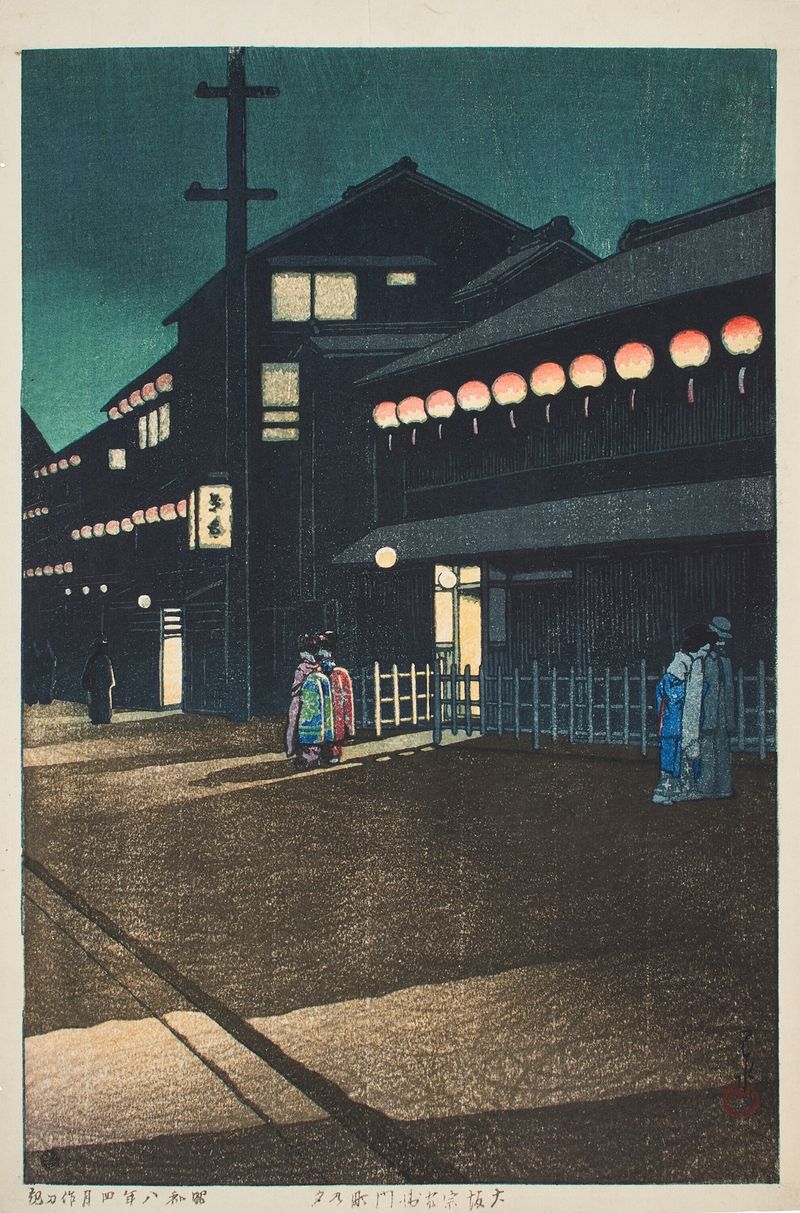
Osaka Soemon-cho no yu (Evening in Soemon-cho, Osaka)
Kawase Hasui
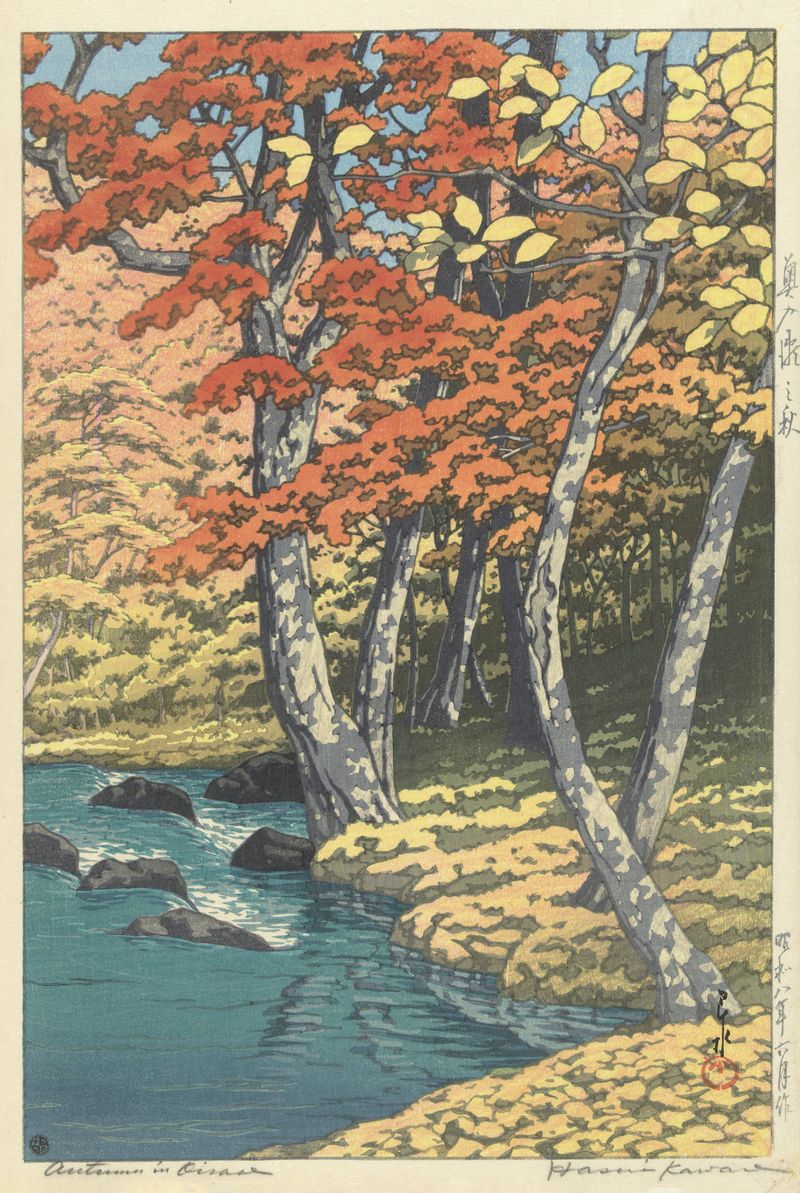
Autumn In Oirase
Kawase Hasui
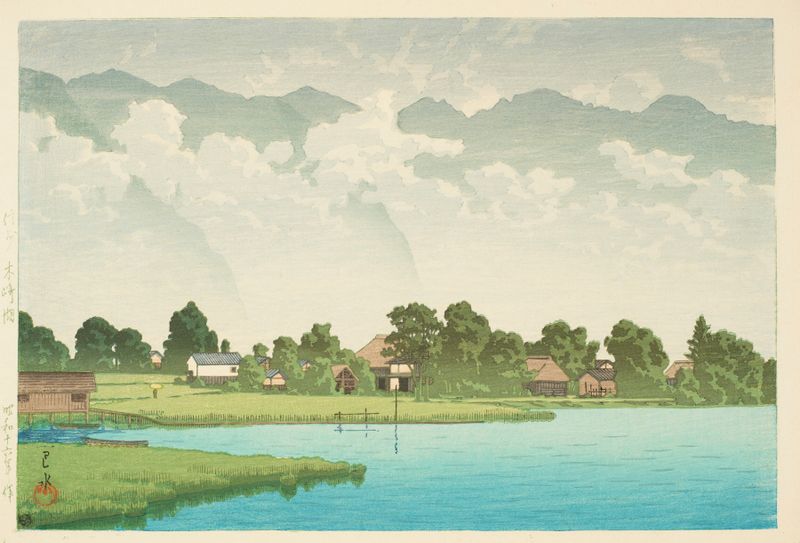
Shinshu Kizakiko (Kizaki Lake in Shinshu)
Kawase Hasui





