
Italian Landscape — History & Facts
In the quiet majesty of an Italian landscape, memories unfurl like the gentle roll of the hills, inviting the viewer into a world both familiar and dreamlike. Look to the left at the serene river winding through the verdant countryside, its surface mirroring the pastel hues of the sky. Notice how the soft light illuminates the distant mountains, revealing layers of warmth that blend seamlessly into the earth. This intricate play of light, texture, and color captures not just a scene but an enduring emotion, as if time itself momentarily stands still in this tranquil haven. Beneath the surface, the painting embodies contrasts—between the serenity of nature and the fleeting moments of human existence.
The solitary figure in the foreground, seemingly lost in thought, hints at introspection, perhaps evoking nostalgia for a simpler time. The lush greenery and warm earth tones juxtapose with the cool, expansive sky, reflecting the harmony and tension of life's dualities. Created around 1630, this work emerged during a pivotal moment in Claude Lorrain's career, as he established his reputation as one of the leading landscape painters of his time. Living in Rome, he was influenced by the classical ideals of beauty and harmony, amidst a flourishing art scene.
This piece not only captures the charm of the Italian countryside but also signifies a turning point in the evolution of landscape painting, where nature became a reflection of the human spirit.
More Artworks by Claude Lorrain
Browse all →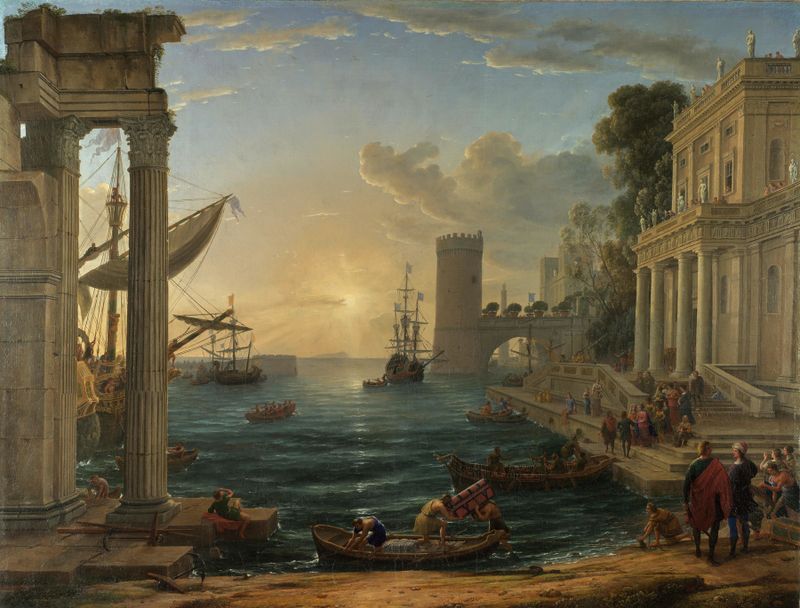
The Embarkation of the Queen of Sheba
Claude Lorrain
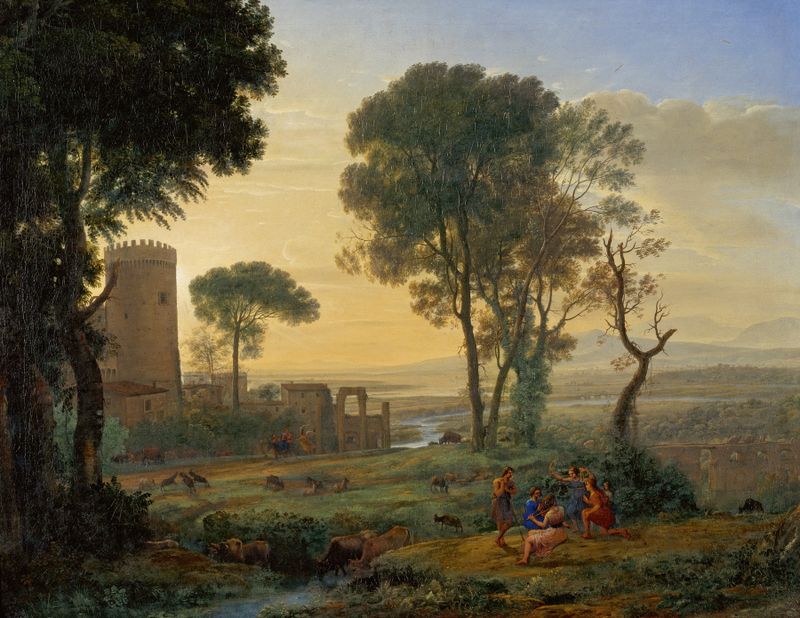
Landscape with the Flight into Egypt
Claude Lorrain
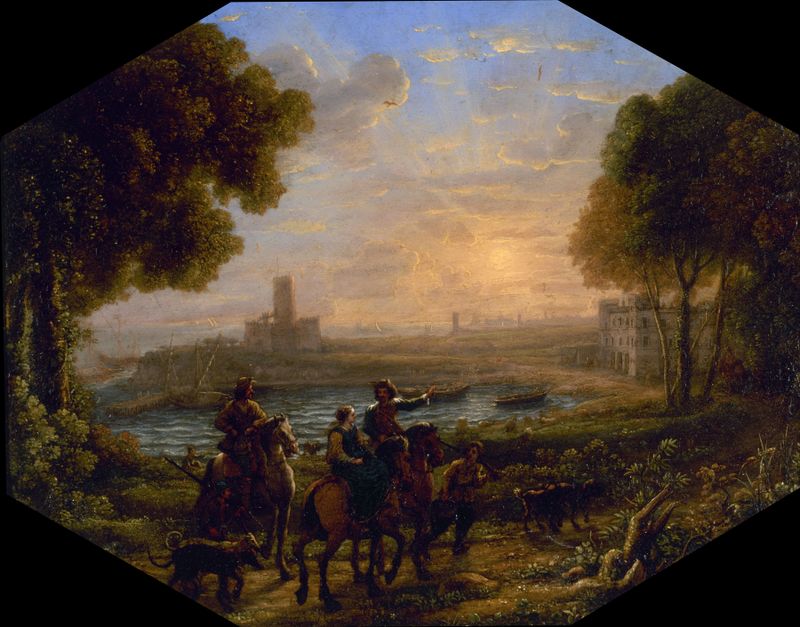
Paysage avec le port de Santa Marinella
Claude Lorrain
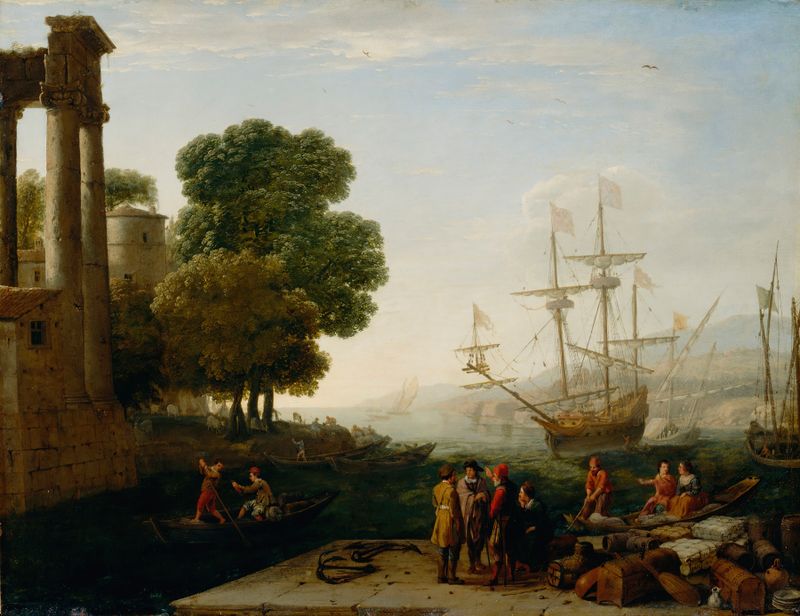
A Seaport at Sunset
Claude Lorrain
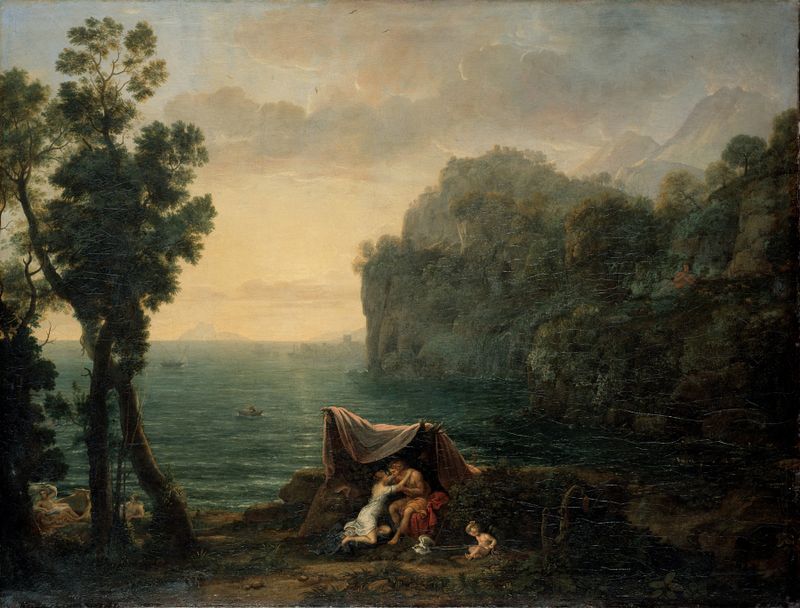
Landscape with Acis and Galatea
Claude Lorrain
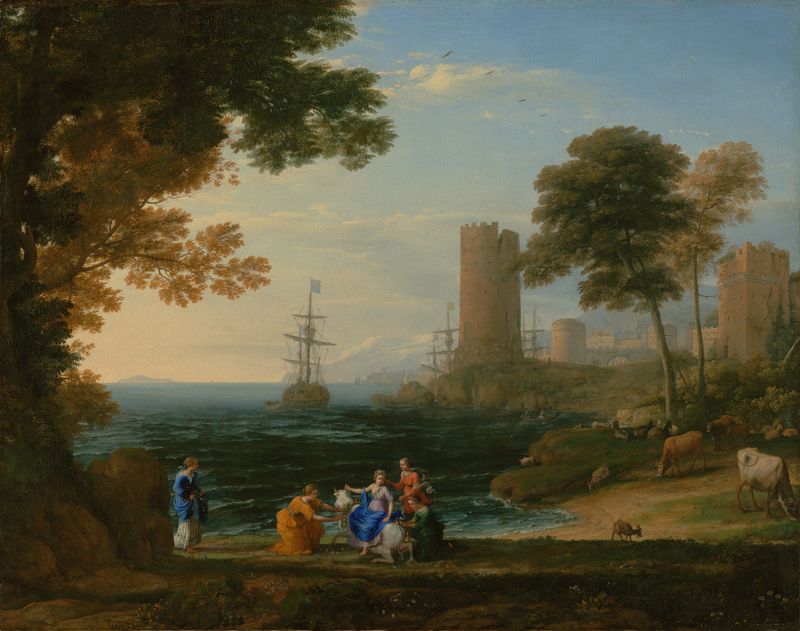
Coast View with the Abduction of Europa
Claude Lorrain
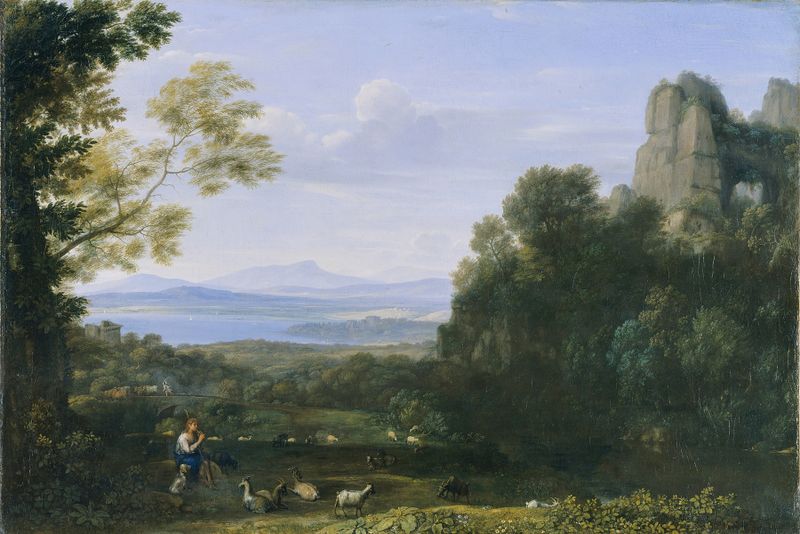
Landscape with Apollo and Mercury
Claude Lorrain
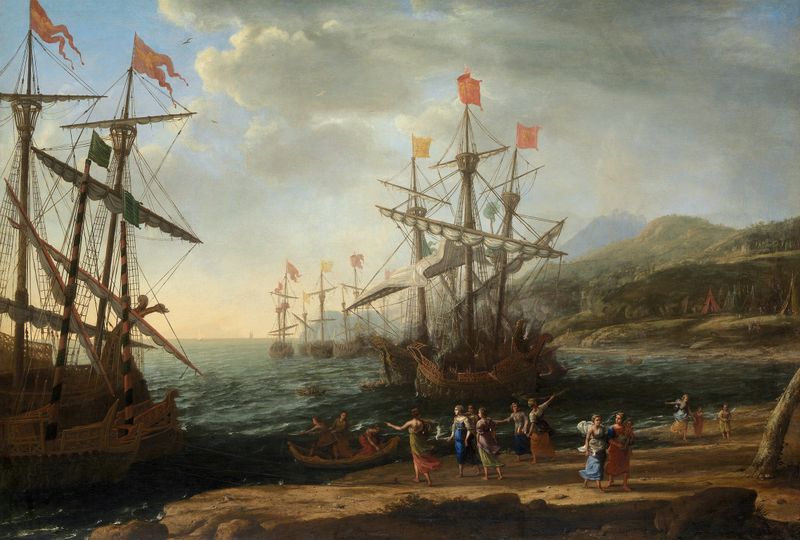
The Trojan Women Setting Fire to Their Fleet
Claude Lorrain
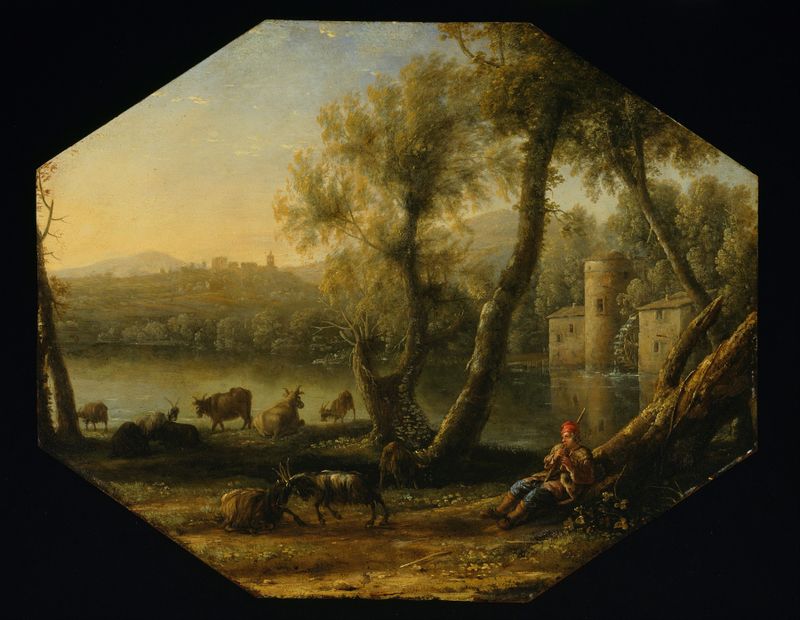
Pastoral landscape
Claude Lorrain
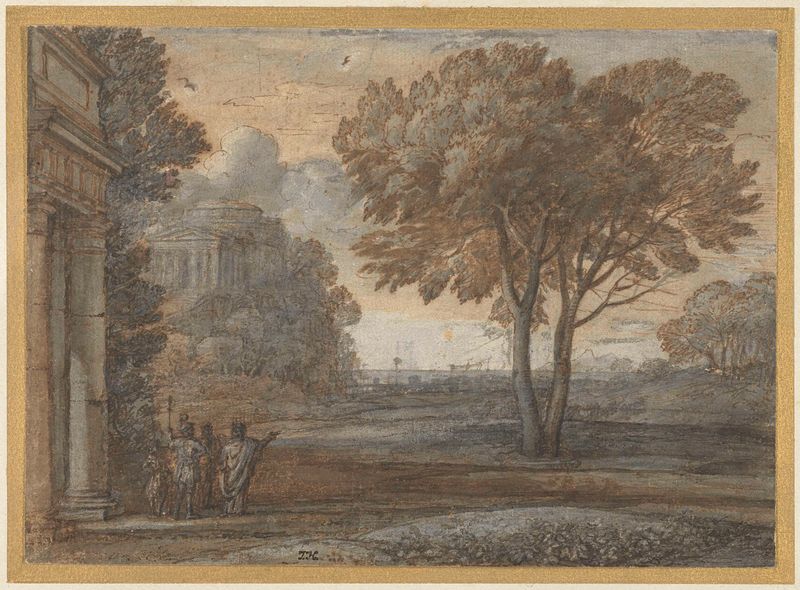
Aeneas op Delos
Claude Lorrain





