
Italianate Landscape — History & Facts
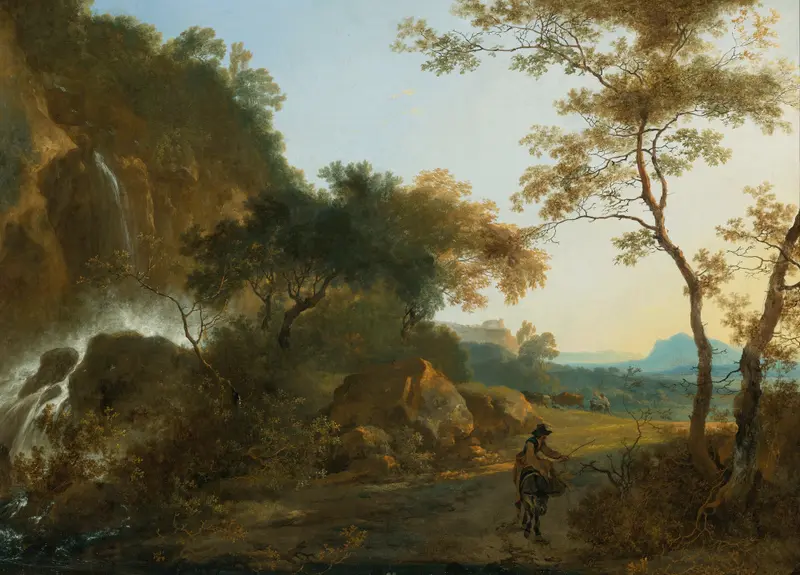
What draws the eye first in Italianate Landscape is the way light pours into the scene, carving a golden stage out of the shadowed woods and guiding us toward distant blue mountains. The sunlit clearing, framed by two slender birches, becomes a quiet theater: a shepherd and his companion pause on the path, their gestures inviting us to share in the hush of early evening. Farther off, a herd of cattle and sheep cross a shallow stream, their movement gentle and unhurried.
The play of darkness and brilliance is deliberate—Pijnacker leads us from the cool, secretive forest on the left into the open, luminous world beyond, echoing the promise of travel and discovery that so captivated Dutch painters who dreamed of Italy. The low horizon grants the sky a vast, commanding presence, while the careful rendering of tree roots and water signals a love of close observation. Painted in 1670, this work belongs to a moment when Dutch artists—though rarely venturing south themselves—were enthralled by visions of the Italian countryside. Such landscapes, known as Italianate, were prized by collectors eager for a taste of Mediterranean warmth and grandeur, even as they remained in northern homes.
Adam Pijnacker was one of the most skilled at conjuring these dreamlike vistas, blending Dutch precision with southern light. Today the painting resides in the Collectie Boijmans Online, a quiet testament to an era when art offered a window onto distant lands, and when the imagined Italy shimmered just beyond the reach of the everyday. The longer you look, the more the painting seems to ask: where might that sunlit path lead next?
More Artworks by Adam Pijnacker

Italianate River Landscape
Adam Pijnacker
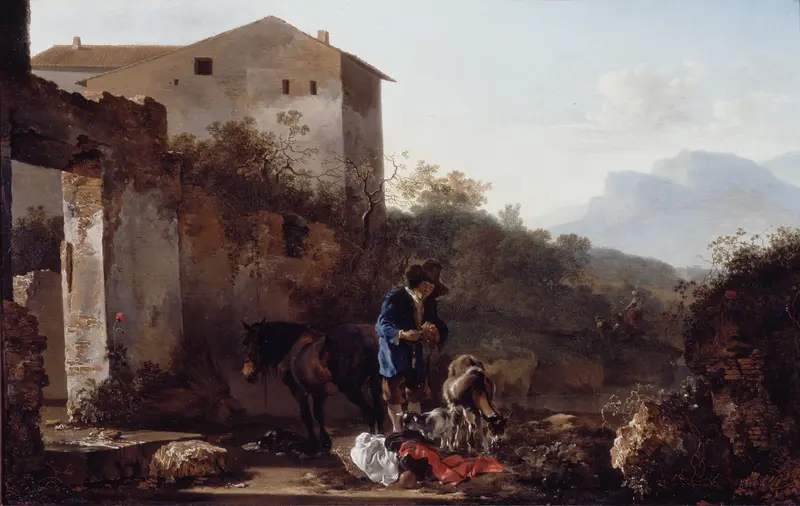
Landscape with a Goatherd
Adam Pijnacker
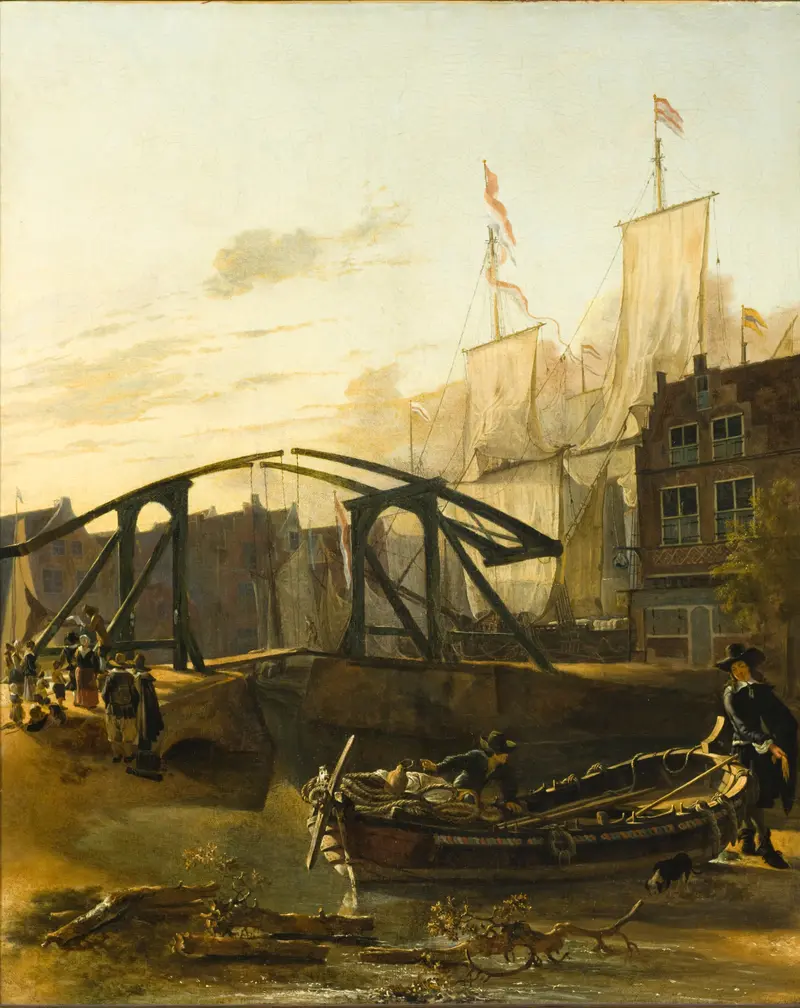
View of a Harbor in Schiedam
Adam Pijnacker
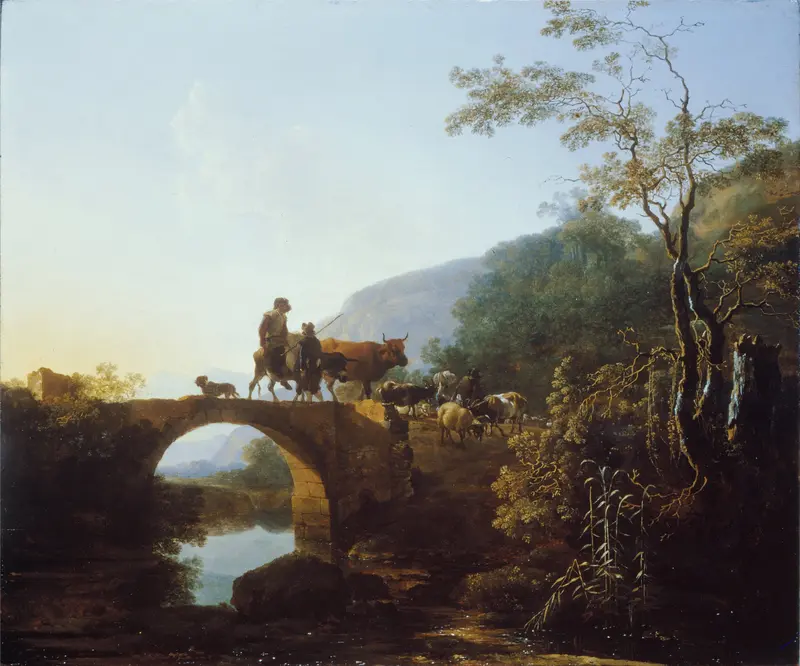
Bridge in an Italian Landscape
Adam Pijnacker
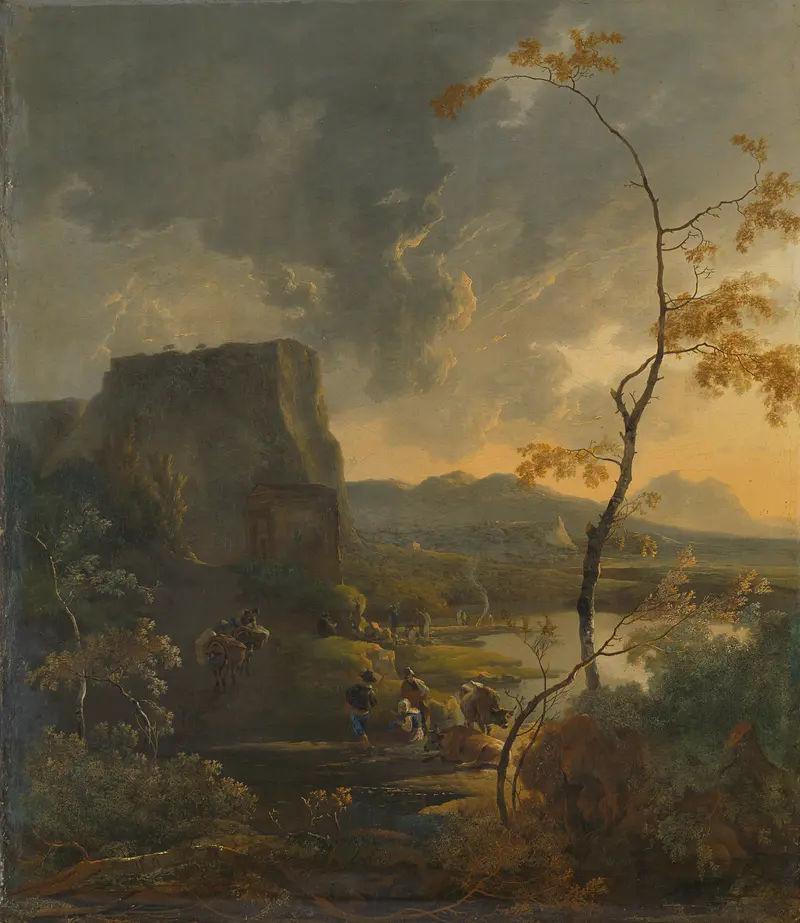
Italian Landscape with Ancient Tempietto
Adam Pijnacker
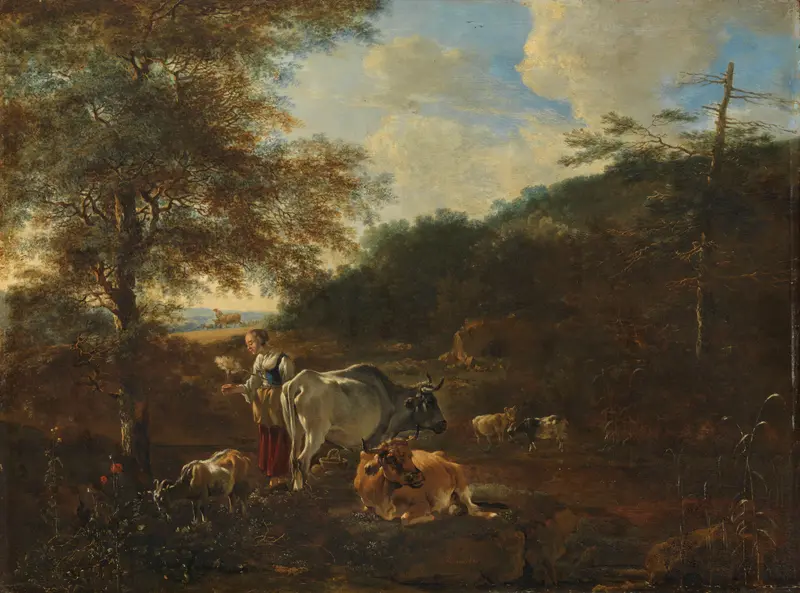
Landscape with cattle
Adam Pijnacker
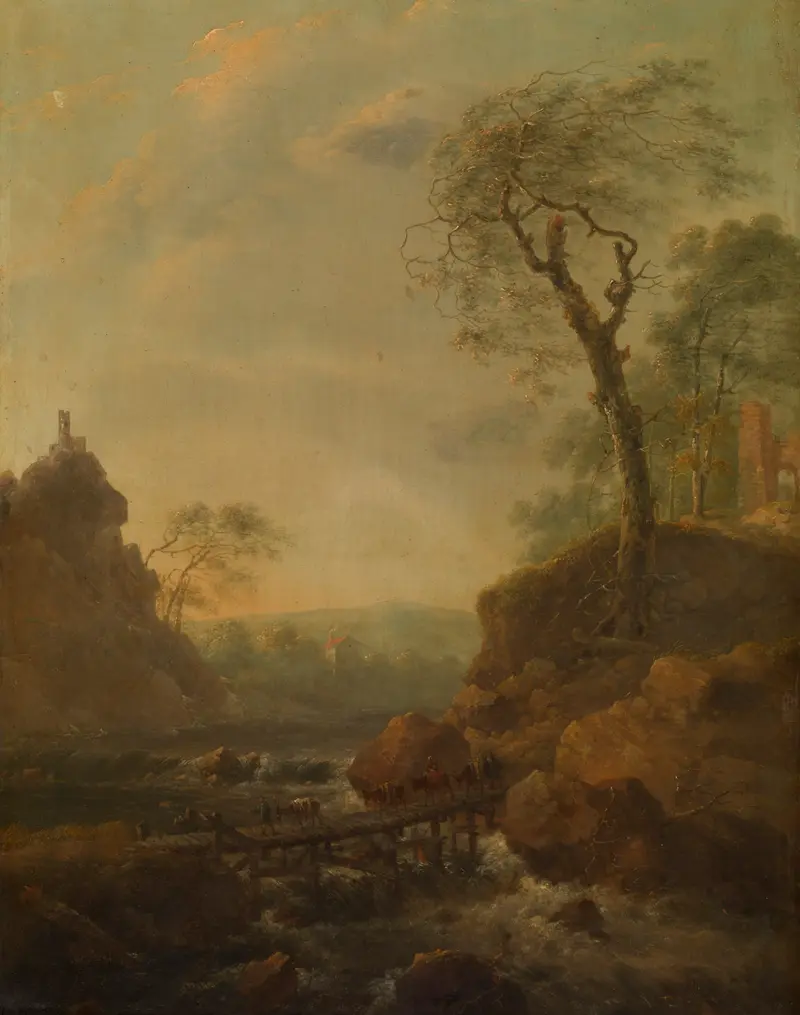
Landscape
Adam Pijnacker
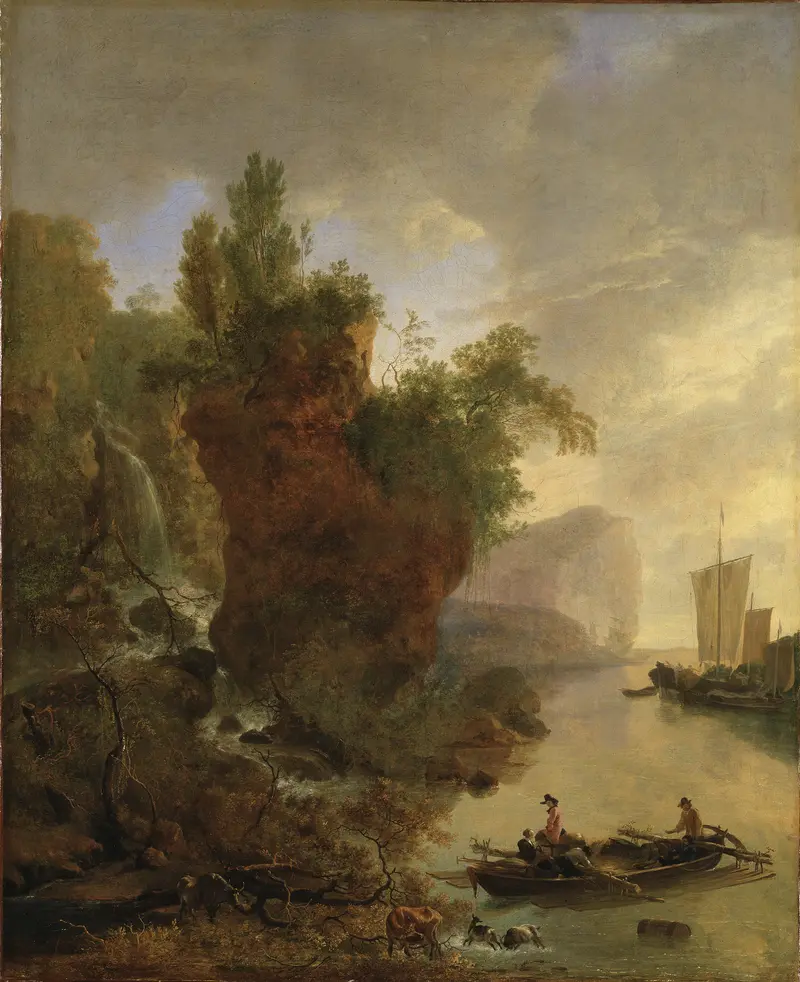
Bay with a Rocky Coast
Adam Pijnacker
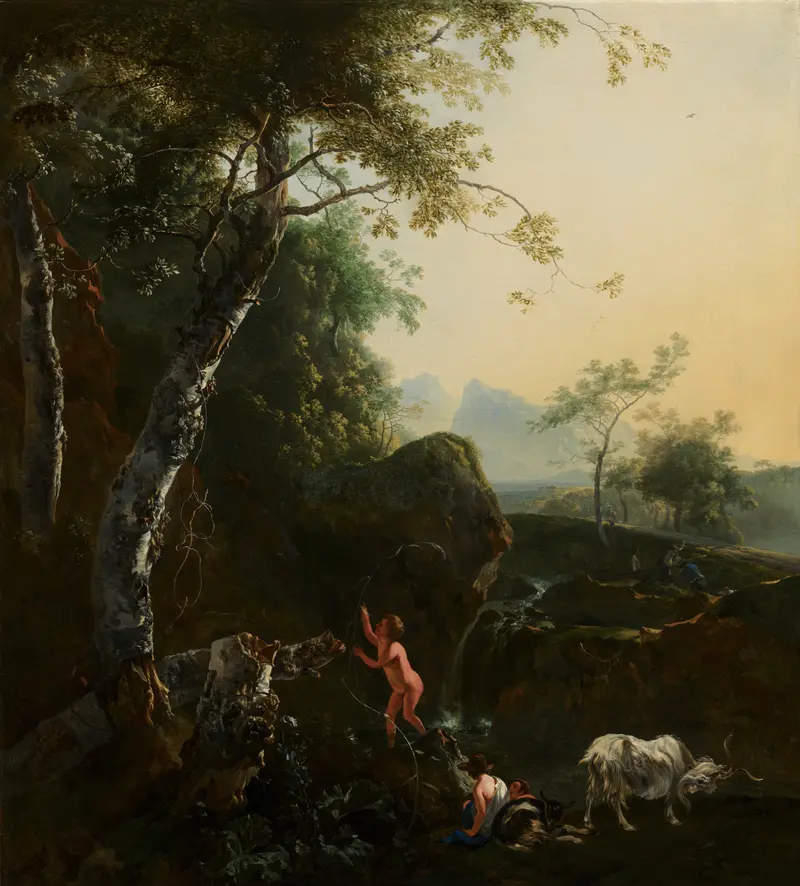
Mountainous Landscape with Waterfall
Adam Pijnacker
An Italianate Landscape With A Traveller On A Path By A Waterfall
Adam Pijnacker
More Landscape Art

The Starry Night
Vincent van Gogh

View of Delft
Johannes Vermeer

Water Lilies
Claude Monet

The Grand Canal, Venice, looking north-west from the Ca' Corner to the Ca' Contarini degli Scrigni, with the campanile of Santa Maria della Carità
Canaletto

Windsor Castle
Canaletto

The Grand Canal looking North-East from the Palazzo Dolfin-Manin to the Rialto Bridge
Canaletto