
Jagdpause — History & Facts
Who listens when art speaks of silence? In Jagdpause, a still moment in time captures a world of reflection and introspection, inviting the viewer to contemplate the quiet depths of its composition. Look to the left at the figure of a hunter, caught in a pensive pose as he rests against a weathered tree trunk. Notice the way the light filters through the leaves, casting dappled patterns upon his rugged attire. The muted earth tones and soft greens create an atmosphere of tranquility, contrasting with the tension of his solitary presence in the wilderness.
The meticulous brushwork and naturalistic details draw attention to the textures of the bark and the foliage, encapsulating the serenity of the outdoors. Delve deeper into the emotional nuances captured in this scene. The hunter's expression hints at a story beyond the hunt—perhaps contemplation of his role in nature or the weight of solitude. The juxtaposition of vibrant life surrounding him and his withdrawn demeanor explores themes of isolation and the search for meaning amidst the chaos of existence.
Each element, from the gentle sway of the grass to the stillness of the air, reinforces this complex relationship between man and nature. In 1902, Hugo Mühlig painted Jagdpause at a time when the artistic world was increasingly drawn to capturing realism and the nuances of everyday life. Living in Germany, Mühlig was part of a growing movement that sought to express the beauty of nature and humanity’s place within it. This painting reflects not only his own introspective journey but also the broader artistic shift towards naturalism at the turn of the century.
More Artworks by Hugo Mühlig
Browse all →
Sommerliche Heuernte
Hugo Mühlig

Holzfäller am Feuer
Hugo Mühlig

Horse cart on a hill
Hugo Mühlig
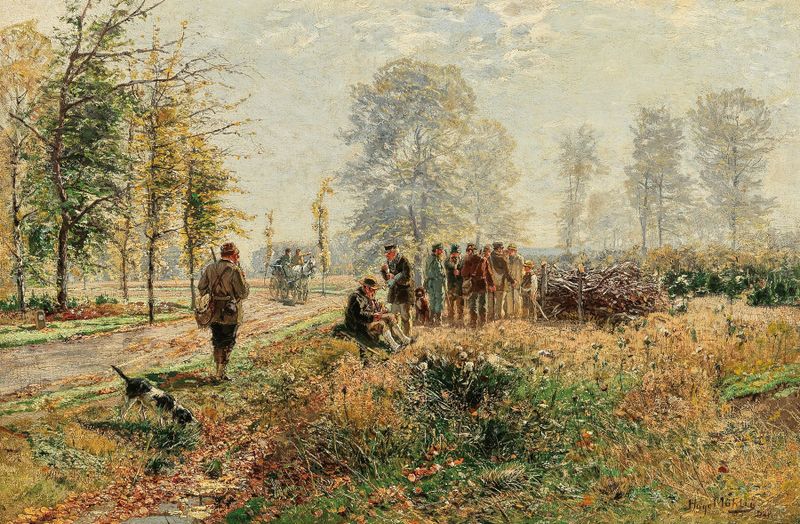
Aufbruch zur Jagd
Hugo Mühlig

Schäfer auf dem Heimweg
Hugo Mühlig
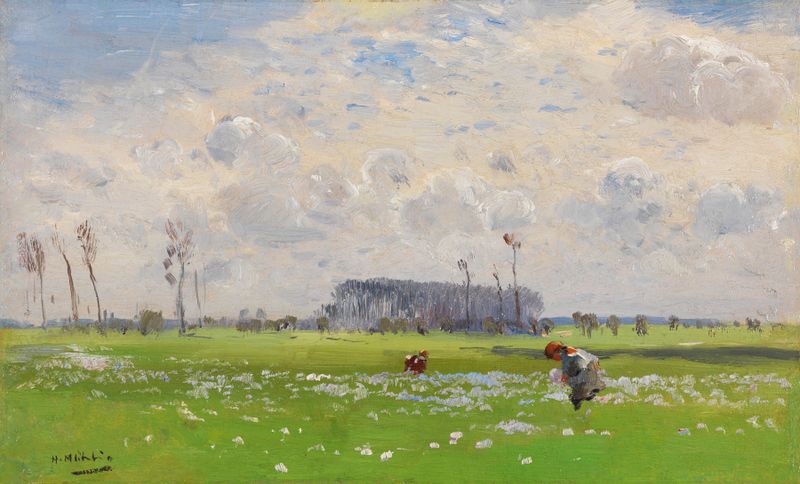
Sommerwiese mit blumenpflückenden Mädchen
Hugo Mühlig
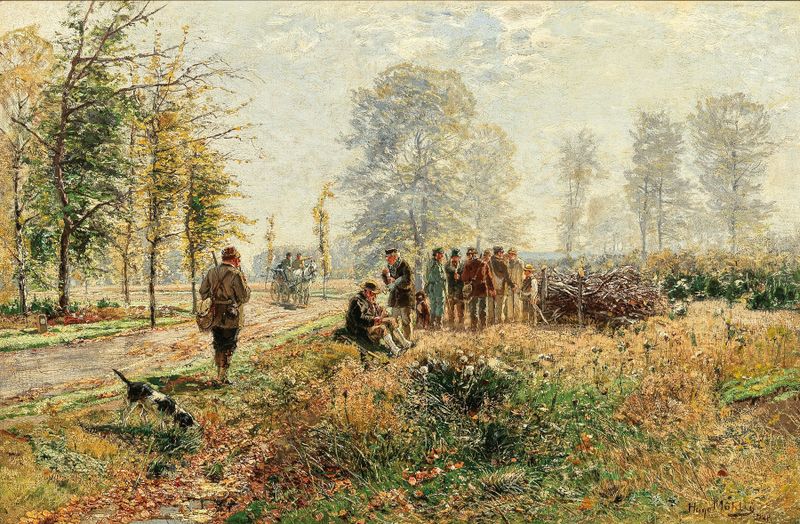
Off to the Hunt
Hugo Mühlig

Bei der Ernte (Niederrhein)
Hugo Mühlig
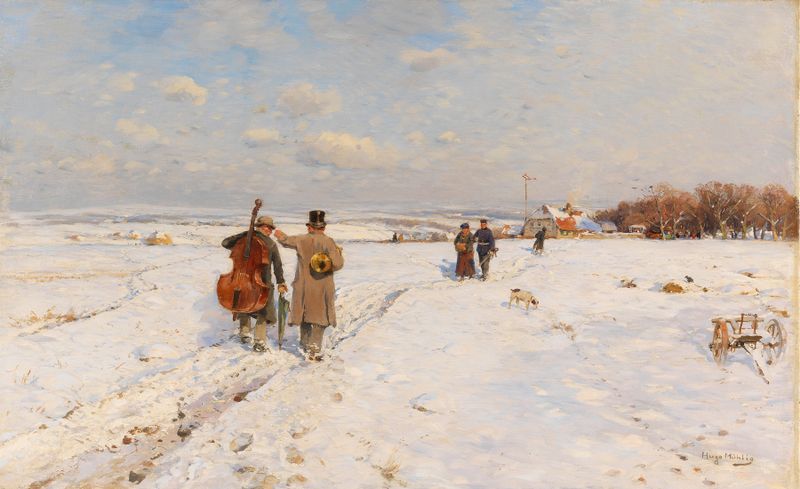
Heimkehrende Musikanten im Schnee
Hugo Mühlig
Herbstmorgen am Niederrhein
Hugo Mühlig





