
Jami Masjid (Great Mosque), Delhi — History & Facts
What first catches the eye in Jami Masjid (Great Mosque), Delhi by Theodoros Ralli is the sense of stillness that fills the vast courtyard, as if time itself has paused to let us study the grandeur of the Mughal monument. The painter draws us in with a low, almost stage-like vantage point, giving the mosque’s domes and minarets a quiet monumentality against a sky brushed with delicate clouds. The central arch, flanked by the mosque’s signature onion domes, commands attention, its shadowed depth hinting at mysteries within.
Small figures are scattered across the stone expanse, dwarfed by the architecture, their presence emphasizing the scale and solemnity of the place. Light pools in the foreground, glinting off a small fountain, inviting the viewer to linger and imagine the gentle sounds of water and footsteps echoing in the open air. Works like this, produced between 1873 and 1909, belong to a period when European artists traveled widely, drawn by the architectural marvels and vibrant cultures of South Asia. Such images were often created for Western patrons eager for glimpses of distant lands, or as personal records of journeys undertaken in the age of steamships and empire.
The careful attention to architectural detail and the measured palette reflect the era’s fascination with both documentation and atmosphere. While little is recorded about this particular work’s journey or purpose, its existence in a modern collection speaks to the enduring allure these scenes held for viewers far from Delhi. The mosque stands not just as a building, but as a meeting point of worlds—inviting you to step closer, to trace the lines of stone and sky.
More Artworks by Theodoros Ralli

The Sleeping Concubine
Theodoros Ralli
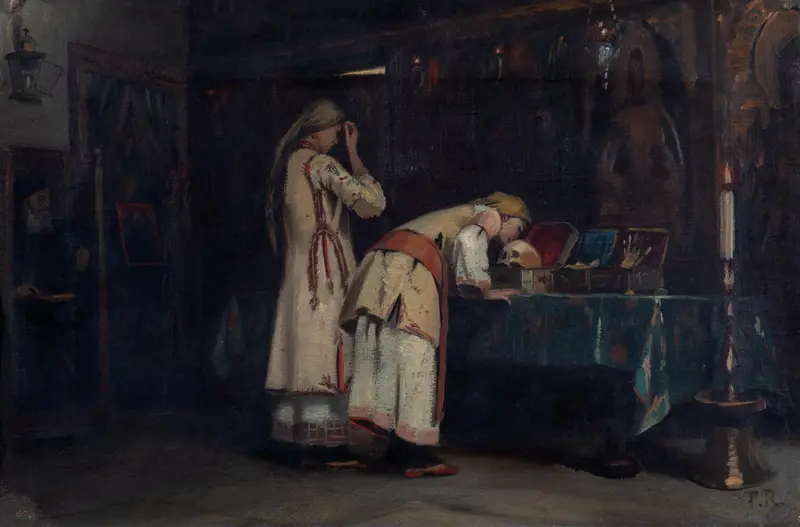
Holy Relics
Theodoros Ralli
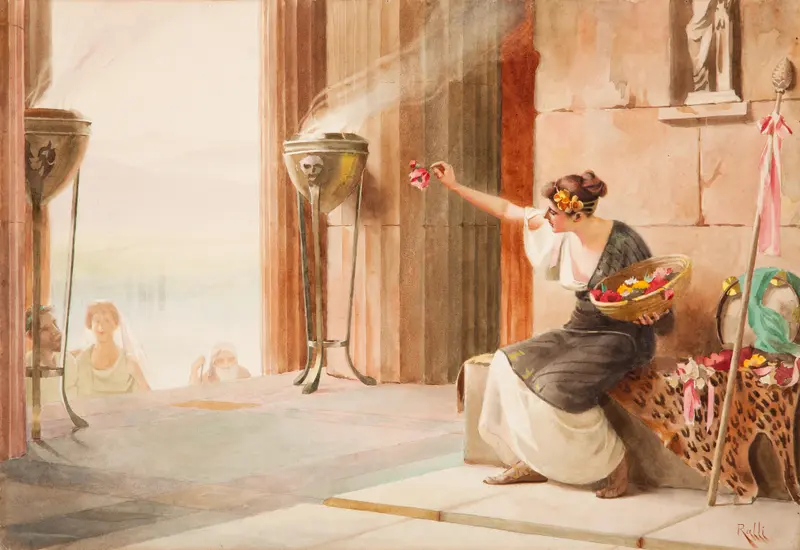
Flower Seller at the Parthenon
Theodoros Ralli
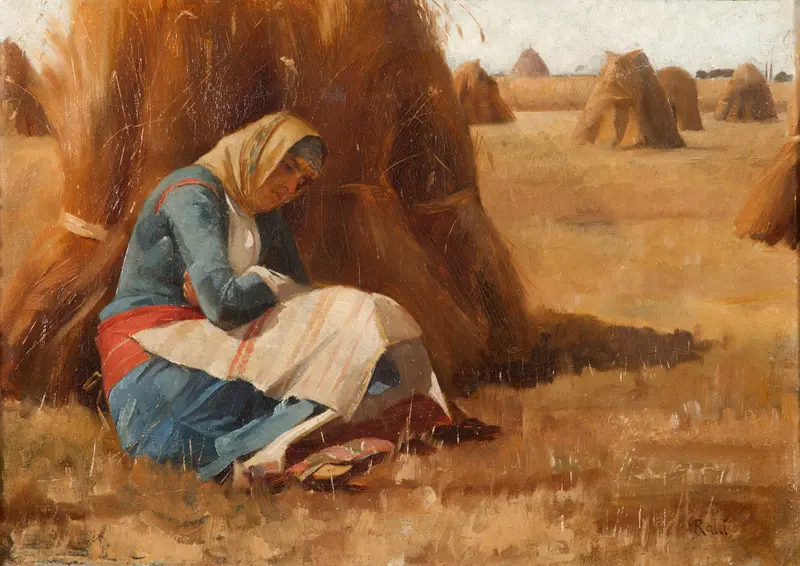
Resting by a Haystack
Theodoros Ralli
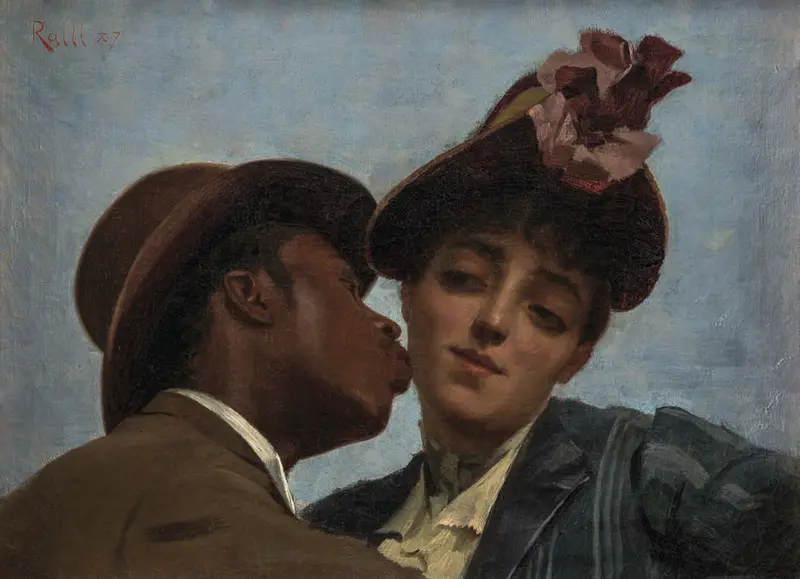
The Kiss (Ralli)
Theodoros Ralli
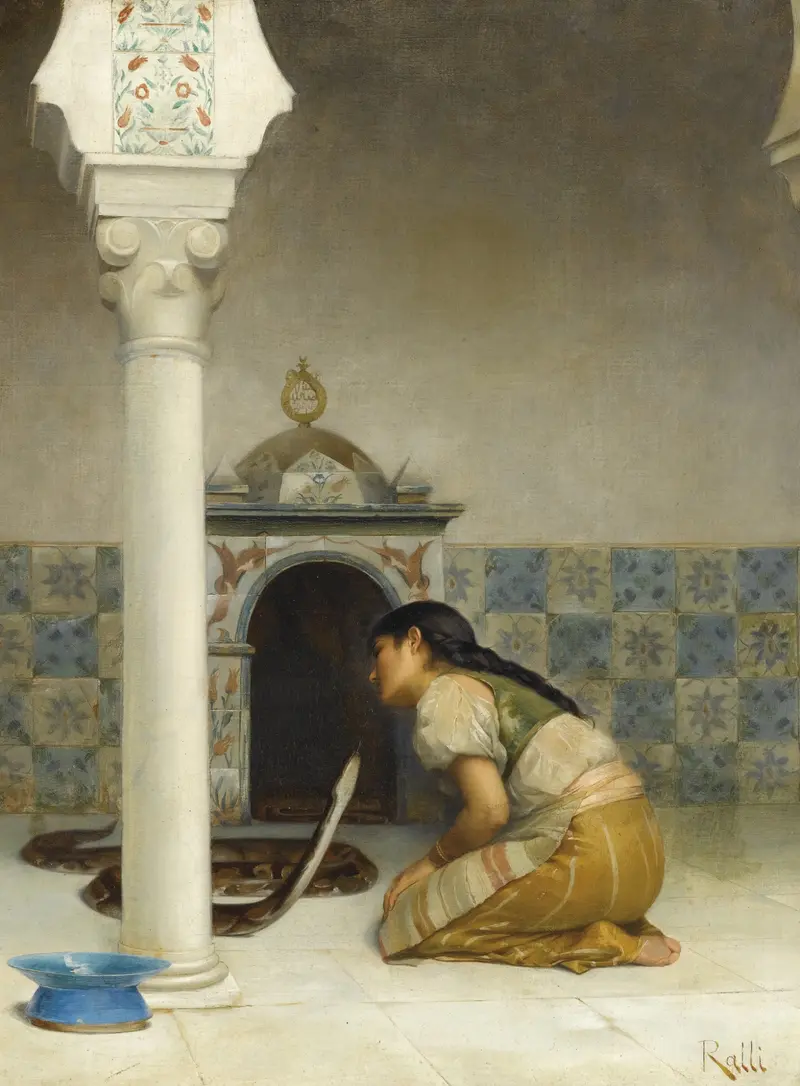
The Sacred Serpent
Theodoros Ralli
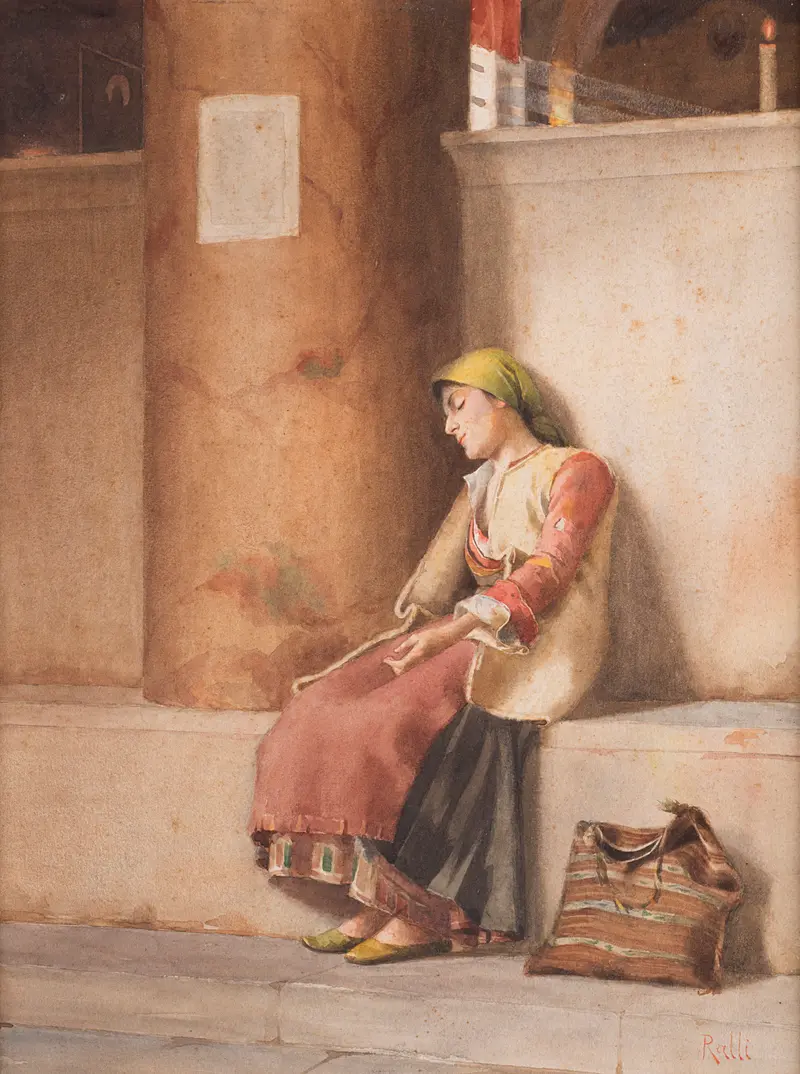
A Moment of Reflection
Theodoros Ralli
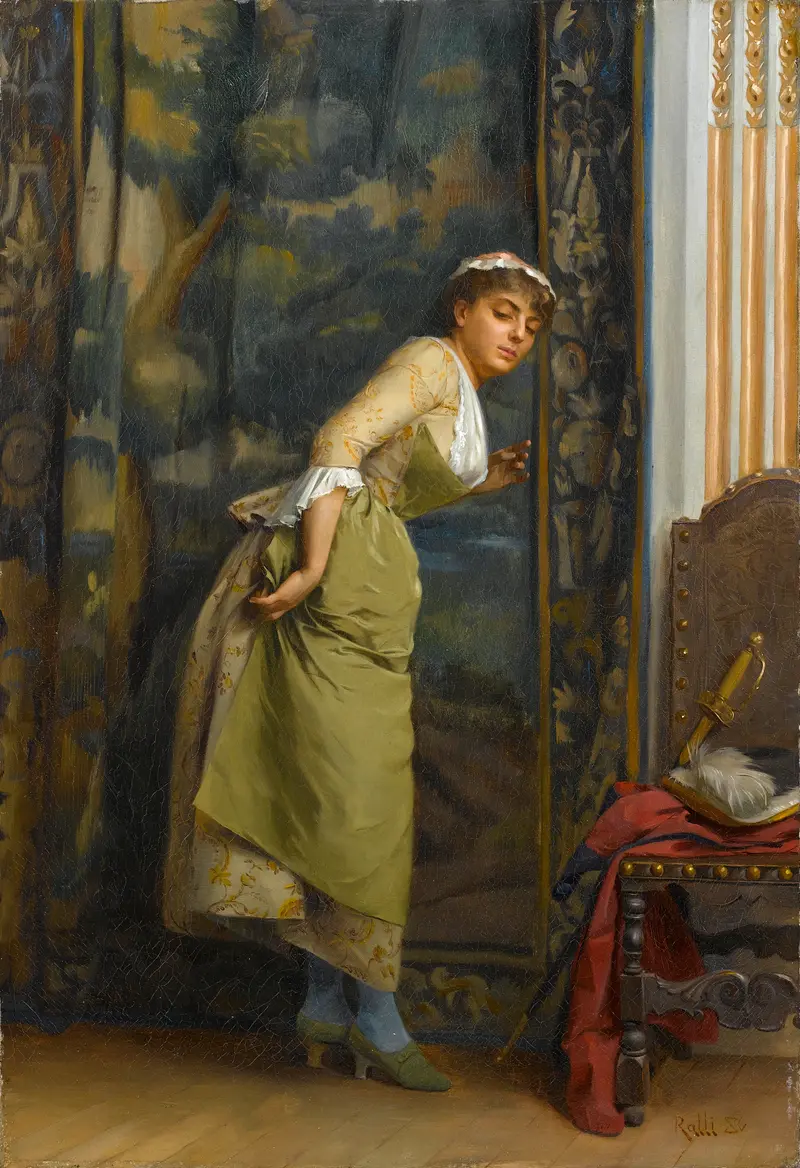
Eavesdropping (Ralli)
Theodoros Ralli
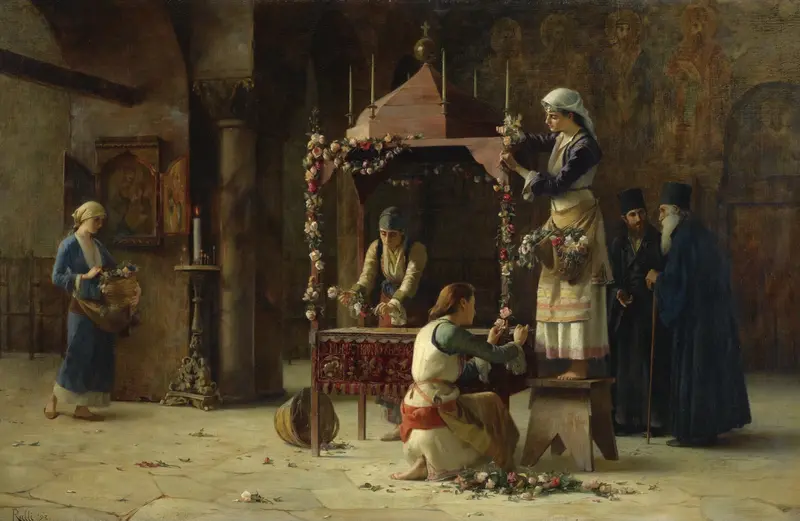
Holy Friday, Greece
Theodoros Ralli
A Moment's Rest
Theodoros Ralli





