
Flower Seller at the Parthenon — History & Facts
What first draws the eye is the gesture: a young woman, poised at the threshold of the ancient Parthenon, extends her arm with a single blossom held delicately between her fingers. The basket of flowers in her lap spills over with color, a vivid counterpoint to the cool, monumental stone behind her. Wisps of smoke curl from braziers, their presence marking this as a place of ritual and offering, while the woman’s intent gaze and the careful arrangement of her wares suggest a moment suspended between commerce and ceremony.
The play of sunlight across the floor and the soft, almost dreamlike haze beyond the doorway invite the viewer to step into this intersection of sacred and everyday life. Painted by Theodoros Ralli between 1873 and 1909, this work belongs to a world in which artists looked to antiquity not only for subject matter but for a sense of lost grandeur and order. Scenes like this—set in imagined or reconstructed ancient sites—were popular among collectors and the public, who sought connection to a classical past through the lens of 19th-century Orientalism and historicism. Little is recorded about the specific journey of this painting or its patrons, but its careful detail and idealized figures speak to the tastes and aspirations of its time.
The viewer is left to wonder: what stories did these flowers witness, and what offerings might still linger in the air?
Sources: Wikidata Q136402334 · Image source (Wikimedia Commons)
More Artworks by Theodoros Ralli

The Sleeping Concubine
Theodoros Ralli
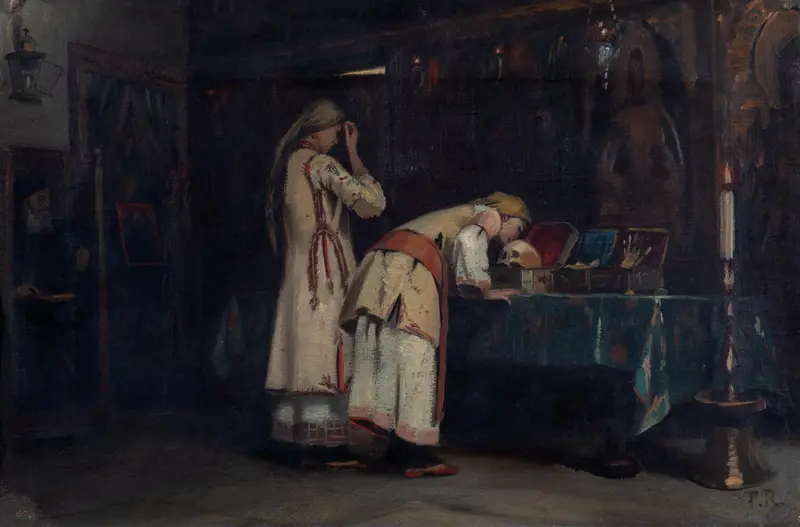
Holy Relics
Theodoros Ralli
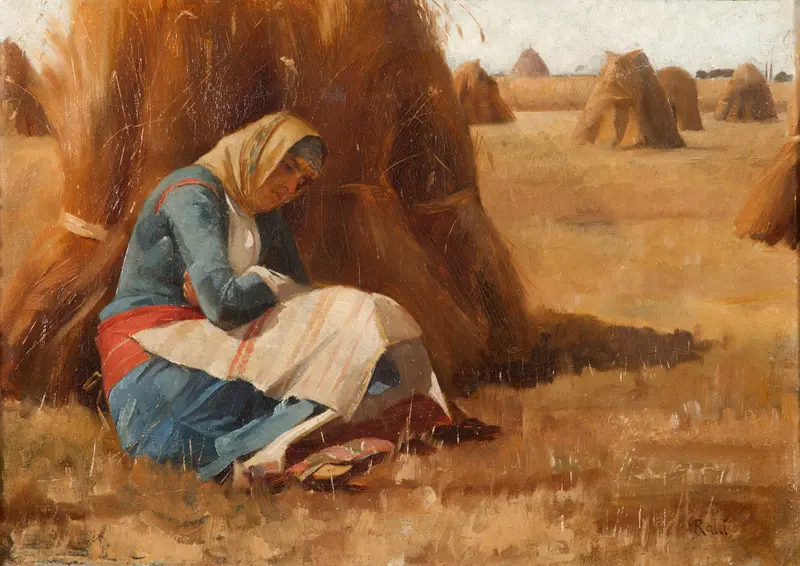
Resting by a Haystack
Theodoros Ralli
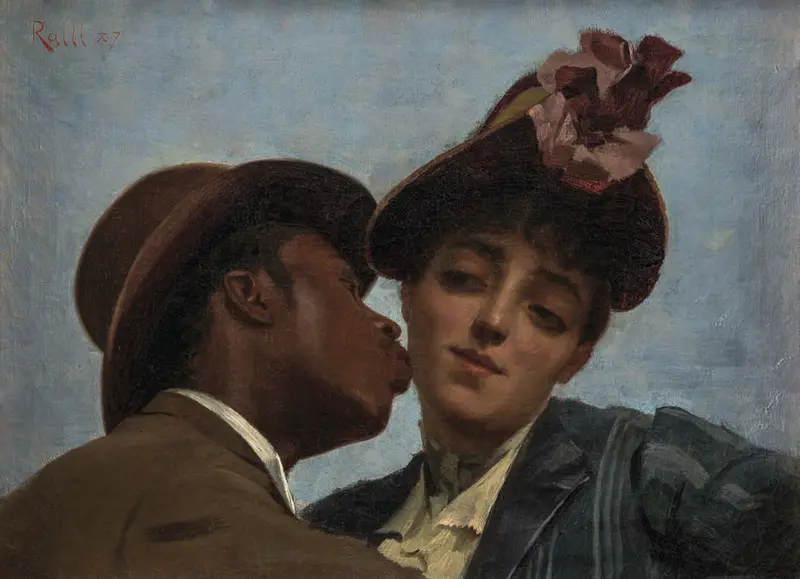
The Kiss (Ralli)
Theodoros Ralli
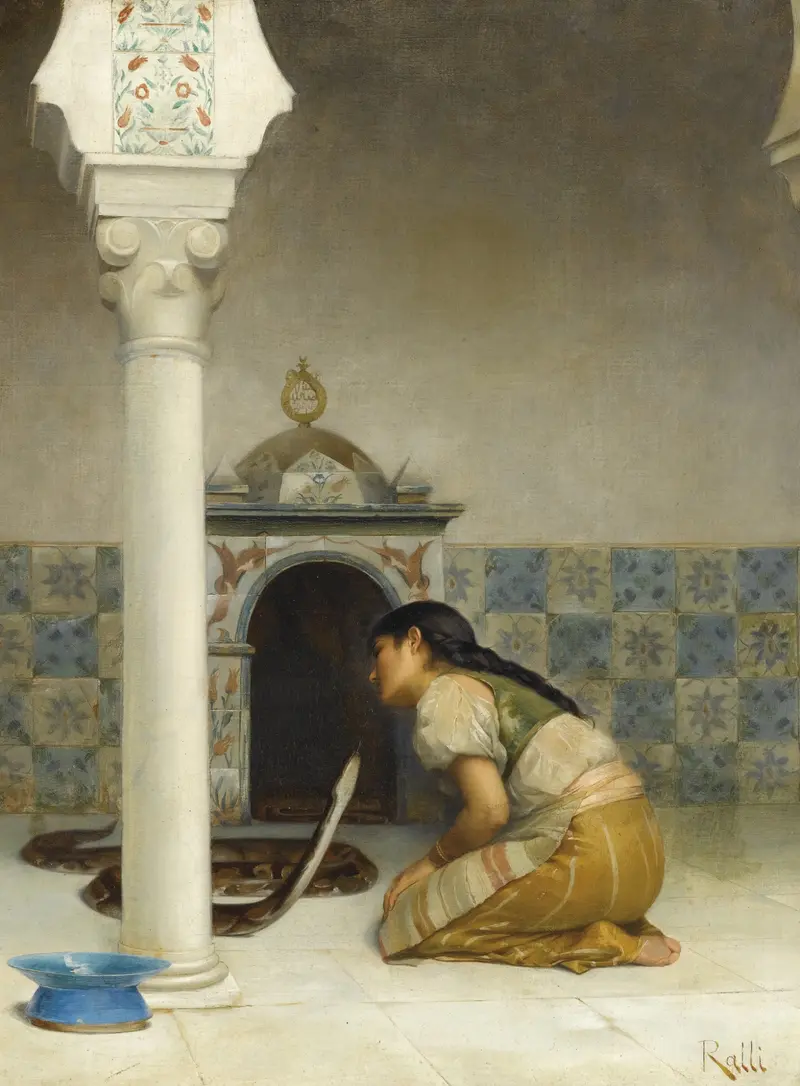
The Sacred Serpent
Theodoros Ralli
A Moment of Reflection
Theodoros Ralli
Eavesdropping (Ralli)
Theodoros Ralli
Holy Friday, Greece
Theodoros Ralli
A Moment's Rest
Theodoros Ralli
Veiled Woman in Yellow
Theodoros Ralli
More Genre Scene Art

Banquet of the Officers of the St George Civic Guard
Frans Hals

Rembrandt and Saskia in the Scene of the Prodigal Son
Rembrandt van Rijn

Bal du moulin de la Galette
Pierre-Auguste Renoir

Quadrille at the Moulin Rouge
Henri de Toulouse-Lautrec

A Burial at Ornans
Gustave Courbet

When Will You Marry?
Paul Gauguin