
Eavesdropping (Ralli) — History & Facts
What draws the viewer in first is the tension in the maid’s posture—a moment caught between duty and curiosity. Her body leans forward, ear pressed to the heavy tapestry, as if the very fabric of the room conspires to keep secrets. The artist’s attention to the subtle twist of her wrist and the careful placement of her feet suggests both caution and excitement.
Light falls gently on her face and apron, highlighting her intent expression and the fine textures of her clothing, while the shadowed background and draped curtain create a sense of intimacy and secrecy. The chair at the right, with its ornate sword and feathered hat, hints at the presence of someone important just out of sight, raising questions about the conversation she strains to overhear. Painted in 1880, Eavesdropping (Ralli) belongs to a world fascinated by stories behind closed doors and the small dramas of everyday life. In the late nineteenth century, such genre scenes were popular among collectors who delighted in glimpses of private moments, often set in opulent interiors that spoke to both fantasy and nostalgia.
Theodoros Ralli, an artist known for his finely observed scenes, here captures the spirit of an era when social boundaries and personal intrigue often played out in the margins. Little is recorded about the specific journey of this painting, now in the collection of Bonhams, but its careful detail and lively storytelling invite us to linger, searching for the next clue in the maid’s silent adventure.
More Artworks by Theodoros Ralli

The Sleeping Concubine
Theodoros Ralli
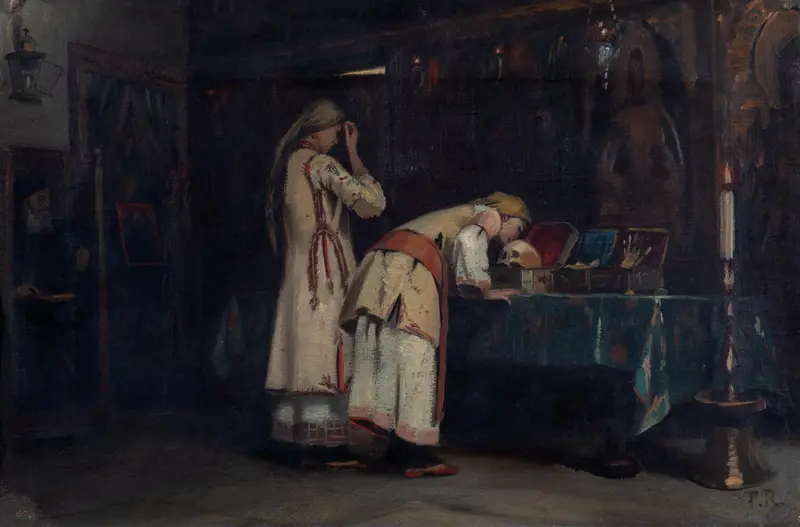
Holy Relics
Theodoros Ralli
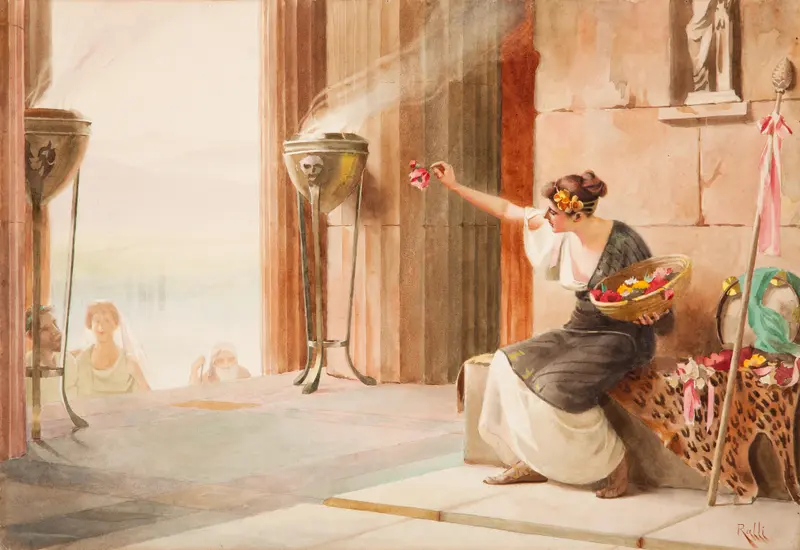
Flower Seller at the Parthenon
Theodoros Ralli
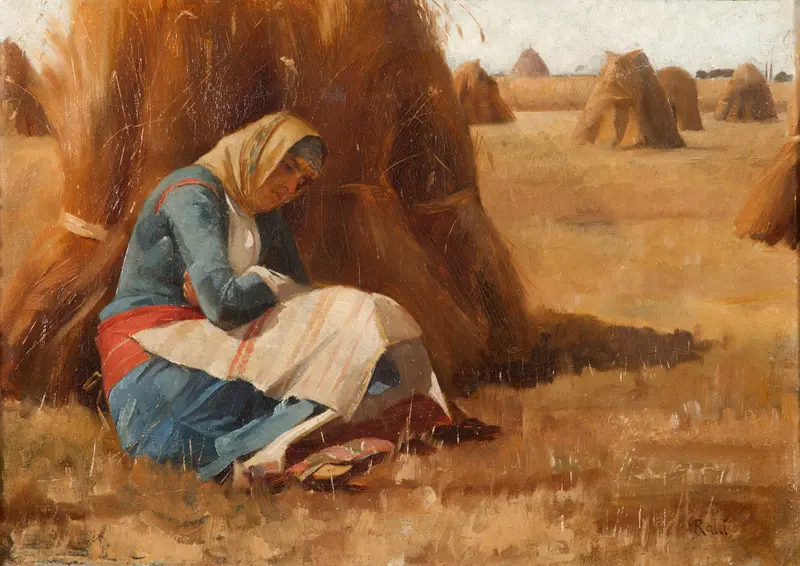
Resting by a Haystack
Theodoros Ralli
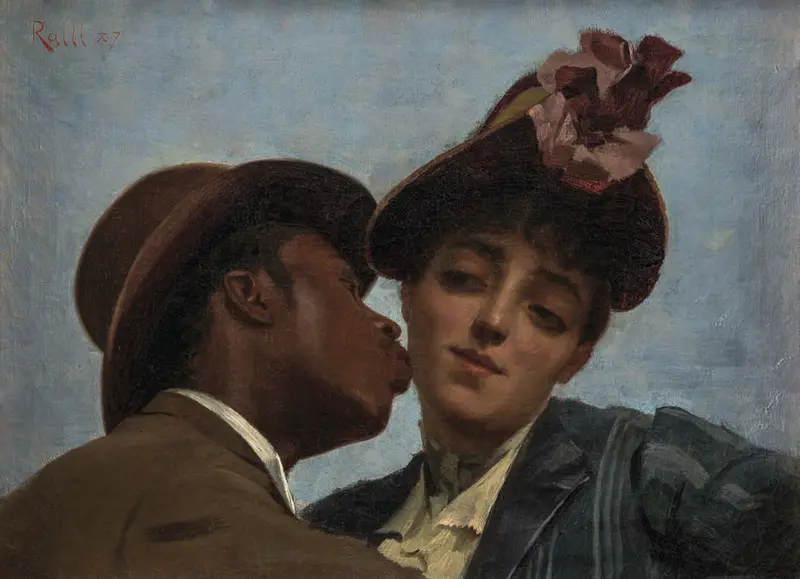
The Kiss (Ralli)
Theodoros Ralli
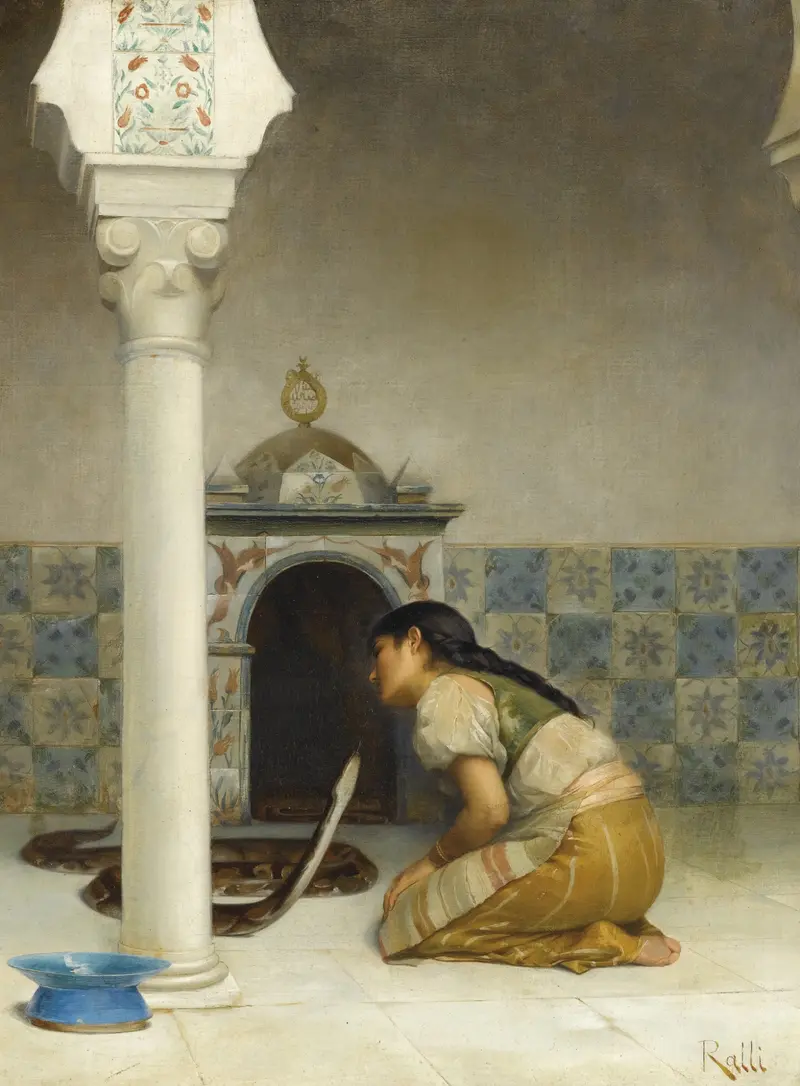
The Sacred Serpent
Theodoros Ralli
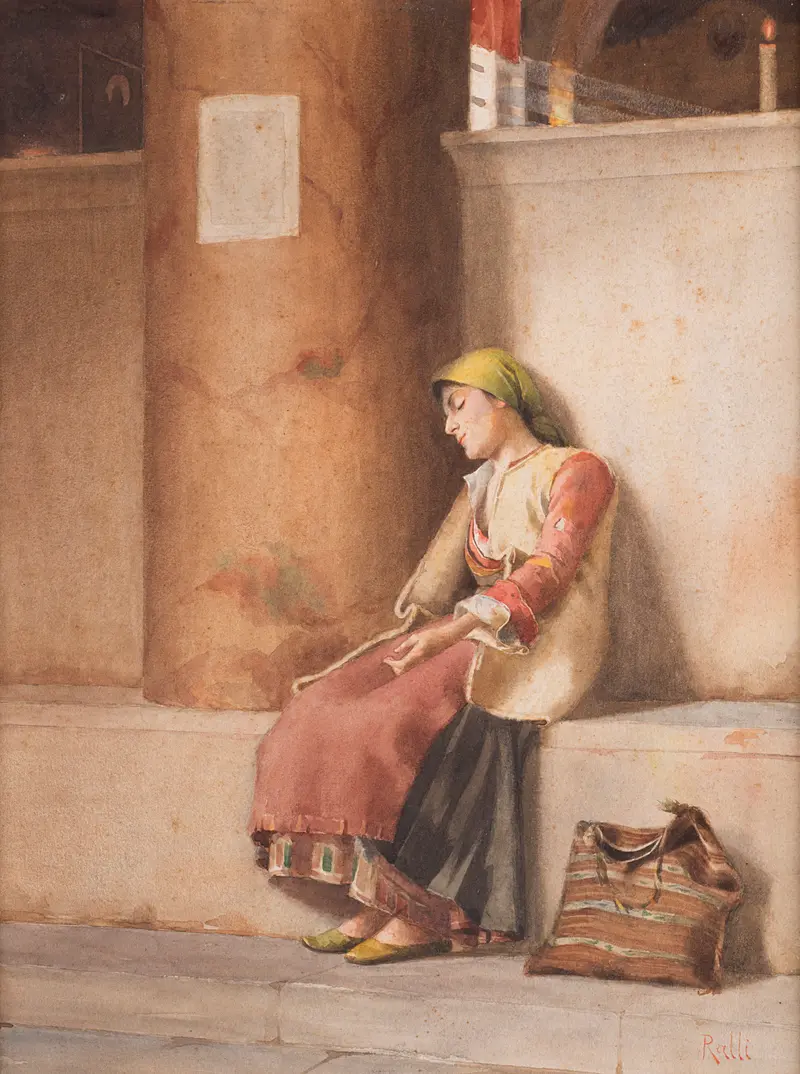
A Moment of Reflection
Theodoros Ralli
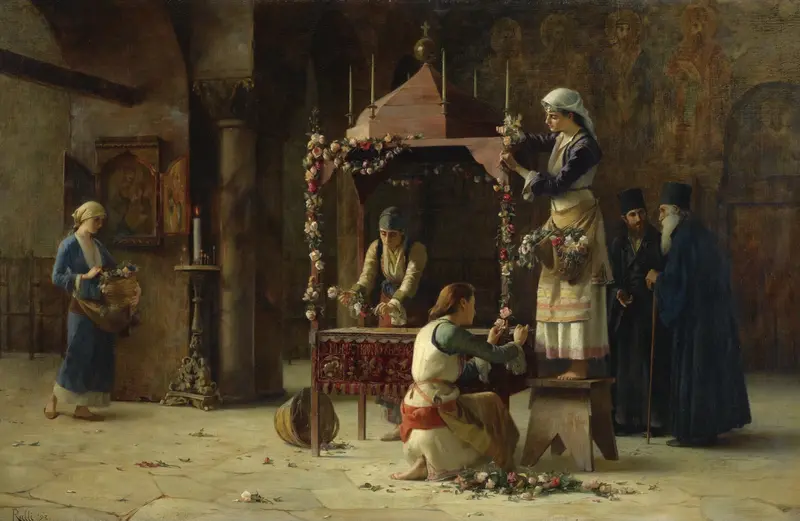
Holy Friday, Greece
Theodoros Ralli
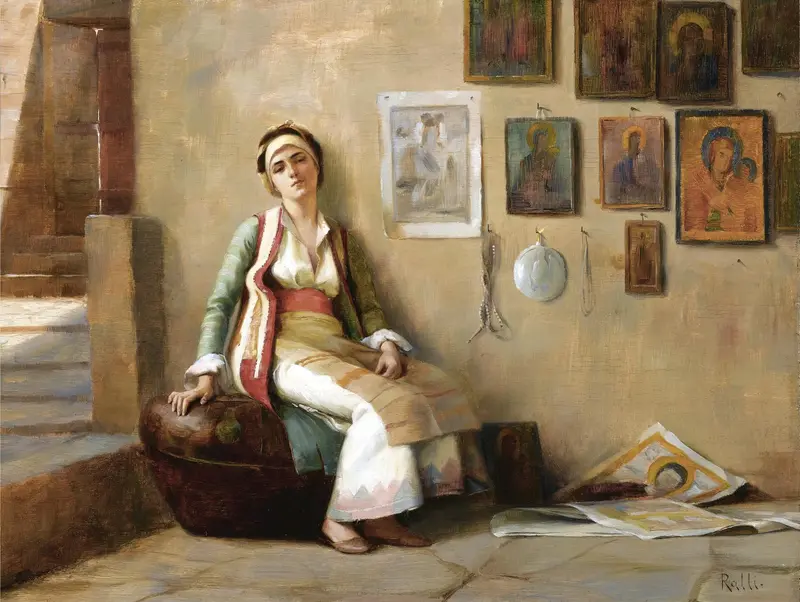
A Moment's Rest
Theodoros Ralli
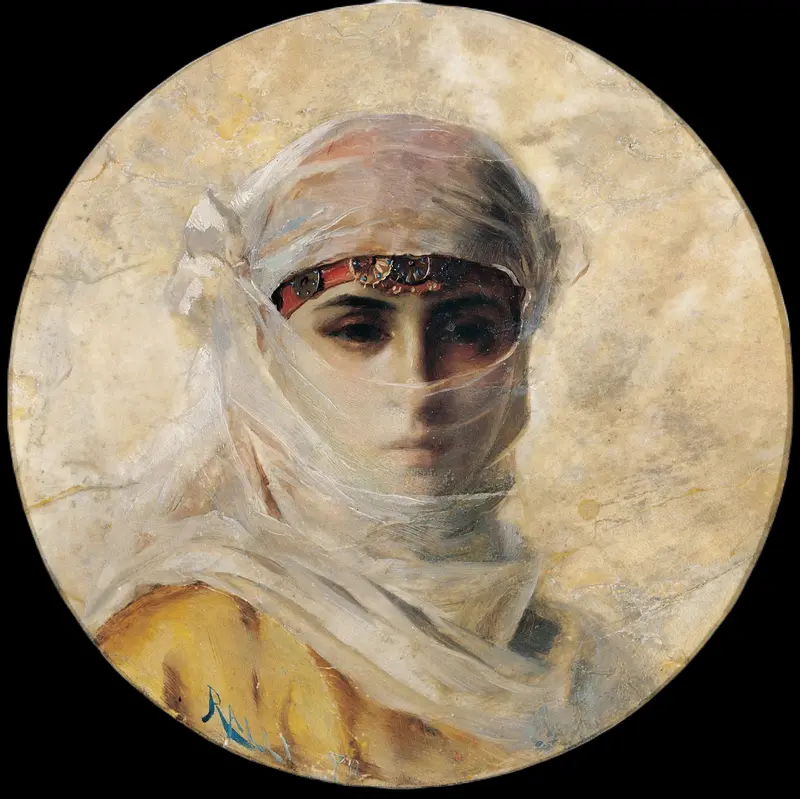
Veiled Woman in Yellow
Theodoros Ralli
More Genre Scene Art

Banquet of the Officers of the St George Civic Guard
Frans Hals

Rembrandt and Saskia in the Scene of the Prodigal Son
Rembrandt van Rijn

Bal du moulin de la Galette
Pierre-Auguste Renoir

Quadrille at the Moulin Rouge
Henri de Toulouse-Lautrec

A Burial at Ornans
Gustave Courbet

When Will You Marry?
Paul Gauguin