
Jäger im Hochgebirge — History & Facts
The transformative power of light is a language all its own, whispering stories through shimmering strokes and shadowed depths. It invites us to explore the unseen, to find beauty in the untamed and the wild. Focus your gaze on the luminous peaks that rise majestically in the background, their snow-capped summits almost glowing under the ethereal light. Notice how the artist's brushwork dances across the canvas, creating a textured interplay of colors that define both the rugged terrain and the gentle sky.
The hues of blue and white blend seamlessly, while darker tones anchor the composition, drawing your eye into the heart of this alpine wilderness. Look closely for the figure of the hunter, subtly integrated into the landscape. His stillness contrasts with the dynamic movement of the clouds and the rustling foliage, embodying a moment of pause amid nature's grandeur. The use of light not only highlights his presence but also reflects the quiet tension between man and nature, evoking a sense of reverence for the untamed world around him. Created during an era of burgeoning Romanticism, the artist painted this work in the late 19th century, perhaps capturing the spirit of exploration that characterized the time.
Surrounded by the burgeoning interest in the natural world, he sought to express both the beauty and the fierceness of the high mountains. This piece stands as a testament to the harmony and chaos that exist side by side in our universe, framed by the artist's unique vision.
More Artworks by Carl Hasch
Browse all →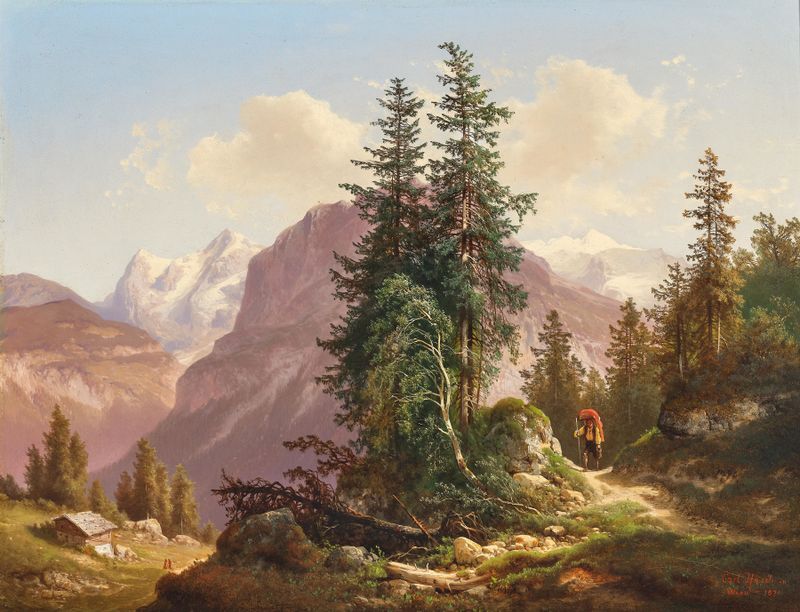
Der Eiger, der Mönch und der Silberhorn in der Schweiz
Carl Hasch

Gebirgsbach in der Ramsau
Carl Hasch
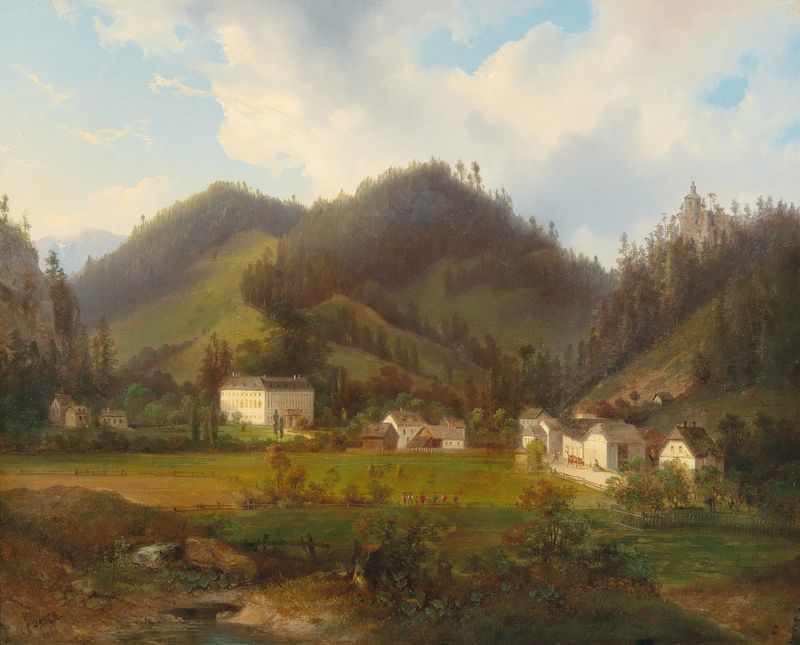
View of Schloss Gutenstein
Carl Hasch
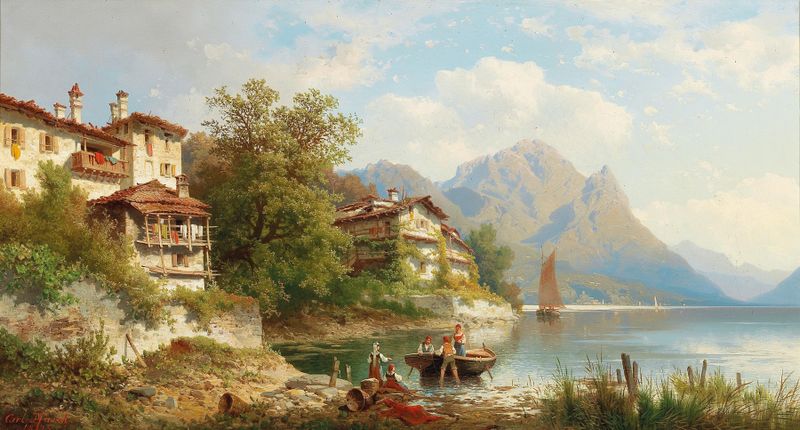
Motiv aus Gandria am Lago di Lugano
Carl Hasch

Waldmühle bei Windischgarsten
Carl Hasch

Waterfall
Carl Hasch

Am Seebach in Prag
Carl Hasch
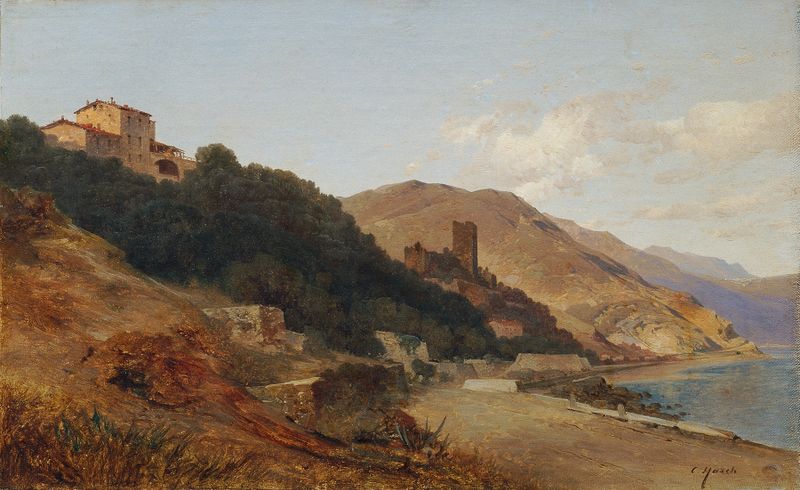
Italienische Abendlandschaft
Carl Hasch
Landschaft mit Sägemühle
Carl Hasch
Luzerner See
Carl Hasch





