
Landschaft mit Sägemühle — History & Facts
Who listens when art speaks of silence? In Carl Hasch's Landschaft mit Sägemühle, the whisper of a forgotten landscape stirs a deep sense of unease, echoing fears that linger in the stillness of time. Look to the foreground, where the jagged edges of the sawmill disrupt the tranquil scene. Notice how the soft greens and browns of the foliage contrast with the stark, angular forms of the machinery, creating an unsettling tension that invites contemplation. The muted palette, infused with dappled light, draws your gaze to the interplay of shadow and illumination, revealing the labor beneath the beauty—suggesting an industry that quietly encroaches upon nature’s serenity. Delve deeper into the painting’s emotional layers, where hints of nostalgia intertwine with anxiety.
The presence of the sawmill implies a relationship between civilization and the wilderness, invoking fears of progress overshadowing the natural world. The stillness surrounding the mill speaks of isolation, suggesting that while human endeavors persist, they are met with an echoing silence—an absence of life that amplifies the weight of the scene. Created in an uncertain time in the late 19th century, Hasch's work reflects a moment when industrialization began to reshape landscapes across Europe. He painted this piece amidst a burgeoning fascination with the relationship between nature and technology, capturing a world on the brink of transformation.
In this setting, the quiet might be more than a lack of sound; it is a harbinger of the changes to come, a meditation on the subtle fear of what lies ahead.
More Artworks by Carl Hasch
Browse all →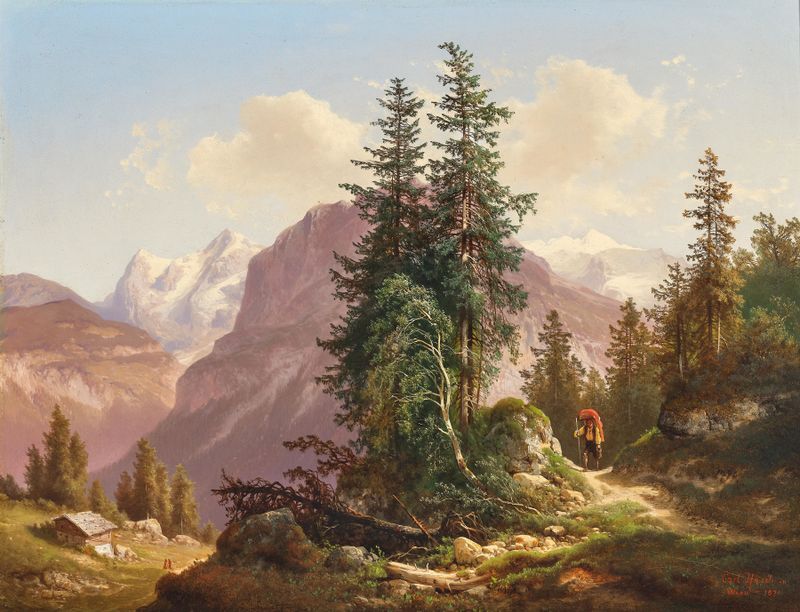
Der Eiger, der Mönch und der Silberhorn in der Schweiz
Carl Hasch

Gebirgsbach in der Ramsau
Carl Hasch

Jäger im Hochgebirge
Carl Hasch
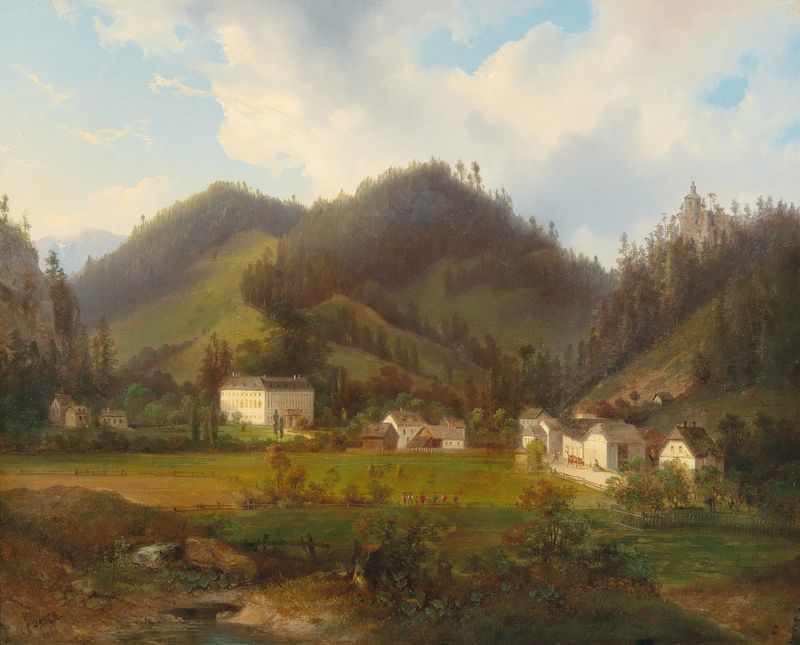
View of Schloss Gutenstein
Carl Hasch
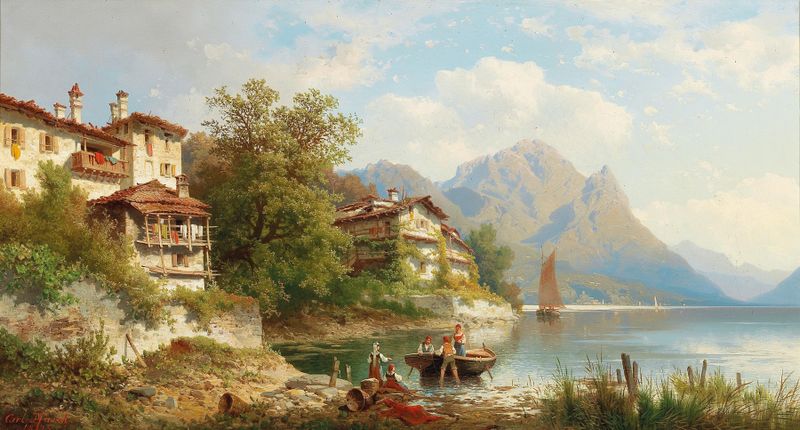
Motiv aus Gandria am Lago di Lugano
Carl Hasch

Waldmühle bei Windischgarsten
Carl Hasch

Waterfall
Carl Hasch

Am Seebach in Prag
Carl Hasch
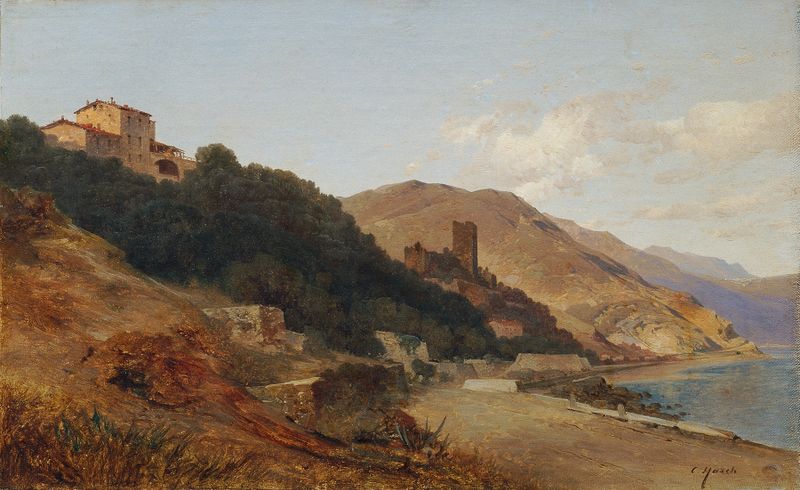
Italienische Abendlandschaft
Carl Hasch
Luzerner See
Carl Hasch





