
View of Schloss Gutenstein — History & Facts
Did the painter know this moment would outlive them? As the leaves dance in the gentle breeze and the sunlight bathes the castle's stone façade, we are invited into a world both tranquil and echoing with madness beneath the surface. Look to the left at the verdant greenery, where a riot of brushstrokes captures the wildness of the adjoining landscape. The viewer's gaze is drawn upward, across the castle’s imposing towers, where the interplay of light and shadow creates a dramatic tension that suggests hidden stories within the walls. The soft blues and radiant yellows harmonize beautifully, yet the slightly chaotic arrangement hints at the fragility of peace, evoking a sense of unease lurking just out of sight. Beneath the surface beauty lies an undercurrent of turmoil.
The vibrant colors juxtapose the rigid, imposing architecture, speaking to the tension between nature and man-made structures. The landscape appears alive, almost as if the trees conspire to reclaim the castle, symbolizing the madness of human ambition overshadowed by nature's inevitable encroachment. Each brushstroke whispers secrets of fragility and resilience, creating a dialogue between serenity and chaos. In 1866, Carl Hasch painted View of Schloss Gutenstein during a transformative era in European art, as the Romantic movement was yielding to the influences of Impressionism.
Living in Vienna, a hub of artistic innovation, he was surrounded by a wave of experimentation and emotional exploration. With social and political upheaval shaping contemporary life, Hasch encapsulated the tension of his time, embedding a sense of madness within the beauty of his landscape.
More Artworks by Carl Hasch
Browse all →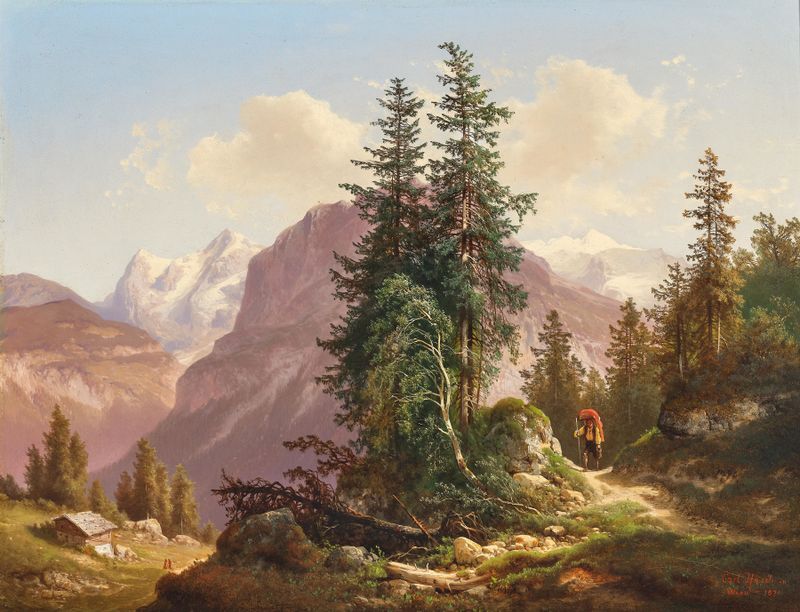
Der Eiger, der Mönch und der Silberhorn in der Schweiz
Carl Hasch

Gebirgsbach in der Ramsau
Carl Hasch

Jäger im Hochgebirge
Carl Hasch
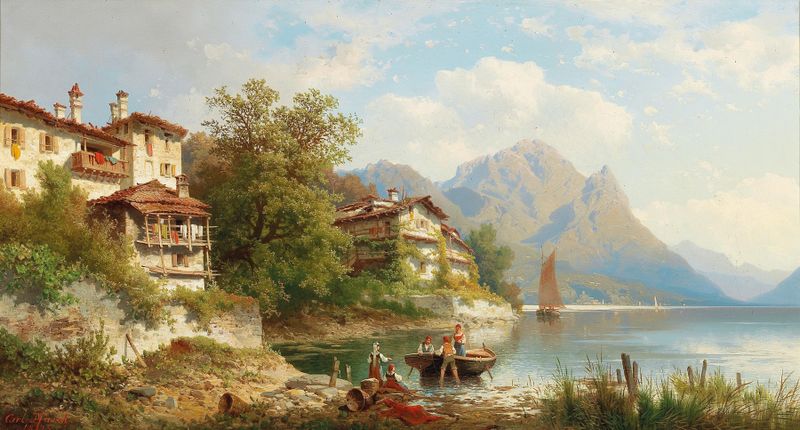
Motiv aus Gandria am Lago di Lugano
Carl Hasch

Waldmühle bei Windischgarsten
Carl Hasch

Waterfall
Carl Hasch

Am Seebach in Prag
Carl Hasch
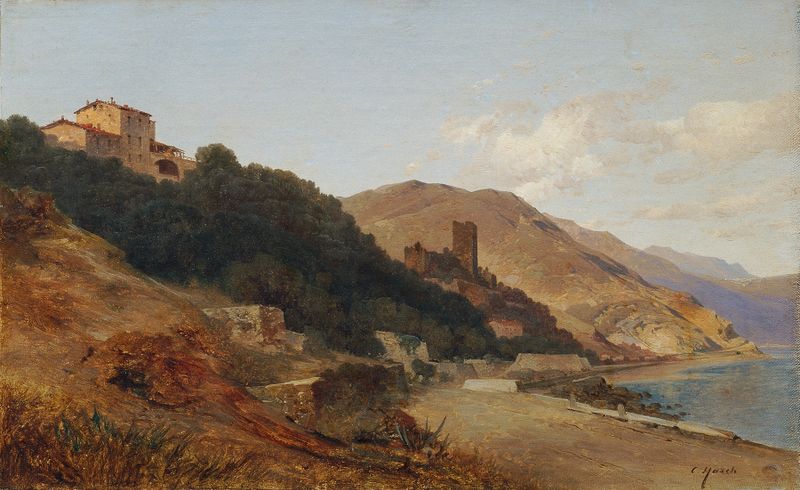
Italienische Abendlandschaft
Carl Hasch
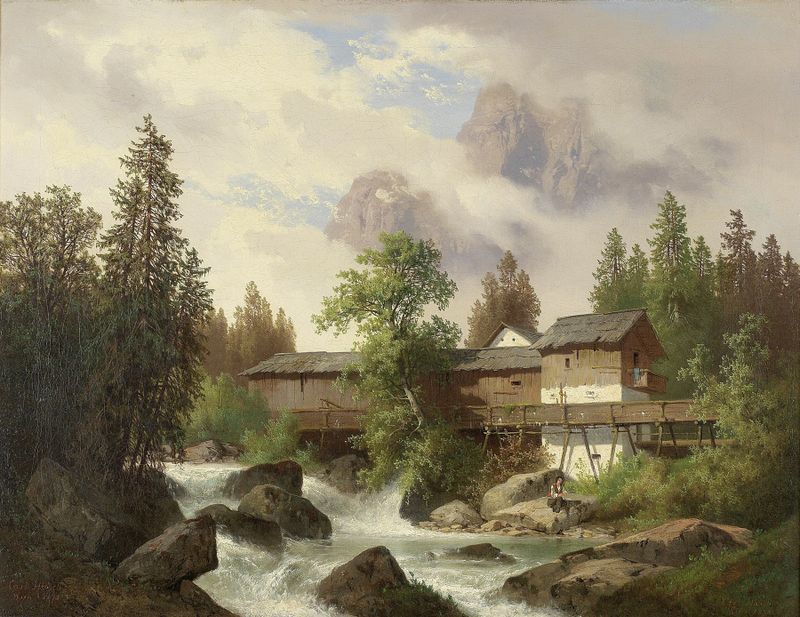
Landschaft mit Sägemühle
Carl Hasch
Luzerner See
Carl Hasch





