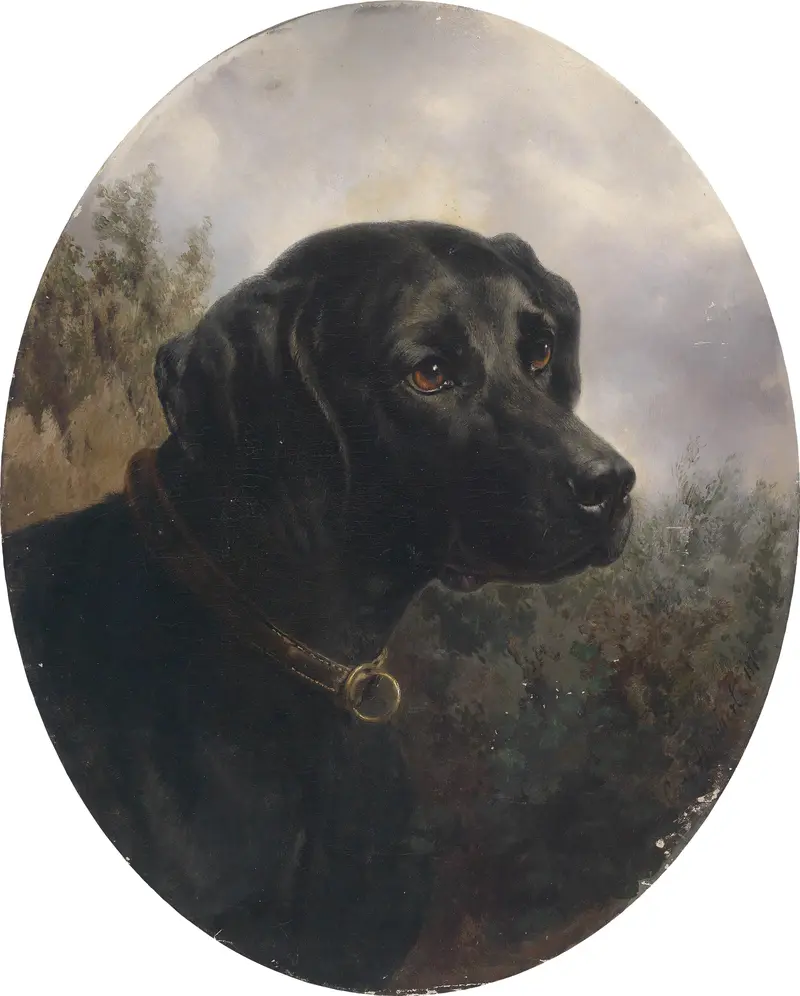
Junger Dackel — History & Facts
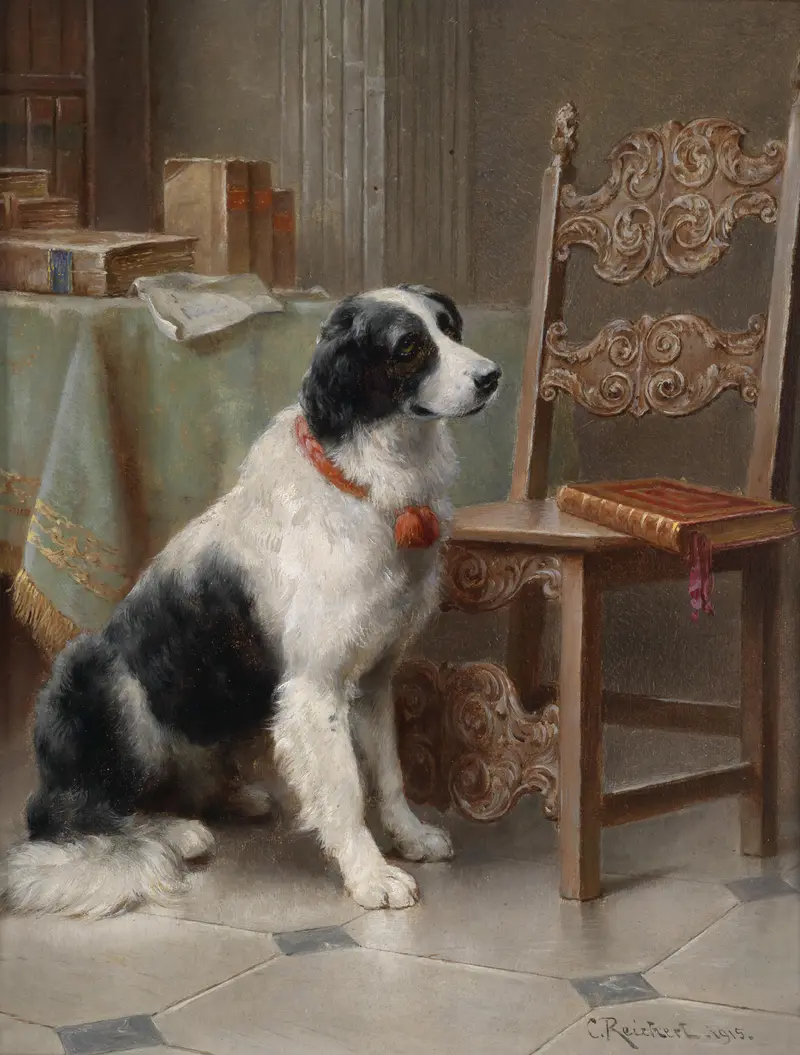
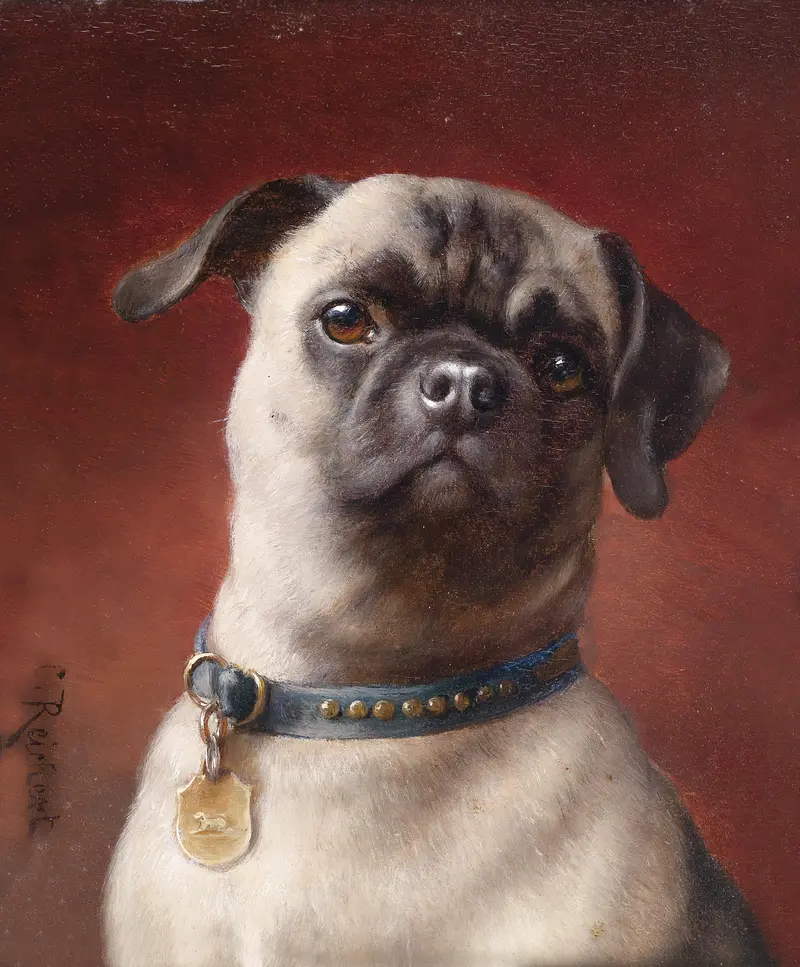
A single glance and the viewer is caught by the intent, almost human gaze of the young dachshund, poised between curiosity and patience. The animal’s glossy eyes meet ours directly, as if inviting a silent conversation, while the soft, dappled light picks out the sheen on its fur and the smooth curve of its ear. There is a gentle intimacy in the way the dog is presented — not as a mere subject, but as a companion, alert to the world and to the artist behind the easel.
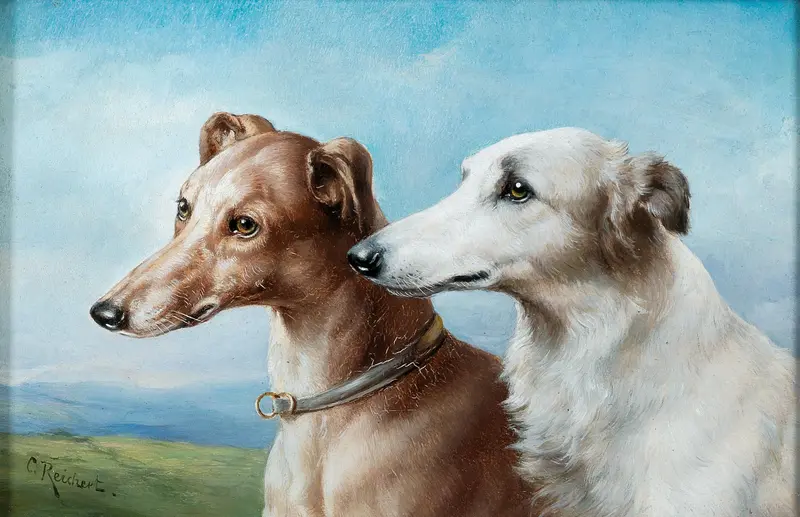
The muted background draws all attention to the animal’s face, and the careful rendering of its features speaks to both affection and skill. Every brushstroke seems designed to capture the living warmth of the dog, from the delicate whiskers to the subtle tension in its posture. Painted by Carl Reichert by 1918, this work stands in a tradition where animal portraiture was both a celebration of beloved pets and a testament to the painter’s technical prowess. In the late nineteenth and early twentieth centuries, such images were often commissioned by the middle and upper classes, eager to immortalize their loyal companions in oil or watercolor.
While the precise story of this particular painting’s journey remains obscure, its presence in the Dorotheum collection hints at a life shaped by private appreciation rather than public fame. Today, as we look into the eyes of this young dachshund, we step into a world where animals were not just subjects, but cherished members of the household — and where the artist’s hand sought to bridge the gap between species, one attentive portrait at a time.