
Jungfrau-Bahn — History & Facts
What first catches the eye in Jungfrau-Bahn by Emil Cardinaux is the sense of arrival—three figures, bundled against the cold, stand at the edge of an alpine expanse, dwarfed by the jagged, flame-tipped peaks of the Jungfrau. Their faces, painted in bold, almost mask-like reds, are turned toward the mountain’s heights, as if measuring themselves against the landscape. The woman’s scarf whips in the wind, her stance both braced and exhilarated, while her companions—one gripping a walking stick, the other a coiled rope—seem poised for the next step.
The vast, pale sweep of snow and sky leaves no doubt: here, the mountain is the protagonist, and human presence is both audacious and fleeting. The low horizon and the upward thrust of the composition guide the viewer’s gaze from the sturdy travelers to the summit itself, making the journey as important as the destination. Created around 1911, this work belongs to the golden age of travel posters, when railways and tourism were transforming the Swiss Alps from remote wilderness into destinations for a new kind of adventure. Posters like this were commissioned to entice travelers onto the newly completed Jungfrau Railway, promising not just a train ride but a passage into the heart of the mountains—an experience previously reserved for explorers and mountaineers.
Emil Cardinaux was a pioneer of this bold, graphic style, using simplified forms and striking colors to capture both the grandeur of the landscape and the thrill of modern travel. History has kept few traces of the individual journeys these posters inspired, but their promise of wonder and achievement still radiates from every brushstroke—inviting us to imagine ourselves at the edge of the snow, looking up.
More Artworks by Emil Cardinaux
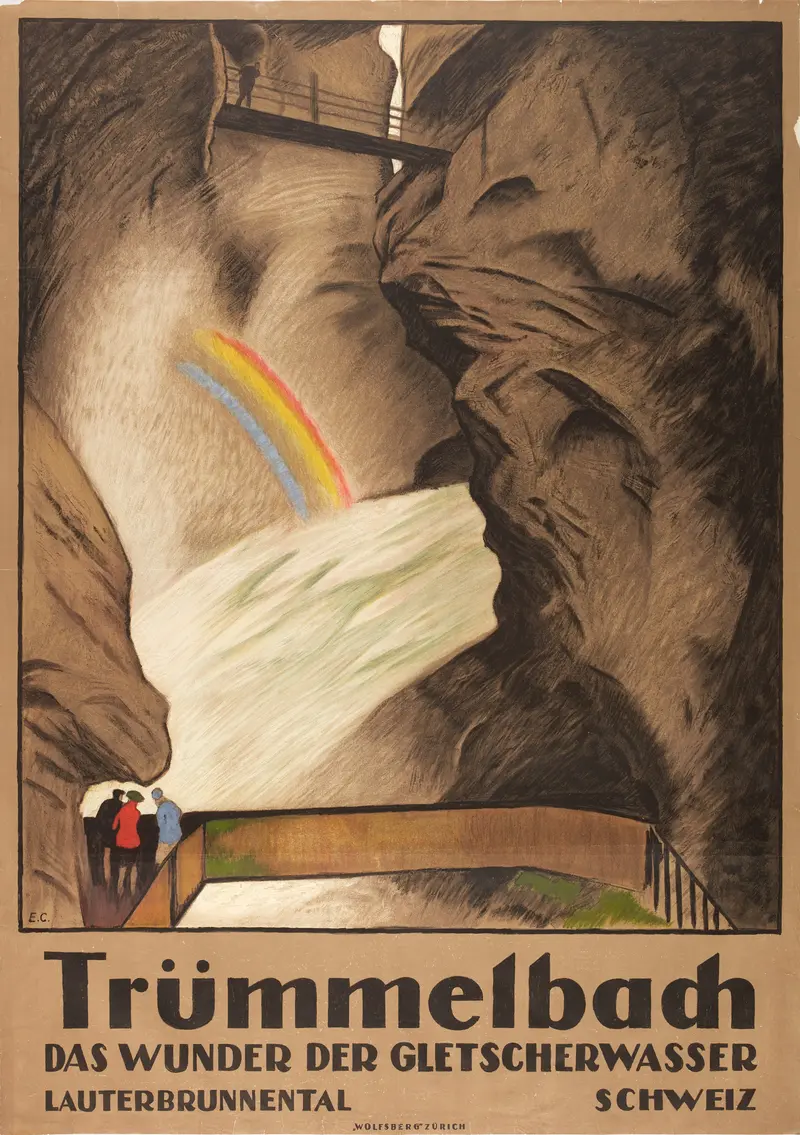
Trümmelbach
Emil Cardinaux
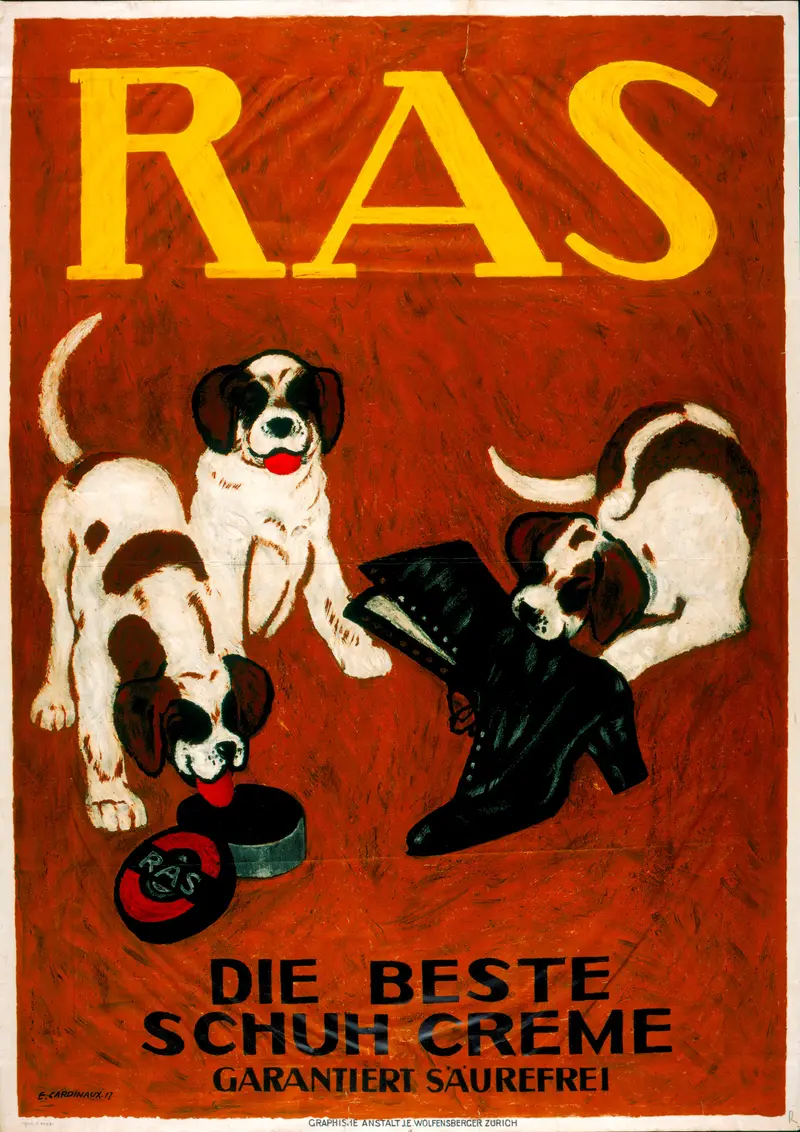
RAS, die beste Schuhcrème
Emil Cardinaux
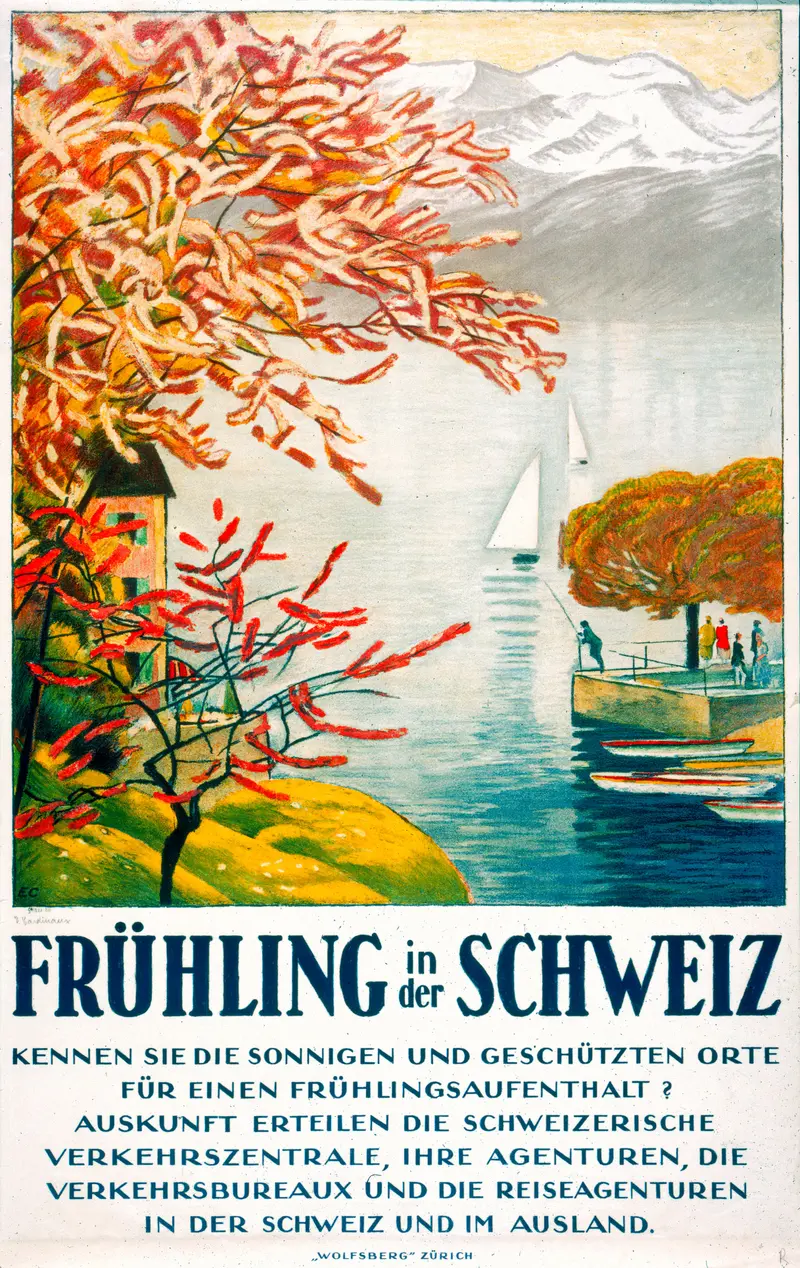
Frühling in der Schweiz
Emil Cardinaux
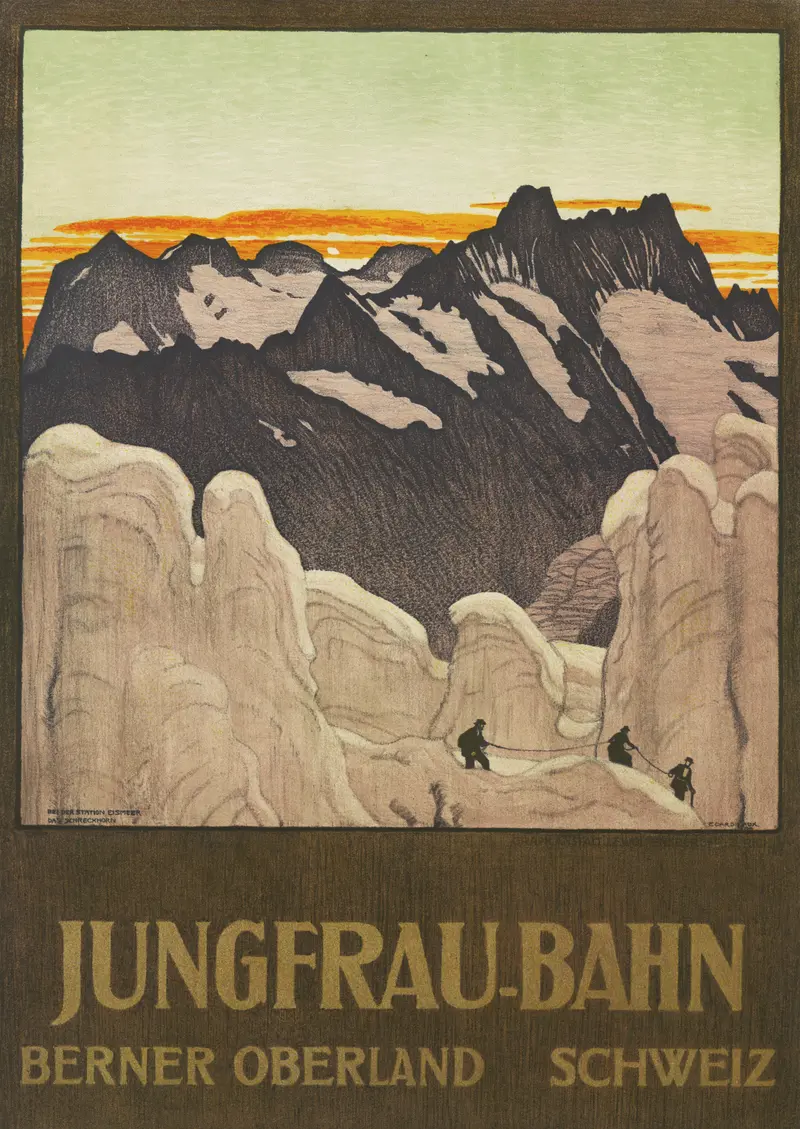
Jungfrau-Bahn, Berner Oberland
Emil Cardinaux
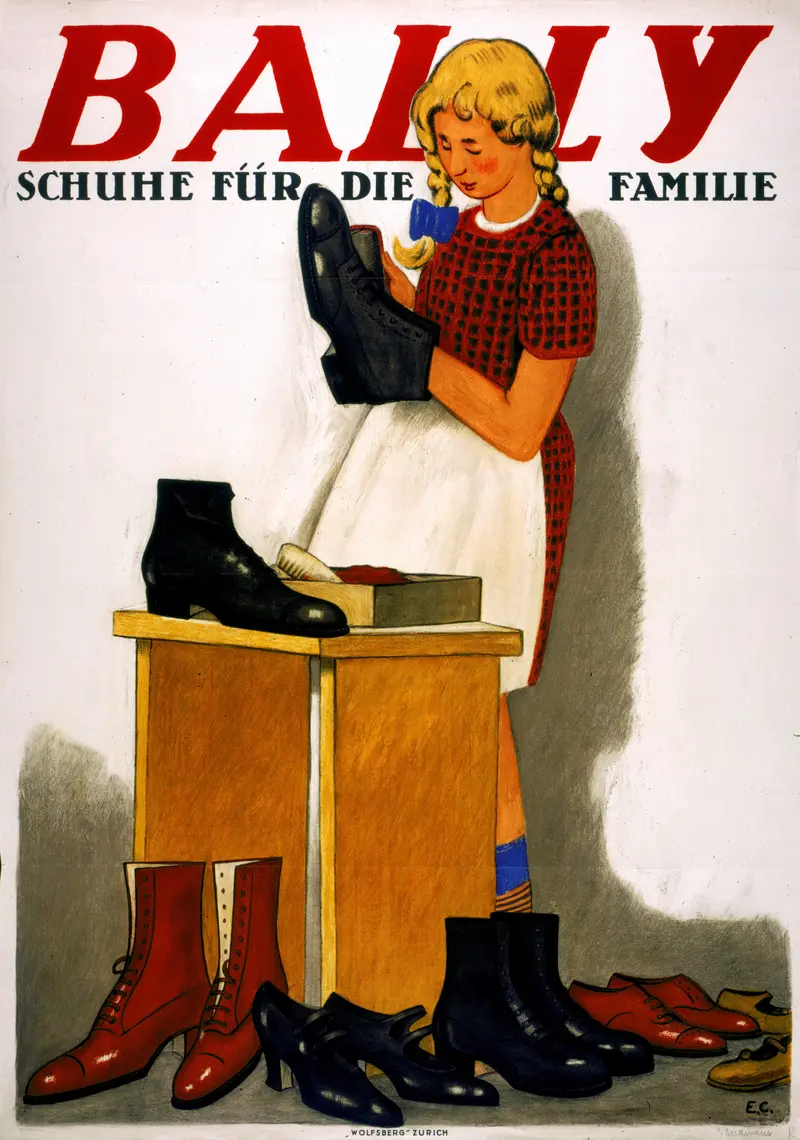
Bally – Schuhe für die Familie
Emil Cardinaux

Winter in Switzerland
Emil Cardinaux
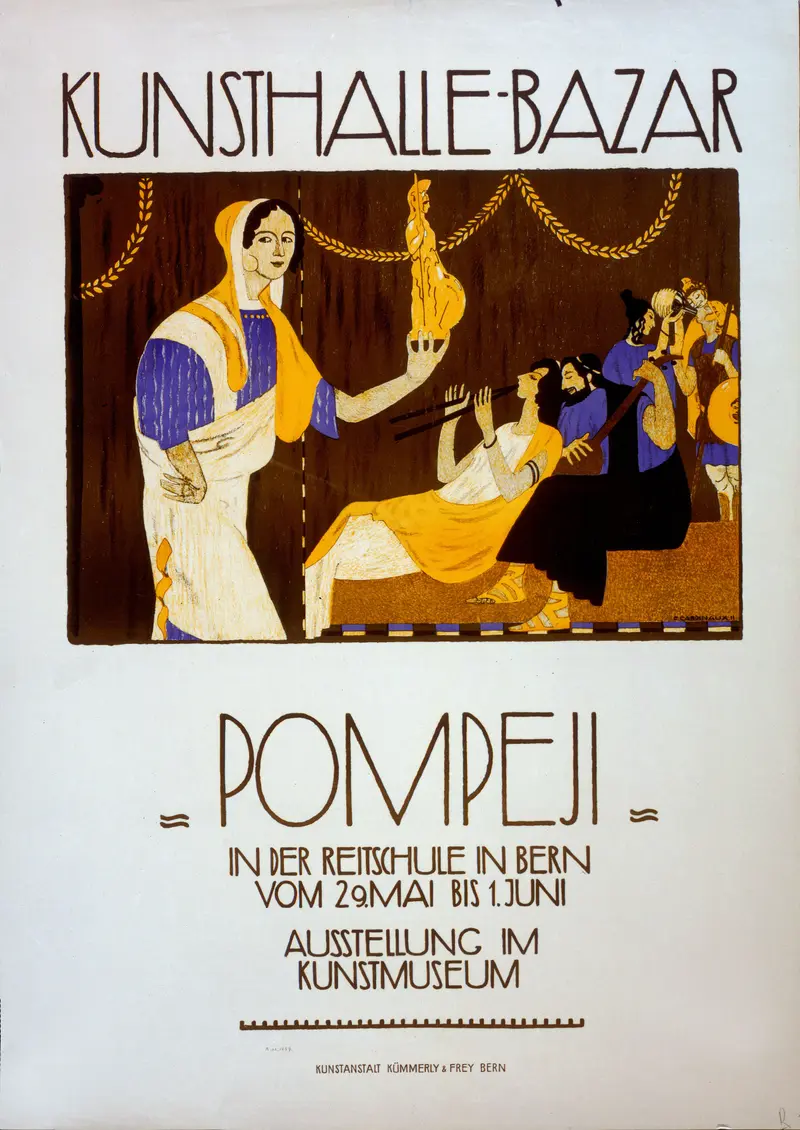
Kunsthalle-Bazar Pompeji, Bern 1911
Emil Cardinaux
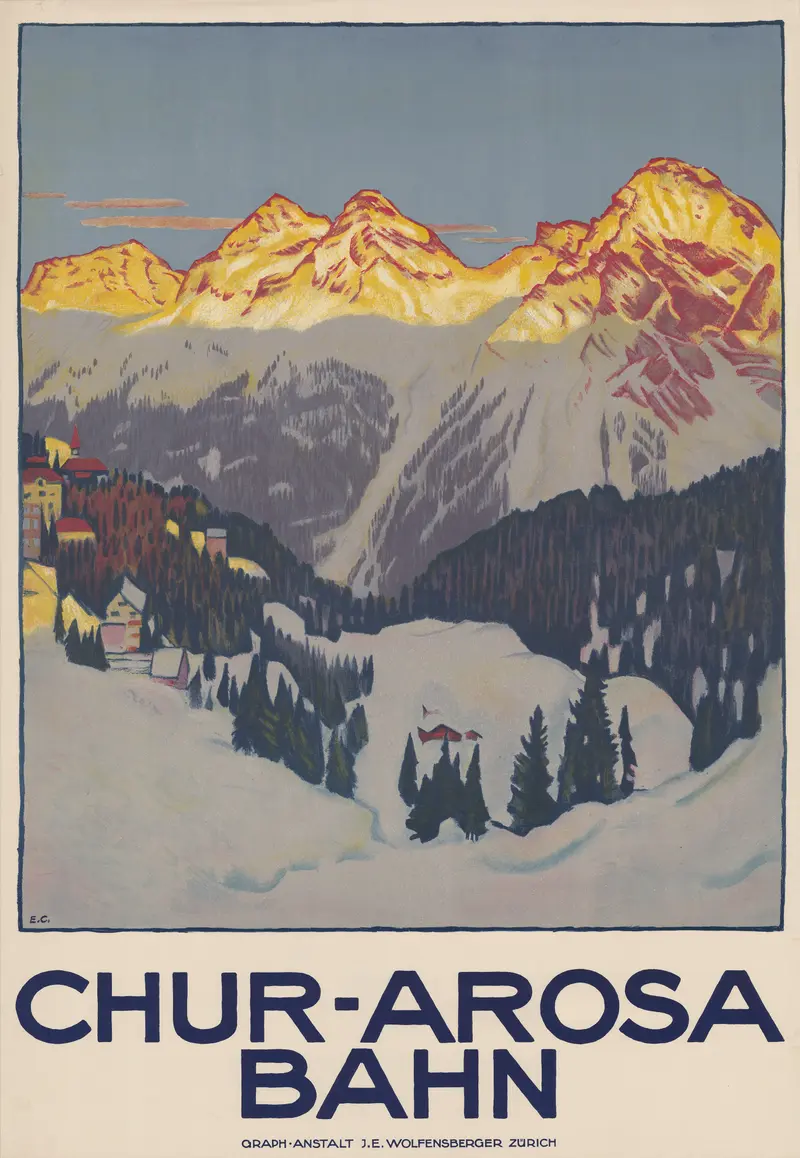
Chur-Arosa-Bahn
Emil Cardinaux
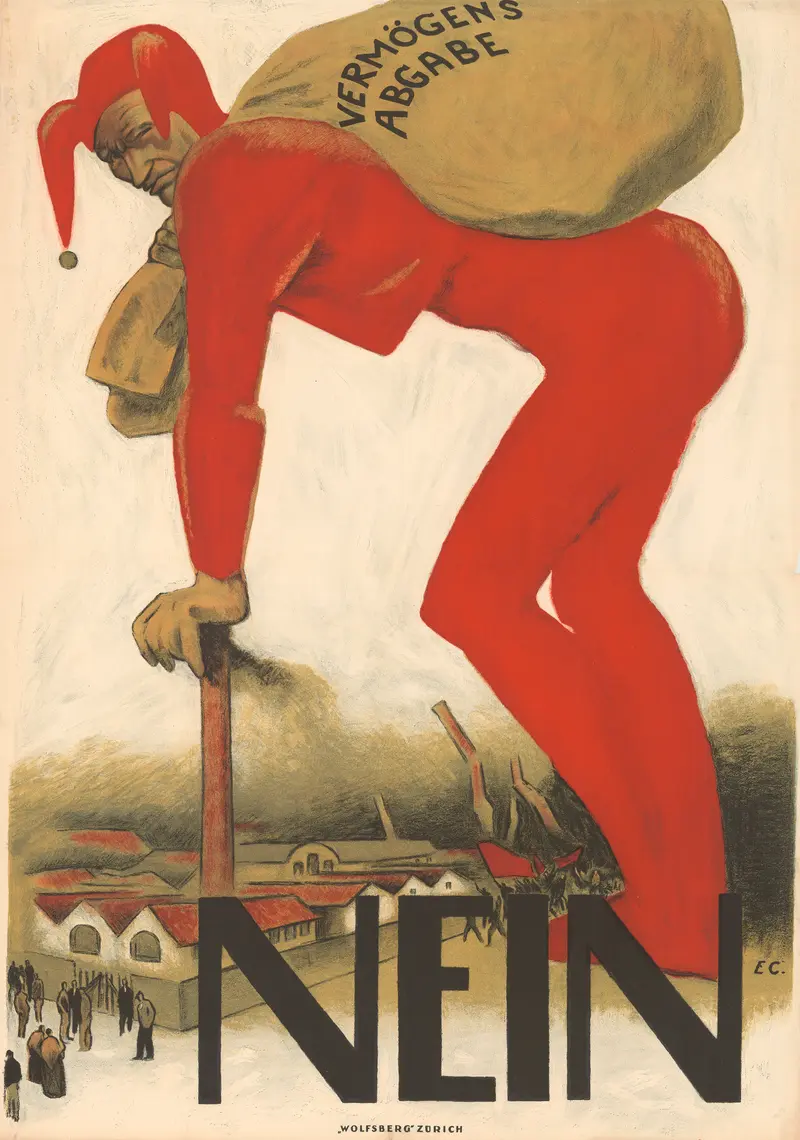
Vermögensabgabe – Nein
Emil Cardinaux
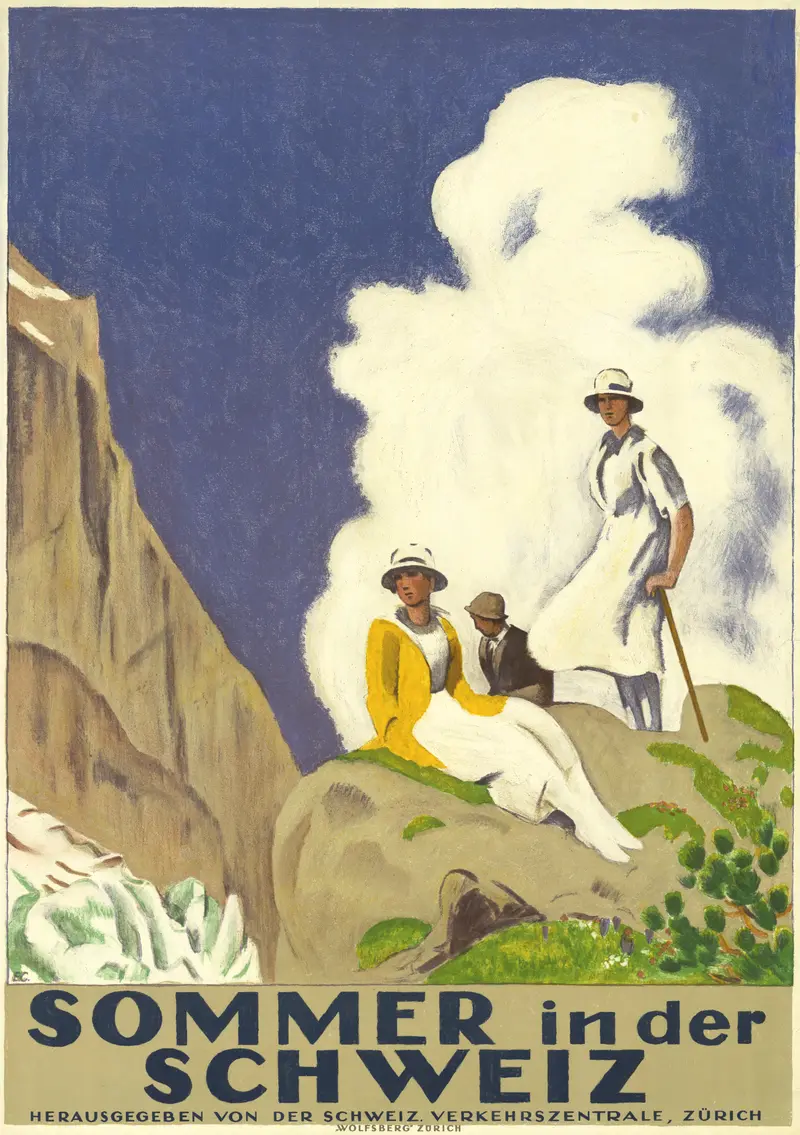
Sommer in der Schweiz
Emil Cardinaux
More Landscape Art

The Starry Night
Vincent van Gogh

View of Delft
Johannes Vermeer

Water Lilies
Claude Monet

The Grand Canal, Venice, looking north-west from the Ca' Corner to the Ca' Contarini degli Scrigni, with the campanile of Santa Maria della Carità
Canaletto

Windsor Castle
Canaletto

The Grand Canal looking North-East from the Palazzo Dolfin-Manin to the Rialto Bridge
Canaletto