
Kairouan — History & Facts
What secret hides in the quiet of the canvas? Beneath the surface of Kairouan, the essence of innocence whispers, inviting us to explore its depths. Look to the center, where the delicate interplay of light and shadow bathes the figures in a soft glow. The intricate patterns of the architectural details draw the eye, leading us along the pathways of the composition. Notice how the warm earth tones harmonize with the cool blues, creating a serene atmosphere that envelops the scene.
The brushwork is gentle, yet deliberate, imparting a sense of calm and stillness that lingers in the air. Delve deeper, and you’ll uncover the contrasts that pulse within the piece. The innocence of the figures, seemingly untouched by the world beyond, stands in stark juxtaposition to the complex architecture that surrounds them, hinting at the weight of history. The absence of movement speaks volumes, embodying a moment frozen in time where simplicity reigns, yet the intricacy of life’s experiences looms just outside the frame.
Each detail—like the distant rooftops and the quiet streets—invites reflection on nostalgia and the passage of time. In 1913, Oskar Laske was navigating the intersection of tradition and modernity, painting in Vienna amidst a vibrant artistic community. This period witnessed a shift in artistic expression, as artists sought to capture new realities. Laske's Kairouan reflects his engagement with these themes while also conveying a personal connection to the innocence found in everyday moments, resonating with the innocence of a world on the cusp of change.
More Artworks by Oskar Laske
Browse all →
Faschingsumzug am Stock im Eisen Platz
Oskar Laske

Schönbrunn (Winter)
Oskar Laske
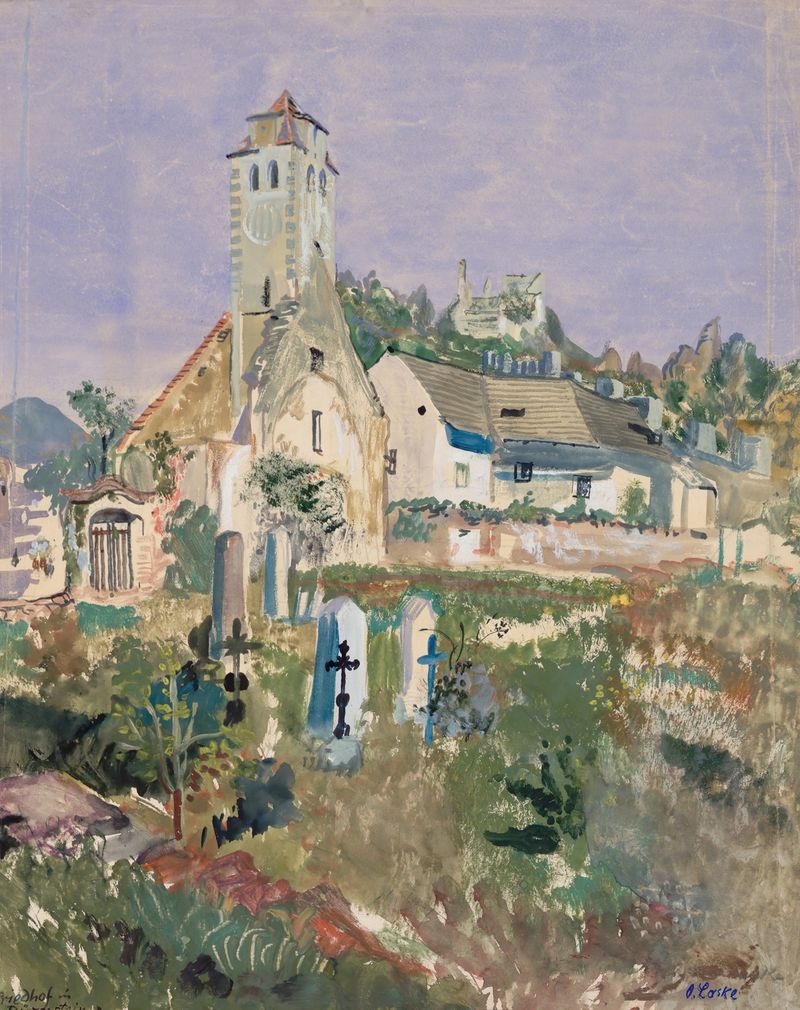
Friedhof in Dürnstein
Oskar Laske

Pratermotiv an der alten Donau
Oskar Laske

Frühjahrsnebel in Niederösterreich
Oskar Laske

Begräbnis des Wiener Bürgermeisters Dr. Karl Lueger
Oskar Laske

Maria Theresien-Denkmal mit Blick gegen das Burgtor
Oskar Laske
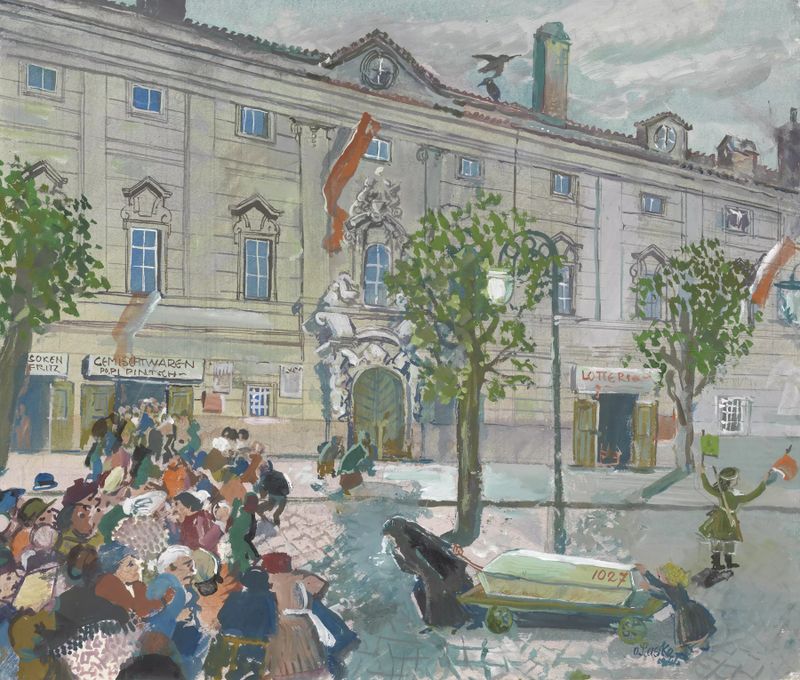
Wiener Straßenbild vom Mai 1945
Oskar Laske

Winterlandschaft in Pressbaum
Oskar Laske

Ansicht von Positano
Oskar Laske





