Kampenwand VI — History & Facts
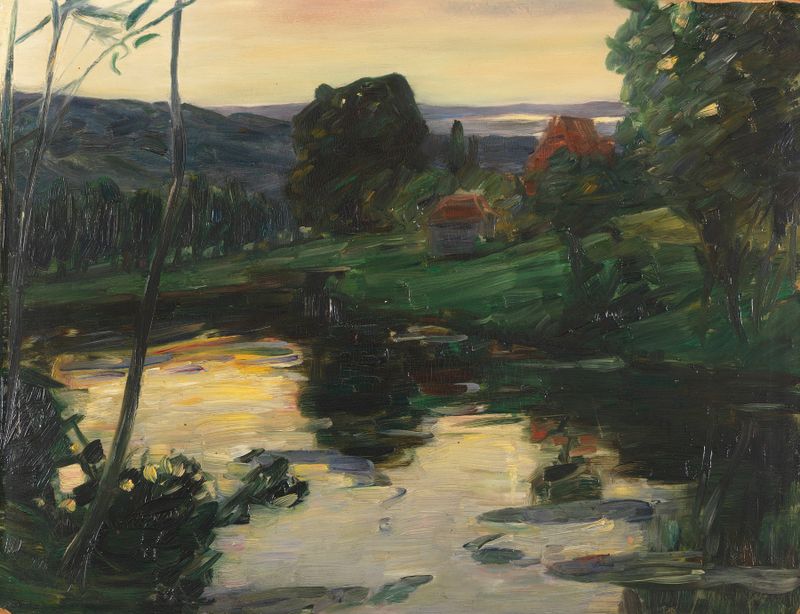
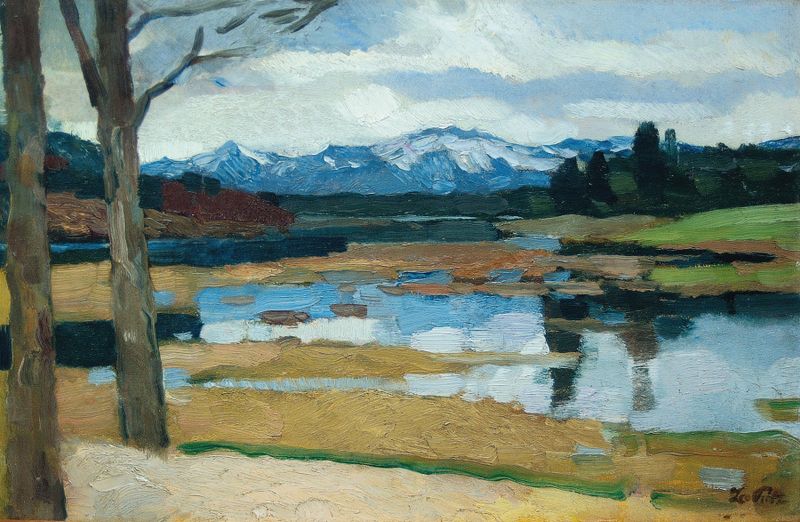
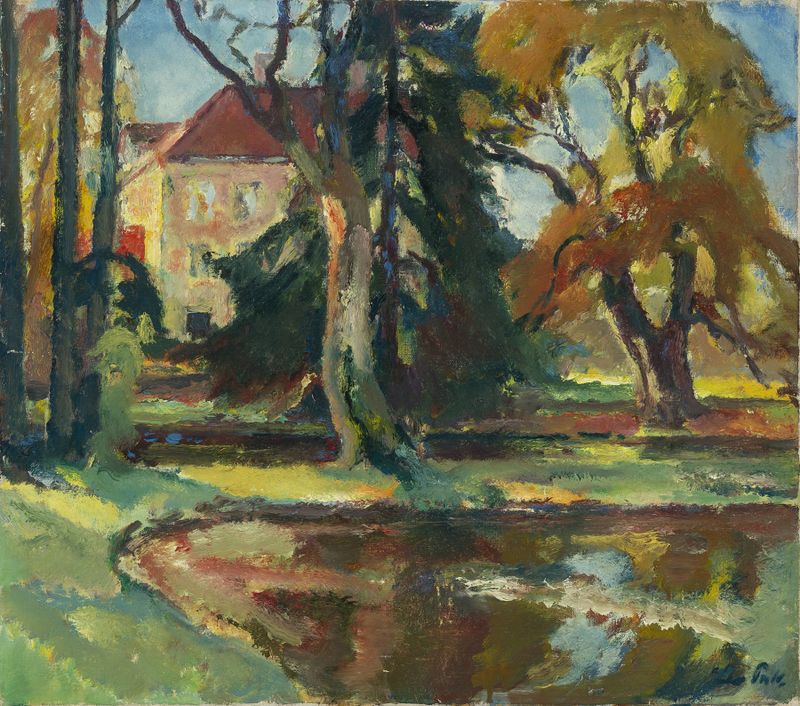
Is this a mirror — or a memory? The stillness captured in Kampenwand VI invites contemplation, drawing us into the quiet depths of our own reflective thoughts. Look to the left at the serene landscape, where the gentle curves of the hills cradle a tranquil lake, glistening under a delicate touch of sunlight. The soft, muted palette of greens and blues blends seamlessly, creating an atmosphere of calm that envelops the viewer. Notice how the brushstrokes fluidly intertwine, demonstrating the artist's mastery in conveying both serenity and subtle tension in nature’s interplay with light. The juxtaposition here is striking: the stillness of the water contrasting with the dynamic movement suggested by the strokes of the surrounding trees.
There’s an ethereal quality in the way the light dances upon the surface, hinting at deeper emotional undercurrents — perhaps a longing for peace or an exploration of solitude. Each detail, from the sky’s gentle gradient to the reflections in the lake, resonates with a profound sense of silence that speaks volumes beyond the canvas. In 1910, Leo Putz was immersed in the vibrant art scene of Munich, a hub of innovation and expression. At this time, he was exploring themes of nature intertwined with personal introspection, reflecting the broader cultural movements shifting towards modernism in art.
This piece illustrates his evolving style and an intimate connection to the landscapes that inspired him, revealing the artist’s search for meaning through the tranquil beauty of his surroundings.