Landschaft — History & Facts
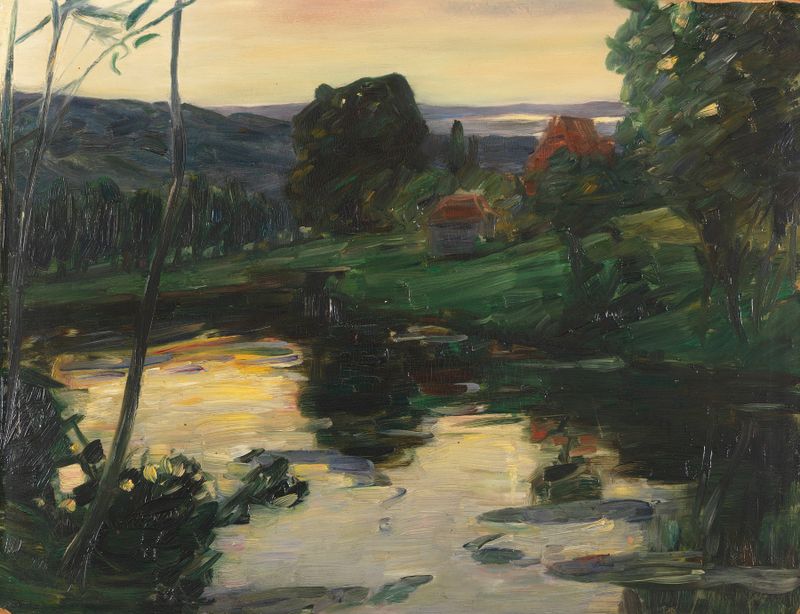
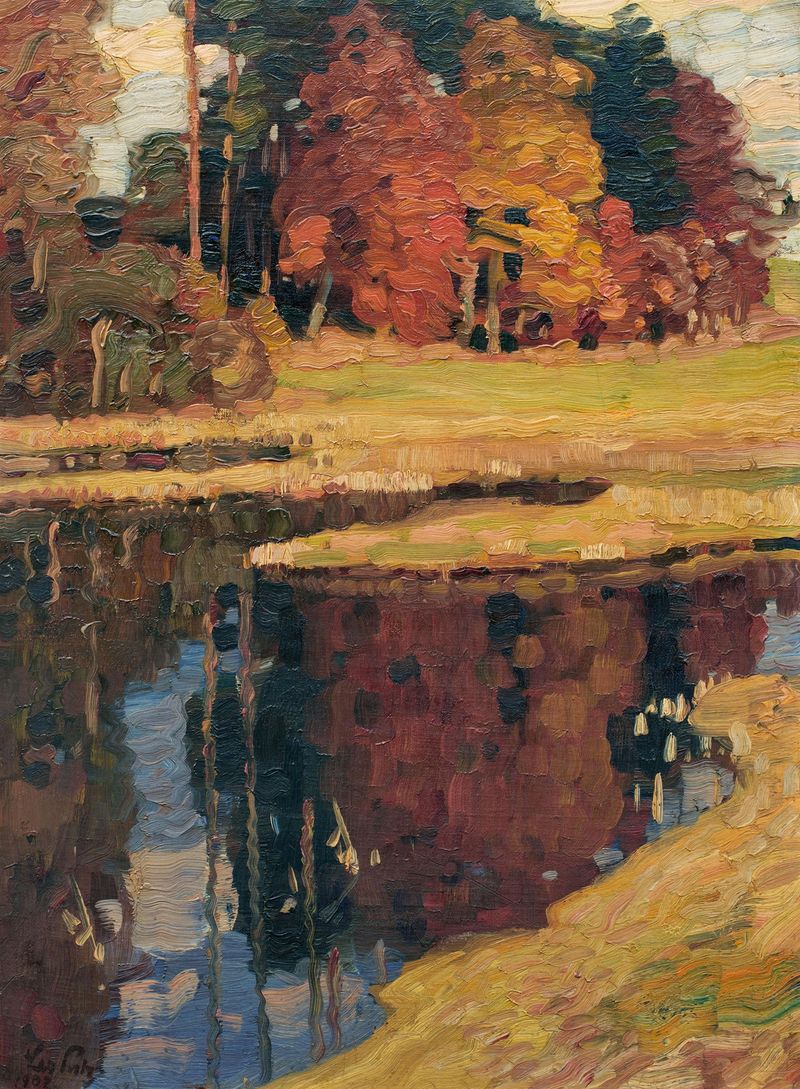
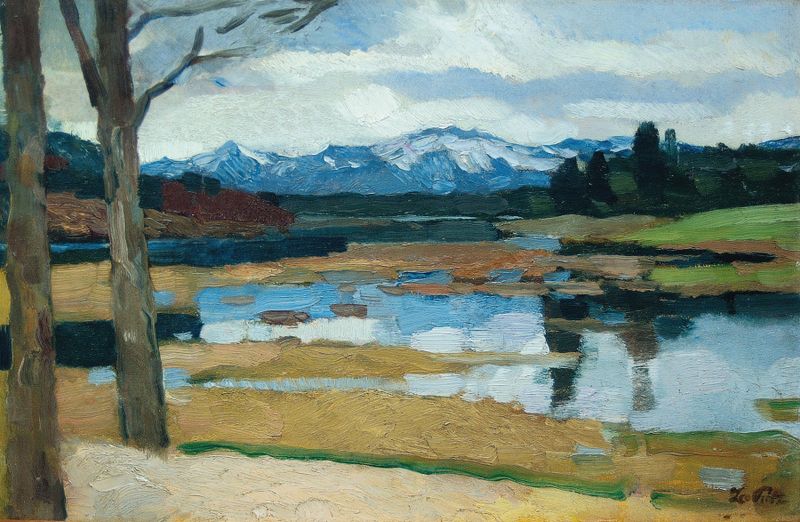
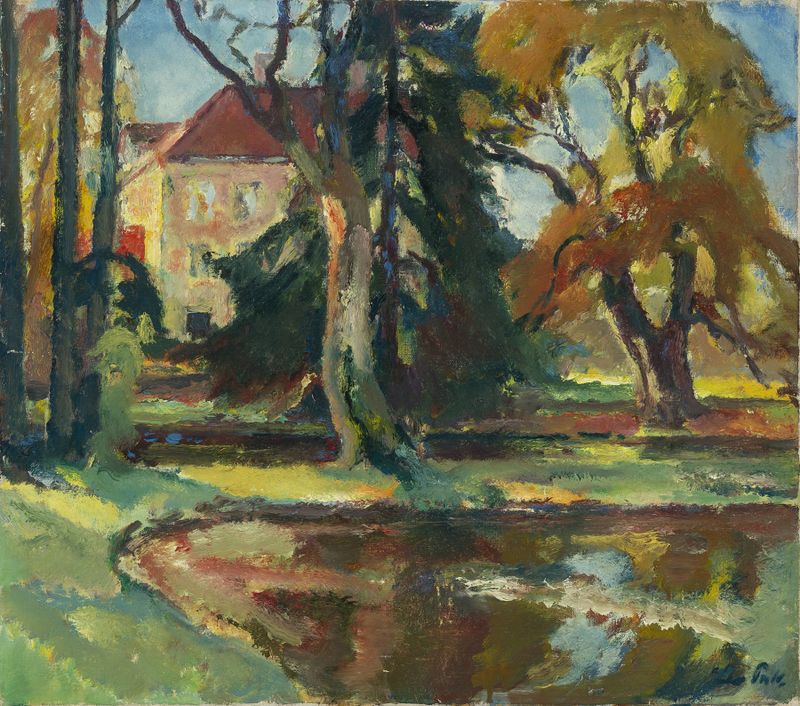
In this tranquil landscape, the absence of sound envelops the viewer, inviting contemplation and reflection. The serene beauty of nature stands not just as a backdrop, but as a profound companion to the unspoken thoughts that linger in the air. Look to the right at the gentle curve of the hills, where muted greens and soft earth tones blend seamlessly into a horizon kissed by a warm, golden light. Notice how the brushstrokes convey a sense of motion in the grass, almost like a whisper, while the sky above, painted in delicate pastel hues, suggests the fleeting nature of day.
The composition balances open space with intimate details, guiding the eye through a realm of stillness and peace. Hidden within this idyllic scene lies a tension between the vibrant colors and the muted shadows, reflecting the complexities of life. The interplay of light and dark evokes a sense of longing, as if the landscape itself carries unvoiced stories. Here, the trees stand tall and silent, their branches reaching for the sky, embodying both solitude and strength, while the winding path urges the viewer to ponder their own journey. In 1900, Leo Putz painted this work during a time of artistic exploration and change in Europe, as the Impressionist movement was beginning to influence newer styles.
While he was residing in Munich, a key cultural hub, he engaged with the growing interest in capturing the essence of nature. This period fostered a deeper appreciation for the emotional resonance of landscapes, setting the stage for his own artistic evolution and pursuit of tranquility through art.