
Schloss Seefeld IV — History & Facts
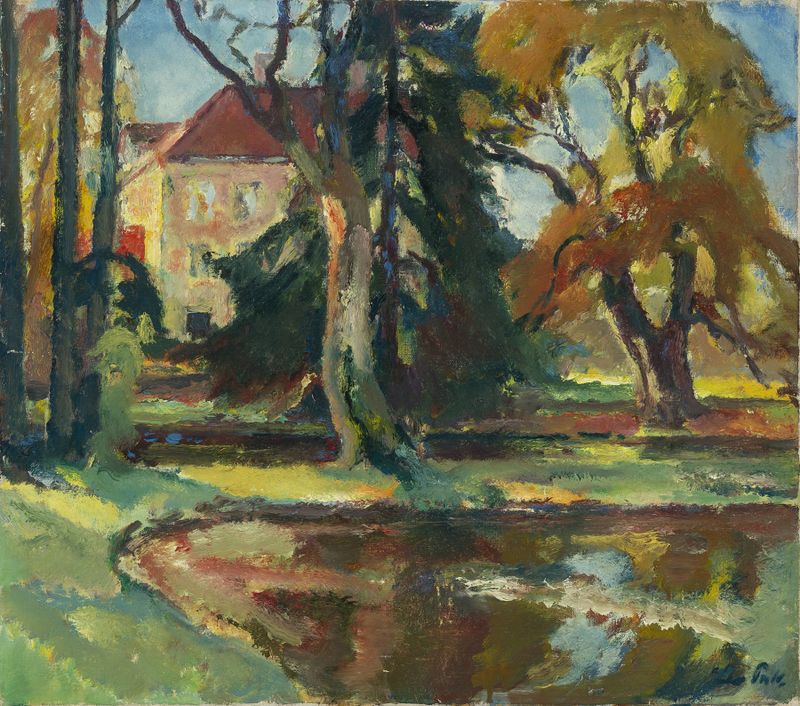
Can paint confess what words never could? In Schloss Seefeld IV, the essence of nostalgia unfurls, beckoning the viewer to journey through a realm where memory and emotion intertwine. Look to the left at the elegantly rendered castle, its architecture a blend of whimsy and realism, bathed in soft, golden light. The strokes are gentle yet deliberate, and the interplay of color—soft blues and earthy greens—creates an inviting atmosphere, drawing the eye deeper into the scene. The delicate ripples in the surrounding water reflect not just the structure itself but the very feelings it embodies, as if whispering secrets of longing and history. Notice how the trees, with their vibrant foliage, stand as silent witnesses to the passage of time, merging the natural with the man-made.
The slightly blurred edges suggest the fleeting nature of memory, enhancing the sense of a moment captured on the brink of fading. This tension between clarity and ambiguity invites contemplation, prompting viewers to reflect on their own encounters with nostalgia and the spaces they cherish. Created in 1923, this work emerged during a pivotal era for Leo Putz, who was embracing the shift towards modernism while still cherishing a romantic idealism in his art. Living in Munich, he engaged with the broader movements of the time, which sought to redefine the relationship between art and the viewer.
As Europe grappled with the aftermath of the Great War, this painting serves as a poignant reminder of the solace found in memories of place and time.
More Artworks by Leo Putz
Browse all →



More Architecture Art
Browse all →
The statue of Liberty
Frédéric Auguste Bartholdi

View of Houses in Delft, Known as ‘The Little Street’
Johannes Vermeer

View of Houses in Delft, Known as ‘The Little Street’
Johannes Vermeer

The Cathedral in Rouen. The portal, Grey Weather
Claude Monet

The yellow house
Vincent van Gogh

The Church in Auvers-sur-Oise, View from the Chevet
Vincent van Gogh