
Karnak — History & Facts
In the quiet embrace of art, illusion breathes life into the stillness of history. Each brushstroke holds a secret, inviting the viewer to step beyond mere observation and into a world of dreams and memories. Focus on the intricate details of Karnak, where the towering columns loom large, their surfaces adorned with hieroglyphics that whisper tales of an ancient civilization. The warm, sunlit hues breathe warmth into the stone, while the interplay of shadows casts a sense of reverence over the scene.
Notice how the composition draws your eyes upward, almost imploring you to transcend the earthly realm and connect with the spiritual essence of the past. Yet, it is in the subtleties where the true narrative unfolds. The contrast between the vibrant colors of the sky and the muted browns of the ancient stone evokes a profound sense of time — a reminder of glory fading into memory. The stillness of the scene juxtaposes the vibrant life that once thrived here, hinting at the fragility of human achievement in the face of eternity.
Müller captures not just a place, but a haunting echo of civilization's rise and fall. During the period between 1838 and 1839, the artist found himself immersed in the romanticism of the orientalist movement, a time when European artists looked to ancient cultures for inspiration. As he painted Karnak, Müller traveled through Egypt, absorbing its rich history and landscapes, challenging the boundaries of perception and reality in his work. It was a time when interest in archaeology and ancient civilizations was burgeoning, allowing him to weave a masterpiece that resonates with both historical significance and imaginative allure.
More Artworks by William James Müller
Browse all →
Cleeve, Somerset, with Bridgewater Bay in the Distance
William James Müller

The Bridge at Llangollen
William James Müller

Cairo Bazaar
William James Müller
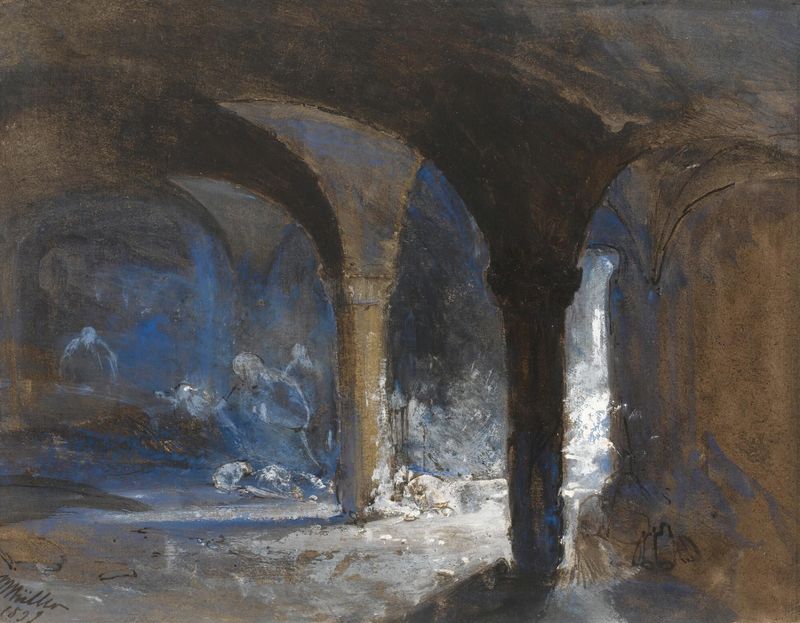
Crypt of the bishop’s palace during the Bristol riots
William James Müller

Near the Caravan Bridge, Smyrna
William James Müller
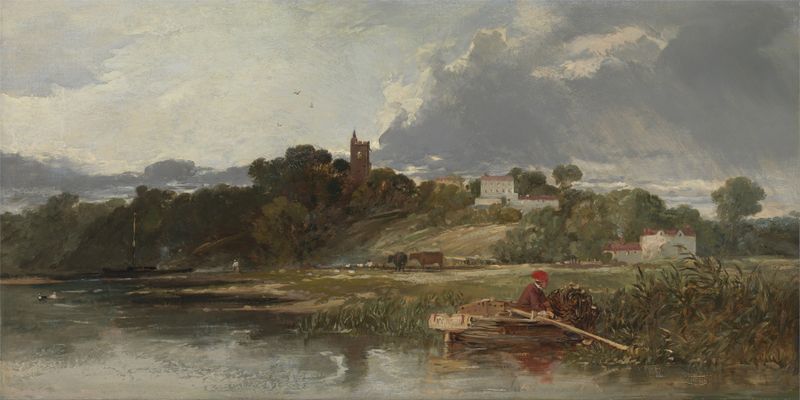
Gillingham on the Medway
William James Müller

The Church of the Holy Sepulchre
William James Müller

A View of Eton and the Fellows Eyot
William James Müller

Tripoli
William James Müller

A Mountain Torrent
William James Müller
More Architecture Art
Browse all →
The statue of Liberty
Frédéric Auguste Bartholdi

View of Houses in Delft, Known as ‘The Little Street’
Johannes Vermeer

View of Houses in Delft, Known as ‘The Little Street’
Johannes Vermeer

The Cathedral in Rouen. The portal, Grey Weather
Claude Monet

The yellow house
Vincent van Gogh

The Church in Auvers-sur-Oise, View from the Chevet
Vincent van Gogh