
Kasteel IJzendoorn in de Betuwe — History & Facts
Who listens when art speaks of silence? In Kasteel IJzendoorn in de Betuwe, a hushed landscape whispers tales of decay and lost grandeur. Look to the center of the canvas, where the castle stands resolute yet vulnerable against the encroaching shadows of nature. The artist’s delicate brushstrokes capture the aging stones, their textures alive with the passage of time. Notice how the muted earth tones blend seamlessly with the soft greens of the surrounding fields, evoking a sense of melancholy that envelops the scene.
The light, soft and diffused, bathes the structure in a bittersweet glow, inviting the viewer to ponder the stories hidden within its walls. As you explore the edges of the painting, subtle details emerge. The twisted branches of trees frame the castle like a protective embrace, yet they also signal the inevitable passage of time. The crumbling façade hints at decay, while the calm waters reflect both beauty and transience, suggesting a deeper narrative of resilience amidst decline.
Each element, from the gently curling smoke to the distant horizon, speaks of a world caught between the memories of the past and the weight of the present. Jacob van Strij painted Kasteel IJzendoorn in de Betuwe during the period from 1766 to 1815, a time marked by shifting artistic ideologies. As he navigated personal challenges and the evolving trends of Romanticism, Strij sought to capture the simplicity and beauty of rural life. His focus on landscapes offered a meditative escape, inviting viewers to contemplate the intersection of nature and architecture, stability and decay.
More Artworks by Jacob van Strij
Browse all →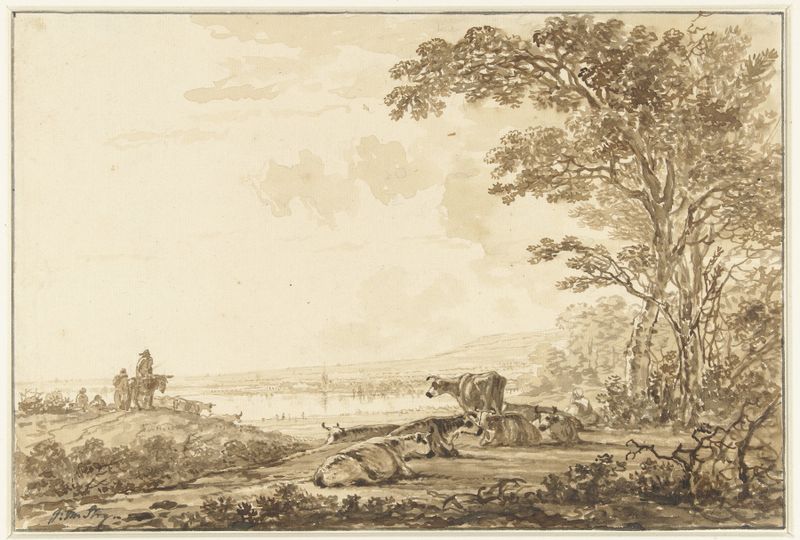
Rivierlandschap met rustend vee
Jacob van Strij
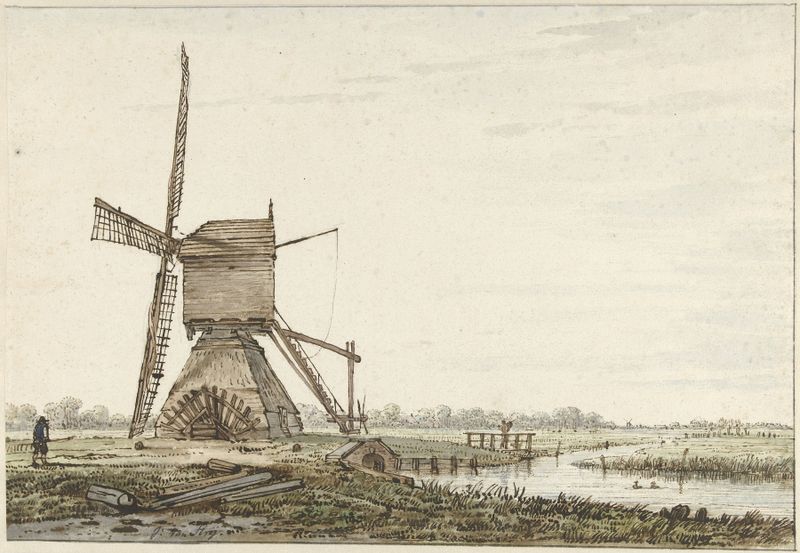
Landschap met poldermolen
Jacob van Strij

Milking Time
Jacob van Strij
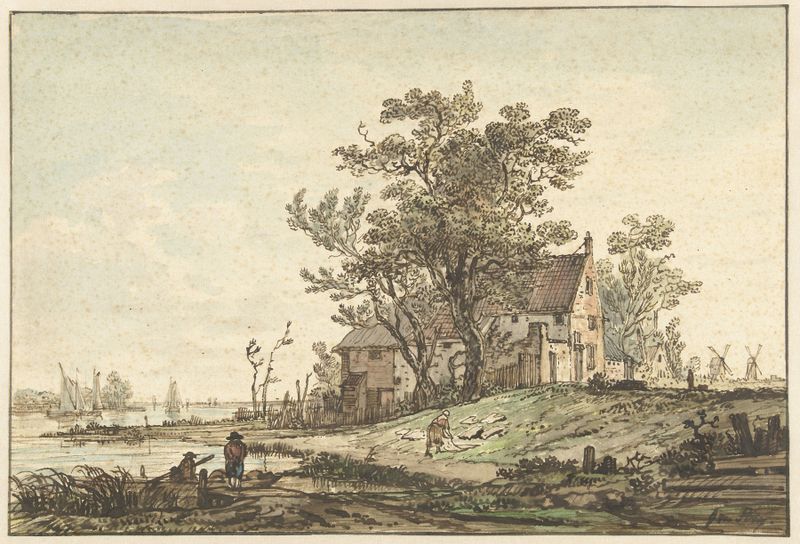
Oude boerderij aan een rivier
Jacob van Strij

Paysage arboré avec figures et maisons au bord du rivage
Jacob van Strij

Landscape with Peasants with their Cattle and Anglers on the Water
Jacob van Strij

Italianisierende Landschaft mit einem Hirten
Jacob van Strij
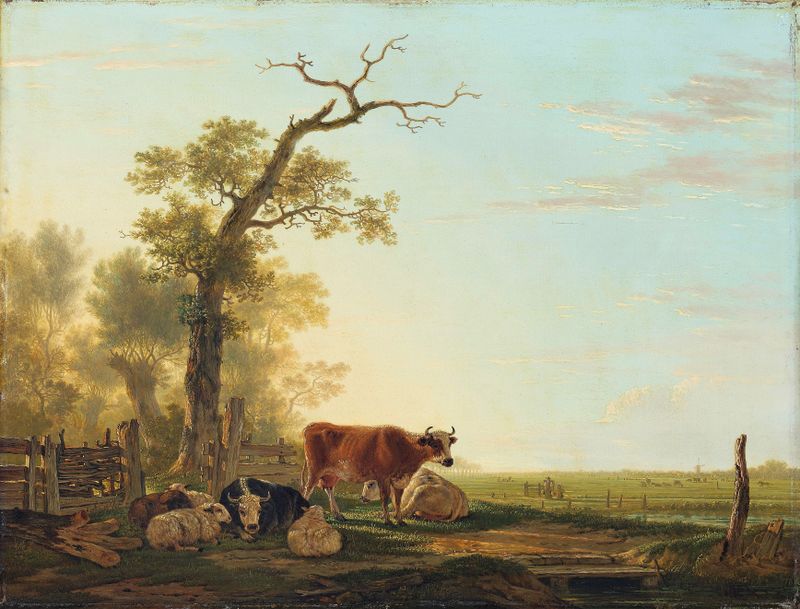
Meadow Landscape with Animals
Jacob van Strij
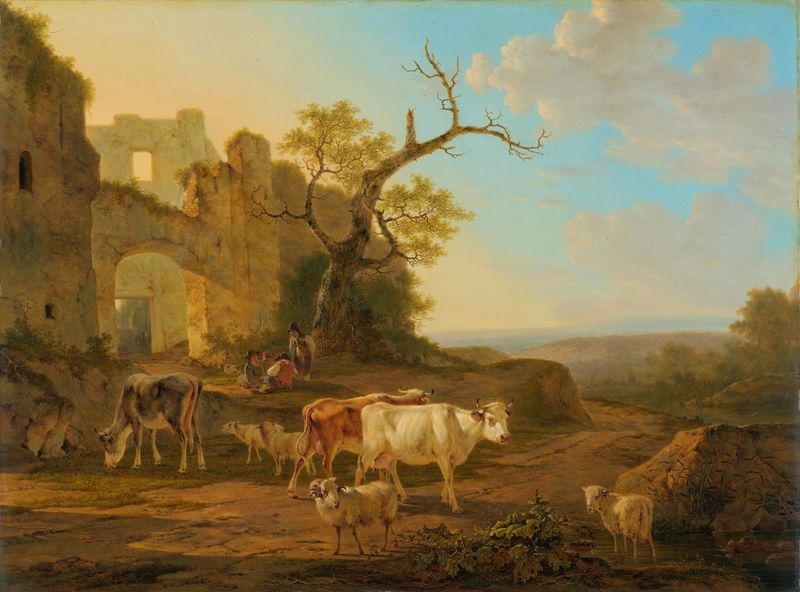
Landscape with Cows near a Ruin
Jacob van Strij
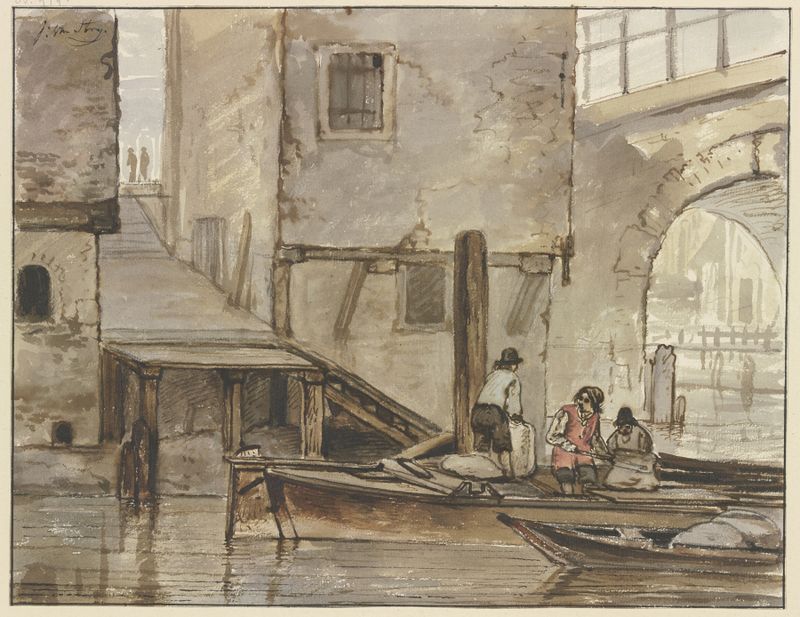
Gracht mit zwei Ruderbooten
Jacob van Strij
More Architecture Art
Browse all →
The statue of Liberty
Frédéric Auguste Bartholdi

View of Houses in Delft, Known as ‘The Little Street’
Johannes Vermeer

View of Houses in Delft, Known as ‘The Little Street’
Johannes Vermeer

The Cathedral in Rouen. The portal, Grey Weather
Claude Monet

The yellow house
Vincent van Gogh

The Church in Auvers-sur-Oise, View from the Chevet
Vincent van Gogh