
Kawaguchi — History & Facts
Who listens when art speaks of silence? In the intricate tapestry of visual language, there exists a divine dialogue that transcends the mere act of observing. Focus on the delicate interplay of lines that weave through the composition, inviting the eye to navigate the serene landscape. The muted palette, composed of soft blues and earth tones, evokes a tranquil harmony that resonates deeply within. Notice how the gentle curves of the hills cradle the horizon, creating a sense of both vastness and intimacy, while the subtle brushstrokes breathe life into each element, suggesting a world both real and ethereal. Within this landscape, a profound silence resonates, evoking both solitude and contemplation.
The absence of human figures invites viewers to reflect on their own connection to nature, emphasizing the divine presence that lingers in the quiet spaces. The harmonious balance of light and shadow suggests a moment frozen in time, where nature's beauty becomes a meditative experience. Each detail, from the soft ripples in the water to the distant mountains, speaks to a sense of peace and spiritual tranquility. During the late Edo period, Takahashi Hiroaki created works that embodied the essence of ukiyo-e, bridging traditional Japanese aesthetics with innovative techniques.
While precise dating of this particular piece remains elusive, Hiroaki was an influential figure in the world of printmaking during the early 20th century, when Japan was undergoing significant cultural transformation. His works reflect a deep appreciation for nature and spirituality, merging the past with a contemporary vision that continues to resonate today.
More Artworks by Takahashi Hiroaki
Browse all →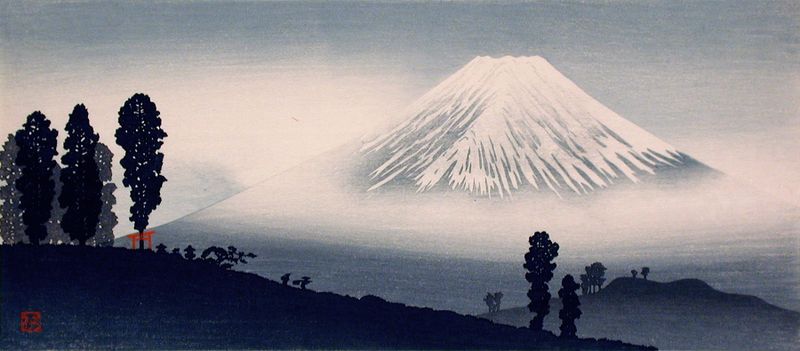
Mount Fuji
Takahashi Hiroaki

Mount Fuji seen near Tamaho, Dawn
Takahashi Hiroaki
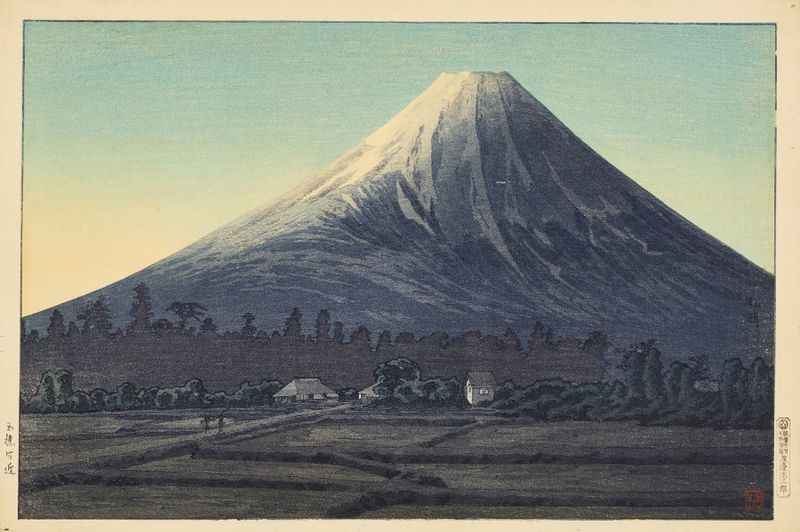
Mount Fuji seen near Tamaho, day
Takahashi Hiroaki
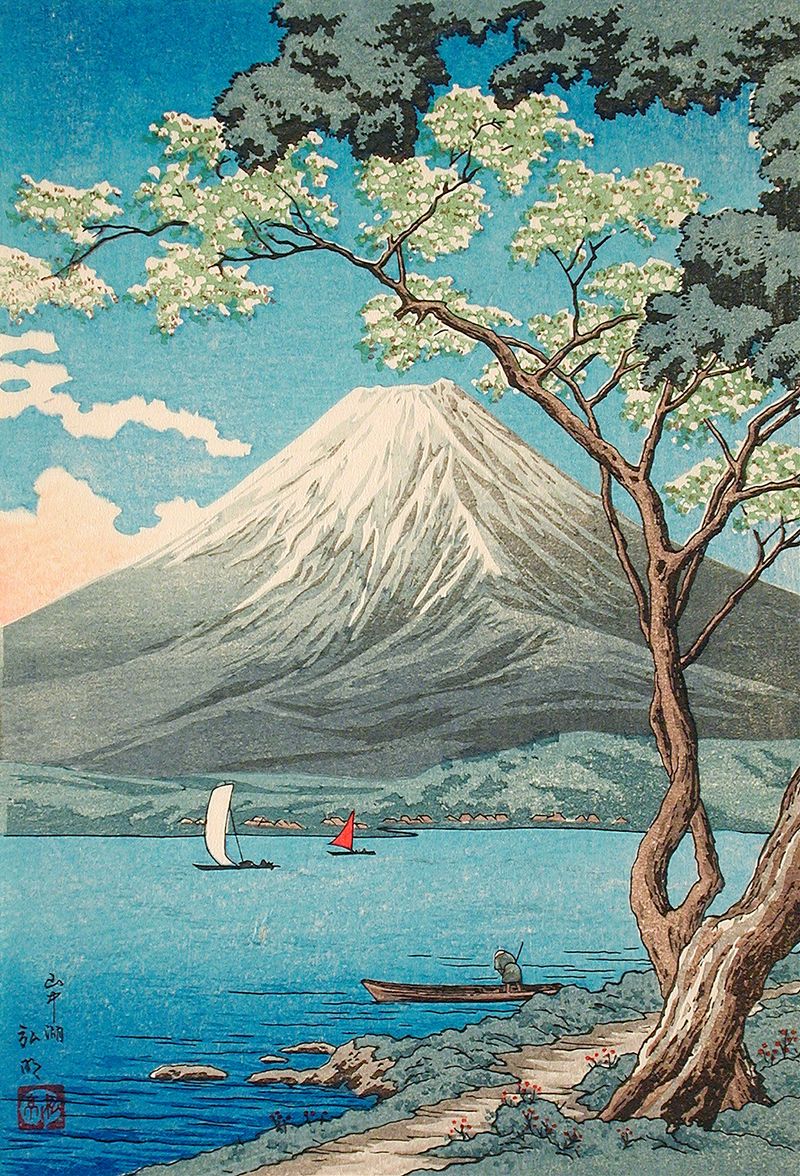
Mount Fuji from Lake Yamanaka
Takahashi Hiroaki

Mt. Fuji from Tagonoura, Snow Scene
Takahashi Hiroaki

Egoda no tsuki
Takahashi Hiroaki
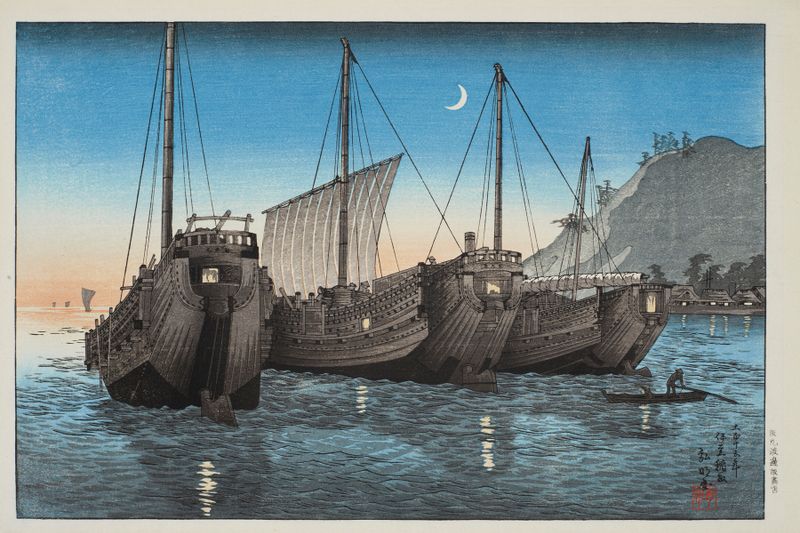
Junks in Inatori Bay, Izu
Takahashi Hiroaki

Izumibashi no ame
Takahashi Hiroaki
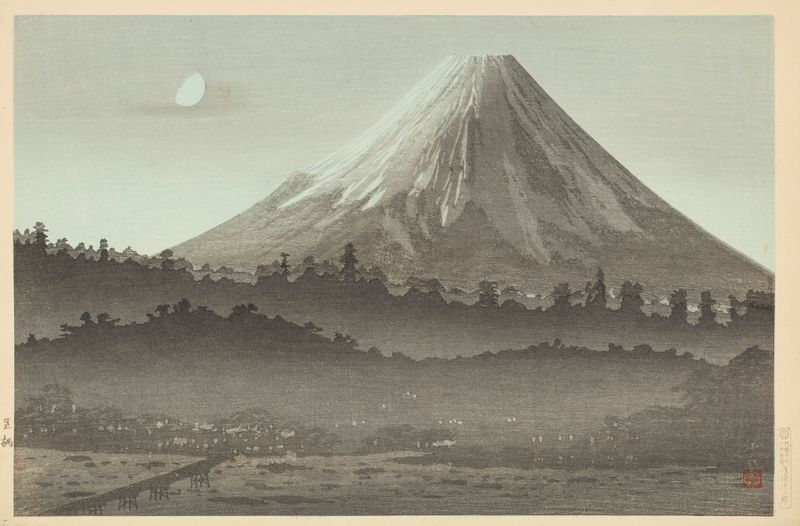
Mount Fuji seen near Tamaho, Night
Takahashi Hiroaki

Fishing nets at Tsukuda
Takahashi Hiroaki





