
Kiyosumien no yuki (Snow at Kiyosumi Park) — History & Facts
In the stillness of a winter's day, a world shrouded in snow holds its breath, inviting us to explore the gentle harmony of nature. The soft white canvas, layered across trees and pathways, speaks volumes in its quietude, allowing the viewer to sit with the unspoken beauty of the moment. Look to the center of the composition, where delicate snow-laden branches intertwine gracefully. The cool blues and soft grays of the sky bleed into the tranquil white, creating an ethereal backdrop.
Notice how the artist masterfully employs subtle variations in color to define the contours of the landscape, guiding your eyes through a serene, wintry maze. Each brushstroke reveals the meticulous attention to detail that breathes life into the stillness, transforming a simple scene into a contemplative experience. As we delve deeper, examine the footprints etched into the snow, hinting at the presence of life in this seemingly desolate world. The contrast between the untouched expanse of white and the fleeting marks of human passage invites contemplation about the impermanence of existence.
The balance of light and shadow creates a dialogue between tranquility and transience, suggesting that within silence lies a whisper of stories waiting to be uncovered. In 1938, Kiyosumien no yuki emerged from the mind of Kawase Hasui during a period defined by change in Japan. It was a time when the artist, a pivotal figure in the ukiyo-e revival, sought to capture the serene beauty of everyday life, using traditional methods to represent modern realities. This work reflects not only his personal aesthetic evolution but also a broader cultural moment, where the delicate interplay of nature and human experience was revered as a poignant reminder of harmony amidst the chaos of the world.
More Artworks by Kawase Hasui
Browse all →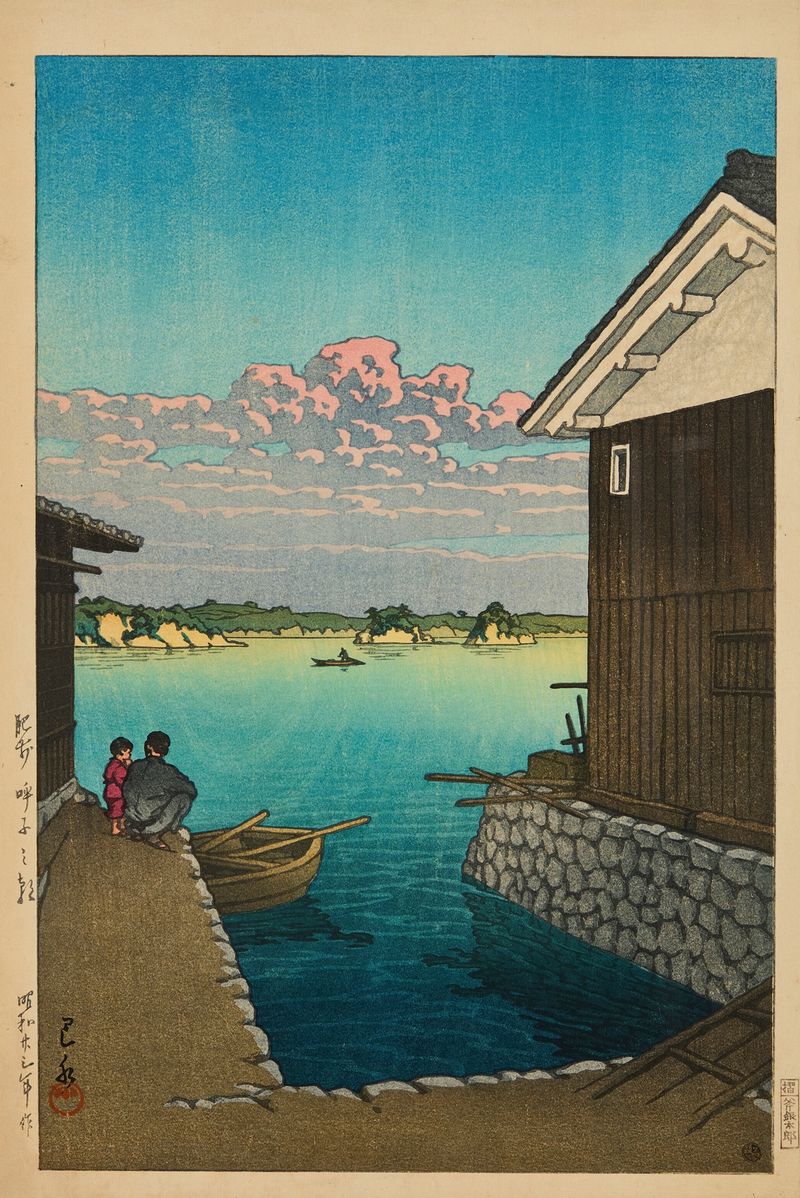
Hizen Yobuko no asa (Morning in Yobuko, Hizen)
Kawase Hasui
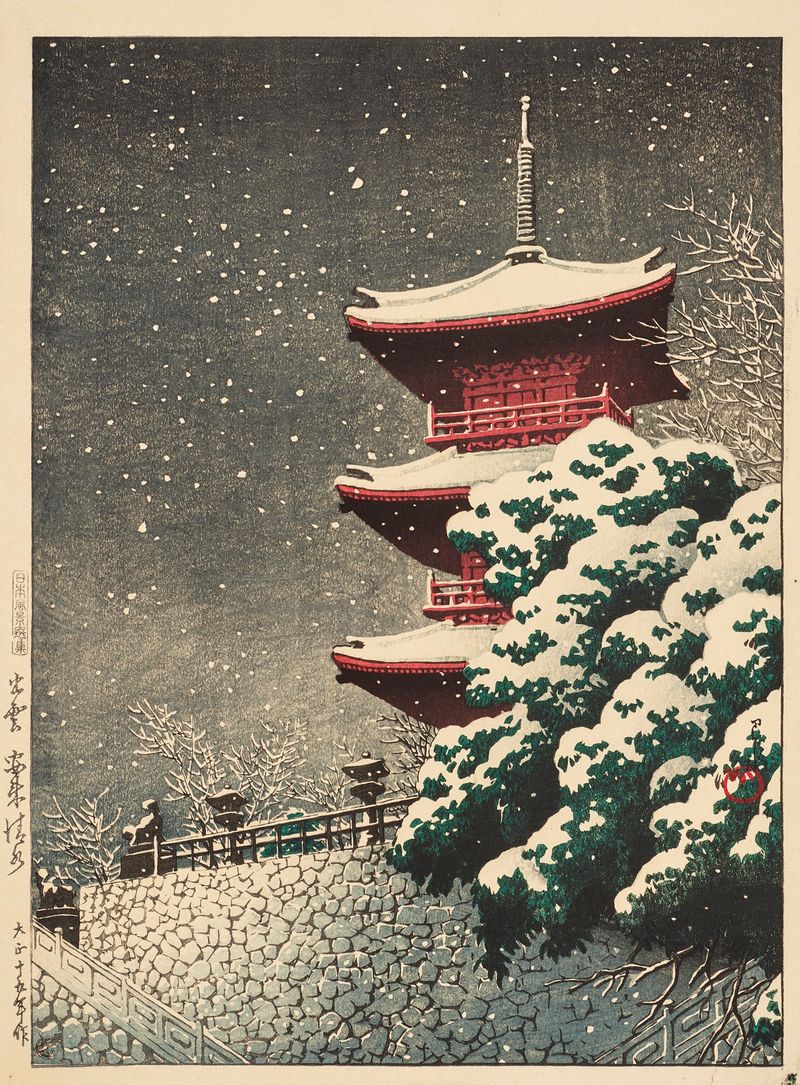
Izumo, Yasugi Kiyomizu (Yasugi Kiyomizu Temple at Izumo)
Kawase Hasui
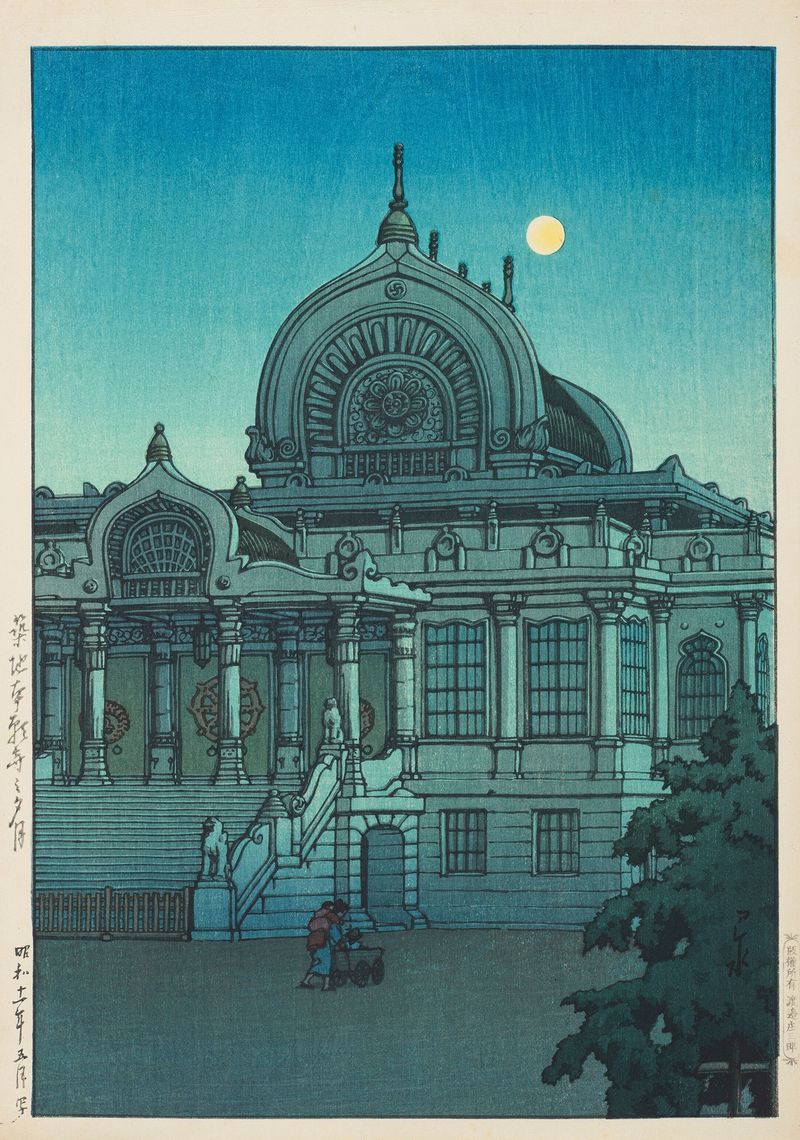
Tsukiji Honganji no yuzuki (Evening moon at Honganji Temple in Tsukiji)
Kawase Hasui
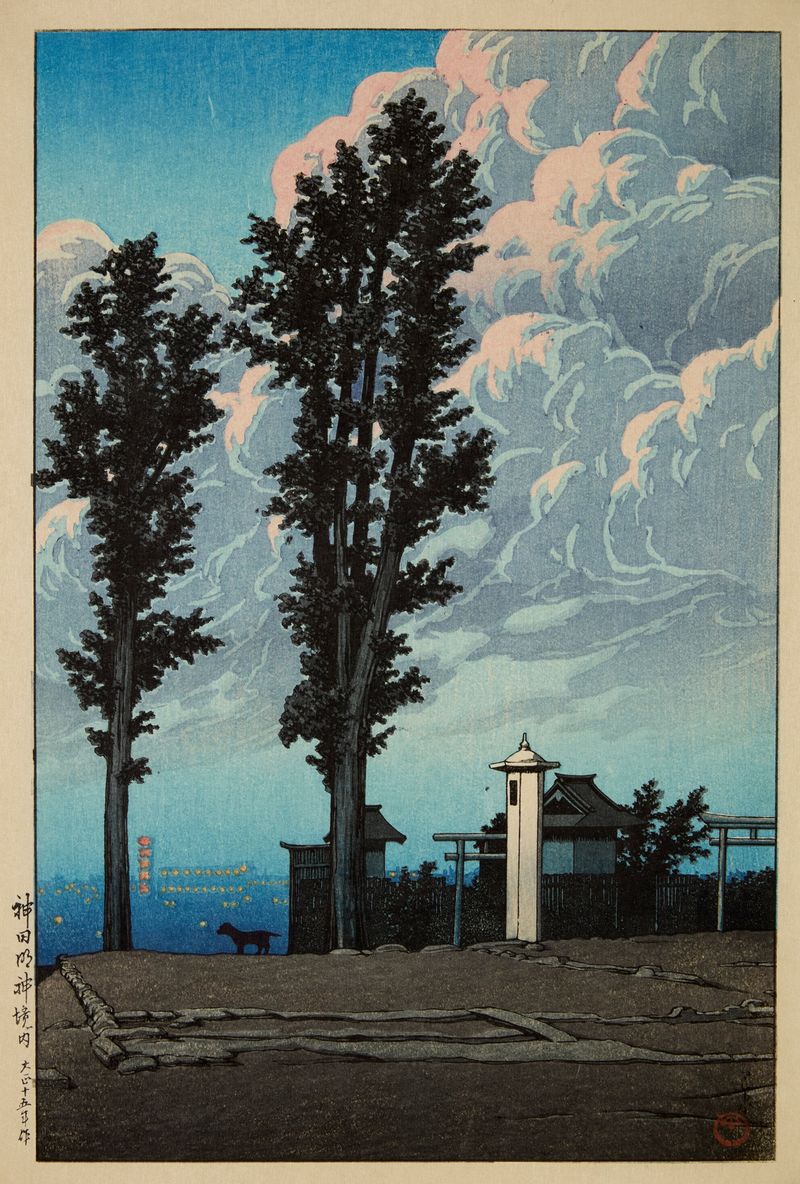
Kanda Myojin keidai (Kanda Myojin Shrine precent)
Kawase Hasui
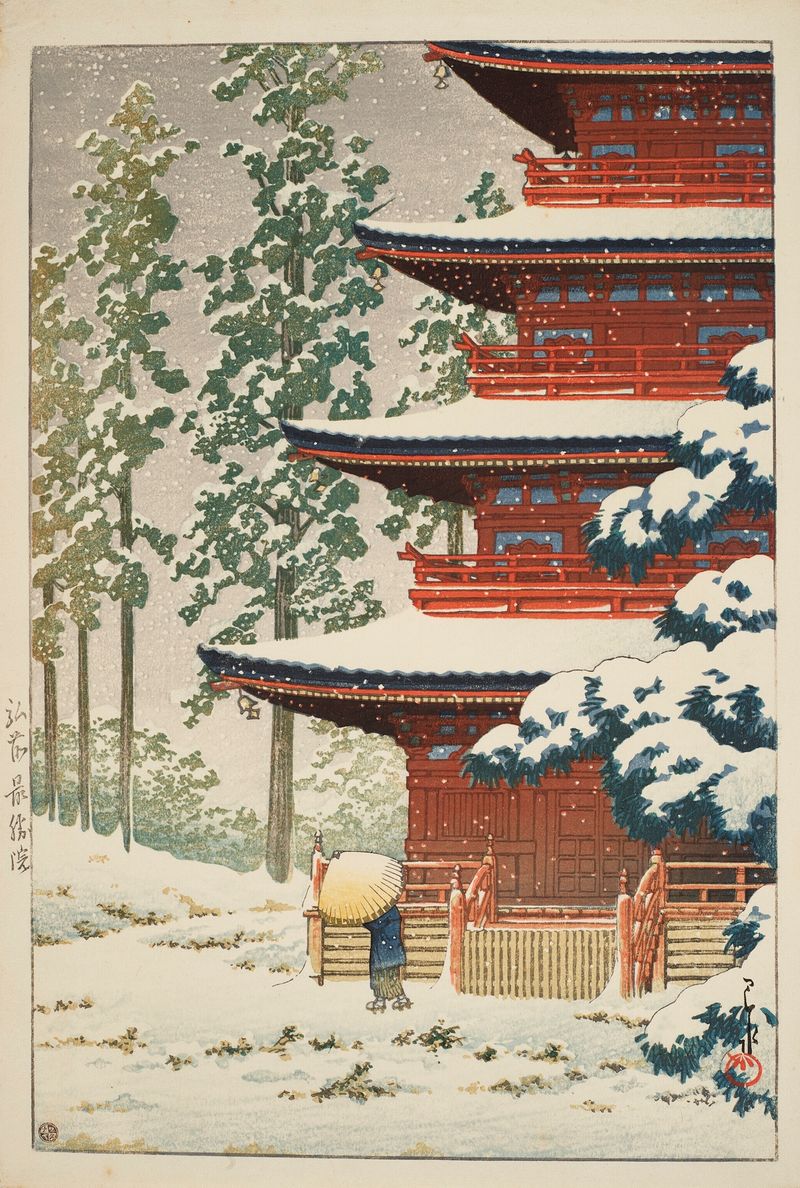
Saisho-in Temple, Hirosaki
Kawase Hasui
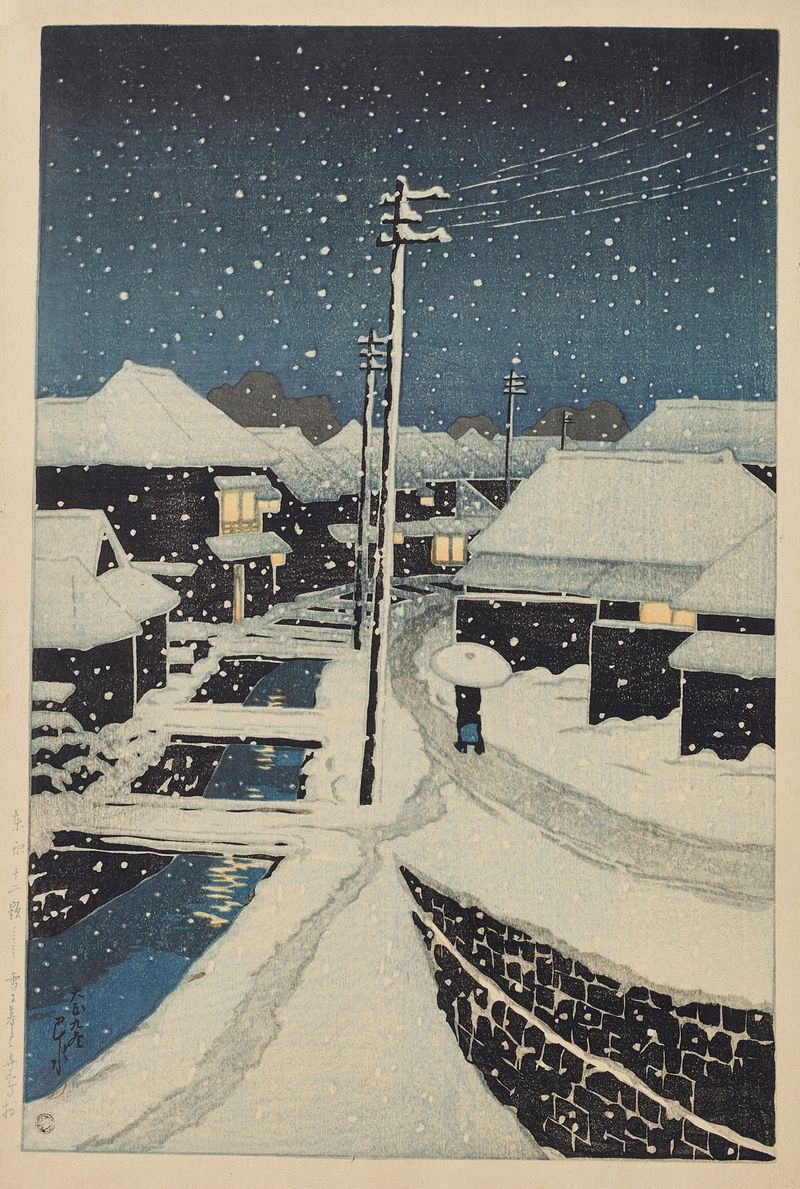
Yuki ni fururu Terajima mura (Evening snow at Terajima Village)
Kawase Hasui
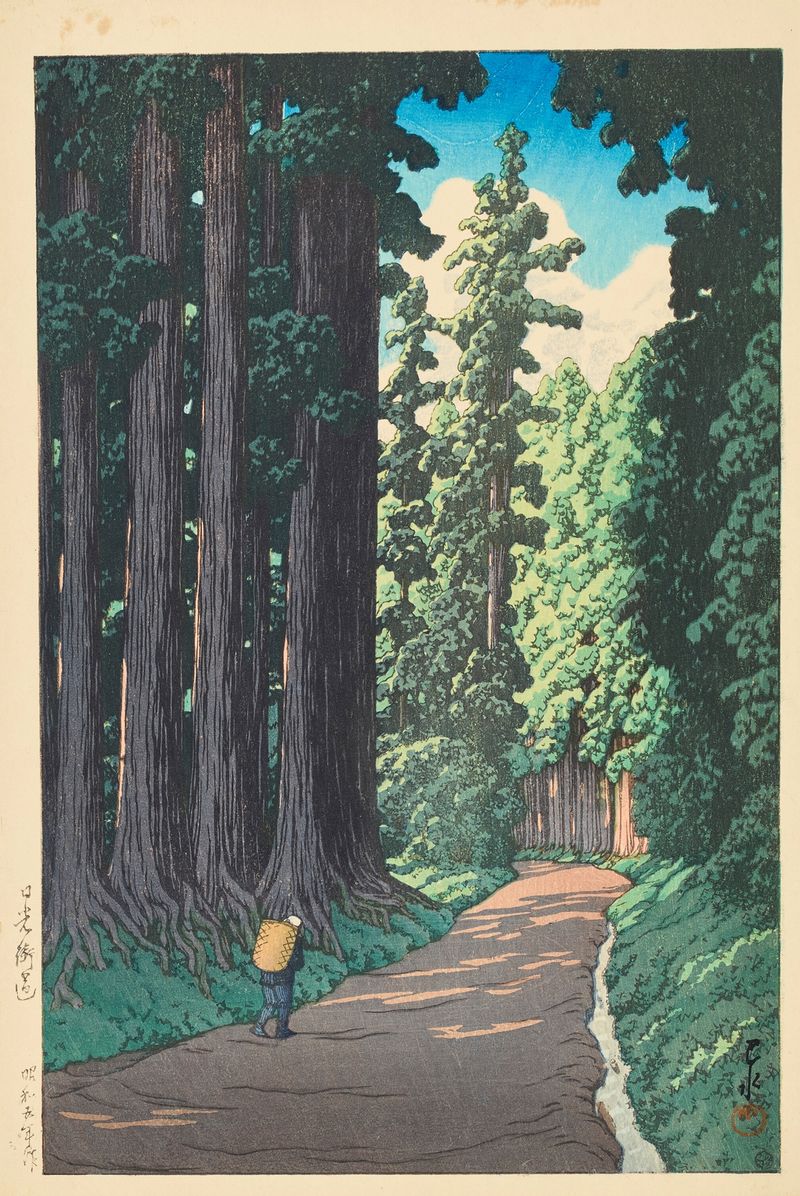
Nikko gaido (The Road to Nikko)
Kawase Hasui
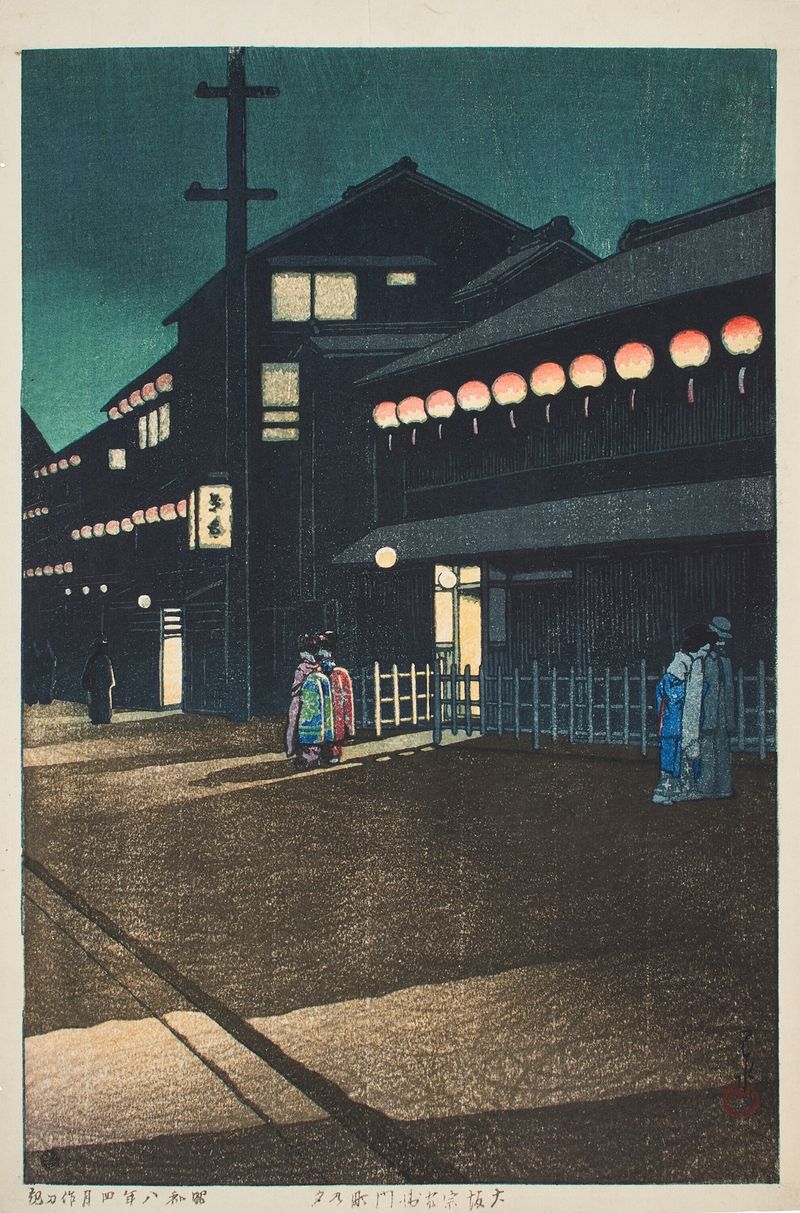
Osaka Soemon-cho no yu (Evening in Soemon-cho, Osaka)
Kawase Hasui
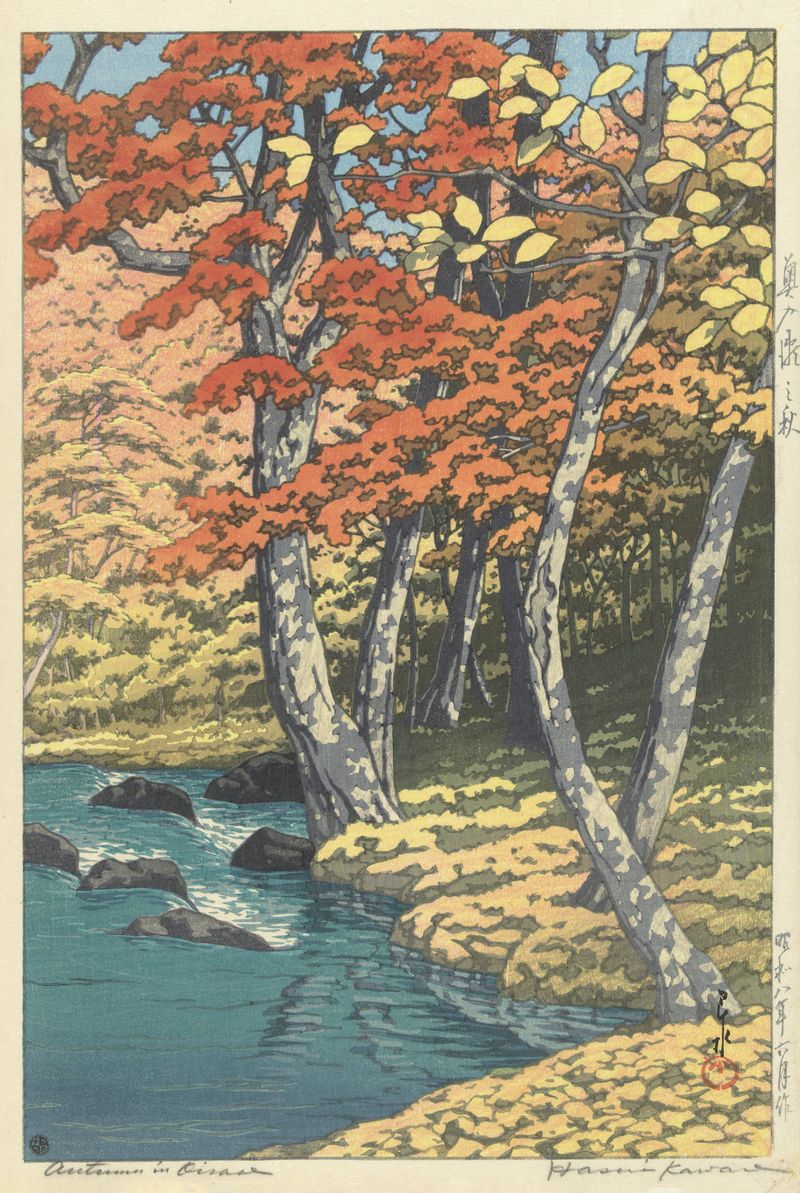
Autumn In Oirase
Kawase Hasui
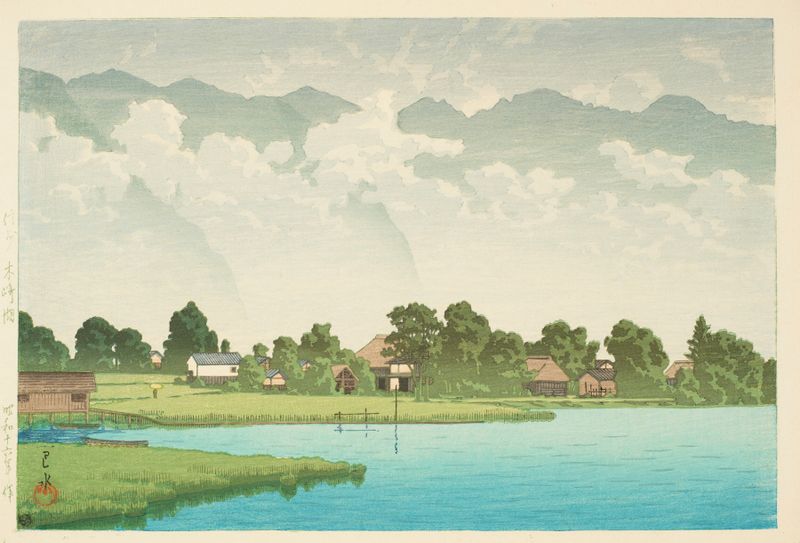
Shinshu Kizakiko (Kizaki Lake in Shinshu)
Kawase Hasui





