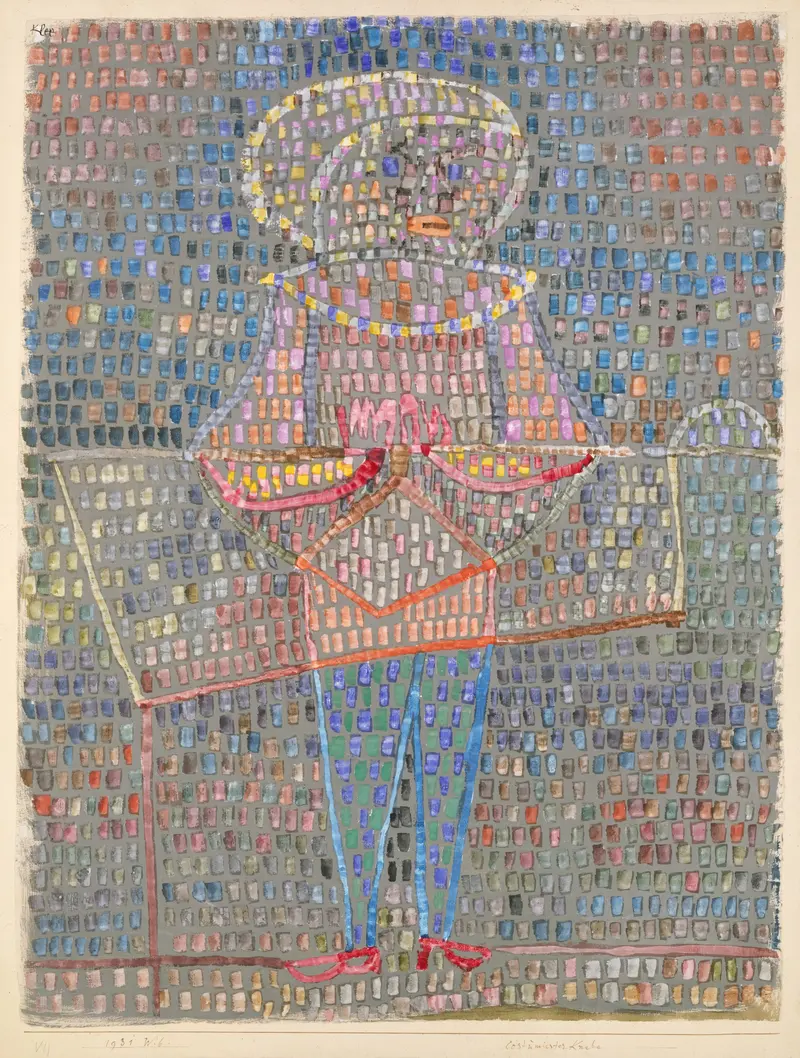
Kleines Blumenstilleben — History & Facts
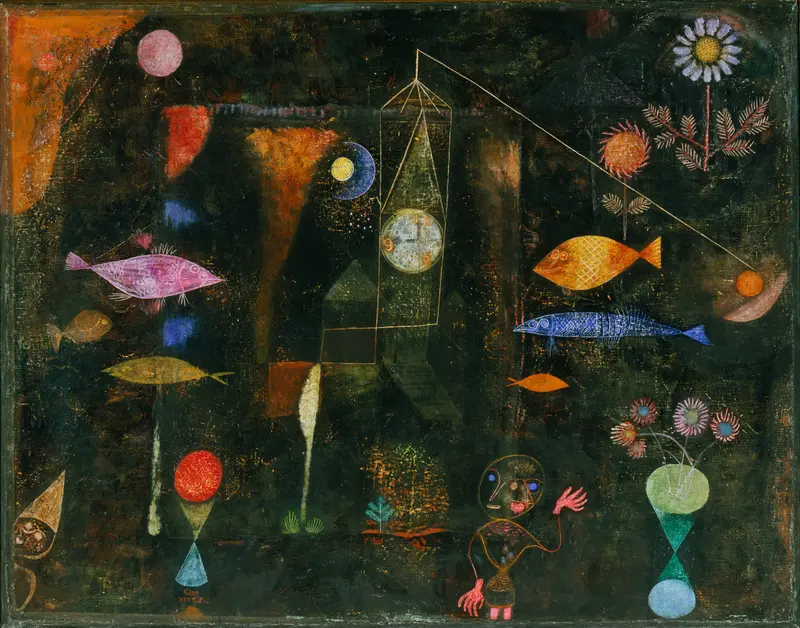
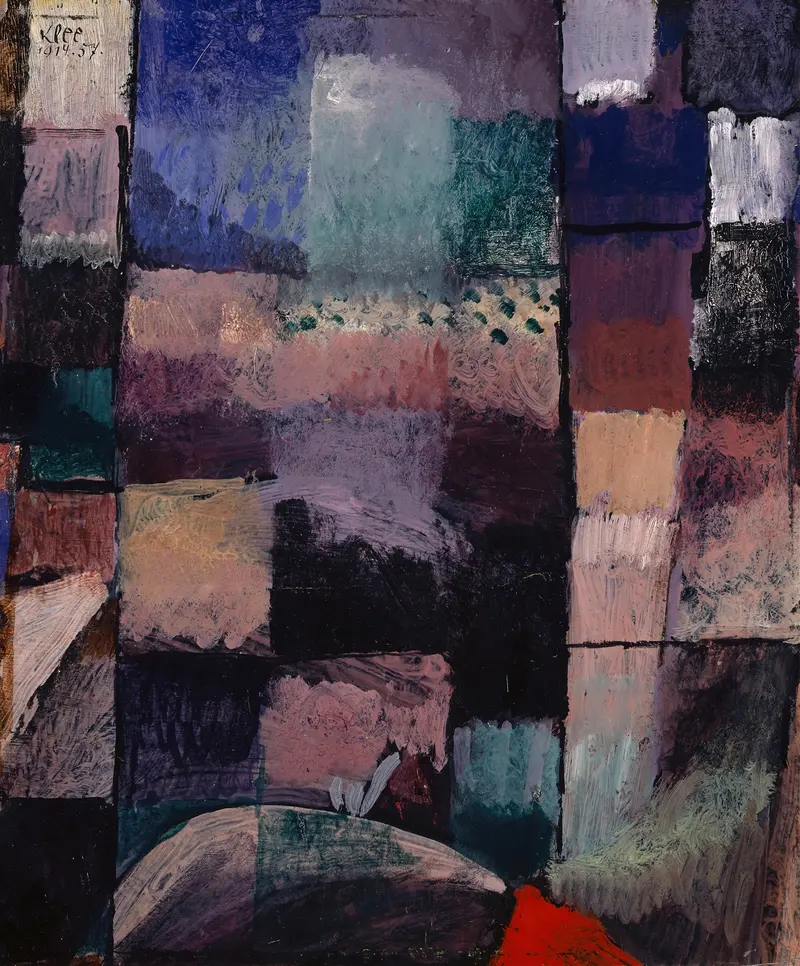
Kleines Blumenstilleben by Paul Klee showcases a vibrant palette dominated by yellows, reds, and greens. The composition features abstract floral forms that seem to dance across the canvas. Klee's unique style blends geometric shapes with organic elements, creating a lively and dynamic scene.
The overall effect is both playful and thought-provoking, inviting viewers to explore the relationship between color and form. The painting is executed in oil on canvas, a medium that allows for rich color application and texture. Klee employs a variety of brush techniques to achieve depth and movement within the floral arrangements. The dimensions of the work are approximately 40 x 50 cm, making it a modestly sized piece that can easily fit into various settings.
Viewers can appreciate the intricate details and layering of colors that Klee masterfully combines. Paul Klee, a key figure in the Expressionist movement, often drew inspiration from nature and the world around him. Kleines Blumenstilleben reflects his fascination with the interplay of color and form, a hallmark of his artistic approach. Interestingly, Klee was also a teacher at the Bauhaus, where he influenced many future artists.
This work exemplifies his ability to merge abstraction with representation, making it a notable piece in his oeuvre.